
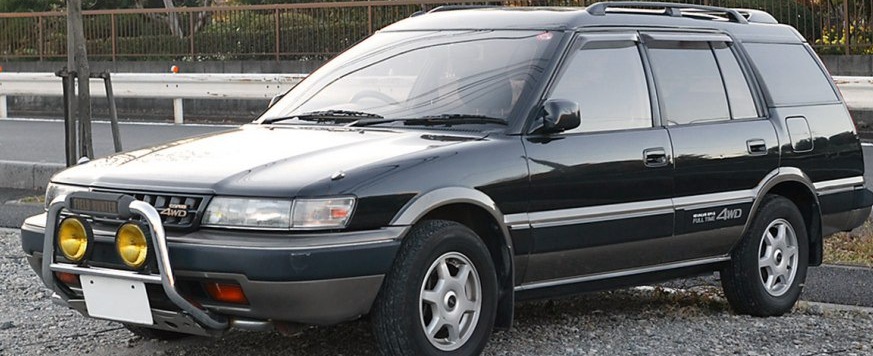
The Toyota Carib 1.8 i, produced between 1995 and 2002, represents a practical and relatively affordable offering within the broader Toyota Carib (also known as the Toyota Vista Wagon in some markets) lineup. Positioned as a mid-range trim, it aimed to balance fuel efficiency, usability, and a reasonable level of equipment for families and individuals needing a versatile station wagon. The Carib, in general, served as Toyota’s competitor to other compact estate cars, primarily sold within the Japanese domestic market (JDM) and exported to select regions, including Australia and parts of Asia. This specific 1.8-liter variant offered a step up in performance from the base models, while remaining more accessible than the higher-specification trims.
Technical Specifications
| Brand | Toyota |
| Model | Carib |
| Type (Engine) | 1.8 i (136 Hp) |
| Start of production | 1995 |
| End of production | 2002 |
| Powertrain Architecture | Internal Combustion engine |
| Body type | Station wagon (estate) |
| Seats | 5 |
| Doors | 5 |
| Fuel Type | Petrol (Gasoline) |
| Power | 136 Hp @ 6000 rpm |
| Power per litre | 75.8 Hp/l |
| Torque | 171 Nm @ 4200 rpm |
| Torque (lb-ft) | 126.12 lb.-ft. @ 4200 rpm |
| Engine layout | Front, Transverse |
| Engine Model/Code | 7A-FE |
| Engine displacement | 1794 cm3 |
| Engine displacement (cu. in.) | 109.48 cu. in. |
| Number of cylinders | 4 |
| Engine configuration | Inline |
| Cylinder Bore | 79 mm |
| Cylinder Bore (in.) | 3.11 in. |
| Piston Stroke | 91.5 mm |
| Piston Stroke (in.) | 3.6 in. |
| Compression ratio | 10:1 |
| Number of valves per cylinder | 4 |
| Fuel injection system | Multi-port manifold injection |
| Engine aspiration | Naturally aspirated engine |
| Valvetrain | DOHC |
| Engine oil capacity | 3.7 l |
| Engine oil capacity (US qt) | 3.91 US qt |
| Engine oil capacity (UK qt) | 3.26 UK qt |
| Coolant capacity | 5.6 l |
| Coolant capacity (US qt) | 5.92 US qt |
| Coolant capacity (UK qt) | 4.93 UK qt |
| Fuel tank capacity | 50 l |
| Fuel tank capacity (US gal) | 13.21 US gal |
| Fuel tank capacity (UK gal) | 11 UK gal |
| Drivetrain Architecture | Internal combustion engine (ICE) drives the front wheels |
| Drive wheel | Front wheel drive |
Powertrain & Engine Architecture
The heart of the Carib 1.8 i is the 7A-FE engine, a 1.8-liter (1794 cc) inline-four cylinder gasoline engine. This engine is a member of Toyota’s A-series engine family, known for its reliability and relatively simple design. The 7A-FE features a double overhead camshaft (DOHC) valvetrain with four valves per cylinder, contributing to its respectable power output for its displacement. Fuel delivery is managed by a multi-port fuel injection system, optimizing combustion efficiency. The engine produces 136 horsepower at 6000 rpm and 171 Nm (126.12 lb-ft) of torque at 4200 rpm. The engine’s design prioritized smooth operation and fuel economy over outright performance. The Carib 1.8 i typically came equipped with a four-speed automatic transmission. This transmission was chosen to provide ease of use and convenience, appealing to a broader range of drivers. While not particularly sporty, the automatic transmission offered smooth shifts and adequate performance for everyday driving.
Driving Characteristics
The driving experience in the Carib 1.8 i with the automatic transmission is best described as comfortable and practical. Acceleration is adequate for merging onto highways and overtaking, but it isn’t particularly brisk. The automatic transmission’s gear ratios are tuned for fuel efficiency, meaning the engine often operates at lower rpm. This contributes to a quieter cabin experience but can sometimes feel sluggish when demanding more power. Compared to the available manual transmission options, the automatic version sacrifices some responsiveness. The manual transmission offered a more engaging driving experience and slightly improved fuel economy, but the automatic was favored by those prioritizing convenience. The suspension is tuned for comfort, absorbing bumps and imperfections in the road reasonably well. Handling is predictable and safe, but not particularly sporty.
Equipment & Trim Levels
The 1.8 i trim level of the Carib typically included features such as power windows, power steering, central locking, and an AM/FM radio with a cassette player. Air conditioning was often standard, though sometimes offered as an option depending on the specific market. Interior upholstery was typically cloth, with a relatively simple and functional dashboard layout. Optional extras could include alloy wheels, a sunroof, and upgraded audio systems. The Carib aimed for a balance between affordability and comfort, offering a reasonable level of equipment without the premium price tag of higher-end trims.
Chassis & Braking
The Carib 1.8 i utilizes a front-wheel-drive layout with an independent MacPherson strut suspension in the front and a torsion beam suspension in the rear. The braking system typically consists of disc brakes in the front and drum brakes in the rear. This configuration was common for vehicles in this class during the 1990s and early 2000s. Stabilizer bars were often included to reduce body roll during cornering. The chassis is designed for comfort and practicality, prioritizing ride quality over sporty handling. The braking system provides adequate stopping power for everyday driving conditions.
Market Reception & Comparison
The Toyota Carib 1.8 i was generally well-received as a practical and reliable family vehicle. Critics praised its spacious interior, comfortable ride, and Toyota’s reputation for dependability. However, some reviewers noted that the automatic transmission could feel sluggish and that the overall driving experience wasn’t particularly exciting. Compared to other trims in the Carib lineup, the 1.8 i offered a good balance between performance and fuel economy. The base models with smaller engines were more affordable but lacked the power of the 1.8 i, while the higher-specification trims were more expensive and offered additional features that weren’t essential for many buyers. Fuel economy was respectable for its class, typically averaging around 7-9 liters per 100 kilometers (30-35 mpg) in mixed driving conditions.
Legacy
The Toyota Carib 1.8 i, and the 7A-FE engine it utilized, have proven to be remarkably durable over the long term. Many examples are still on the road today, a testament to Toyota’s engineering and build quality. The 7A-FE engine is known for its reliability and relatively low maintenance costs. Common issues are typically limited to routine maintenance items such as oil leaks and worn spark plugs. In the used car market, the Carib 1.8 i remains a popular choice for those seeking an affordable and dependable station wagon. Its practicality, spacious interior, and Toyota’s reputation for reliability continue to make it a desirable option for budget-conscious buyers. While not a collector’s item, well-maintained examples command reasonable prices and offer a good value proposition.
