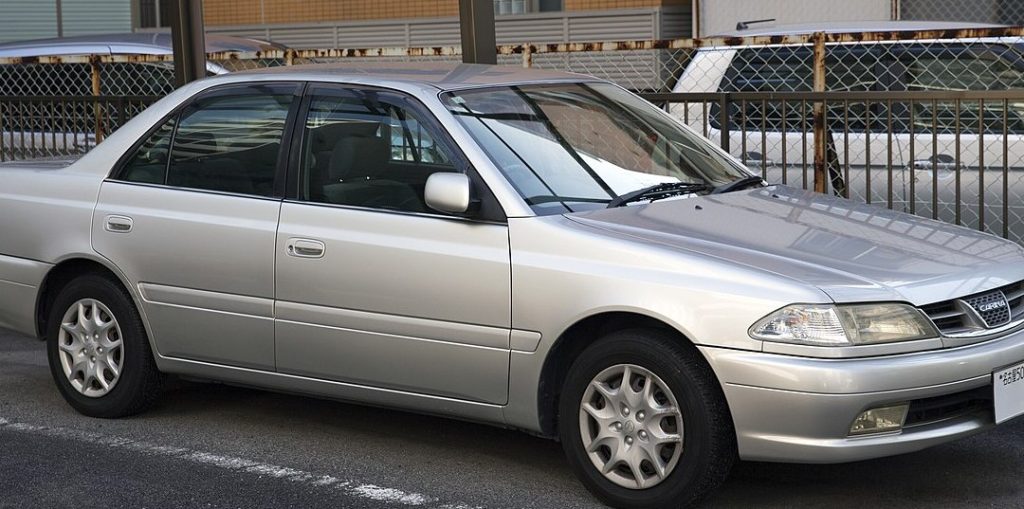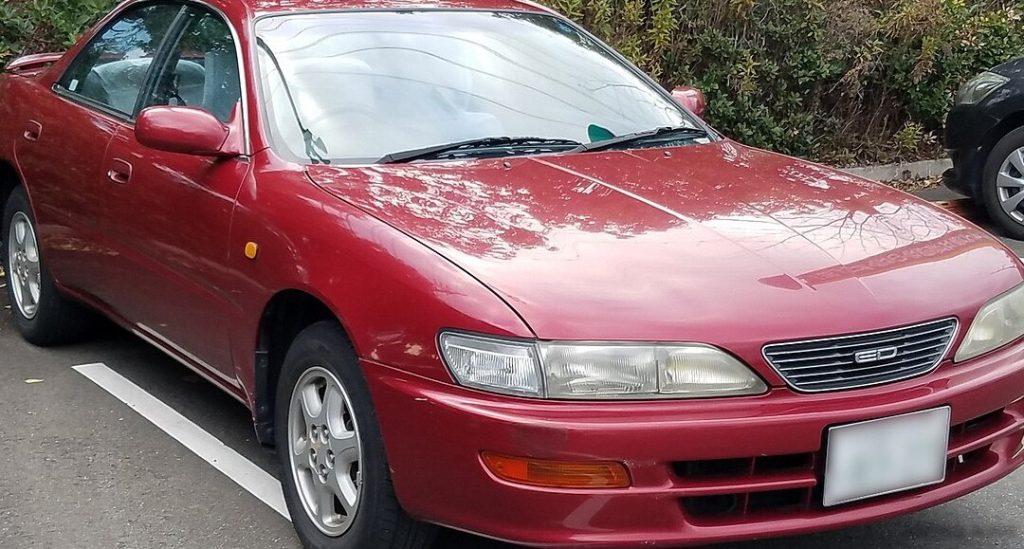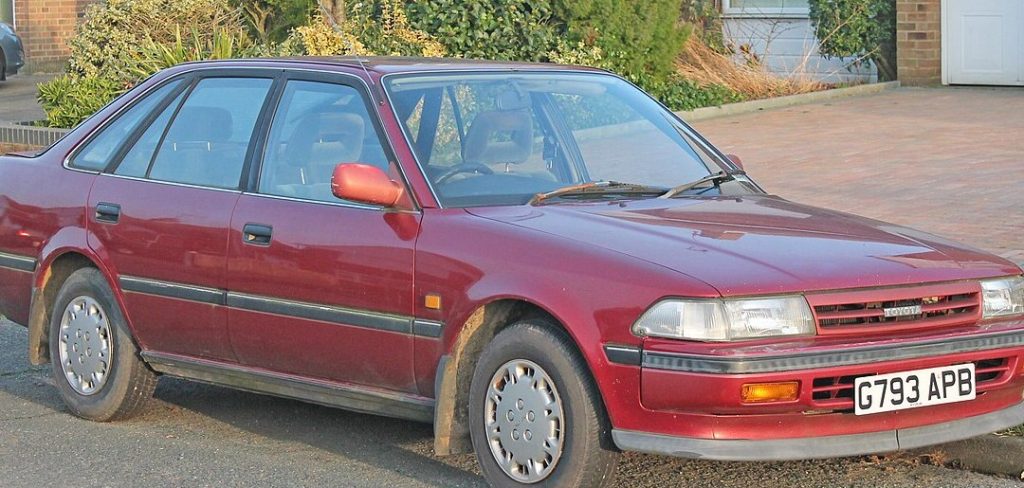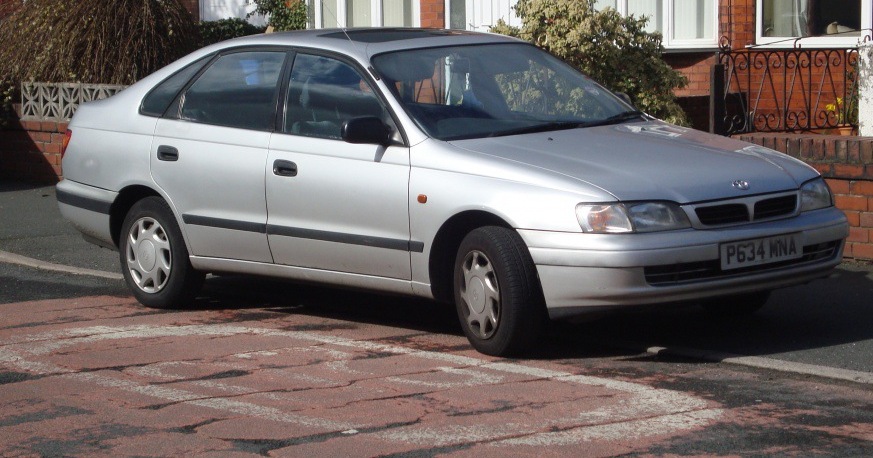
The Toyota Carina E Hatch (T19) 1.6 i 16V XLi, produced between 1992 and 1997, represented a key offering in Toyota’s European lineup during the early to mid-1990s. Positioned as a compact family hatchback, the Carina E aimed to provide a blend of practicality, reliability, and reasonable performance. The 1.6L 16V XLi trim, generating 107 horsepower, served as a mid-range option within the Carina E range, slotting between the base 1.6L models and the more powerful 2.0L variants. It was primarily marketed towards buyers seeking a well-equipped and efficient vehicle for daily commuting and family use.
Technical Specifications
| Brand | Toyota |
| Model | Carina |
| Generation | Carina E Hatch (T19) |
| Type (Engine) | 1.6 i 16V XLi (107 Hp) |
| Start of production | 1992 |
| End of production | 1997 |
| Powertrain Architecture | Internal Combustion engine |
| Body type | Hatchback |
| Seats | 5 |
| Doors | 5 |
| Fuel consumption (combined) | 7.1 l/100 km |
| Fuel consumption (US mpg) | 33.1 US mpg |
| Fuel consumption (UK mpg) | 39.8 UK mpg |
| Fuel consumption (km/l) | 14.1 km/l |
| Fuel Type | Petrol (Gasoline) |
| Acceleration 0 – 100 km/h | 11.4 sec |
| Acceleration 0 – 62 mph | 11.4 sec |
| Acceleration 0 – 60 mph | 10.8 sec |
| Maximum speed | 190 km/h (118.06 mph) |
| Weight-to-power ratio | 10.6 kg/Hp |
| Weight-to-torque ratio | 8.2 kg/Nm |
| Power | 107 Hp @ 6000 rpm |
| Power per litre | 67.4 Hp/l |
| Torque | 137 Nm @ 4600 rpm (101.05 lb.-ft. @ 4600 rpm) |
| Engine layout | Front, Transverse |
| Engine Model/Code | 4A-FE |
| Engine displacement | 1587 cm3 (96.84 cu. in.) |
| Number of cylinders | 4 |
| Engine configuration | Inline |
| Cylinder Bore | 81 mm (3.19 in.) |
| Piston Stroke | 77 mm (3.03 in.) |
| Compression ratio | 9.5:1 |
| Number of valves per cylinder | 4 |
| Fuel injection system | Multi-port manifold injection |
| Engine aspiration | Naturally aspirated engine |
| Valvetrain | DOHC |
| Engine oil capacity | 3.3 l (3.49 US qt | 2.9 UK qt) |
| Coolant capacity | 5.4 l (5.71 US qt | 4.75 UK qt) |
| Kerb Weight | 1130 kg (2491.22 lbs.) |
| Max. weight | 1600 kg (3527.4 lbs.) |
| Max load | 470 kg (1036.17 lbs.) |
| Trunk (boot) space – minimum | 470 l (16.6 cu. ft.) |
| Trunk (boot) space – maximum | 1250 l (44.14 cu. ft.) |
| Fuel tank capacity | 60 l (15.85 US gal | 13.2 UK gal) |
| Length | 4530 mm (178.35 in.) |
| Width | 1695 mm (66.73 in.) |
| Height | 1410 mm (55.51 in.) |
| Wheelbase | 2580 mm (101.57 in.) |
| Front track | 1465 mm (57.68 in.) |
| Rear track | 1445 mm (56.89 in.) |
| Drivetrain Architecture | Front wheel drive |
| Number of gears | 5 gears, manual transmission |
| Front suspension | Spring Strut |
| Rear suspension | Coil spring |
| Front brakes | Ventilated discs |
| Rear brakes | Drum |
| Steering type | Steering rack and pinion |
| Power steering | Hydraulic Steering |
| Tires size | 175/70 R14 H |
INTRODUCTION
The Toyota Carina E, launched in 1992, was a significant model for Toyota in Europe, representing a move towards more contemporary styling and improved refinement. The hatchback body style, designated T19, offered a practical alternative to traditional saloons. The 1.6 i 16V XLi variant, powered by the 4A-FE engine, was a popular choice for buyers prioritizing fuel efficiency and reasonable performance. It occupied a middle ground in the Carina E range, offering more equipment than the base models but remaining more affordable than the larger-engined versions.
Powertrain & Engine Architecture
At the heart of the Carina E 1.6 i 16V XLi lies the 4A-FE engine, a 1.6-liter (1587cc) inline-four cylinder gasoline engine. This engine is characterized by its dual overhead camshafts (DOHC) and 16 valves, contributing to its relatively high output for its displacement. The 4A-FE utilizes a multi-port fuel injection system, ensuring precise fuel delivery for optimal combustion and efficiency. The engine’s design emphasized reliability and low maintenance, typical of Toyota engineering. The XLi trim was exclusively offered with a 5-speed manual transmission, providing drivers with direct control over the engine’s power. The transmission was known for its smooth shifting and durability.
Driving Characteristics
The 107 horsepower and 137 Nm (101 lb-ft) of torque produced by the 4A-FE engine in the Carina E 1.6 i 16V XLi provided adequate performance for everyday driving. Acceleration from 0 to 60 mph took around 10.8 seconds, and the car had a top speed of approximately 118 mph. While not particularly sporty, the engine offered a responsive feel, especially in the mid-range. The 5-speed manual transmission allowed drivers to keep the engine in its optimal power band. Compared to the 2.0L versions, the 1.6L felt less powerful, particularly when fully loaded or tackling steep inclines. However, it offered superior fuel economy and a lighter feel in city driving. The gear ratios were well-matched for both urban and highway use, providing a comfortable and efficient driving experience.
Equipment & Trim Levels
The XLi trim level of the Carina E 1.6 i 16V offered a good level of standard equipment. Typically, this included power steering, central locking, electric front windows, and a basic audio system. Interior upholstery was usually cloth, with a functional and durable design. Optional extras available for the XLi included air conditioning, alloy wheels, and an upgraded audio system. The dashboard layout was straightforward and user-friendly, with clearly labeled controls. The XLi trim aimed to provide a comfortable and well-equipped interior without the higher price tag of the more luxurious trims.
Chassis & Braking
The Carina E 1.6 i 16V XLi featured a front-wheel-drive layout with a MacPherson strut suspension at the front and a coil spring suspension at the rear. This suspension setup provided a comfortable ride quality, absorbing bumps and imperfections in the road surface effectively. The front brakes were ventilated discs, offering good stopping power, while the rear brakes were drums. The steering was a rack and pinion system with hydraulic power assistance, providing precise and responsive steering feel. The car’s relatively light weight contributed to its nimble handling characteristics. Stabilizer bars were fitted to both the front and rear axles to reduce body roll during cornering.
Market Reception & Comparison
The Toyota Carina E 1.6 i 16V XLi was generally well-received by automotive critics. It was praised for its reliability, fuel efficiency, and comfortable ride. However, some critics noted that the engine lacked the outright performance of its larger-engined counterparts. Compared to rivals such as the Ford Escort and Vauxhall Astra, the Carina E offered a more refined and reliable experience, albeit at a slightly higher price point. The 1.6L engine offered better fuel economy than the 2.0L versions, making it a popular choice for drivers covering long distances. Reliability surveys consistently ranked the Carina E highly, contributing to its strong reputation in the used car market.
Legacy
The Toyota Carina E 1.6 i 16V XLi has proven to be a remarkably durable and reliable vehicle. Many examples are still on the road today, testament to Toyota’s engineering quality. The 4A-FE engine is known for its longevity and relatively low maintenance costs. In the used car market, the Carina E 1.6 i 16V XLi represents a good value proposition for buyers seeking an affordable and dependable family hatchback. While not a particularly sought-after classic, it remains a respected and appreciated vehicle among enthusiasts who value reliability and practicality. Parts availability is generally good, further enhancing its appeal as a used car purchase.