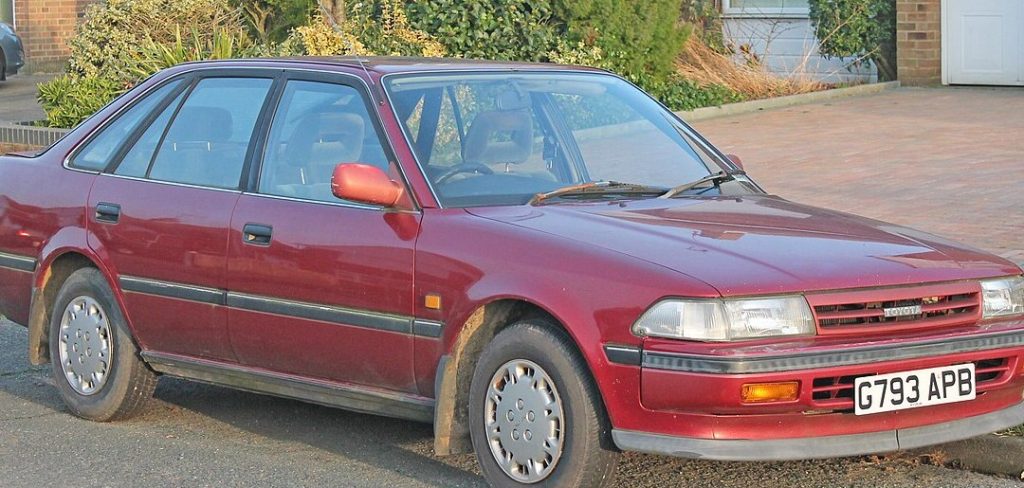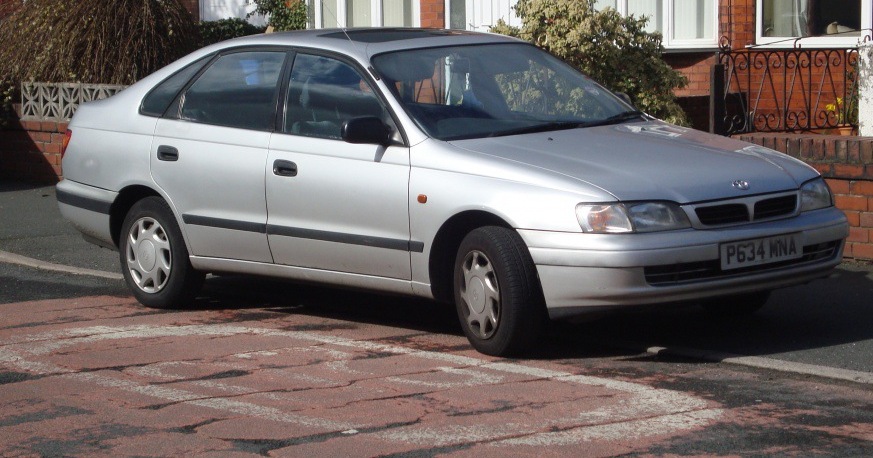
The Toyota Carina E Hatch (T19) 2.0 TD, produced between 1996 and 1998, represented a practical and fuel-efficient offering within Toyota’s European lineup. This variant, powered by a 2.0-liter turbocharged diesel engine producing 83 horsepower, occupied a mid-range position in the Carina E Hatchback series, appealing to buyers prioritizing economy and reasonable performance over outright speed. It was primarily marketed in Europe, where diesel engines held a significant market share due to favorable taxation and fuel costs.
Technical Specifications
| Brand | Toyota |
| Model | Carina |
| Generation | Carina E Hatch (T19) |
| Type (Engine) | 2.0 TD (83 Hp) |
| Start of production | 1996 |
| End of production | 1998 |
| Powertrain Architecture | Internal Combustion engine |
| Body type | Hatchback |
| Seats | 5 |
| Doors | 5 |
| Fuel consumption (combined) | 6 l/100 km (39.2 US mpg, 47.1 UK mpg, 16.7 km/l) |
| Fuel Type | Diesel |
| Acceleration 0 – 100 km/h | 12.3 sec |
| Acceleration 0 – 62 mph | 12.3 sec |
| Acceleration 0 – 60 mph | 11.7 sec |
| Maximum speed | 175 km/h (108.74 mph) |
| Weight-to-power ratio | 15.8 kg/Hp (63.5 Hp/tonne) |
| Weight-to-torque ratio | 7.5 kg/Nm (133 Nm/tonne) |
| Power | 83 Hp @ 4000 rpm |
| Power per litre | 42 Hp/l |
| Torque | 174 Nm @ 2000 rpm (128.34 lb.-ft. @ 2000 rpm) |
| Engine layout | Front, Transverse |
| Engine Model/Code | 2C-T |
| Engine displacement | 1975 cm3 (120.52 cu. in.) |
| Number of cylinders | 4 |
| Engine configuration | Inline |
| Cylinder Bore | 86 mm (3.39 in.) |
| Piston Stroke | 85 mm (3.35 in.) |
| Compression ratio | 23:1 |
| Number of valves per cylinder | 4 |
| Fuel injection system | Precombustion chamber injection |
| Engine aspiration | Turbocharger |
| Valvetrain | OHC |
| Engine oil capacity | 5.1 l (5.39 US qt | 4.49 UK qt) |
| Coolant capacity | 7 l (7.4 US qt | 6.16 UK qt) |
| Kerb Weight | 1308 kg (2883.65 lbs.) |
| Max. weight | 1750 kg (3858.09 lbs.) |
| Max load | 442 kg (974.44 lbs.) |
| Trunk (boot) space – minimum | 470 l (16.6 cu. ft.) |
| Trunk (boot) space – maximum | 810 l (28.6 cu. ft.) |
| Fuel tank capacity | 60 l (15.85 US gal | 13.2 UK gal) |
| Length | 4530 mm (178.35 in.) |
| Width | 1695 mm (66.73 in.) |
| Height | 1410 mm (55.51 in.) |
| Wheelbase | 2580 mm (101.57 in.) |
| Front track | 1465 mm (57.68 in.) |
| Rear track | 1445 mm (56.89 in.) |
| Drivetrain Architecture | Front wheel drive |
| Number of gears and type of gearbox | 5 gears, manual transmission |
| Front suspension | Spring Strut |
| Rear suspension | Coil spring |
| Front brakes | Ventilated discs |
| Rear brakes | Drum |
| Assisting systems | ABS (Anti-lock braking system) |
| Steering type | Steering rack and pinion |
| Power steering | Hydraulic Steering |
| Tires size | 175/70 R14H |
Background and Market Positioning
The Toyota Carina E, launched in 1992, was Toyota’s mid-size offering in Europe, positioned between the smaller Corolla and the larger Camry. The Carina E aimed to provide a comfortable and reliable vehicle for families and commuters. The hatchback body style, introduced with the ‘T19’ series, offered increased practicality compared to the traditional saloon (sedan) version. The 2.0 TD variant was introduced in 1996 as a response to the growing demand for diesel-powered vehicles in Europe. It was designed to appeal to drivers seeking lower running costs and improved fuel economy, particularly those covering long distances.
Engine and Mechanical Details
The heart of the Carina E 2.0 TD is the 2C-T engine, a 1.975-liter inline-four cylinder diesel engine equipped with a turbocharger and precombustion chamber fuel injection. This engine produced 83 horsepower at 4000 rpm and 174 Nm (128 lb-ft) of torque at 2000 rpm. The turbocharger significantly improved the engine’s power output and responsiveness compared to naturally aspirated diesel engines of the time. The precombustion chamber injection system, while less sophisticated than direct injection, contributed to relatively quiet and smooth operation for a diesel engine. Power was delivered to the front wheels through a five-speed manual transmission. The suspension utilized a conventional spring strut setup at the front and a coil spring arrangement at the rear, prioritizing ride comfort over sporty handling. Ventilated disc brakes were fitted to the front wheels, while the rear wheels employed drum brakes.
Comparison with Other Carina E Variants
The 2.0 TD variant occupied a middle ground within the Carina E Hatchback range. The base models typically featured smaller, naturally aspirated petrol engines (gasoline engines) with lower power outputs, offering even greater fuel economy but significantly reduced performance. Higher-end Carina E models were available with a 2.2-liter petrol engine, providing considerably more horsepower and a more refined driving experience, but at the expense of fuel efficiency. Compared to the petrol engines, the 2.0 TD offered superior torque, making it more suitable for carrying loads or towing. However, it lacked the responsiveness and higher top speed of the petrol variants. Maintenance on the 2.0 TD, while generally reliable, could be more involved than on the simpler petrol engines, particularly concerning the turbocharger and fuel injection system. The target audience for the 2.0 TD was primarily drivers who valued fuel economy and practicality over outright performance, such as fleet operators and private buyers covering high annual mileages.
Legacy and Impact
The Toyota Carina E, including the 2.0 TD variant, was a commercially successful model for Toyota in Europe. It established Toyota as a reliable and well-respected brand in the mid-size segment. While not a groundbreaking vehicle in terms of innovation, the Carina E 2.0 TD offered a compelling combination of fuel efficiency, practicality, and reliability, making it a popular choice for drivers seeking a sensible and dependable family car. The Carina E was eventually replaced by the Avensis in 1997, but the lessons learned from its development and market success contributed to the Avensis’s own strong performance in the European market. The 2C-T engine itself was a workhorse for Toyota, appearing in various other models across different markets, known for its durability and longevity.