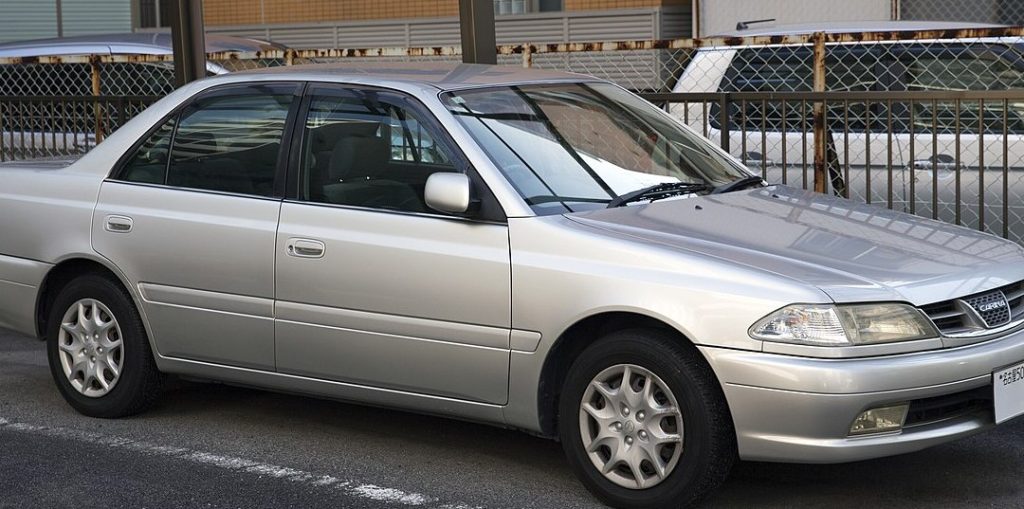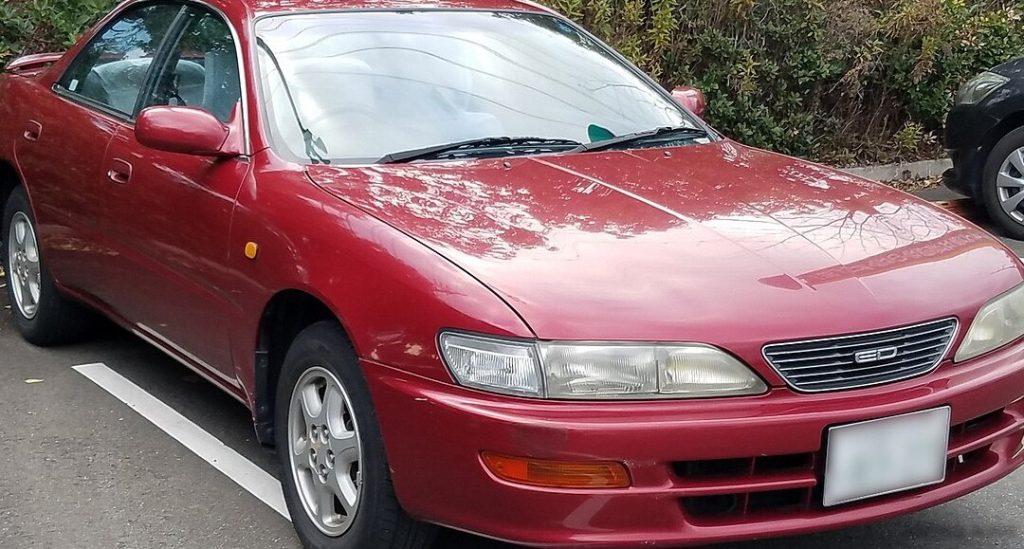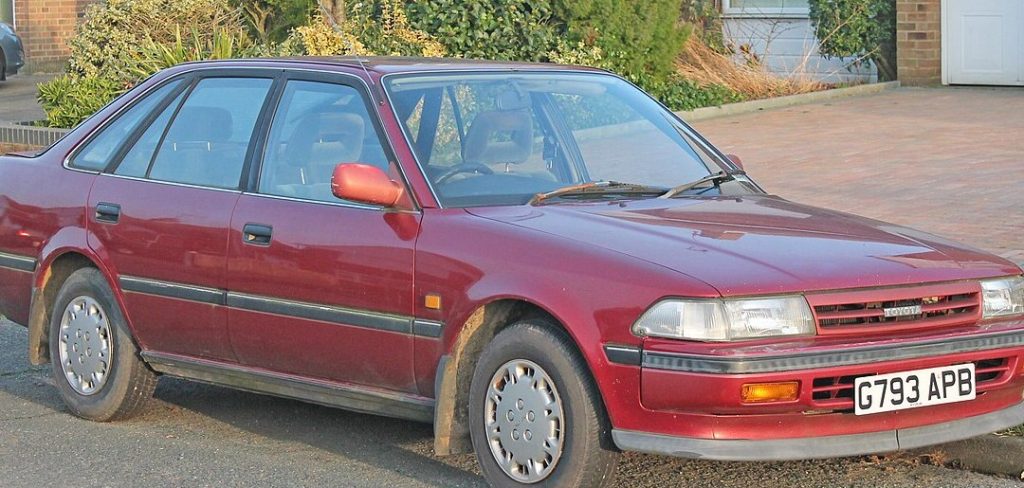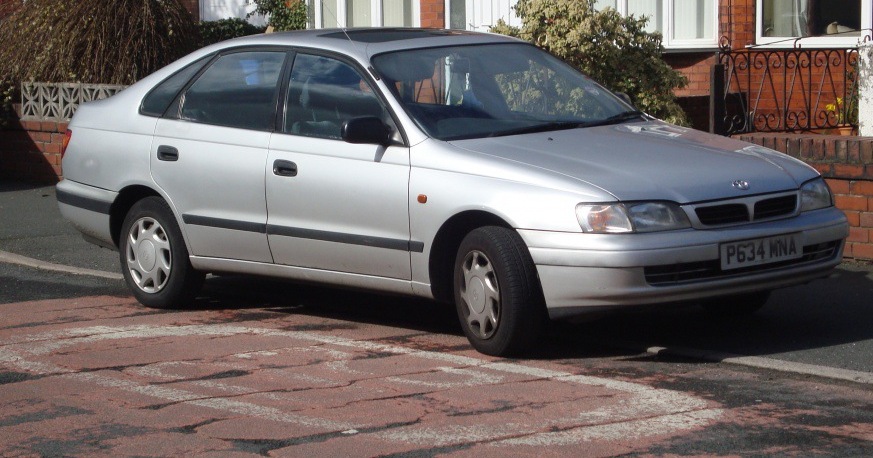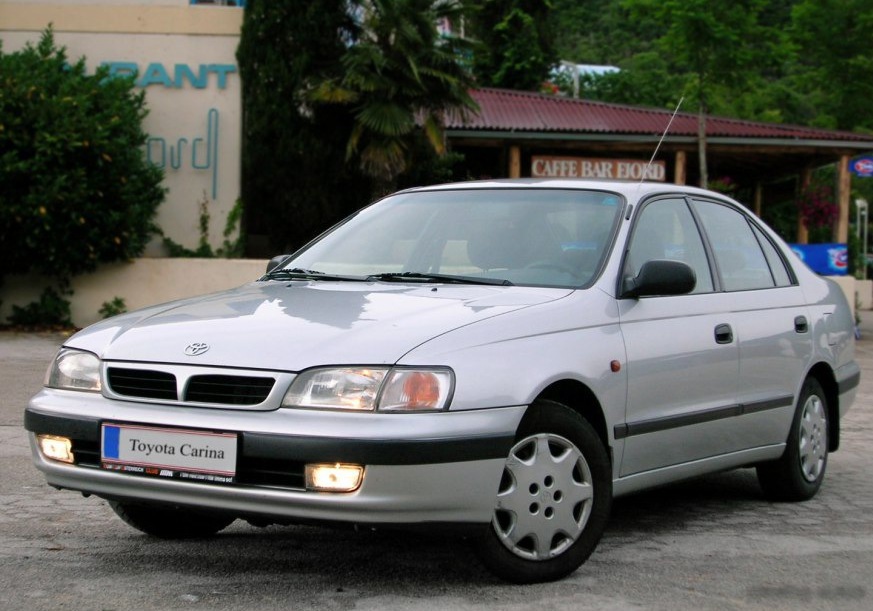
The Toyota Carina E (T19) 1.5i 16V SG, produced between 1993 and 1998, represented an entry point into Toyota’s mid-size sedan range in Europe and other international markets. This variant, powered by the 5A-FE engine, offered a balance of affordability, fuel efficiency, and reasonable performance. It served as a practical and reliable option for families and commuters, positioned below the more powerful and technologically advanced Carina E models like the 2.0L variants.
Technical Specifications
| Brand | Toyota |
| Model | Carina |
| Generation | Carina E (T19) |
| Type (Engine) | 1.5i 16V SG (105 Hp) |
| Start of production | 1993 |
| End of production | 1998 |
| Powertrain Architecture | Internal Combustion engine |
| Body type | Sedan |
| Seats | 5 |
| Doors | 4 |
| Fuel consumption (combined) | 5 l/100 km (47 US mpg, 56.5 UK mpg, 20 km/l) |
| Fuel Type | Petrol (Gasoline) |
| Weight-to-power ratio | 9.7 kg/Hp, 102.9 Hp/tonne |
| Weight-to-torque ratio | 7.6 kg/Nm, 132.4 Nm/tonne |
| Power | 105 Hp @ 6000 rpm |
| Power per litre | 70.1 Hp/l |
| Torque | 135 Nm @ 3200 rpm (99.57 lb.-ft. @ 3200 rpm) |
| Engine layout | Front, Transverse |
| Engine Model/Code | 5A-FE |
| Engine displacement | 1498 cm3 (91.41 cu. in.) |
| Number of cylinders | 4 |
| Engine configuration | Inline |
| Cylinder Bore | 78.7 mm (3.1 in.) |
| Piston Stroke | 77 mm (3.03 in.) |
| Compression ratio | 9.8:1 |
| Number of valves per cylinder | 4 |
| Fuel injection system | Multi-port manifold injection |
| Engine aspiration | Naturally aspirated engine |
| Valvetrain | DOHC |
| Engine oil capacity | 3 l (3.17 US qt | 2.64 UK qt) |
| Kerb Weight | 1020 kg (2248.72 lbs.) |
| Max. weight | 1295 kg (2854.99 lbs.) |
| Max load | 275 kg (606.27 lbs.) |
| Fuel tank capacity | 55 l (14.53 US gal | 12.1 UK gal) |
| Length | 4455 mm (175.39 in.) |
| Width | 1695 mm (66.73 in.) |
| Height | 1395 mm (54.92 in.) |
| Wheelbase | 2580 mm (101.57 in.) |
| Front track | 1475 mm (58.07 in.) |
| Rear track | 1460 mm (57.48 in.) |
| Drivetrain Architecture | The Internal combustion engine (ICE) drives the front wheels of the vehicle. |
| Drive wheel | Front wheel drive |
| Number of gears and type of gearbox | 5 gears, manual transmission |
| Front suspension | Spring Strut |
| Rear suspension | Coil spring |
| Front brakes | Ventilated discs |
| Rear brakes | Drum |
| Steering type | Steering rack and pinion |
| Tires size | 165/80 R13 S |
Overview and Market Positioning
The Toyota Carina E was Toyota’s offering in the competitive European mid-size sedan segment, aiming to provide a comfortable, reliable, and well-equipped vehicle. Introduced in 1993, it represented a significant step forward in terms of design and technology compared to its predecessor, the Carina II. The 1.5i 16V SG variant served as the entry-level model, targeting buyers who prioritized fuel economy and affordability over outright performance. It was primarily sold in Europe, where smaller displacement engines were favored due to tax regulations and fuel costs.
Engine and Mechanical Details
The heart of the Carina E 1.5i 16V SG is the 5A-FE engine, a 1.5-liter inline-four cylinder powerplant. This engine featured a double overhead camshaft (DOHC) valvetrain and multi-port fuel injection, contributing to its relatively efficient operation and respectable power output for its size. Producing 105 horsepower at 6000 rpm and 135 Nm (99.57 lb-ft) of torque at 3200 rpm, the 5A-FE provided adequate performance for everyday driving. The engine’s transverse front-engine layout and front-wheel drive configuration were typical for vehicles in this class during the 1990s.
Transmission and Handling
The 1.5i 16V SG was typically equipped with a five-speed manual transmission, although an optional four-speed automatic transmission was also available. The manual gearbox offered a more engaging driving experience and contributed to slightly better fuel economy. The Carina E featured a relatively simple suspension setup, with MacPherson struts at the front and coil springs at the rear. This provided a comfortable ride quality, although it wasn’t particularly sporty in terms of handling. Steering was via a rack and pinion system, offering reasonable precision and feedback.
Comparison with Other Carina E Variants
The Carina E range offered a variety of engine and trim level options. Compared to the larger-displacement engines, such as the 1.8L and 2.0L gasoline engines, the 1.5i 16V SG offered less power and acceleration. However, it also benefited from superior fuel economy and lower running costs. The 1.5L engine was significantly more affordable to purchase and insure. The diesel variants, like the 2.0 TDI, provided even better fuel economy but sacrificed performance and refinement. The 1.5i 16V SG was aimed at buyers who prioritized practicality and economy over performance, making it a popular choice for families and commuters.
Interior and Features
The interior of the Carina E 1.5i 16V SG was functional and well-built, reflecting Toyota’s reputation for quality and reliability. Standard features typically included power steering, central locking, and electric windows. Higher trim levels offered additional features such as air conditioning, alloy wheels, and a better audio system. The cabin provided comfortable seating for five passengers and a reasonably sized trunk for luggage. The overall design was conservative and understated, focusing on practicality and durability rather than flashy styling.
Reliability and Maintenance
The Toyota Carina E, and particularly the 1.5i 16V SG variant, is known for its exceptional reliability. The 5A-FE engine is a robust and durable unit, capable of covering high mileages with proper maintenance. Routine maintenance tasks, such as oil changes, filter replacements, and spark plug replacements, are relatively straightforward and inexpensive. Parts availability is generally good, although some components may be becoming increasingly difficult to find as the car ages. The Carina E’s simple mechanical design makes it a relatively easy vehicle to maintain and repair, even for amateur mechanics.
Legacy and Impact
The Toyota Carina E, while not a groundbreaking vehicle, played an important role in establishing Toyota as a major player in the European mid-size sedan market. It offered a compelling combination of reliability, affordability, and practicality, appealing to a wide range of buyers. The 1.5i 16V SG variant, in particular, provided an accessible entry point into the Carina E range, making it a popular choice for those seeking a dependable and economical family car. While the Carina E was eventually replaced by the Avensis, it remains a fondly remembered vehicle by many owners, appreciated for its enduring quality and trouble-free operation.