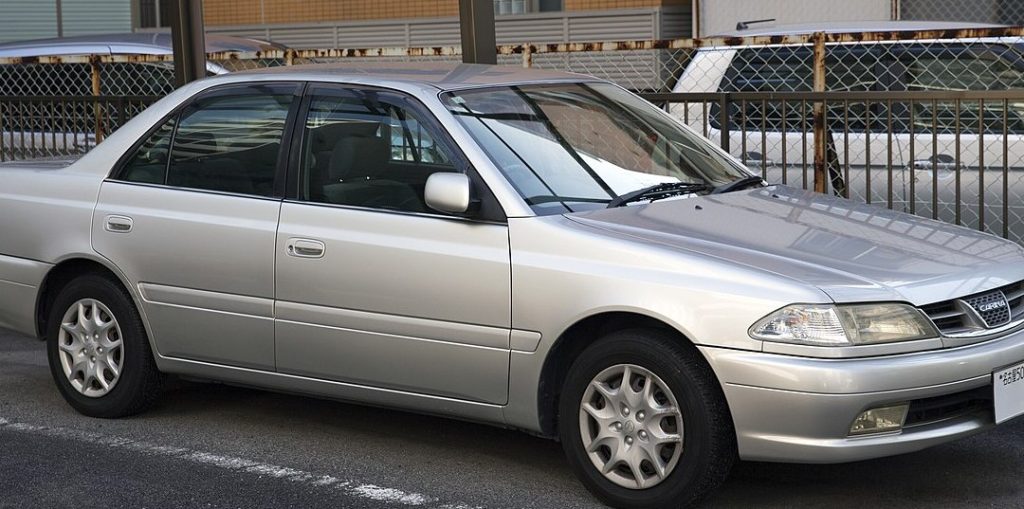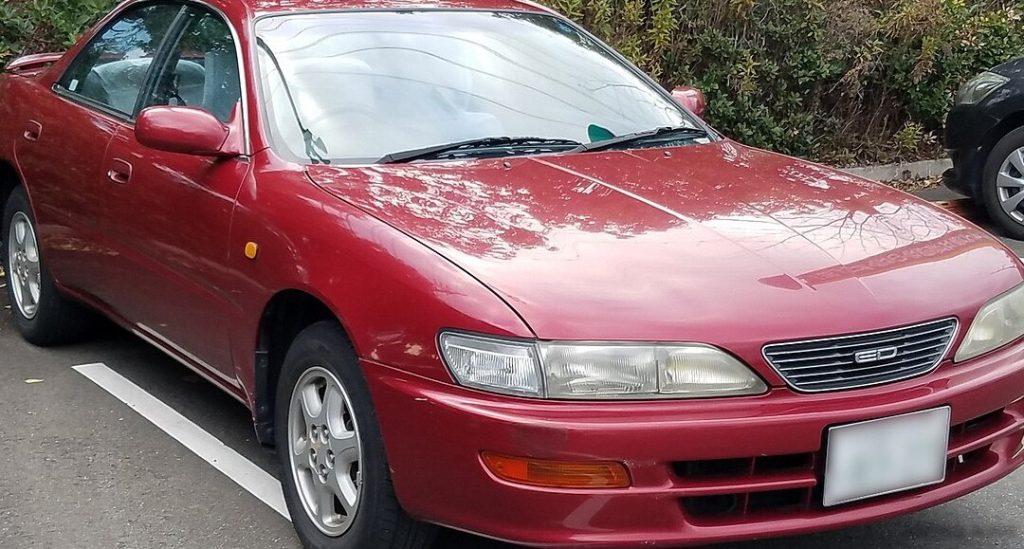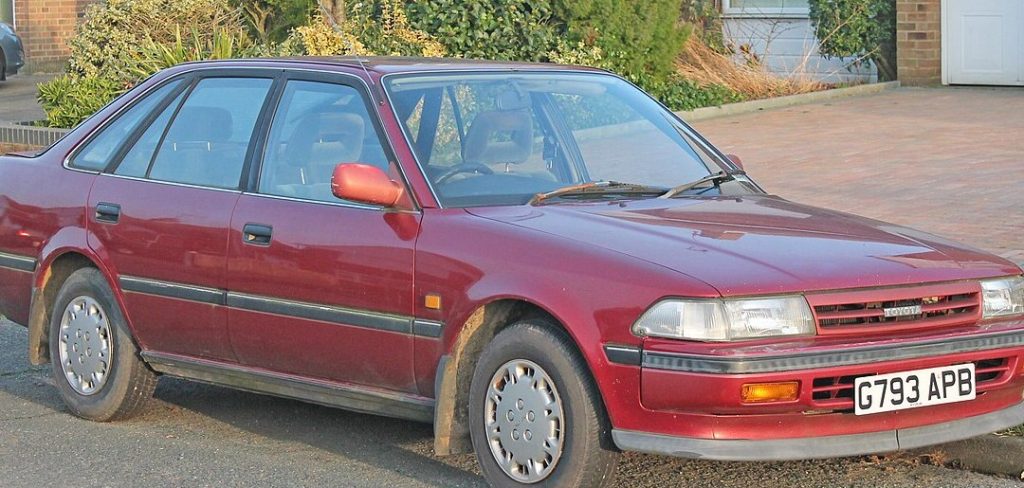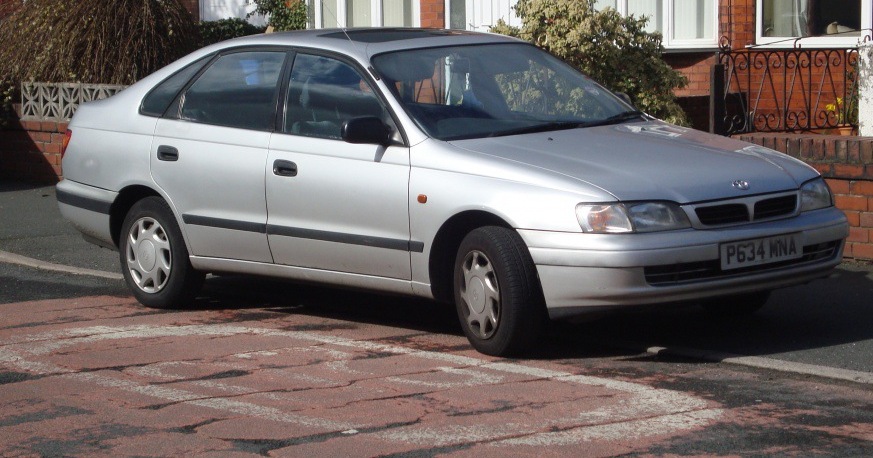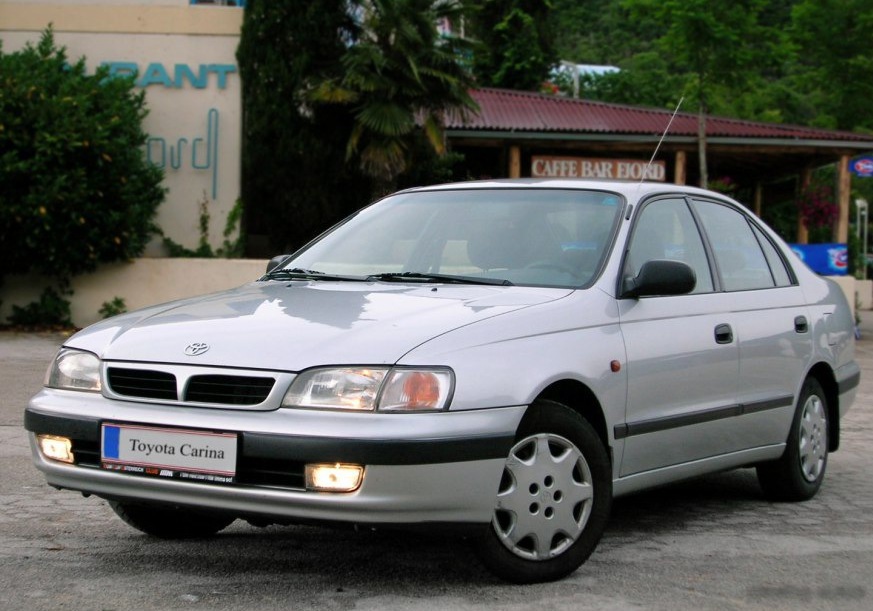
The Toyota Carina E (T19) 1.5i 16V SG Automatic, produced between 1993 and 1998, represented an entry-level offering within the broader Carina E range. Positioned as a practical and fuel-efficient sedan, it catered to buyers seeking comfortable transportation without the higher costs associated with larger-engined or more lavishly equipped models. The Carina E itself was Toyota’s mid-size offering, primarily aimed at the European market, and served as a competitor to vehicles like the Ford Mondeo and Vauxhall/Opel Vectra. This particular 1.5-liter variant, paired with a four-speed automatic transmission, was designed for ease of use and affordability, making it a popular choice for families and commuters.
Technical Specifications
| Brand | Toyota |
| Model | Carina |
| Generation | Carina E (T19) |
| Type (Engine) | 1.5i 16V SG (105 Hp) Automatic |
| Start of production | 1993 |
| End of production | 1998 |
| Powertrain Architecture | Internal Combustion engine |
| Body type | Sedan |
| Seats | 5 |
| Doors | 4 |
| Fuel consumption (combined) | 5 l/100 km (47 US mpg, 56.5 UK mpg, 20 km/l) |
| Fuel Type | Petrol (Gasoline) |
| Weight-to-power ratio | 9.7 kg/Hp, 102.9 Hp/tonne |
| Weight-to-torque ratio | 7.6 kg/Nm, 132.4 Nm/tonne |
| Power | 105 Hp @ 6000 rpm |
| Power per litre | 70.1 Hp/l |
| Torque | 135 Nm @ 3200 rpm (99.57 lb.-ft. @ 3200 rpm) |
| Engine layout | Front, Transverse |
| Engine Model/Code | 5A-FE |
| Engine displacement | 1498 cm3 (91.41 cu. in.) |
| Number of cylinders | 4 |
| Engine configuration | Inline |
| Cylinder Bore | 78.7 mm (3.1 in.) |
| Piston Stroke | 77 mm (3.03 in.) |
| Compression ratio | 9.8:1 |
| Number of valves per cylinder | 4 |
| Fuel injection system | Multi-port manifold injection |
| Engine aspiration | Naturally aspirated engine |
| Valvetrain | DOHC |
| Engine oil capacity | 3 l (3.17 US qt | 2.64 UK qt) |
| Kerb Weight | 1020 kg (2248.72 lbs.) |
| Max. weight | 1295 kg (2854.99 lbs.) |
| Max load | 275 kg (606.27 lbs.) |
| Fuel tank capacity | 55 l (14.53 US gal | 12.1 UK gal) |
| Length | 4455 mm (175.39 in.) |
| Width | 1695 mm (66.73 in.) |
| Height | 1395 mm (54.92 in.) |
| Wheelbase | 2580 mm (101.57 in.) |
| Front track | 1475 mm (58.07 in.) |
| Rear track | 1460 mm (57.48 in.) |
| Drivetrain Architecture | The Internal combustion engine (ICE) drives the front wheels of the vehicle. |
| Drive wheel | Front wheel drive |
| Number of gears and type of gearbox | 4 gears, automatic transmission |
| Front suspension | Spring Strut |
| Rear suspension | Coil spring |
| Front brakes | Ventilated discs |
| Rear brakes | Drum |
| Steering type | Steering rack and pinion |
| Tires size | 165/80 R13 S |
| Wheel rims size | 13 |
Powertrain & Engine Architecture
The heart of the Carina E 1.5i Automatic is the 5A-FE engine, a 1.5-liter inline-four cylinder gasoline engine. This engine is a naturally aspirated unit featuring a double overhead camshaft (DOHC) valvetrain and multi-port fuel injection. The 5A-FE was known for its relatively smooth operation and decent fuel economy, though it wasn’t a powerhouse in terms of outright performance. The engine’s 9.8:1 compression ratio contributed to its efficiency. The four-speed automatic transmission, while providing convenience, was a relatively conventional unit for the time. It wasn’t known for particularly quick shifts or advanced features, but it was generally reliable. The transmission’s gear ratios were tuned for fuel efficiency and comfortable cruising rather than sporty acceleration.
Driving Characteristics
The 105 horsepower and 135 Nm (99.57 lb-ft) of torque delivered by the 1.5-liter engine and automatic transmission resulted in a driving experience best described as adequate. Acceleration was not brisk, and overtaking required careful planning. Compared to the more powerful 1.8-liter or 2.0-liter versions of the Carina E, or even the diesel variants, this model felt noticeably slower. The automatic transmission, while smooth, contributed to this lack of urgency. However, the car was perfectly suitable for everyday commuting and relaxed highway driving. The automatic transmission’s shift points were programmed to prioritize fuel economy, which meant the engine often operated at lower RPMs, contributing to a quieter cabin experience.
Equipment & Trim Levels
The 1.5i 16V SG Automatic typically came with a reasonable level of standard equipment, though it was less comprehensive than the higher-spec models. Standard features generally included power steering, central locking, electric front windows, and a basic audio system. Interior upholstery was typically cloth, and the dashboard featured a functional but somewhat plain design. Optional extras could include air conditioning, alloy wheels, and an upgraded audio system. The trim level often dictated the quality of the cloth upholstery and the presence of additional convenience features.
Chassis & Braking
The Carina E 1.5i Automatic utilized a fairly conventional chassis setup for a front-wheel-drive sedan of its era. It featured a MacPherson strut front suspension and a coil spring rear suspension. The braking system consisted of ventilated discs on the front wheels and drum brakes on the rear. This configuration was typical for cars in this weight class and price range. Stabilizer bars were present on both axles, helping to reduce body roll during cornering. The steering was rack and pinion, providing reasonably precise control.
Market Reception & Comparison
The Carina E 1.5i Automatic was generally well-received as a practical and affordable family car. Critics praised its fuel efficiency and comfortable ride, but noted its lack of outright performance. Compared to the higher-spec Carina E models, the 1.5-liter version offered a more economical entry point into the range, but at the expense of performance and refinement. The 1.8-liter models provided a noticeable boost in power, while the diesel variants offered superior fuel economy. However, the 1.5-liter version remained a popular choice for buyers who prioritized affordability and ease of use.
Legacy
The Toyota Carina E 1.5i 16V SG Automatic, while not a particularly exciting or groundbreaking vehicle, proved to be a reliable and durable car. The 5A-FE engine is known for its longevity, and the automatic transmission, while not sophisticated, is generally robust. Today, these cars are relatively rare, but well-maintained examples can still be found. They are often sought after by enthusiasts looking for a simple, affordable, and reliable classic car. Parts availability can be a challenge, but many components are still available through Toyota dealerships or aftermarket suppliers. The Carina E represents a solid example of Toyota’s commitment to building dependable and practical vehicles.