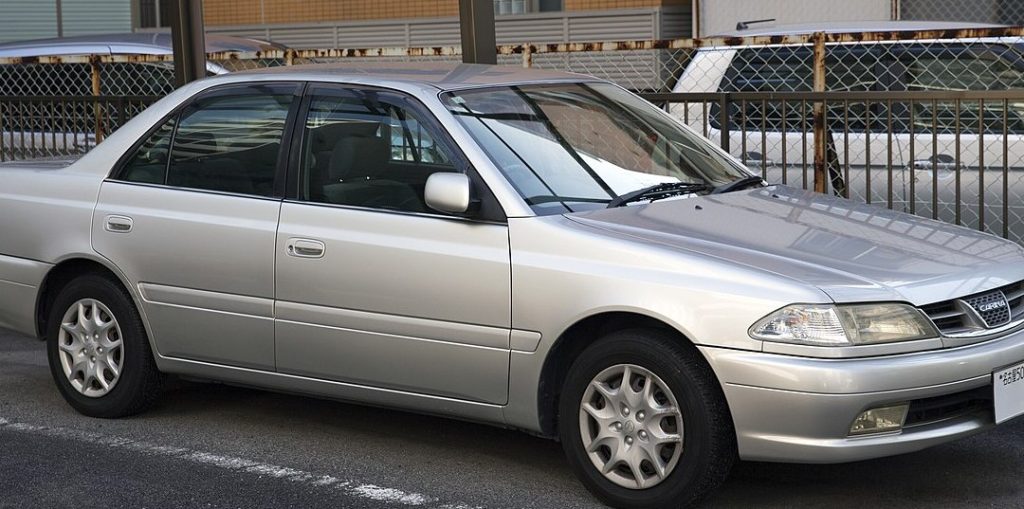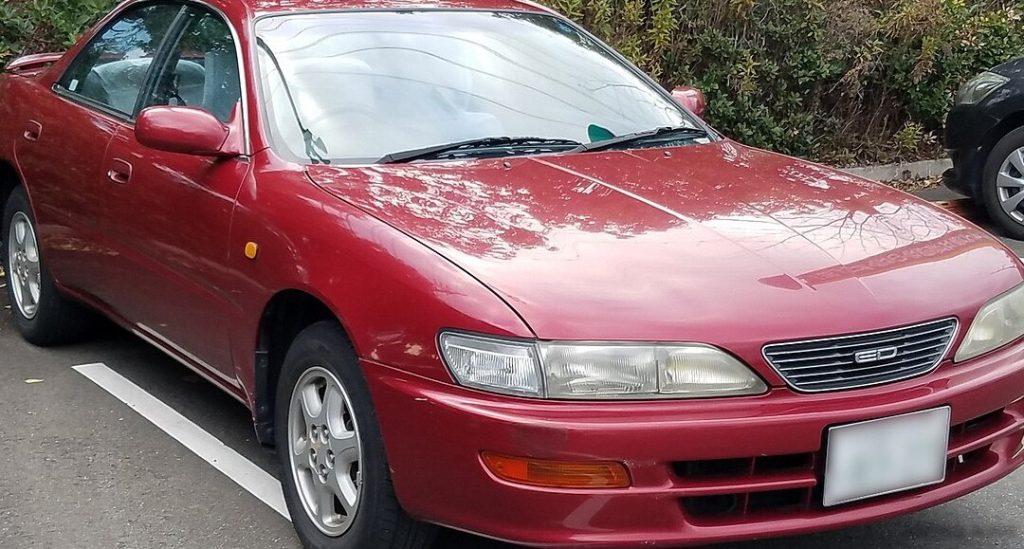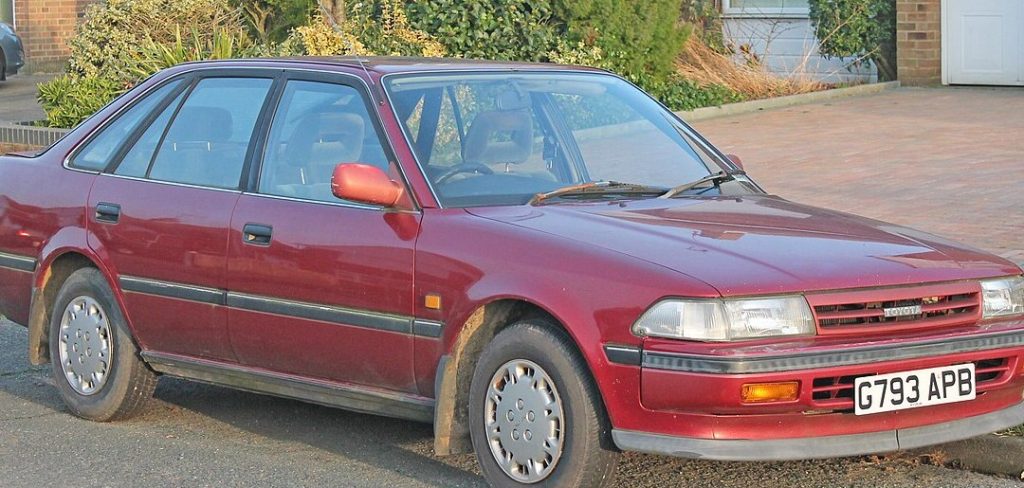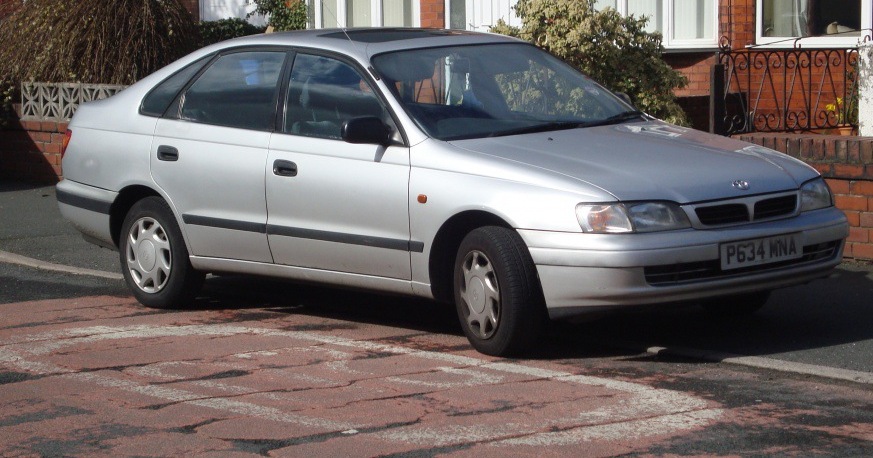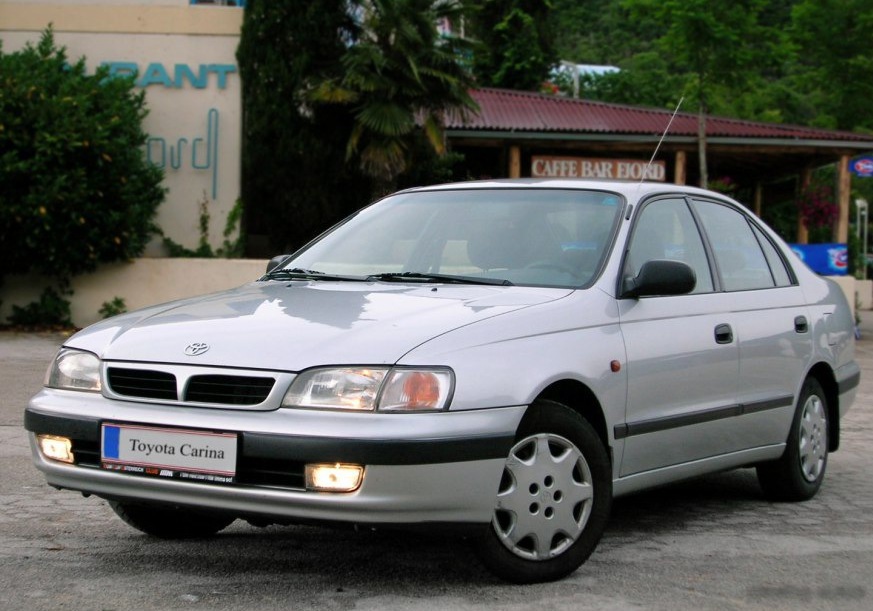
The Toyota Carina E (T19) 1.8i 16V Automatic, produced between 1995 and 1998, represented a mid-range offering within the broader Carina E lineup. Positioned as a comfortable and practical family sedan, it aimed to provide a balance between performance, fuel efficiency, and affordability. The Carina E itself was Toyota’s replacement for the Carina II, and was built upon the T19 platform, sharing components with other Toyota models of the era, including the Corolla and Celica. This variant, with its 1.8-liter engine and four-speed automatic transmission, was particularly popular in European markets where automatic transmissions were gaining acceptance, offering a convenient alternative to the standard manual gearbox.
Technical Specifications
| Brand | Toyota |
| Model | Carina |
| Generation | Carina E (T19) |
| Type (Engine) | 1.8i 16V (107 Hp) Automatic |
| Start of production | 1995 |
| End of production | 1998 |
| Powertrain Architecture | Internal Combustion engine |
| Body type | Sedan |
| Seats | 5 |
| Doors | 4 |
| Fuel consumption (combined) | 6.8 l/100 km (34.6 US mpg, 41.5 UK mpg, 14.7 km/l) |
| Fuel Type | Petrol (Gasoline) |
| Acceleration 0 – 100 km/h | 11.8 sec |
| Acceleration 0 – 62 mph | 11.8 sec |
| Acceleration 0 – 60 mph | 11.2 sec |
| Maximum speed | 190 km/h (118.06 mph) |
| Weight-to-power ratio | 11.3 kg/Hp, 88.2 Hp/tonne |
| Weight-to-torque ratio | 8.1 kg/Nm, 123.7 Nm/tonne |
| Power | 107 Hp @ 5600 rpm |
| Power per litre | 60.7 Hp/l |
| Torque | 150 Nm @ 2600 rpm (110.63 lb.-ft. @ 2600 rpm) |
| Engine layout | Front, Transverse |
| Engine Model/Code | 7A-FE |
| Engine displacement | 1762 cm3 (107.52 cu. in.) |
| Number of cylinders | 4 |
| Engine configuration | Inline |
| Cylinder Bore | 81 mm (3.19 in.) |
| Piston Stroke | 85.5 mm (3.37 in.) |
| Compression ratio | 9.8:1 |
| Number of valves per cylinder | 4 |
| Fuel injection system | Multi-port manifold injection |
| Engine aspiration | Naturally aspirated engine |
| Valvetrain | DOHC |
| Engine oil capacity | 3.7 l (3.91 US qt | 3.26 UK qt) |
| Coolant | 5.6 l (5.92 US qt | 4.93 UK qt) |
| Kerb Weight | 1213 kg (2674.21 lbs.) |
| Max. weight | 1720 kg (3791.95 lbs.) |
| Max load | 507 kg (1117.74 lbs.) |
| Trunk (boot) space – minimum | 545 l (19.25 cu. ft.) |
| Fuel tank capacity | 60 l (15.85 US gal | 13.2 UK gal) |
| Length | 4530 mm (178.35 in.) |
| Width | 1695 mm (66.73 in.) |
| Height | 1410 mm (55.51 in.) |
| Wheelbase | 2580 mm (101.57 in.) |
| Front track | 1465 mm (57.68 in.) |
| Rear (Back) track | 1445 mm (56.89 in.) |
| Drivetrain Architecture | The Internal combustion engine (ICE) drives the front wheels of the vehicle. |
| Drive wheel | Front wheel drive |
| Number of gears and type of gearbox | 4 gears, automatic transmission |
| Front suspension | Spring Strut |
| Rear suspension | Coil spring |
| Front brakes | Ventilated discs |
| Rear brakes | Drum |
| Assisting systems | ABS (Anti-lock braking system) |
| Steering type | Steering rack and pinion |
| Power steering | Hydraulic Steering |
| Tires size | 185/65 R14 H |
| Wheel rims size | 14 |
Powertrain & Engine Architecture
The heart of the Carina E 1.8i Automatic is the 7A-FE engine, a 1.8-liter (1762 cc) inline-four cylinder gasoline engine. This engine is a naturally aspirated unit featuring a double overhead camshaft (DOHC) valvetrain with four valves per cylinder. It utilizes a multi-port fuel injection system for precise fuel delivery, contributing to improved efficiency and reduced emissions. The 7A-FE engine is known for its relative simplicity and durability, making it a reliable powerplant. The engine produces 107 horsepower at 5600 rpm and 150 Nm (110.63 lb-ft) of torque at 2600 rpm. Paired with this engine is a four-speed automatic transmission. This transmission, while not offering the sportiness of a manual, provided smooth and convenient gear changes, appealing to drivers prioritizing comfort. The automatic transmission’s gear ratios were tuned for fuel economy and relaxed cruising, rather than outright acceleration.
Driving Characteristics
The 1.8i Automatic variant of the Carina E offered a comfortable and predictable driving experience. Acceleration from 0 to 60 mph took approximately 11.2 seconds, and top speed was around 118 mph. While not particularly quick, the engine provided adequate power for everyday driving situations, including highway merging and overtaking. The automatic transmission, while smooth, did result in some power loss compared to the manual transmission versions. The gear ratios were spaced to prioritize fuel efficiency, meaning the engine often felt slightly strained during hard acceleration. The Carina E’s suspension provided a comfortable ride, absorbing bumps and imperfections in the road well. Steering was light and precise, making it easy to maneuver in urban environments.
Equipment & Trim Levels
The 1.8i Automatic trim typically included features such as power steering, central locking, electric windows, and an AM/FM radio. Higher trim levels, often denoted by additional badging, could add features like alloy wheels, air conditioning, and a sunroof. Interior upholstery was typically cloth, with options for upgraded materials on higher-spec models. The dashboard layout was functional and straightforward, with easy-to-read gauges and controls. Safety features included ABS (Anti-lock Braking System) as standard equipment, a significant advancement for its time.
Chassis & Braking
The Carina E featured a front-engine, front-wheel-drive layout. The front suspension utilized a MacPherson strut design, while the rear suspension employed a coil spring setup. This configuration provided a good balance between ride comfort and handling. Braking duties were handled by ventilated discs at the front and drum brakes at the rear. While the front discs provided adequate stopping power, the rear drums were a cost-saving measure and offered less consistent performance, particularly under heavy braking. The Carina E’s chassis was relatively lightweight, contributing to its fuel efficiency and handling characteristics.
Market Reception & Comparison
The Carina E 1.8i Automatic was generally well-received by automotive critics as a practical and reliable family sedan. It was praised for its comfortable ride, spacious interior, and fuel efficiency. However, some critics noted that its performance was not particularly exciting compared to rivals like the Ford Mondeo or Opel Vectra. Compared to the higher-performance Carina E variants, such as those equipped with the 2.0-liter engine, the 1.8i Automatic offered a more economical and accessible option. The 1.8i Automatic also contrasted with the diesel-powered Carina E models, which prioritized fuel economy over performance. The automatic transmission, while convenient, did slightly impact fuel economy compared to the manual versions.
Legacy
The Toyota Carina E 1.8i Automatic has proven to be a durable and reliable vehicle, with many examples still on the road today. The 7A-FE engine is known for its longevity, and the automatic transmission, while not the most advanced, has generally held up well over time. In the used car market, these models are often sought after by buyers looking for an affordable and dependable family car. While not a particularly collectible model, the Carina E 1.8i Automatic represents a solid and well-engineered vehicle from Toyota’s lineup of the 1990s, offering a blend of practicality, comfort, and reliability that continues to appeal to drivers today.