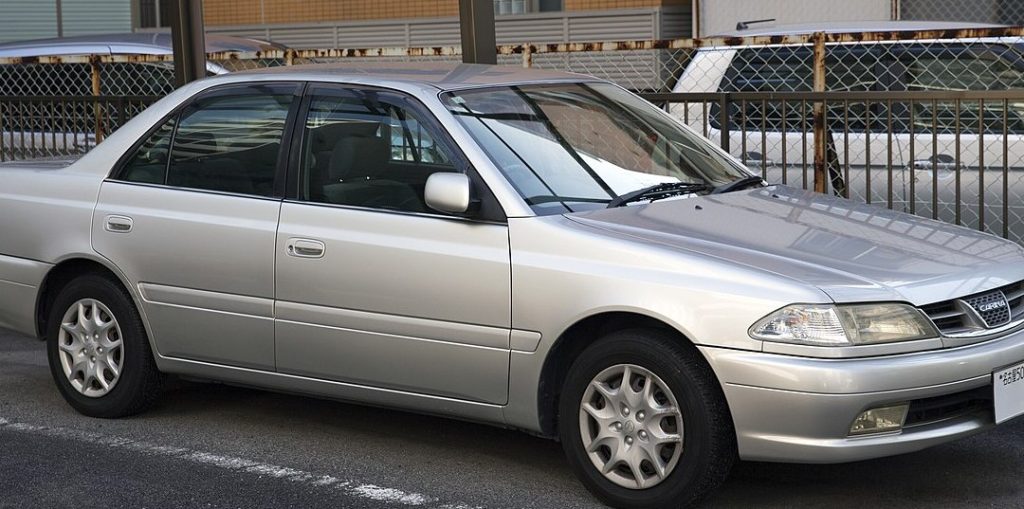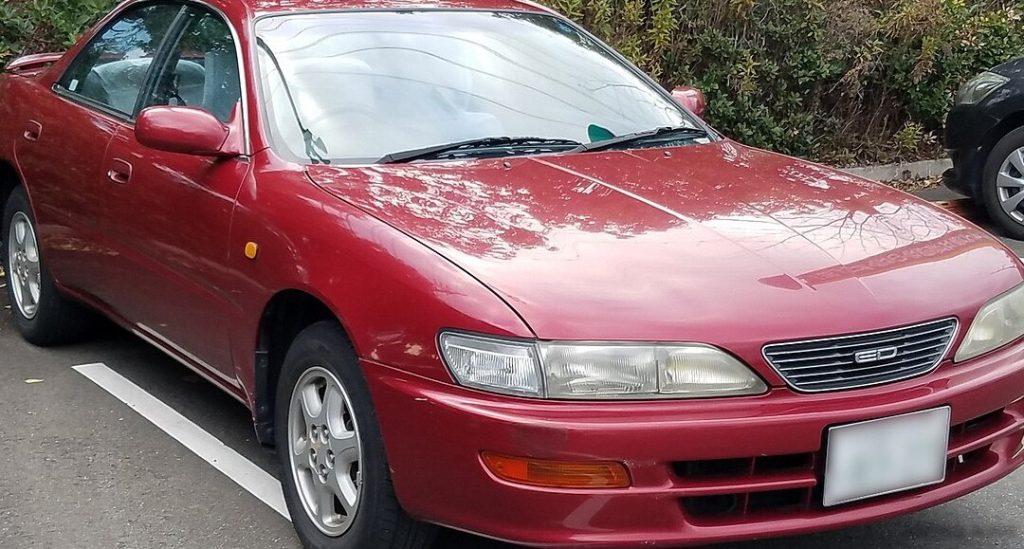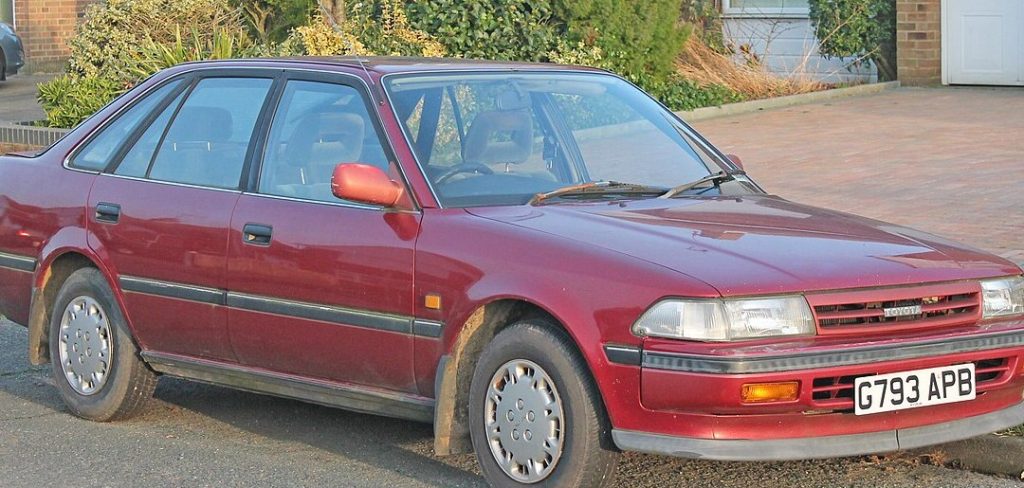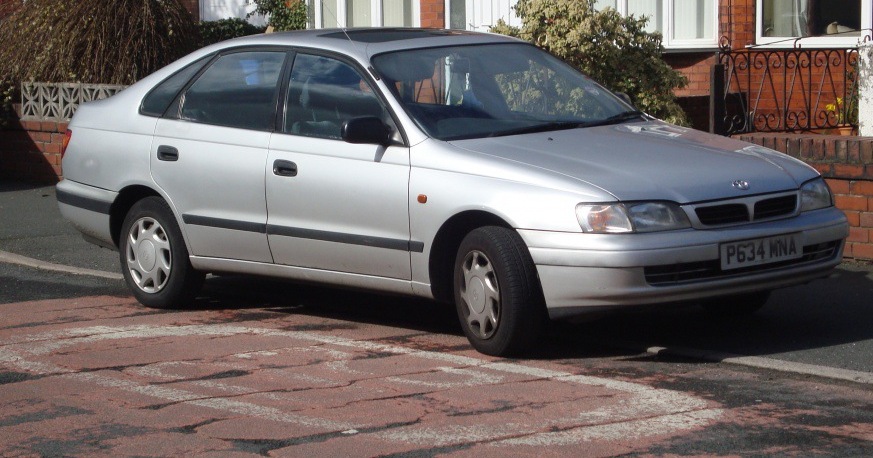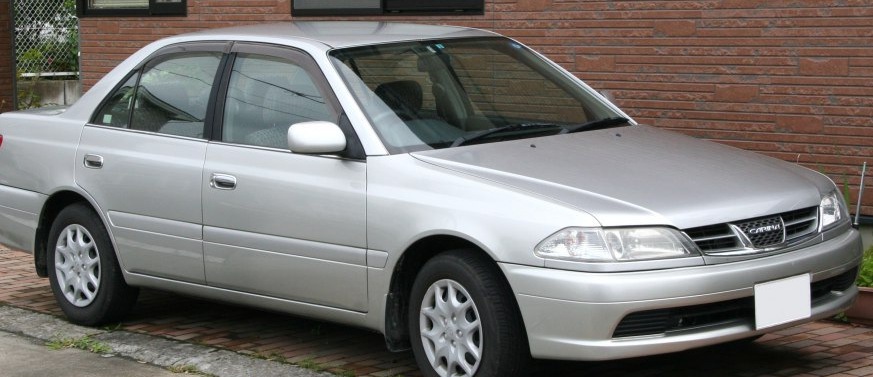
The Toyota Carina (T21) 1.8i, produced between 1996 and 2001, represented a significant iteration of Toyota’s mid-size sedan. Positioned as a more upscale offering compared to the Corolla, the T21 Carina aimed to provide a comfortable and reliable driving experience with a focus on practicality and a touch of refinement. This generation of Carina, built on the T21 platform, was primarily marketed in Japan and Europe, offering a blend of traditional Toyota engineering with contemporary styling. The 1.8i variant, with its 7A-FE engine, served as a popular choice for buyers seeking a balance between fuel efficiency and adequate performance. It occupied a middle ground in the Carina lineup, offering more power than the base 1.6L models but remaining more accessible than the higher-spec 2.0L or 2.2L options.
Technical Specifications
| Brand | Toyota |
| Model | Carina |
| Generation | Carina (T21) |
| Type (Engine) | 1.8i (115 Hp) |
| Start of production | 1996 |
| End of production | 2001 |
| Powertrain Architecture | Internal Combustion engine |
| Body type | Sedan |
| Seats | 5 |
| Doors | 4 |
| Fuel Type | Petrol (Gasoline) |
| Weight-to-power ratio | 9.8 kg/Hp, 101.8 Hp/tonne |
| Weight-to-torque ratio | 7.3 kg/Nm, 137.2 Nm/tonne |
| Power | 115 Hp @ 5400 rpm |
| Power per litre | 65.3 Hp/l |
| Torque | 155 Nm @ 2800 rpm (114.32 lb.-ft. @ 2800 rpm) |
| Engine layout | Front, Transverse |
| Engine Model/Code | 7A-FE |
| Engine displacement | 1762 cm3 (107.52 cu. in.) |
| Number of cylinders | 4 |
| Engine configuration | Inline |
| Cylinder Bore | 81 mm (3.19 in.) |
| Piston Stroke | 85.5 mm (3.37 in.) |
| Compression ratio | 9.5:1 |
| Number of valves per cylinder | 4 |
| Fuel injection system | Multi-port manifold injection |
| Engine aspiration | Naturally aspirated engine |
| Valvetrain | DOHC |
| Engine oil capacity | 3.7 l (3.91 US qt | 3.26 UK qt) |
| Coolant | 5.6 l (5.92 US qt | 4.93 UK qt) |
| Kerb Weight | 1130 kg (2491.22 lbs.) |
| Fuel tank capacity | 60 l (15.85 US gal | 13.2 UK gal) |
| Length | 4495 mm (176.97 in.) |
| Width | 1695 mm (66.73 in.) |
| Height | 1410 mm (55.51 in.) |
| Wheelbase | 2580 mm (101.57 in.) |
| Front track | 1465 mm (57.68 in.) |
| Rear (Back) track | 1450 mm (57.09 in.) |
| Minimum turning circle (turning diameter) | 10.2 m (33.46 ft.) |
| Drivetrain Architecture | The Internal combustion engine (ICE) drives the front wheels of the vehicle. |
| Drive wheel | Front wheel drive |
| Number of gears and type of gearbox | 5 gears, manual transmission |
| Front brakes | Ventilated discs |
| Rear brakes | Drum |
Powertrain & Engine Architecture
The heart of the Carina 1.8i is the 7A-FE engine, a 1.8-liter (1762 cc) inline-four cylinder powerplant. This engine is a naturally aspirated unit featuring a double overhead camshaft (DOHC) valvetrain with four valves per cylinder. The 7A-FE utilizes a multi-port fuel injection system, delivering fuel directly to each intake port for improved combustion efficiency. The engine’s 9.5:1 compression ratio contributed to its respectable power output for its displacement. The 7A-FE is known for its durability and relatively simple design, making it a reliable engine overall. The five-speed manual transmission was the standard offering, providing drivers with direct control over the engine’s power. The transmission’s gear ratios were tuned for a balance of acceleration and fuel economy, with a relatively tall fifth gear for comfortable highway cruising.
Driving Characteristics
The 1.8i variant of the Carina T21 offered a comfortable and predictable driving experience. While not a performance-oriented model, the 115 horsepower engine provided sufficient power for everyday driving situations. Acceleration was adequate, though not particularly brisk, with 0-60 mph times estimated around 10-11 seconds. The manual transmission allowed for precise gear selection, and the engine responded reasonably well to throttle inputs. Compared to the larger 2.0L or 2.2L Carina models, the 1.8i felt lighter and more nimble, particularly in city driving. The suspension, tuned for comfort, absorbed bumps and imperfections in the road effectively, providing a smooth ride. However, this comfort came at the expense of some handling precision, with noticeable body roll during cornering.
Equipment & Trim Levels
The Carina 1.8i typically came equipped with a reasonable level of standard features. Interior appointments included cloth upholstery, power windows, power door locks, and a basic audio system. Air conditioning was generally standard, though some base models may have offered it as an option. Higher trim levels, often denoted by suffixes like “XL” or “GXi”, added features such as alloy wheels, upgraded audio systems, and more luxurious interior trim. Optional extras included a sunroof, central locking, and upgraded sound systems. The dashboard layout was functional and straightforward, with clearly labeled controls and a relatively uncluttered design.
Chassis & Braking
The Carina T21 utilized a front-wheel-drive layout with an independent MacPherson strut suspension in the front and a torsion beam suspension in the rear. The front suspension provided good ride quality and handling, while the rear torsion beam offered a cost-effective and space-efficient solution. Braking duties were handled by ventilated disc brakes in the front and drum brakes in the rear. This configuration was typical for vehicles in this class during the late 1990s and early 2000s. Anti-lock brakes (ABS) were often available as an option, enhancing braking performance and safety.
Market Reception & Comparison
The Toyota Carina 1.8i was generally well-received by automotive critics as a practical and reliable family sedan. It was praised for its comfortable ride, spacious interior, and Toyota’s reputation for build quality. However, it was often criticized for its somewhat bland styling and lack of sporting pretensions. Compared to other models in its class, such as the Ford Mondeo or Volkswagen Passat, the Carina offered a more conservative driving experience but arguably greater long-term reliability. Fuel economy was competitive, averaging around 30-35 mpg in mixed driving conditions. The 1.8i variant offered a good balance between performance and fuel efficiency, making it a popular choice for buyers prioritizing practicality and value.
Legacy
The Toyota Carina T21, particularly the 1.8i variant, has proven to be a durable and reliable vehicle in the used car market. The 7A-FE engine is known for its longevity, and with proper maintenance, can easily exceed 200,000 miles. Parts availability remains relatively good, although some trim-specific components may be more difficult to source. Today, the Carina T21 is often sought after by buyers looking for an affordable and dependable used car. While it may not offer the excitement of more modern vehicles, its simplicity, reliability, and comfortable ride continue to appeal to a dedicated following. The Carina was eventually replaced by the Avensis, continuing Toyota’s presence in the mid-size sedan segment.