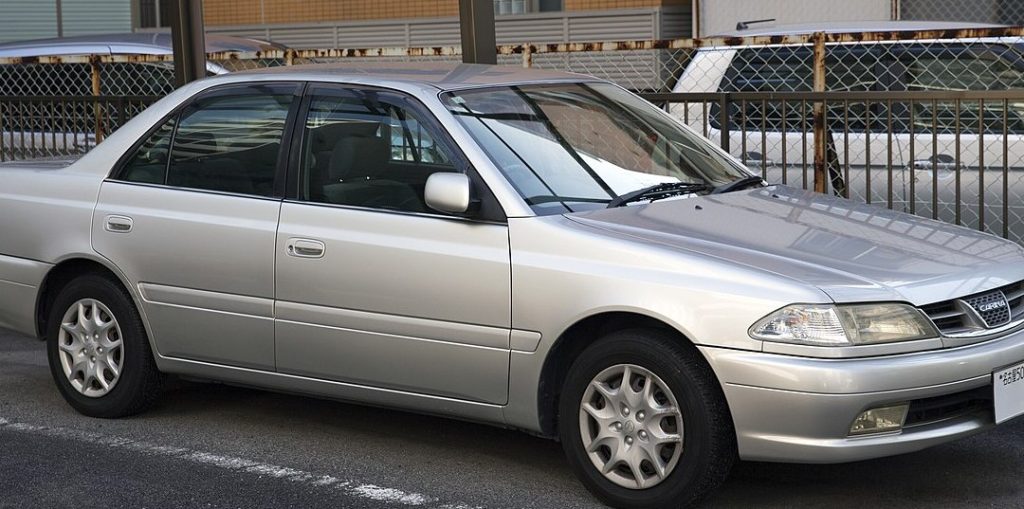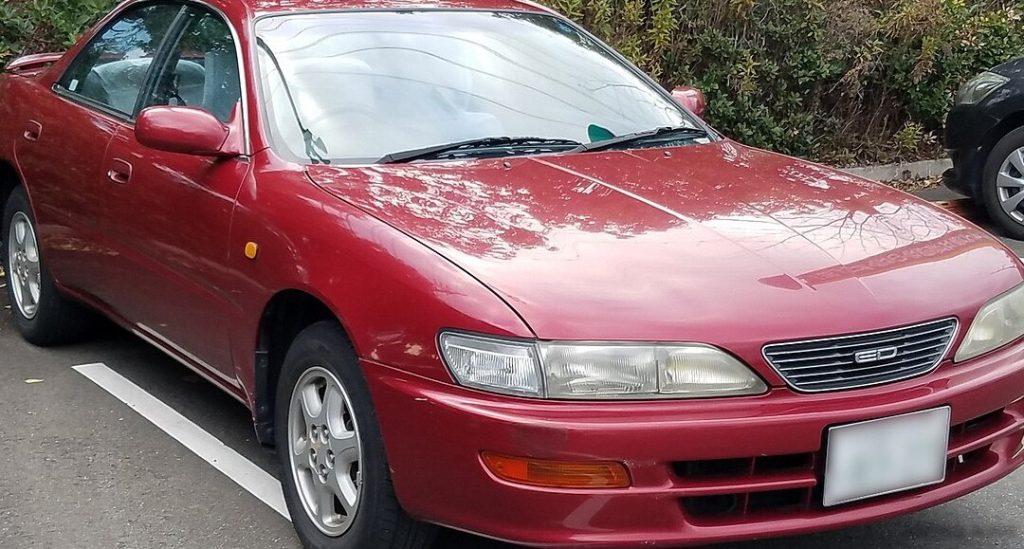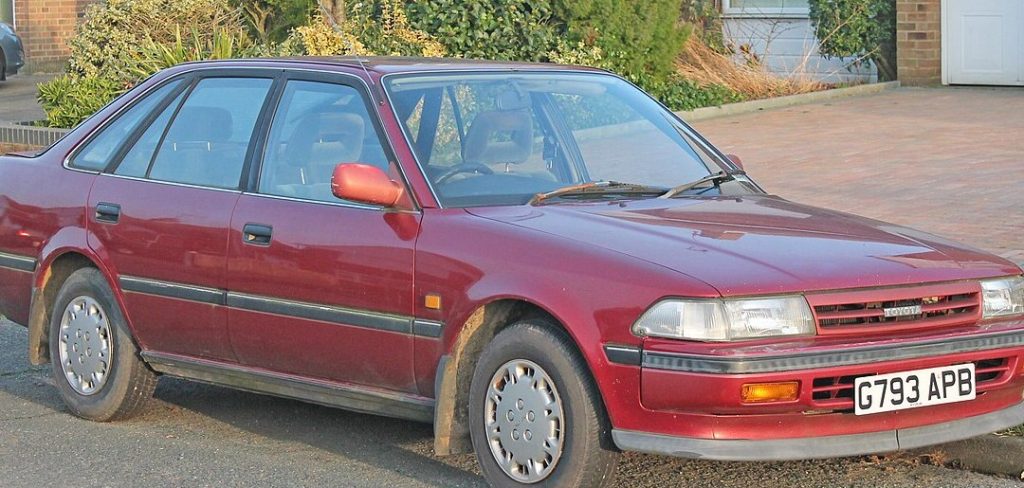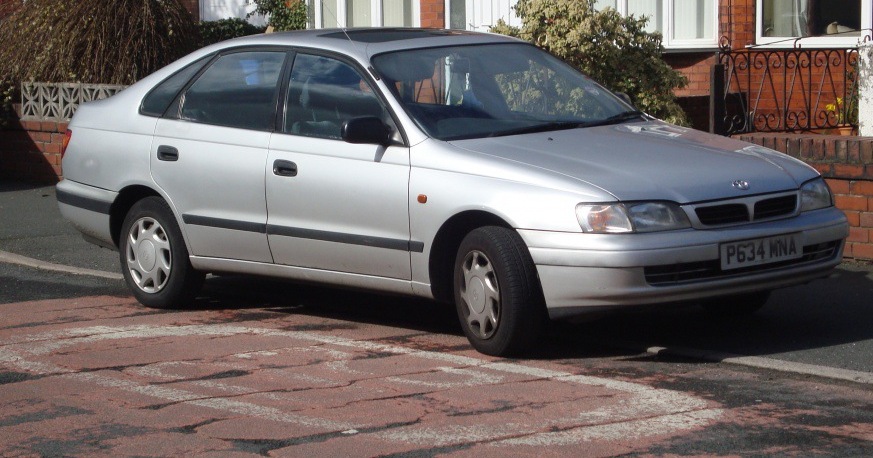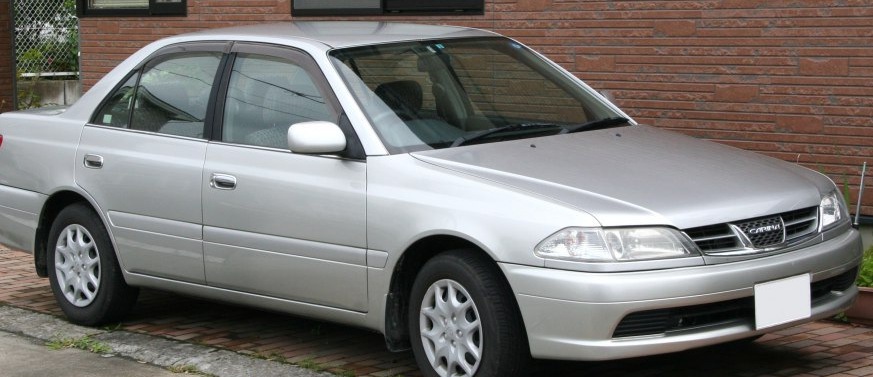
The Toyota Carina (T21) 2.0i Automatic, produced between 1996 and 2001, represented a mid-range offering within the fourth generation of the Carina line. Positioned as a comfortable and reliable family sedan, the T21 Carina aimed to provide a balance between performance, fuel efficiency, and affordability. This generation of Carina was primarily marketed in Japan, Australia, and parts of Europe, serving as a competitor to models like the Ford Mondeo and Opel Vectra. The 2.0i Automatic variant, equipped with the 3S-FE engine and a four-speed automatic transmission, was a popular choice for buyers prioritizing ease of driving over outright sportiness.
Technical Specifications
| Brand | Toyota |
| Model | Carina |
| Generation | Carina (T21) |
| Type | 2.0i (135 Hp) Automatic |
| Start of production | 1996 |
| End of production | 2001 |
| Powertrain Architecture | Internal Combustion engine |
| Body type | Sedan |
| Seats | 5 |
| Doors | 4 |
| Fuel Type | Petrol (Gasoline) |
| Weight-to-power ratio | 8.4 kg/Hp, 119.5 Hp/tonne |
| Weight-to-torque ratio | 6.2 kg/Nm, 160.2 Nm/tonne |
| Power | 135 Hp @ 6000 rpm |
| Power per litre | 67.6 Hp/l |
| Torque | 181 Nm @ 4000 rpm (133.5 lb.-ft. @ 4000 rpm) |
| Engine layout | Front, Transverse |
| Engine Model/Code | 3S-FE |
| Engine displacement | 1998 cm3 (121.93 cu. in.) |
| Number of cylinders | 4 |
| Engine configuration | Inline |
| Cylinder Bore | 86 mm (3.39 in.) |
| Piston Stroke | 86 mm (3.39 in.) |
| Compression ratio | 10:1 |
| Number of valves per cylinder | 4 |
| Fuel injection system | Multi-port manifold injection |
| Engine aspiration | Naturally aspirated engine |
| Valvetrain | DOHC |
| Engine oil capacity | 3.9 l (4.12 US qt | 3.43 UK qt) |
| Coolant | 6.8 l (7.19 US qt | 5.98 UK qt) |
| Kerb Weight | 1130 kg (2491.22 lbs.) |
| Fuel tank capacity | 60 l (15.85 US gal | 13.2 UK gal) |
| Length | 4495 mm (176.97 in.) |
| Width | 1695 mm (66.73 in.) |
| Height | 1410 mm (55.51 in.) |
| Wheelbase | 2580 mm (101.57 in.) |
| Front track | 1465 mm (57.68 in.) |
| Rear track | 1450 mm (57.09 in.) |
| Minimum turning circle | 10.2 m (33.46 ft.) |
| Drivetrain | Front wheel drive |
| Number of gears | 4 |
| Gearbox type | automatic transmission |
| Front brakes | Ventilated discs |
| Rear brakes | Drum |
Powertrain & Engine Architecture
The heart of the Carina 2.0i Automatic was the 3S-FE engine, a 1.998-liter (2.0L) inline-four cylinder powerplant. This engine was a mainstay in Toyota’s lineup during the 1990s and early 2000s, known for its reliability and relatively smooth operation. The 3S-FE featured a double overhead camshaft (DOHC) valvetrain with four valves per cylinder, contributing to its respectable power output for its displacement. Fuel delivery was handled by a multi-port fuel injection system, optimizing combustion efficiency. The engine produced 135 horsepower at 6000 rpm and 181 Nm (133.5 lb-ft) of torque at 4000 rpm. Paired with this engine was a four-speed automatic transmission, designed for comfortable and effortless cruising. This transmission wasn’t known for its sportiness, prioritizing smooth shifts over rapid acceleration.
Driving Characteristics
The 2.0i Automatic variant of the Carina T21 offered a comfortable, if not particularly exhilarating, driving experience. The four-speed automatic transmission, while smooth, resulted in somewhat leisurely acceleration. The gear ratios were tuned for fuel economy and ease of use, rather than maximizing performance. Compared to the five-speed manual transmission available on other Carina models, the automatic version felt noticeably slower, especially during overtaking maneuvers. However, the automatic provided a more relaxed driving experience, particularly in urban traffic. The suspension was tuned for comfort, absorbing bumps and imperfections in the road well, but it didn’t offer the same level of handling precision as some of its European competitors.
Equipment & Trim Levels
The Carina 2.0i Automatic typically came equipped with a reasonable level of standard features. These included power windows, power steering, central locking, and an air conditioning system. Interior upholstery was usually cloth, with options for upgraded materials available. Dashboard design was functional and straightforward, prioritizing usability over aesthetic flair. Optional extras could include an upgraded audio system, alloy wheels, and a sunroof. The 2.0i Automatic trim level generally sat in the middle of the Carina range, offering a good balance of features and price. It was a step up from the base models, but lacked some of the luxury appointments found in the higher-spec variants.
Chassis & Braking
The Carina T21 utilized a front-wheel-drive layout with an independent MacPherson strut suspension in the front and a torsion beam suspension in the rear. The front brakes were ventilated discs, providing adequate stopping power, while the rear brakes were drums. This configuration was typical for a family sedan of this class and price point. Stabilizer bars were fitted to both the front and rear axles to reduce body roll during cornering. The chassis was designed to prioritize comfort and ride quality, rather than outright handling performance.
Market Reception & Comparison
The Toyota Carina 2.0i Automatic was generally well-received by critics as a reliable and practical family sedan. However, it wasn’t often praised for its dynamic performance. Compared to the more powerful Carina variants, such as those equipped with the 2.2-liter engine, the 2.0i Automatic felt somewhat underpowered. Fuel economy was a strong point, with the 3S-FE engine delivering respectable mileage for its class. Reliability was also a key strength, with the Carina consistently ranking well in owner satisfaction surveys. Against competitors like the Ford Mondeo and Opel Vectra, the Carina offered a compelling combination of reliability, comfort, and affordability.
Legacy
The Toyota Carina T21, particularly the 2.0i Automatic variant, has proven to be a durable and long-lasting vehicle. The 3S-FE engine is known for its robustness and ability to withstand high mileage with proper maintenance. Today, well-maintained examples of the Carina T21 can still be found on the used car market, often prized for their reliability and affordability. While not a particularly sought-after classic, the Carina T21 represents a solid and dependable family sedan from a period when Toyota was establishing its reputation for quality and reliability. The automatic transmission, while not the most exciting, has also proven to be relatively trouble-free, contributing to the overall longevity of the vehicle.