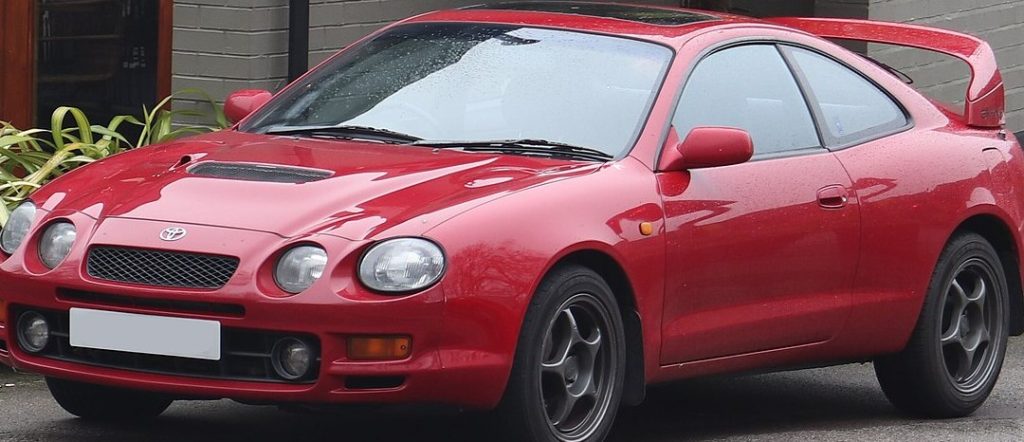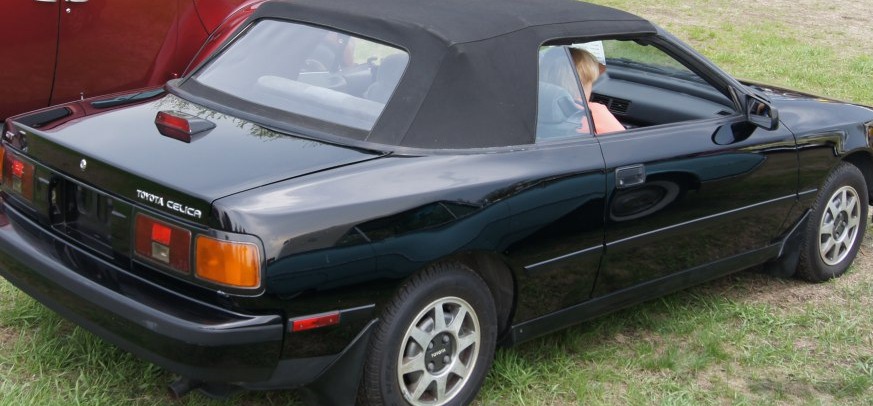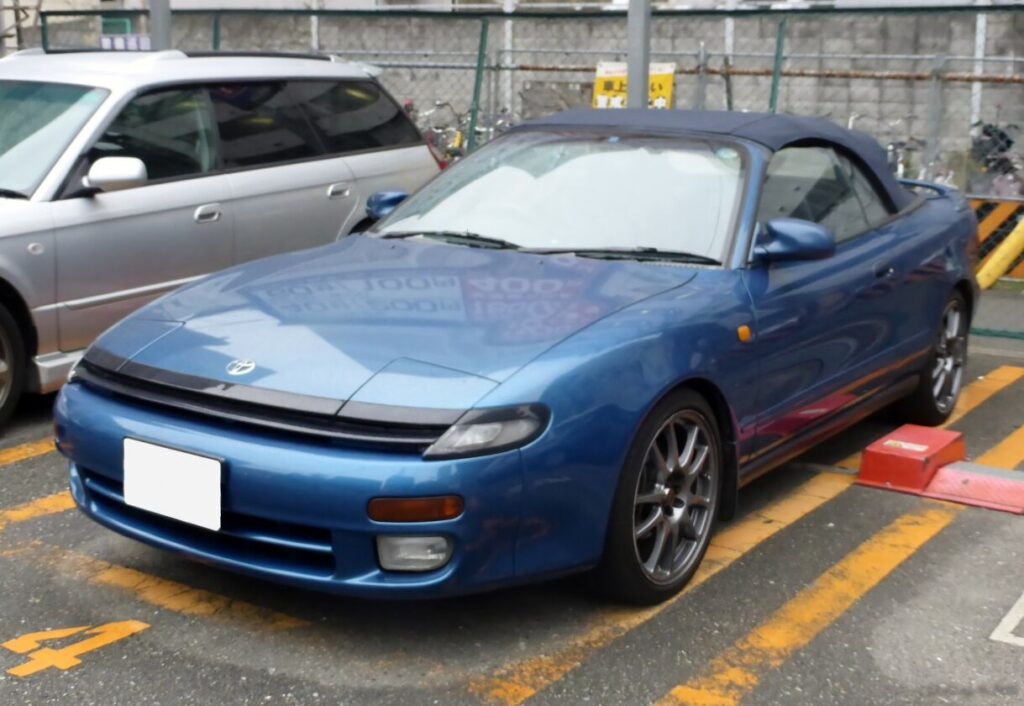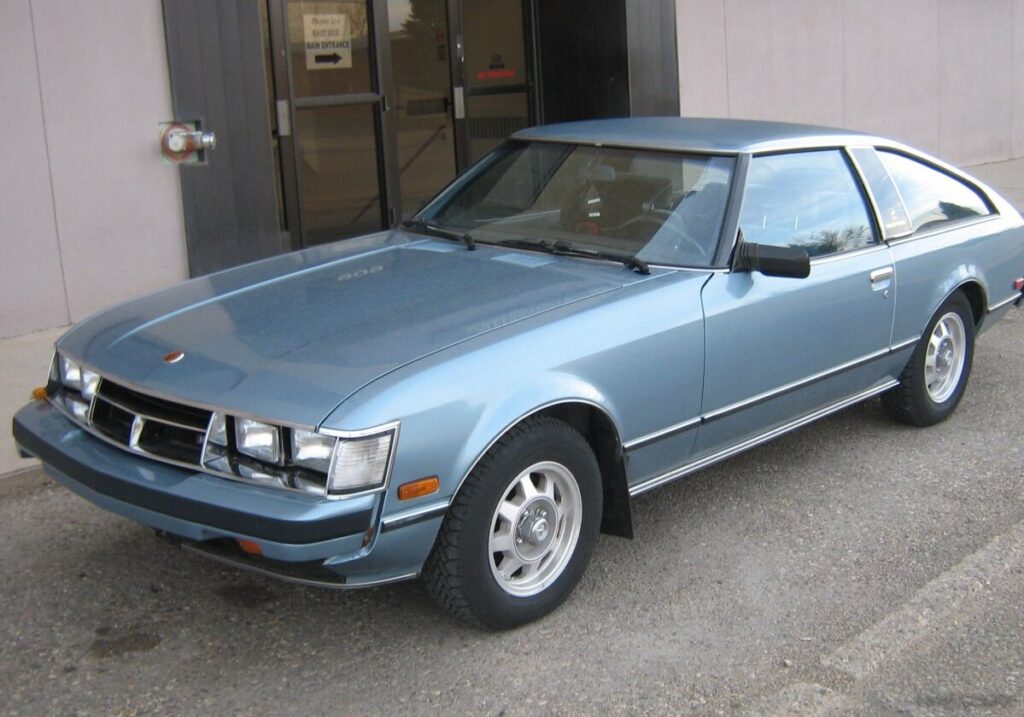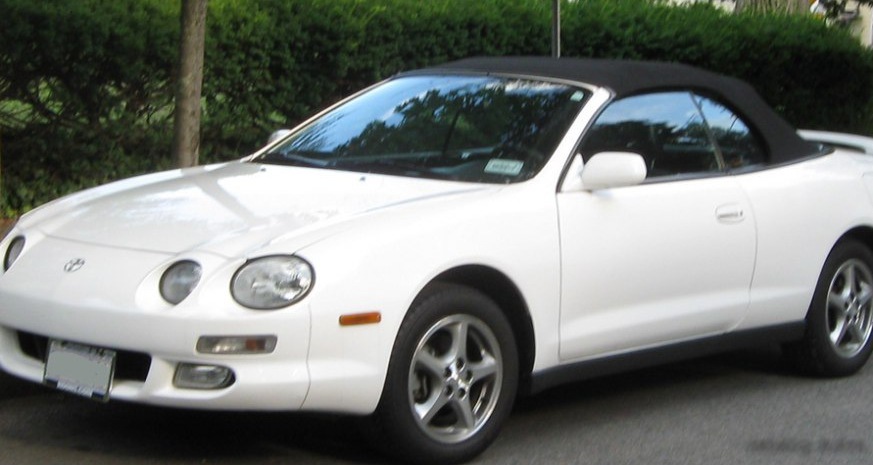
The Toyota Celica Cabrio (T20), specifically the 2.2i GT variant with the automatic transmission, represented a significant offering in Toyota’s lineup during its 1994-1999 production run. This generation Celica, internally designated T20, aimed to blend sporty styling with open-air enjoyment. The 2.2i GT Automatic trim sat in the middle of the Cabrio range, offering a balance between performance and convenience, appealing to buyers who desired a comfortable and stylish convertible without the engagement of a manual gearbox. It was positioned above the base model and below any potential limited-edition or higher-performance variants. The T20 Celica Cabrio was primarily marketed in North America, Europe, and Japan, offering a more affordable alternative to European convertibles.
Technical Specifications
| Brand | Toyota |
| Model | Celica |
| Generation | Celica Cabrio (T20) |
| Type | 2.2i GT (136 Hp) Automatic |
| Start of production | 1994 |
| End of production | 1999 |
| Powertrain Architecture | Internal Combustion engine |
| Body type | Cabriolet |
| Seats | 2 |
| Doors | 2 |
| Fuel consumption (combined) | 9.5 l/100 km |
| Fuel consumption (US mpg) | 24.8 US mpg |
| Fuel consumption (UK mpg) | 29.7 UK mpg |
| Fuel consumption (km/l) | 10.5 km/l |
| Fuel Type | Petrol (Gasoline) |
| Weight-to-power ratio | 8.6 kg/Hp |
| Power | 136 Hp @ 5400 rpm |
| Power per litre | 62.8 Hp/l |
| Torque | 196 Nm @ 4000 rpm |
| Torque (lb.-ft.) | 144.56 lb.-ft. @ 4000 rpm |
| Engine layout | Front, Transverse |
| Engine Model/Code | 5S-FE |
| Engine displacement | 2166 cm3 |
| Engine displacement (cu. in.) | 132.18 cu. in. |
| Number of cylinders | 4 |
| Engine configuration | Inline |
| Cylinder Bore | 87.1 mm |
| Cylinder Bore (in.) | 3.43 in. |
| Piston Stroke | 90.9 mm |
| Piston Stroke (in.) | 3.58 in. |
| Compression ratio | 9.7:1 |
| Number of valves per cylinder | 4 |
| Fuel injection system | Multi-port manifold injection |
| Engine aspiration | Naturally aspirated engine |
| Valvetrain | DOHC |
| Engine oil capacity | 3.9 l |
| Engine oil capacity (US qt) | 4.12 US qt |
| Engine oil capacity (UK qt) | 3.43 UK qt |
| Coolant capacity | 7.1 l |
| Coolant capacity (US qt) | 7.5 US qt |
| Coolant capacity (UK qt) | 6.25 UK qt |
| Kerb Weight | 1165 kg |
| Kerb Weight (lbs.) | 2568.39 lbs. |
| Trunk (boot) space (minimum) | 194 l |
| Trunk (boot) space (cu. ft.) | 6.85 cu. ft. |
| Fuel tank capacity | 60 l |
| Fuel tank capacity (US gal) | 15.85 US gal |
| Fuel tank capacity (UK gal) | 13.2 UK gal |
| Length | 4496 mm |
| Length (in.) | 177.01 in. |
| Width | 1750 mm |
| Width (in.) | 68.9 in. |
| Height | 1295 mm |
| Height (in.) | 50.98 in. |
| Wheelbase | 2525 mm |
| Wheelbase (in.) | 99.41 in. |
| Front track | 1514 mm |
| Front track (in.) | 59.61 in. |
| Rear track | 1496 mm |
| Rear track (in.) | 58.9 in. |
| Drivetrain Architecture | Front wheel drive |
| Number of gears | 4 |
| Gearbox type | automatic transmission |
| Front suspension | Spring Strut |
| Rear suspension | Coil spring |
| Front brakes | Ventilated discs |
| Rear brakes | Ventilated discs |
| Assisting systems | ABS (Anti-lock braking system) |
| Steering type | Steering rack and pinion |
| Power steering | Hydraulic Steering |
| Tires size | 205/55 R15 V |
| Wheel rims size | 15 |
Powertrain & Engine Architecture
The heart of the Celica Cabrio 2.2i GT Automatic was the 5S-FE engine, a 2.2-liter (2166 cc) inline-four cylinder powerplant. This engine was a mainstay in Toyota’s mid-size offerings during the 1990s, known for its reliability and relatively smooth operation. The 5S-FE featured a double overhead camshaft (DOHC) valvetrain with four valves per cylinder, contributing to its respectable power output for its displacement. Fuel delivery was handled by a multi-port fuel injection system, optimizing combustion efficiency. The engine produced 136 horsepower at 5400 rpm and 196 Nm (144.56 lb-ft) of torque at 4000 rpm. Paired with this engine was a four-speed automatic transmission. This transmission was chosen for its ease of use and comfort, catering to buyers who prioritized a relaxed driving experience over outright performance. The automatic transmission featured typical torque converter technology, providing smooth shifts but at the expense of some efficiency compared to a manual transmission.
Driving Characteristics
The 2.2i GT Automatic Celica Cabrio offered a comfortable and predictable driving experience. While not a sports car in the purest sense, the 136 hp engine provided adequate power for everyday driving and cruising. Acceleration was reasonable, but noticeably slower than the manual transmission versions or any potential higher-performance trims. The automatic transmission’s gear ratios were tuned for fuel economy and smooth operation, resulting in a less engaging driving experience compared to a manual. The front-wheel-drive layout provided predictable handling, but lacked the dynamic capabilities of rear-wheel-drive alternatives. The convertible top, while adding to the open-air enjoyment, did contribute to some chassis flex, particularly on uneven road surfaces.
Equipment & Trim Levels
The 2.2i GT Automatic trim level came reasonably well-equipped for its time. Standard features typically included power windows, power locks, air conditioning, and a basic audio system. Interior upholstery was usually cloth, with options for leather available. The dashboard layout was functional and straightforward, with easy-to-read gauges. Optional extras could include a premium sound system, alloy wheels, and a power-operated convertible top. The overall interior design prioritized comfort and practicality over outright luxury.
Chassis & Braking
The Celica Cabrio’s chassis utilized a front strut and rear coil spring suspension setup. This configuration provided a comfortable ride, but wasn’t particularly sporty. The front suspension featured stabilizer bars to reduce body roll during cornering. Braking duties were handled by ventilated disc brakes on all four wheels, providing adequate stopping power for the vehicle’s weight and performance. An Anti-lock Braking System (ABS) was standard, enhancing safety by preventing wheel lockup during hard braking.
Market Reception & Comparison
The Celica Cabrio 2.2i GT Automatic received generally positive reviews, praised for its stylish design, comfortable ride, and reliable powertrain. Critics noted that the automatic transmission dulled the driving experience compared to the manual version, and that the performance wasn’t particularly exciting. However, it was seen as a good value for the money, offering a more affordable alternative to European convertibles. Compared to other Celica trims, the 2.2i GT Automatic offered a balance between performance and convenience, appealing to a broader range of buyers. The manual transmission versions were favored by enthusiasts, while the automatic was preferred by those seeking a more relaxed driving experience.
Legacy
The Toyota Celica Cabrio (T20) 2.2i GT Automatic has proven to be a relatively reliable vehicle over the long term. The 5S-FE engine is known for its durability, and the automatic transmission, while not the most exciting, is generally dependable. Today, these Celica Cabrios are becoming increasingly sought after by collectors and enthusiasts. Well-maintained examples command reasonable prices, and the car’s classic styling and open-air enjoyment continue to appeal to a wide range of buyers. Parts availability is generally good, thanks to Toyota’s extensive parts network. However, like any older vehicle, regular maintenance and attention to potential rust issues are crucial for preserving its condition.