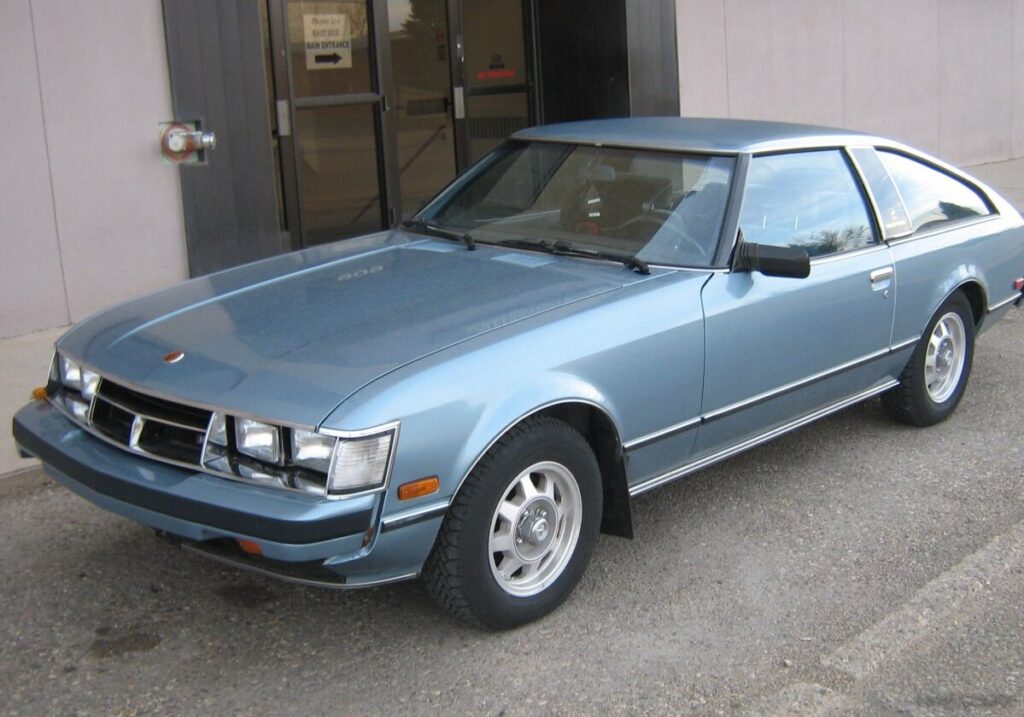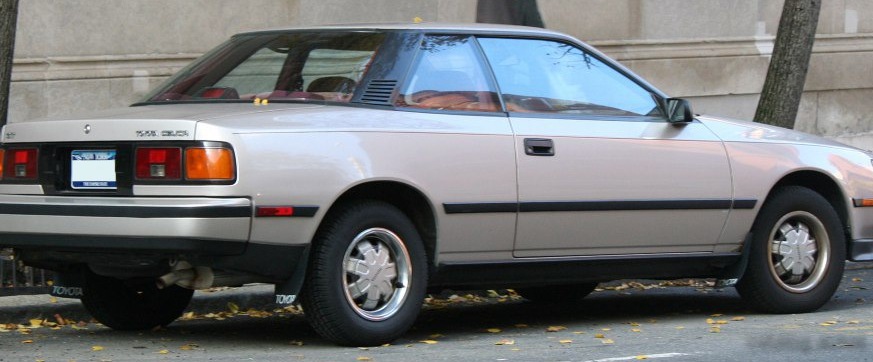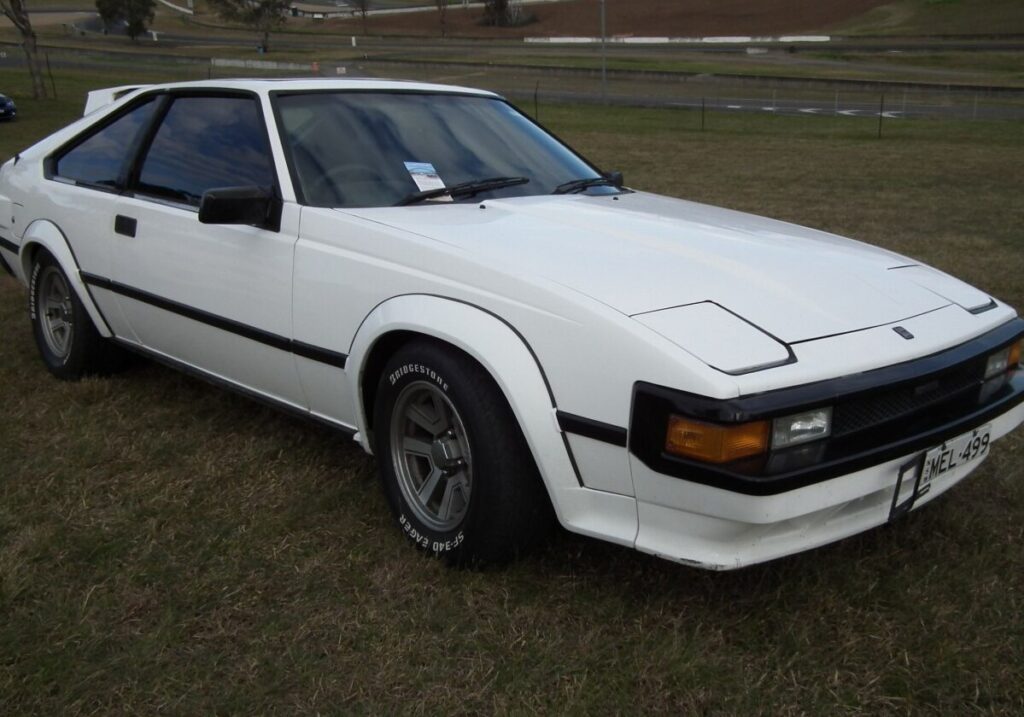
The Toyota Celica Supra II, designated as the A60 chassis, represented a significant evolution in Toyota’s sports car lineage. Produced between 1981 and 1985, it marked a departure from the earlier Celica liftback, adopting a more dedicated grand tourer focus. The 2.8-liter (145 hp) variant, powered by the 5M-GE engine, occupied a key position in the A60 lineup, offering a balance between performance and refinement. This model aimed to provide a more sophisticated driving experience compared to the base four-cylinder Celica Supras, while remaining more accessible than the later, more powerful turbocharged versions.
Technical Specifications
| Brand | Toyota |
| Model | Supra |
| Generation | Celica Supra II (A60) |
| Type (Engine) | 2.8 (145 Hp) |
| Start of production | 1981 |
| End of production | 1985 |
| Powertrain Architecture | Internal Combustion engine |
| Body type | Coupe |
| Seats | 4 |
| Doors | 3 |
| Fuel Type | Petrol (Gasoline) |
| Weight-to-power ratio | 9.2 kg/Hp, 109 Hp/tonne |
| Weight-to-torque ratio | 6.3 kg/Nm, 157.9 Nm/tonne |
| Power | 145 Hp @ 5200 rpm |
| Power per litre | 52.6 Hp/l |
| Torque | 210 Nm @ 4400 rpm, 154.89 lb.-ft. @ 4400 rpm |
| Engine layout | Front, Longitudinal |
| Engine Model/Code | 5M-GE |
| Engine displacement | 2759 cm3, 168.36 cu. in. |
| Number of cylinders | 6 |
| Engine configuration | Inline |
| Cylinder Bore | 83 mm, 3.27 in. |
| Piston Stroke | 85 mm, 3.35 in. |
| Number of valves per cylinder | 2 |
| Fuel injection system | Single-point injection |
| Engine aspiration | Naturally aspirated engine |
| Valvetrain | DOHC |
| Engine oil capacity | 5.1 l, 5.39 US qt | 4.49 UK qt |
| Coolant | 8 l, 8.45 US qt | 7.04 UK qt |
| Kerb Weight | 1330 kg, 2932.15 lbs |
| Trunk (boot) space – maximum | 595 l, 21.01 cu. ft |
| Fuel tank capacity | 61 l, 16.11 US gal | 13.42 UK gal |
| Length | 4661 mm, 183.5 in |
| Width | 1720 mm, 67.72 in |
| Height | 1321 mm, 52.01 in |
| Wheelbase | 2614 mm, 102.91 in |
| Front track | 1471 mm, 57.91 in |
| Rear (Back) track | 1440 mm, 56.69 in |
| Drivetrain Architecture | The Internal combustion engine (ICE) drives the rear wheels of the vehicle. |
| Drive wheel | Rear wheel drive |
| Number of gears and type of gearbox | 5 gears, manual transmission |
| Front suspension | Independent type McPherson |
| Rear suspension | Independent multi-link spring suspension with stabilizer |
| Front brakes | Ventilated discs |
| Rear brakes | Ventilated discs |
| Steering type | Steering rack and pinion |
| Tires size | 225/60 R14 |
| Wheel rims size | 7J x 14 |
INTRODUCTION
The A60 Celica Supra represented a significant shift for Toyota. While the first-generation Supra (A40/A50) was closely tied to the Celica’s styling and shared many components, the A60 moved towards a more independent identity. Launched in 1981, it featured a longer wheelbase and a more sophisticated suspension setup, aiming for a more refined grand touring experience. The 2.8-liter 5M-GE engine variant was introduced as a step up from the base 2.4-liter and 2.0-liter options, offering increased power and torque for improved performance. It was positioned as a mid-range offering, bridging the gap between the more economical Celica variants and the forthcoming, higher-performance turbocharged models.
Powertrain & Engine Architecture
The heart of the 2.8-liter Celica Supra was the 5M-GE inline-six engine. This engine was a naturally aspirated, 2.8-liter (2759 cc) unit featuring a dual overhead camshaft (DOHC) valvetrain with two valves per cylinder. It utilized a single-point fuel injection system, a common technology for the time, which delivered fuel to the intake manifold rather than directly into the cylinders. The 5M-GE produced 145 horsepower at 5200 rpm and 210 Nm (154.89 lb-ft) of torque at 4400 rpm. The engine’s longitudinal front-engine layout and rear-wheel drive configuration contributed to its balanced handling characteristics. The standard transmission for this variant was a five-speed manual, although an optional four-speed automatic transmission was also available, impacting performance and fuel economy.
Driving Characteristics
The 2.8-liter Supra offered a smooth and relatively refined driving experience. While not a high-performance machine by modern standards, it provided ample power for comfortable cruising and spirited driving. The 5M-GE engine delivered a linear powerband, making it predictable and easy to control. The five-speed manual transmission allowed drivers to fully utilize the engine’s power, while the optional automatic, though convenient, resulted in some power loss and a less engaging driving experience. Compared to the later turbocharged versions, the 2.8-liter felt less urgent in its acceleration, but it offered a more manageable and predictable power delivery. The rear-wheel drive layout provided a balanced feel, although the relatively narrow tires (225/60 R14) limited grip in hard cornering.
Equipment & Trim Levels
The 2.8-liter Celica Supra was generally well-equipped for its time. Standard features typically included power steering, power brakes, and a comfortable interior with cloth upholstery. Optional extras could include air conditioning, a premium sound system, and upgraded interior trim. The dashboard layout was functional and driver-focused, with clearly marked gauges and controls. The interior space was adequate for a coupe, offering comfortable seating for four passengers, although rear seat space was limited. The trim level for the 2.8-liter model typically fell in the mid-range of the A60 lineup, offering a step up in features and refinement compared to the base models.
Chassis & Braking
The A60 Celica Supra featured an independent suspension system at all four wheels. The front suspension utilized a McPherson strut design, while the rear employed a multi-link setup with a stabilizer bar. This suspension configuration provided a comfortable ride and good handling characteristics. Braking duties were handled by ventilated disc brakes on all four wheels, offering adequate stopping power for the vehicle’s weight and performance. The steering system was a rack-and-pinion setup, providing precise and responsive steering feel. The chassis was relatively lightweight, contributing to the car’s balanced handling.
Market Reception & Comparison
The 2.8-liter Celica Supra was generally well-received by automotive critics. It was praised for its smooth engine, comfortable ride, and refined handling. However, some critics noted that it lacked the outright performance of its turbocharged counterparts. Compared to the 2.4-liter and 2.0-liter models, the 2.8-liter offered a noticeable improvement in power and torque, making it a more enjoyable driving experience. Fuel economy was reasonable for the time, but not exceptional. The 2.8-liter model offered a good balance between performance, comfort, and price, making it a popular choice among buyers seeking a sophisticated sports coupe.
Legacy
The A60 Celica Supra, particularly the 2.8-liter variant, has gained a loyal following among classic car enthusiasts. The 5M-GE engine is known for its reliability and durability, although regular maintenance is essential to keep it running smoothly. Parts availability can be a challenge, but many aftermarket suppliers offer replacement components. Today, well-maintained A60 Supras are sought after by collectors and enthusiasts who appreciate their classic styling, smooth driving experience, and historical significance. The 2.8-liter model represents a sweet spot in the A60 lineup, offering a balance of performance and affordability that makes it an attractive option in the used car market. It remains a testament to Toyota’s engineering prowess and its commitment to building high-quality, reliable sports cars.