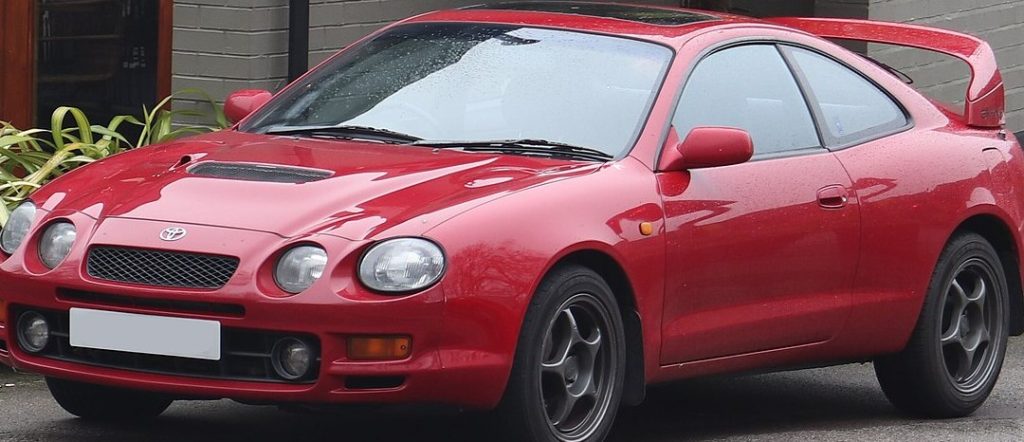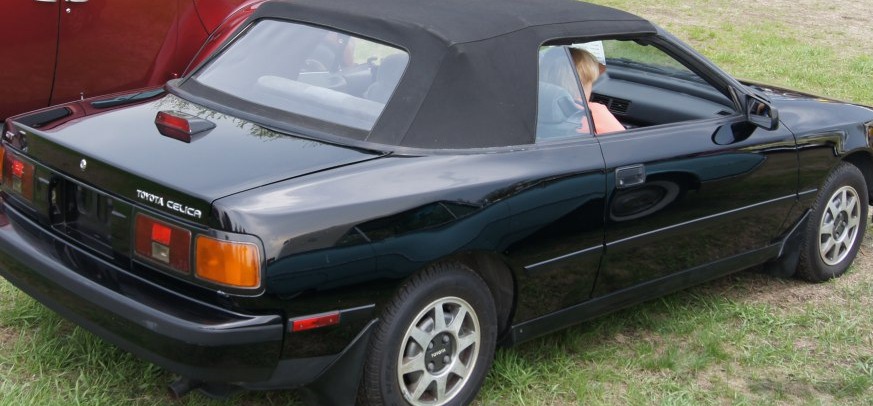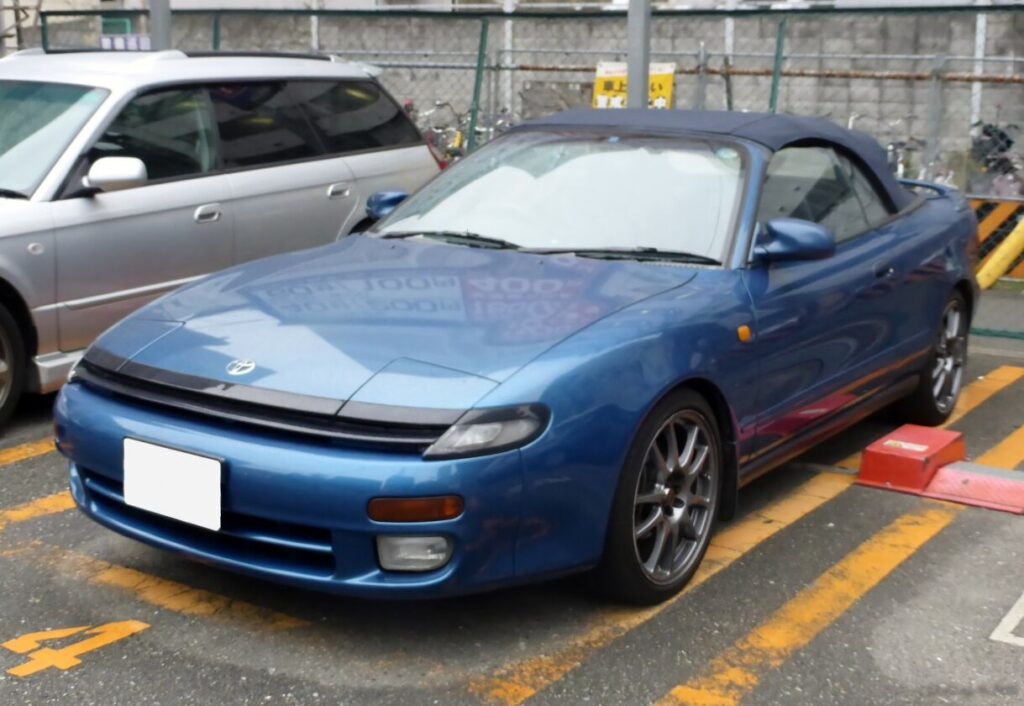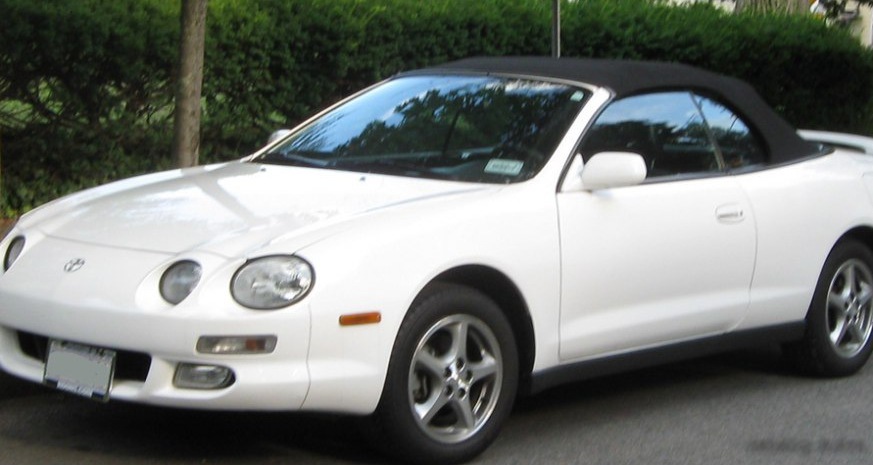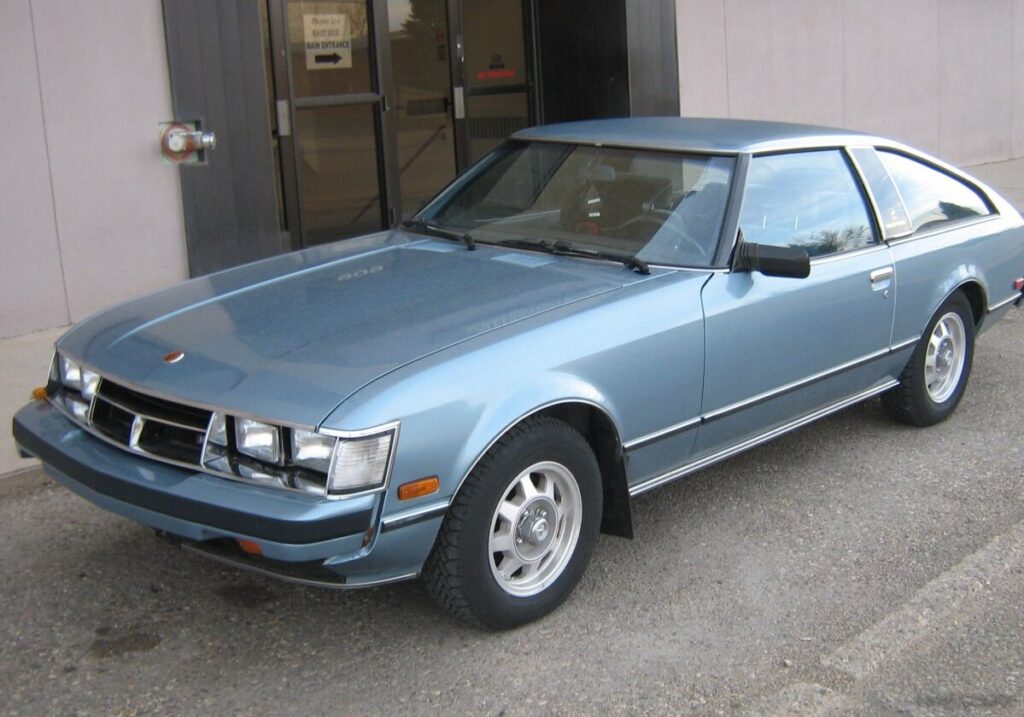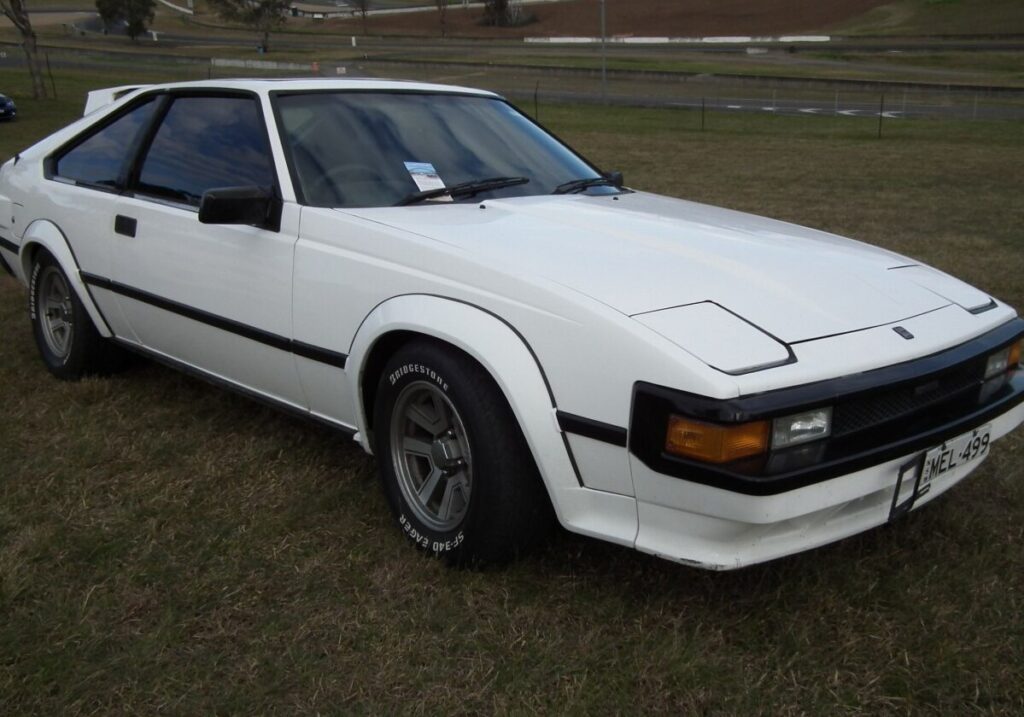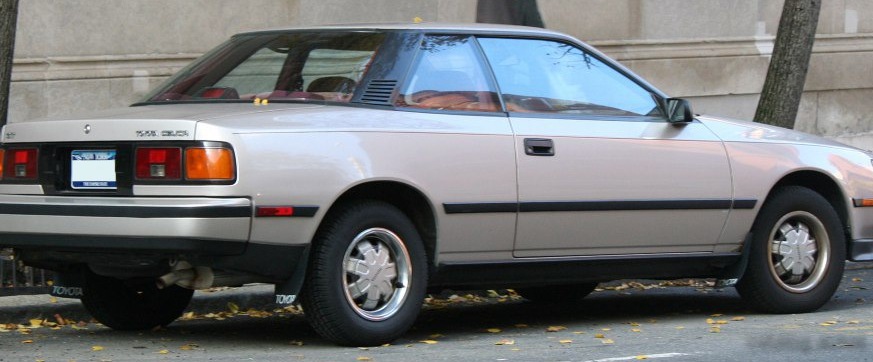
The Toyota Celica T16, specifically the 2.0 Turbo 4×4 variant produced between 1988 and 1990, represents a high-performance iteration of the fourth-generation Celica (T16). This model, built on the T16 platform, was Toyota’s foray into all-wheel-drive performance coupes, designed to compete with rivals like the Mitsubishi Starion and Nissan Skyline. It was primarily marketed in Japan and Europe, offering a blend of sporty handling and turbocharged power. The T16 2.0 Turbo 4×4 occupied the top echelon of the Celica lineup, positioned as the premium performance model.
Technical Specifications
| Brand | Toyota |
| Model | Celica |
| Generation | Celica (T16) |
| Type (Engine) | 2.0 Turbo (185 Hp) 4×4 |
| Start of production | 1988 |
| End of production | 1990 |
| Powertrain Architecture | Internal Combustion engine |
| Body type | Coupe |
| Seats | 4 |
| Doors | 2 |
| Fuel Type | Petrol (Gasoline) |
| Acceleration 0 – 100 km/h | 8.1 sec |
| Acceleration 0 – 62 mph | 8.1 sec |
| Acceleration 0 – 60 mph | 7.7 sec |
| Maximum speed | 220 km/h (136.7 mph) |
| Weight-to-power ratio | 7.8 kg/Hp, 127.6 Hp/tonne |
| Weight-to-torque ratio | 5.8 kg/Nm, 172.4 Nm/tonne |
| Power | 185 Hp @ 6000 rpm |
| Power per litre | 92.6 Hp/l |
| Torque | 250 Nm @ 3600 rpm (184.39 lb.-ft. @ 3600 rpm) |
| Engine layout | Front, Transverse |
| Engine Model/Code | 3S-GTE |
| Engine displacement | 1998 cm3 (121.93 cu. in.) |
| Number of cylinders | 4 |
| Engine configuration | Inline |
| Cylinder Bore | 86 mm (3.39 in.) |
| Piston Stroke | 86 mm (3.39 in.) |
| Compression ratio | 8.5:1 |
| Number of valves per cylinder | 4 |
| Fuel injection system | Multi-port manifold injection |
| Engine aspiration | Turbocharger, Intercooler |
| Valvetrain | DOHC |
| Engine oil capacity | 4.6 l (4.86 US qt | 4.05 UK qt) |
| Coolant | 8 l (8.45 US qt | 7.04 UK qt) |
| Kerb Weight | 1450 kg (3196.7 lbs) |
| Max. weight | 1840 kg (4056.51 lbs) |
| Max load | 390 kg (859.8 lbs) |
| Trunk (boot) space – minimum | 307 l (10.84 cu. ft.) |
| Fuel tank capacity | 60 l (15.85 US gal | 13.2 UK gal) |
| Max. roof load | 100 kg (220.46 lbs) |
| Permitted trailer load with brakes (12%) | 1200 kg (2645.55 lbs) |
| Permitted trailer load without brakes | 600 kg (1322.77 lbs) |
| Length | 4380 mm (172.44 in.) |
| Width | 1710 mm (67.32 in.) |
| Height | 1290 mm (50.79 in.) |
| Wheelbase | 2525 mm (99.41 in.) |
| Front track | 1465 mm (57.68 in.) |
| Rear (Back) track | 1440 mm (56.69 in.) |
| Minimum turning circle (turning diameter) | 10.8 m (35.43 ft.) |
| Drivetrain Architecture | The Internal combustion engine (ICE) drives permanently the four wheels of the vehicle. |
| Drive wheel | All wheel drive (4×4) |
| Front suspension | Independent, type McPherson with coil spring and anti-roll bar |
| Rear suspension | McPherson, Transverse stabilizer |
| Front brakes | Ventilated discs |
| Rear brakes | Disc |
| Assisting systems | ABS (Anti-lock braking system) |
| Steering type | Steering rack and pinion |
| Power steering | Hydraulic Steering |
| Tires size | 205/60 R14 |
| Wheel rims size | 6J x 14 |
INTRODUCTION
The Toyota Celica T16 2.0 Turbo 4×4, produced from 1988 to 1990, was a significant model in the Celica lineage. It represented Toyota’s commitment to performance engineering and all-wheel-drive technology. This variant was part of the broader T16 generation (1985-1989), known for its modern styling and improved aerodynamics compared to its predecessors. The introduction of the 3S-GTE engine and a full-time 4WD system distinguished this model as a serious contender in the sports coupe market.
Powertrain & Engine Architecture
At the heart of the Celica T16 2.0 Turbo 4×4 lies the 3S-GTE engine, a 1998cc inline-four cylinder powerplant. This engine featured a single overhead camshaft (DOHC) design with four valves per cylinder, and crucially, a CT26 turbocharger with an intercooler. The 3S-GTE utilized multi-port fuel injection for precise fuel delivery. The engine’s 8.5:1 compression ratio was a compromise between performance and reliability, allowing it to handle the increased boost pressure from the turbocharger. The engine was transversely mounted, contributing to a more balanced weight distribution. The transmission was a four-speed automatic, designed to handle the engine’s 250 Nm (184.39 lb.-ft.) of torque. While a five-speed manual transmission was available on other T16 variants, the automatic was specifically paired with the 4×4 system.
Driving Characteristics
The 2.0 Turbo 4×4 Celica offered a unique driving experience. The all-wheel-drive system provided enhanced traction, particularly in inclement weather or during spirited driving. However, the automatic transmission, while convenient, did detract somewhat from the sporty feel compared to the manual versions. The gear ratios were tuned for a balance of acceleration and fuel economy, but the automatic’s shift points could sometimes feel less responsive than a skilled driver could achieve with a manual gearbox. Acceleration from 0-60 mph was around 7.7 seconds, and the car could reach a top speed of 220 km/h (136.7 mph). The 4WD system added weight, impacting handling agility slightly, but also increased stability.
Equipment & Trim Levels
The T16 2.0 Turbo 4×4 was generally well-equipped, reflecting its position as the top-of-the-line Celica. Standard features included power windows, power locks, and a premium sound system. Interior upholstery typically consisted of cloth or optional leather seats. The dashboard featured a comprehensive instrument cluster with gauges for boost pressure, oil temperature, and voltage. Optional extras included a sunroof, upgraded audio systems, and alloy wheels. The interior design was functional and driver-focused, with a clear layout and easy-to-reach controls.
Chassis & Braking
The Celica T16 featured an independent McPherson strut suspension system at both the front and rear, with coil springs and anti-roll bars. The front suspension incorporated a stabilizer bar for improved handling. The rear suspension also utilized a transverse stabilizer. Braking duties were handled by ventilated discs at the front and solid discs at the rear. An Anti-lock Braking System (ABS) was standard, enhancing safety and control during hard braking. The chassis was reinforced to handle the increased power and torque of the turbocharged engine and the stresses of the all-wheel-drive system.
Market Reception & Comparison
The Celica T16 2.0 Turbo 4×4 received generally positive reviews from automotive critics. It was praised for its performance, handling, and advanced technology. However, some reviewers noted that the automatic transmission diminished the driving experience compared to the manual versions. Compared to other Celica trims, such as the naturally aspirated 1.6L or 2.0L models, the Turbo 4×4 offered significantly more power and performance. The 1.6L and 2.0L models were more fuel-efficient and affordable, targeting a broader audience. The Turbo 4×4, with its higher price tag, appealed to enthusiasts seeking a more exhilarating driving experience. Compared to rivals like the Mitsubishi Starion, the Celica offered a more refined interior and a more sophisticated all-wheel-drive system.
Legacy
The Toyota Celica T16 2.0 Turbo 4×4 remains a sought-after model among Celica enthusiasts. The 3S-GTE engine is known for its durability and tunability, making it a popular choice for modifications. While the automatic transmission isn’t as highly regarded as the manual, the 4×4 system adds a unique dimension to the Celica driving experience. Well-maintained examples are becoming increasingly rare, and prices have been steadily rising in the used car market. The T16 2.0 Turbo 4×4 represents a high point in Celica development, showcasing Toyota’s engineering prowess and its commitment to building exciting and capable sports coupes.