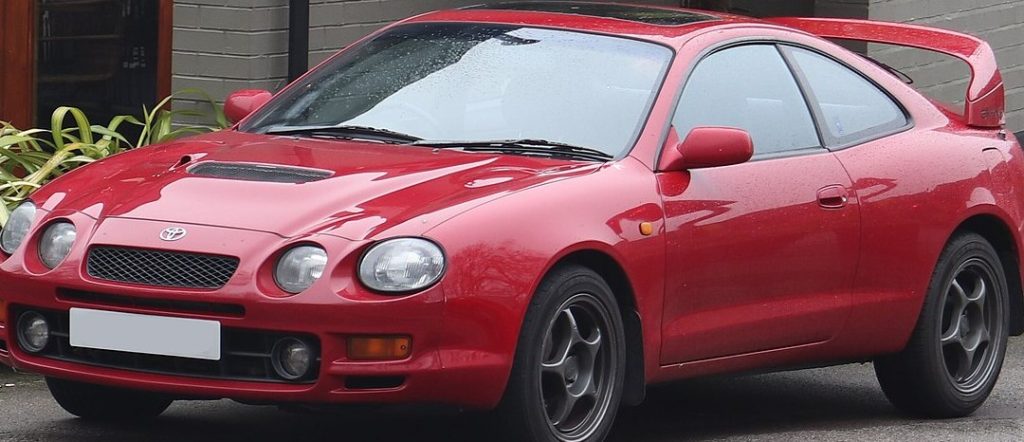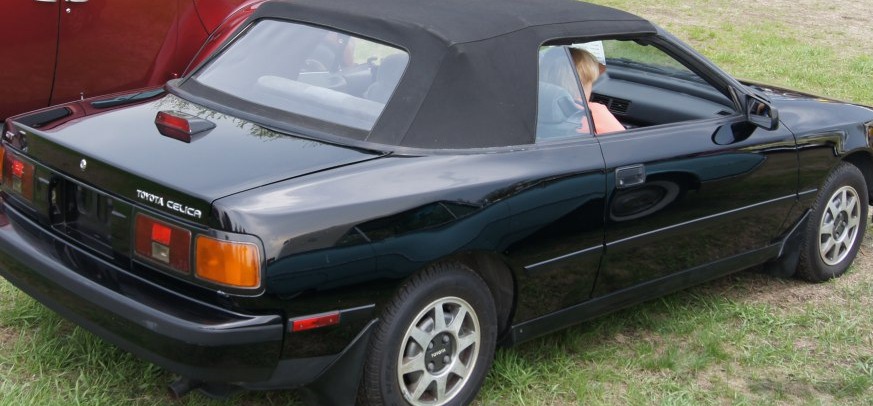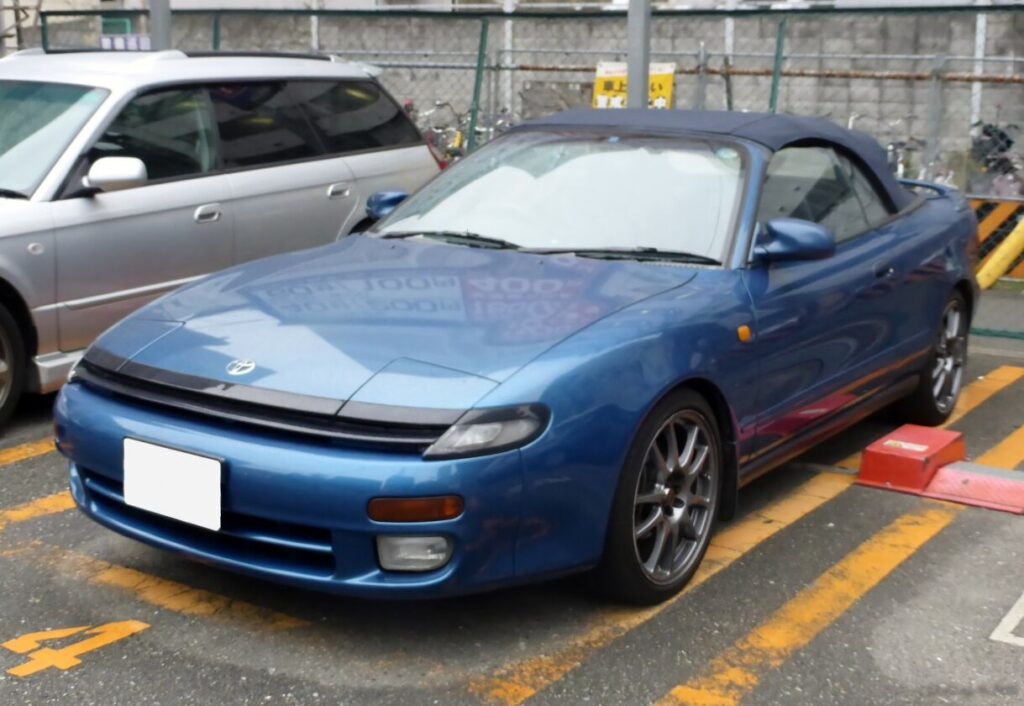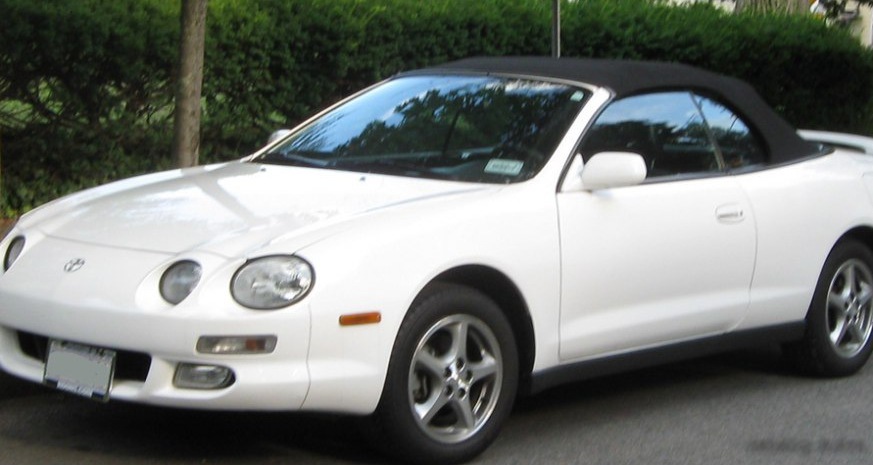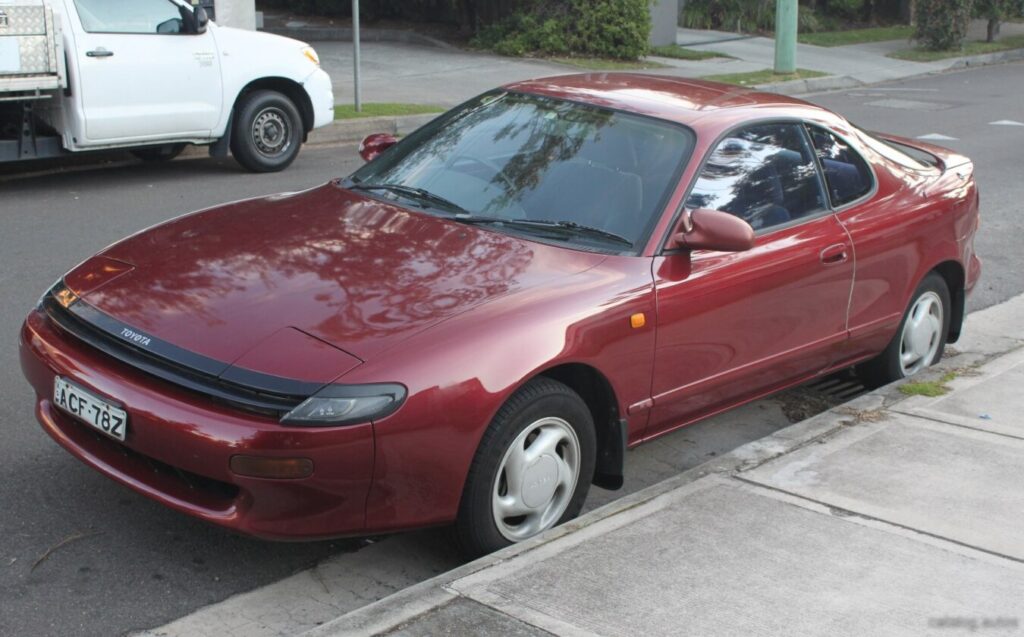
The Toyota Celica T18, produced between 1989 and 1994, represented a significant evolution for the Celica line, moving towards a more sophisticated and aerodynamic design. The 2.0i 16V variant, equipped with a 140 horsepower engine and an automatic transmission, occupied a middle ground within the T18 range, offering a balance between performance and convenience. This model was primarily aimed at buyers seeking a stylish coupe with a degree of refinement, appealing to those who preferred the ease of an automatic gearbox over a manual. It was a key offering in Toyota’s lineup during a period of strong competition in the sports coupe segment.
Technical Specifications
| Brand | Toyota |
| Model | Celica |
| Generation | Celica (T18) |
| Type (Engine) | 2.0i 16V (140 Hp) Automatic |
| Start of production | 1989 |
| End of production | 1994 |
| Powertrain Architecture | Internal Combustion engine |
| Body type | Coupe |
| Seats | 5 |
| Doors | 3 |
| Fuel consumption (urban) | 13 l/100 km (18.1 US mpg, 21.7 UK mpg) |
| Fuel consumption (extra urban) | 7 l/100 km (33.6 US mpg, 40.4 UK mpg) |
| Fuel Type | Petrol (Gasoline) |
| Maximum speed | 205 km/h (127.38 mph) |
| Weight-to-power ratio | 8.6 kg/Hp, 116.7 Hp/tonne |
| Weight-to-torque ratio | 6.5 kg/Nm, 155 Nm/tonne |
| Power | 140 Hp @ 6000 rpm |
| Power per litre | 70.1 Hp/l |
| Torque | 186 Nm @ 4400 rpm (137.19 lb.-ft. @ 4400 rpm) |
| Engine layout | Front, Transverse |
| Engine displacement | 1998 cm3 (121.93 cu. in.) |
| Number of cylinders | 4 |
| Engine configuration | Inline |
| Cylinder Bore | 86 mm (3.39 in.) |
| Piston Stroke | 86 mm (3.39 in.) |
| Compression ratio | 9.5:1 |
| Number of valves per cylinder | 4 |
| Fuel injection system | Multi-port manifold injection |
| Engine aspiration | Naturally aspirated engine |
| Kerb Weight | 1200 kg (2645.55 lbs.) |
| Trunk (boot) space (minimum) | 320 l (11.3 cu. ft.) |
| Fuel tank capacity | 60 l (15.85 US gal | 13.2 UK gal) |
| Length | 4420 mm (174.02 in.) |
| Width | 1690 mm (66.54 in.) |
| Height | 1300 mm (51.18 in.) |
| Wheelbase | 2525 mm (99.41 in.) |
| Front track | 1465 mm (57.68 in.) |
| Rear track | 1430 mm (56.3 in.) |
| Drivetrain Architecture | Front wheel drive |
| Number of gears and type of gearbox | 4 gears, automatic transmission |
| Front suspension | Spring Strut |
| Rear suspension | Coil spring |
| Front brakes | Ventilated discs |
| Rear brakes | Disc |
| Assisting systems | ABS (Anti-lock braking system) |
| Steering type | Steering rack and pinion |
| Power steering | Hydraulic Steering |
| Tires size | 185/65 R14 |
| Wheel rims size | 14 |
Powertrain & Engine Architecture
The heart of the Celica 2.0i 16V Automatic was the 3S-FE engine, a 1998cc inline-four cylinder powerplant. This engine featured a multi-port fuel injection system, providing precise fuel delivery for improved efficiency and performance. The 16-valve cylinder head, with four valves per cylinder, enhanced breathing and contributed to the engine’s respectable power output. The 3S-FE was known for its relatively smooth operation and decent reliability. The automatic transmission was a four-speed unit, designed to provide comfortable and convenient shifting. While not as sporty as a manual transmission, it suited the target audience of this particular Celica variant. The engine’s transverse mounting and front-wheel-drive configuration were typical for cars of this era and class.
Driving Characteristics
The 140 hp and 137 lb-ft of torque delivered by the 3S-FE engine, coupled with the four-speed automatic transmission, resulted in a driving experience that prioritized comfort and ease of use over outright performance. Acceleration was adequate for everyday driving, but it wasn’t particularly brisk. The automatic transmission’s gear ratios were tuned for fuel economy and smooth transitions, rather than aggressive downshifts. Compared to the five-speed manual version, the automatic Celica felt noticeably less engaging and responsive. However, it offered a more relaxed driving experience, especially in city traffic. The power delivery was linear, with a usable amount of torque available throughout the rev range.
Equipment & Trim Levels
The 2.0i 16V Automatic trim typically included features such as power windows, power locks, and an upgraded sound system. Interior upholstery was usually cloth, with options for different color schemes. Air conditioning was a standard feature, and some models included a sunroof as an optional extra. The dashboard layout was functional and driver-focused, with easy-to-read gauges. Higher-spec versions could be equipped with features like cruise control and upgraded audio systems. The overall interior ambiance was geared towards providing a comfortable and refined experience.
Chassis & Braking
The Celica T18 utilized a front strut and rear coil spring suspension setup, providing a reasonable balance between ride comfort and handling. The front brakes were ventilated discs, offering good stopping power, while the rear brakes were solid discs. An anti-lock braking system (ABS) was included as standard equipment, enhancing safety. The steering was rack and pinion with hydraulic power assistance, providing precise and responsive steering feel. The 185/65 R14 tires offered adequate grip for everyday driving conditions.
Market Reception & Comparison
The Celica 2.0i 16V Automatic received generally positive reviews from automotive critics. It was praised for its stylish design, comfortable interior, and reliable powertrain. However, some critics noted that the automatic transmission detracted from the car’s sporty image. Compared to the more powerful Celica GT-Four (All-Trac Turbo), the 2.0i 16V Automatic offered a more affordable and accessible entry point into the Celica lineup. In terms of fuel economy, it performed competitively with other coupes in its class. Reliability was generally good, with the 3S-FE engine proving to be a durable and long-lasting unit.
Legacy
The Toyota Celica T18 2.0i 16V Automatic has maintained a respectable reputation in the used car market. The 3S-FE engine is known for its longevity and relatively low maintenance costs. While not a collector’s item like some of the more performance-oriented Celica variants, it remains a popular choice for those seeking a stylish and reliable coupe. Parts availability is generally good, and the car’s relatively simple mechanical design makes it relatively easy to maintain. Today, these Celicas are often seen as a testament to Toyota’s commitment to building durable and well-engineered vehicles.