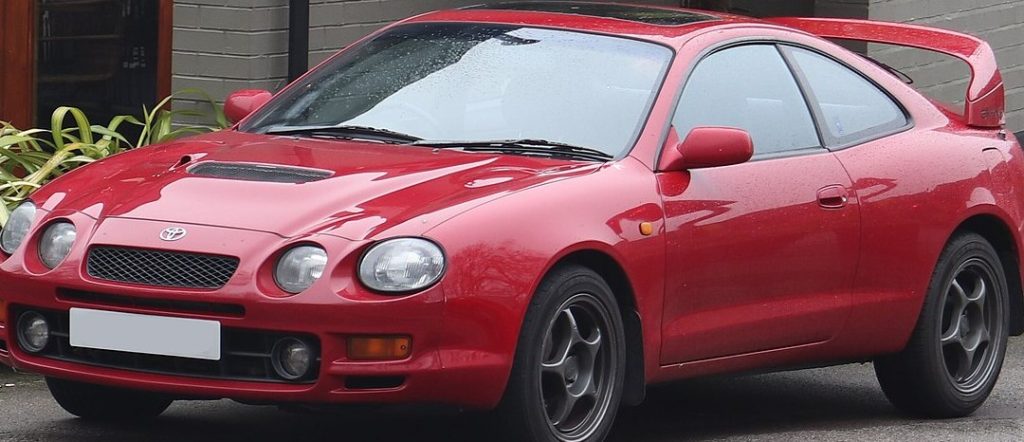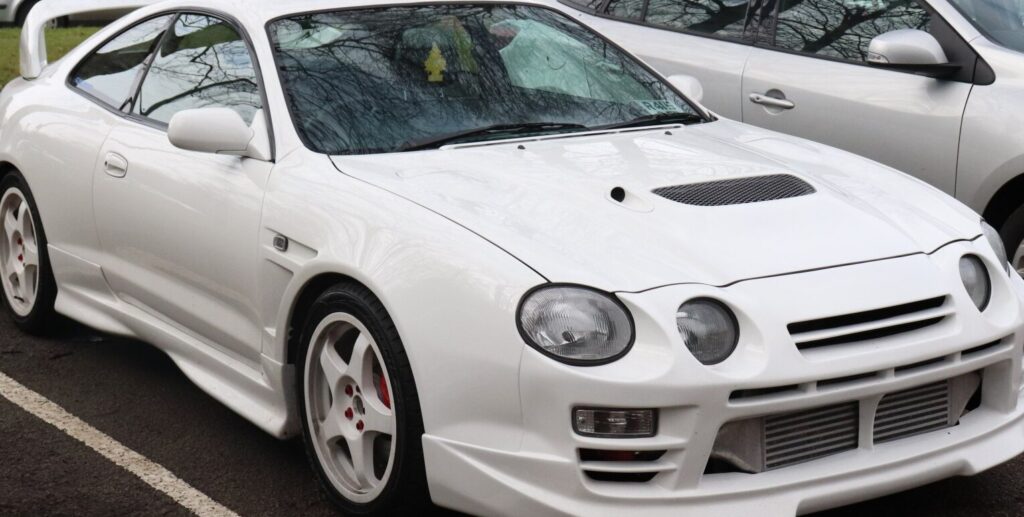
The Toyota Celica GT-Four, specifically the T20 generation produced between 1994 and 1999, represents the pinnacle of Toyota’s rally-bred performance coupes. This variant, powered by the 3S-GTE 2.0-liter turbocharged engine, was designed to homologate the Celica for World Rally Championship (WRC) competition. The T20 chassis, internally designated as the ST205, was a significant evolution over its predecessor, offering improved handling, a more sophisticated all-wheel-drive system, and increased power. Within the Celica lineup, the GT-Four served as the flagship performance model, positioned above the naturally aspirated ST184 and ST185 variants, and aimed at enthusiasts seeking a potent and capable sports car.
Technical Specifications
| Brand | Toyota |
| Model | Celica |
| Generation | Celica (T20) |
| Type | 2.0 Turbo (242 Hp) GT-Four |
| Start of production | 1994 |
| End of production | 1999 |
| Powertrain Architecture | Internal Combustion engine |
| Body type | Liftback |
| Seats | 4 |
| Doors | 3 |
| Fuel consumption (combined) | 9.5 l/100 km |
| Fuel consumption (US mpg) | 24.8 US mpg |
| Fuel consumption (UK mpg) | 29.7 UK mpg |
| Fuel consumption (km/l) | 10.5 km/l |
| Fuel Type | Petrol (Gasoline) |
| Acceleration 0 – 100 km/h | 6.1 sec |
| Acceleration 0 – 62 mph | 6.1 sec |
| Acceleration 0 – 60 mph | 5.8 sec |
| Maximum speed | 240 km/h (149.13 mph) |
| Weight-to-power ratio | 5.7 kg/Hp |
| Weight-to-torque ratio | 4.6 kg/Nm |
| Power | 242 Hp @ 6000 rpm |
| Power per litre | 121.1 Hp/l |
| Torque | 302 Nm @ 4000 rpm (222.74 lb.-ft. @ 4000 rpm) |
| Engine layout | Front, Transverse |
| Engine Model/Code | 3S-GTE |
| Engine displacement | 1998 cm3 (121.93 cu. in.) |
| Number of cylinders | 4 |
| Engine configuration | Inline |
| Cylinder Bore | 86 mm (3.39 in.) |
| Piston Stroke | 86 mm (3.39 in.) |
| Compression ratio | 8.5:1 |
| Number of valves per cylinder | 4 |
| Fuel injection system | Multi-port manifold injection |
| Engine aspiration | Turbocharger |
| Valvetrain | DOHC |
| Engine oil capacity | 4.5 l (4.76 US qt | 3.96 UK qt) |
| Kerb Weight | 1390 kg (3064.43 lbs.) |
| Max. weight | 1785 kg (3935.25 lbs.) |
| Max load | 395 kg (870.83 lbs.) |
| Trunk (boot) space – minimum | 208 l (7.35 cu. ft.) |
| Fuel tank capacity | 68 l (17.96 US gal | 14.96 UK gal) |
| Length | 4420 mm (174.02 in.) |
| Width | 1750 mm (68.9 in.) |
| Height | 1305 mm (51.38 in.) |
| Wheelbase | 2450 mm (96.46 in.) |
| Front track | 1510 mm (59.45 in.) |
| Rear (Back) track | 1490 mm (58.66 in.) |
| Drive wheel | All wheel drive (4×4) |
| Number of gears and type of gearbox | 5 gears, manual transmission |
| Front suspension | Spring Strut |
| Rear suspension | Coil spring |
| Front brakes | Ventilated discs |
| Rear brakes | Ventilated discs |
| Assisting systems | ABS (Anti-lock braking system) |
| Steering type | Steering rack and pinion |
| Power steering | Hydraulic Steering |
| Tires size | 215/50 R16 V |
Powertrain & Engine Architecture
The heart of the T20 GT-Four is the 3S-GTE engine, a 2.0-liter, inline-four cylinder powerplant. This engine is a heavily modified version of the naturally aspirated 3S-FE, featuring a CT26 turbocharger, strengthened internals (including forged pistons), and an upgraded fuel injection system. The 3S-GTE utilizes a multi-port fuel injection system and a dual overhead camshaft (DOHC) valvetrain, contributing to its high specific output. The turbocharger provides significant boost, resulting in 242 horsepower and 302 Nm (222.74 lb-ft) of torque. The engine’s compression ratio is set at 8.5:1 to accommodate the turbocharging. The T20 GT-Four exclusively came with a 5-speed manual transmission, designed to handle the engine’s power and deliver precise gear changes. The transmission is coupled with Toyota’s sophisticated full-time all-wheel-drive system.
Driving Characteristics
The T20 GT-Four delivers a thrilling driving experience, characterized by strong acceleration and impressive grip. The turbocharger provides a noticeable surge of power in the mid-range, making it responsive in everyday driving situations. The all-wheel-drive system provides excellent traction, particularly on loose surfaces or in inclement weather. Compared to the naturally aspirated Celica models, the GT-Four offers a significantly higher level of performance. While the manual transmission requires skillful operation, it allows for precise control and maximizes the engine’s potential. The gear ratios are well-matched to the engine’s powerband, providing strong acceleration in all gears. The suspension is tuned for a balance between comfort and handling, offering a relatively compliant ride without sacrificing cornering stability.
Equipment & Trim Levels
The T20 GT-Four was generally well-equipped, although options were available to further enhance the interior and exterior. Standard features typically included power windows, power locks, air conditioning, and a decent sound system. The interior featured sport seats with bolstered support, providing a secure and comfortable driving position. The dashboard layout was functional and driver-focused. Optional extras included a sunroof, upgraded audio systems, and various cosmetic enhancements. The GT-Four’s interior was generally more focused on functionality than outright luxury, reflecting its performance-oriented nature.
Chassis & Braking
The T20 chassis was reinforced compared to the standard Celica, providing increased rigidity and improved handling. The suspension system consisted of independent struts at the front and a multi-link setup at the rear. The GT-Four featured ventilated disc brakes on all four wheels, providing ample stopping power. An Anti-lock Braking System (ABS) was standard, enhancing safety and control during hard braking. The steering system utilized a rack-and-pinion setup with hydraulic power assistance, offering precise and responsive steering feel. The T20 GT-Four’s chassis and braking systems were designed to handle the demands of high-performance driving.
Market Reception & Comparison
The T20 GT-Four was generally well-received by automotive critics, who praised its performance, handling, and all-wheel-drive system. However, some critics noted that the turbo lag could be noticeable at lower engine speeds. Compared to other sports cars of the era, the GT-Four offered a unique combination of performance, practicality, and affordability. It was often compared to the Mitsubishi Lancer Evolution and Subaru Impreza WRX, both of which were also rally-bred performance cars. The GT-Four’s fuel economy was reasonable for a turbocharged sports car, averaging around 24.8 US mpg in combined driving. Reliability was generally good, although the turbocharger and all-wheel-drive system required regular maintenance.
Legacy
The Toyota Celica T20 GT-Four remains a highly sought-after vehicle among enthusiasts. Its rally heritage, potent engine, and all-wheel-drive system have cemented its place as a classic performance car. Well-maintained examples are becoming increasingly rare and valuable. The 3S-GTE engine is known for its durability and tunability, making it a popular choice for modifications. While the T20 GT-Four is no longer in production, its legacy continues to inspire Toyota’s performance car development. The car’s robust build quality and relatively simple mechanicals mean that, with proper care, these cars can still provide years of enjoyable driving.