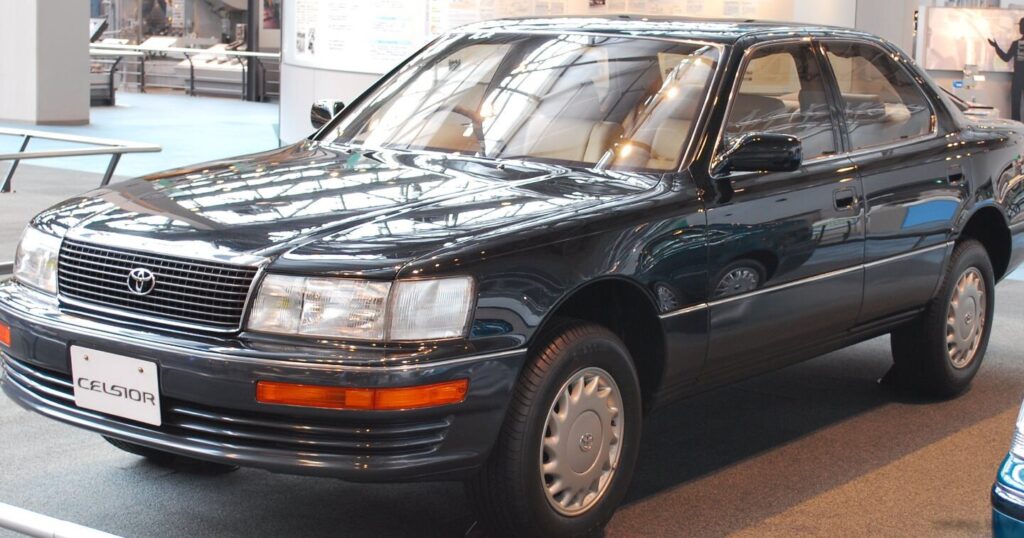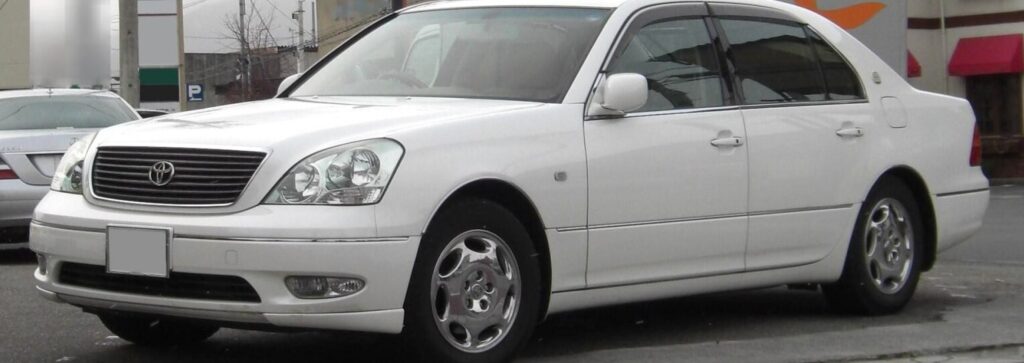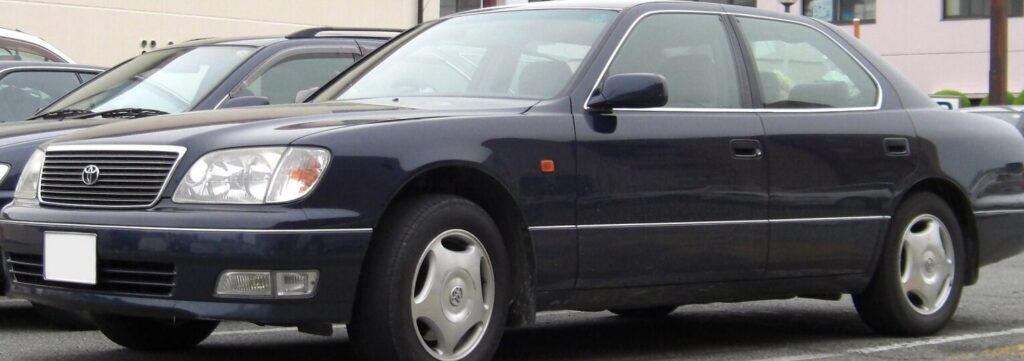
The Toyota Celsior II 4.0 V8 i (280 Hp), produced between 1997 and 2000, represents the pinnacle of Japanese luxury sedans during its era. As the second generation of the Celsior (known as the Lexus LS400 outside of Japan), this model was designed to offer an unparalleled level of refinement, comfort, and performance for the domestic Japanese market. It sat at the top of the Celsior lineup, offering the most powerful engine option and a host of premium features. The Celsior II was built on Toyota’s robust rear-wheel-drive platform, emphasizing a smooth and quiet driving experience. It was a direct competitor to other Japanese luxury flagships like the Nissan President and Mitsubishi Proudia.
Technical Specifications
| Brand | Toyota |
| Model | Celsior |
| Generation | Celsior II |
| Type (Engine) | 4.0 V8 i (280 Hp) |
| Start of production | 1997 year |
| End of production | 2000 year |
| Powertrain Architecture | Internal Combustion engine |
| Body type | Sedan |
| Seats | 5 |
| Doors | 4 |
| Fuel Type | Petrol (Gasoline) |
| Weight-to-power ratio | 5.9 kg/Hp, 170.7 Hp/tonne |
| Weight-to-torque ratio | 4.1 kg/Nm, 245.1 Nm/tonne |
| Power | 280 Hp @ 6000 rpm |
| Power per litre | 70.6 Hp/l |
| Torque | 402 Nm @ 4000 rpm, 296.5 lb.-ft. @ 4000 rpm |
| Engine layout | Front, Longitudinal |
| Engine Model/Code | 1UZ-FE |
| Engine displacement | 3968 cm3, 242.14 cu. in. |
| Number of cylinders | 8 |
| Engine configuration | V-engine |
| Cylinder Bore | 87.5 mm, 3.44 in. |
| Piston Stroke | 82.5 mm, 3.25 in. |
| Compression ratio | 10.5:1 |
| Number of valves per cylinder | 4 |
| Fuel injection system | Multi-port manifold injection |
| Engine aspiration | Naturally aspirated engine |
| Valvetrain | DOHC |
| Engine oil capacity | 4.8 l, 5.07 US qt | 4.22 UK qt |
| Kerb Weight | 1640 kg, 3615.58 lbs |
| Fuel tank capacity | 85 l, 22.45 US gal | 18.7 UK gal |
| Length | 4995 mm, 196.65 in |
| Width | 1830 mm, 72.05 in |
| Height | 1435 mm, 56.5 in |
| Wheelbase | 2850 mm, 112.2 in |
| Minimum turning circle | 10.6 m, 34.78 ft |
| Drivetrain Architecture | The Internal combustion engine (ICE) drives the rear wheels of the vehicle. |
| Drive wheel | Rear wheel drive |
| Number of gears and type of gearbox | 5 gears, automatic transmission |
| Front suspension | Coil spring |
| Rear suspension | Coil spring |
| Front brakes | Ventilated discs |
| Rear brakes | Ventilated discs |
| Assisting systems | ABS (Anti-lock braking system) |
| Steering type | Steering rack and pinion |
| Power steering | Hydraulic Steering |
| Tires size | 225/60 R16 98H |
| Wheel rims size | 7JJ x 16 |
Powertrain & Engine Architecture
The heart of the Celsior II 4.0 V8 i is the 1UZ-FE engine, a 4.0-liter (3968 cc) naturally aspirated V8. This engine is renowned for its smoothness and reliability. The 1UZ-FE features a cast-iron block and aluminum cylinder heads, incorporating a double overhead camshaft (DOHC) valvetrain with four valves per cylinder. Fuel delivery is managed by a multi-port fuel injection system, ensuring precise fuel metering for optimal performance and efficiency. The engine produces 280 horsepower at 6000 rpm and 402 Nm (296.5 lb-ft) of torque at 4000 rpm. The engine’s longitudinal mounting and rear-wheel-drive configuration contribute to a balanced weight distribution. Paired with the 1UZ-FE is a 5-speed automatic transmission, designed for seamless gear changes and a comfortable driving experience. This transmission was specifically tuned to complement the V8’s power delivery, prioritizing smooth acceleration over aggressive shifting.
Driving Characteristics
The Celsior II 4.0 V8 i delivers a refined and effortless driving experience. The 5-speed automatic transmission, while not offering manual control, is programmed to provide smooth and predictable shifts. The V8 engine provides ample power for both city driving and highway cruising, with strong low-end torque making overtaking easy. Compared to lower-spec Celsiors with smaller engines, the 4.0 V8 offers a significant performance advantage. While not a sports car, the Celsior’s well-tuned suspension and rear-wheel-drive layout provide a stable and comfortable ride. The steering is light and precise, making it easy to maneuver in urban environments. The automatic transmission’s gear ratios are optimized for fuel efficiency at cruising speeds, but can feel slightly conservative when seeking more spirited acceleration.
Equipment & Trim Levels
The 4.0 V8 i trim represented the highest level of luxury available on the Celsior II. Standard features included leather upholstery, power-adjustable front seats with memory function, a premium sound system, automatic climate control, and woodgrain interior trim. Many examples were equipped with optional features such as a navigation system, a rear-seat entertainment system, and electronically adjustable suspension. The interior design emphasized spaciousness and comfort, with ample legroom for both front and rear passengers. The exterior featured chrome accents, alloy wheels, and a generally understated but elegant aesthetic.
Chassis & Braking
The Celsior II utilizes a traditional body-on-frame construction, contributing to its robust feel and quiet cabin. The suspension consists of coil springs and shock absorbers at all four corners, providing a comfortable ride. The front suspension utilizes a double wishbone setup, while the rear employs a semi-trailing arm design. Braking duties are handled by ventilated disc brakes on all four wheels, providing ample stopping power. An Anti-lock Braking System (ABS) is standard, enhancing safety and control during emergency braking situations. The steering system is a rack-and-pinion setup with hydraulic power assistance, offering precise and responsive steering feel.
Market Reception & Comparison
The Toyota Celsior II 4.0 V8 i was highly regarded in the Japanese market for its luxurious appointments, smooth ride, and powerful engine. Critics praised its quiet cabin, comfortable seats, and overall refinement. Compared to the smaller-engined Celsiors, the 4.0 V8 offered a significant performance upgrade, but at a higher price point. Fuel economy, while respectable for a V8 engine, was lower than that of the inline-six or four-cylinder models. Reliability was a key strength, with the 1UZ-FE engine being known for its longevity and durability. The Celsior II competed directly with other Japanese luxury sedans, such as the Nissan President and Mitsubishi Proudia, offering a compelling combination of performance, comfort, and reliability.
Legacy
The Toyota Celsior II 4.0 V8 i remains a sought-after classic among Japanese car enthusiasts. The 1UZ-FE engine is renowned for its durability and is often cited as one of Toyota’s most reliable engines. Well-maintained examples of the Celsior II are becoming increasingly rare, and their values are steadily appreciating. In the used car market, these vehicles are prized for their luxurious features, smooth ride, and iconic status. The Celsior II represents a high point in Japanese automotive engineering, showcasing Toyota’s commitment to quality, comfort, and innovation. The 1UZ-FE engine’s robust design and readily available parts contribute to its continued usability and appeal to collectors and enthusiasts alike.