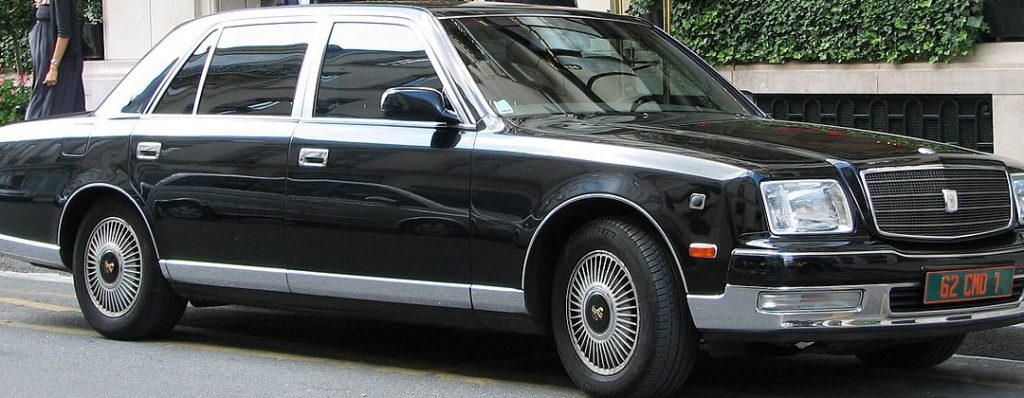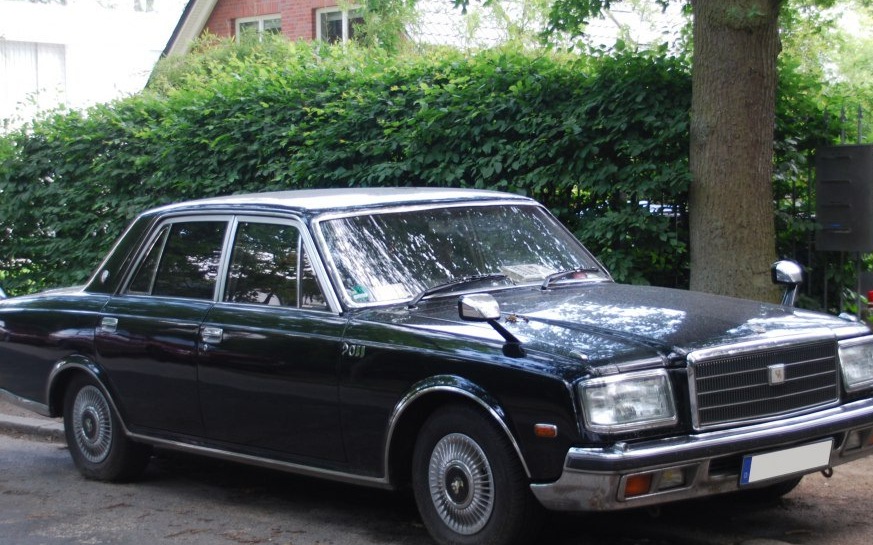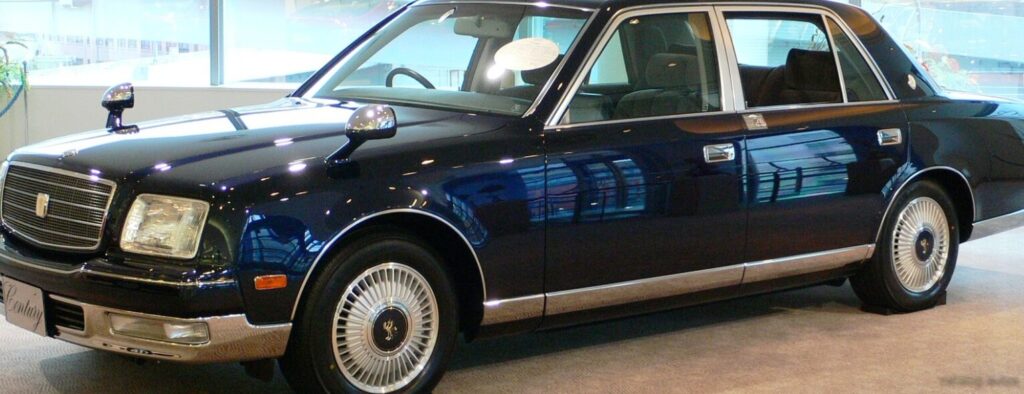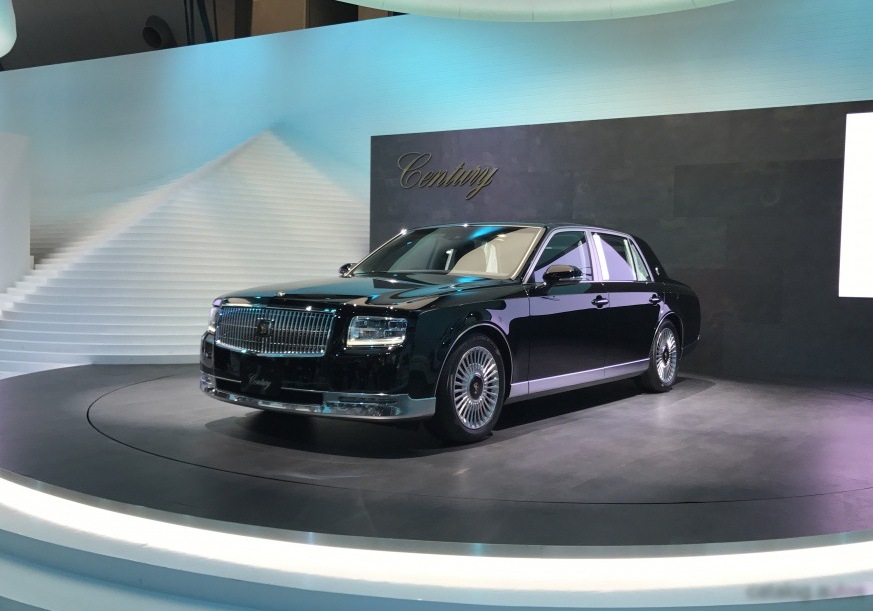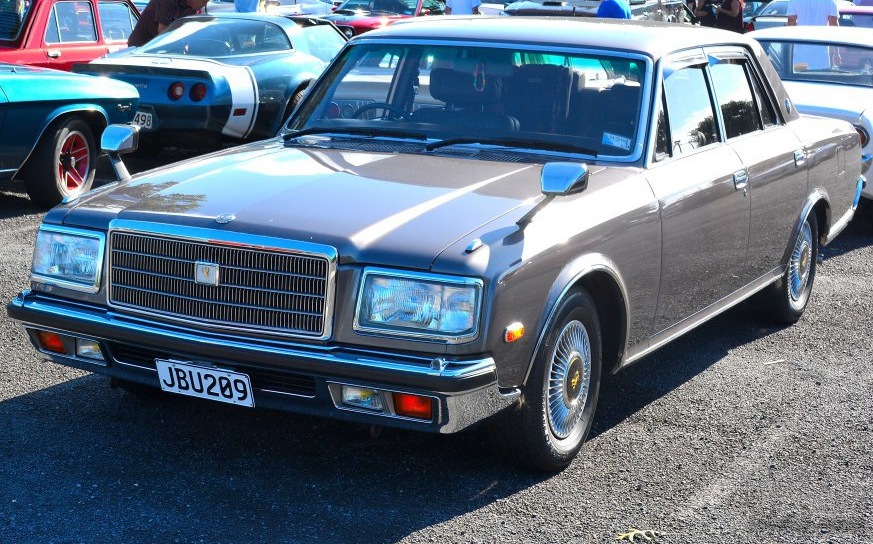
The Toyota Century I (VG45) 4.0i, produced between 1990 and 1997, represents a unique chapter in Toyota’s history. This full-size luxury sedan was specifically designed for the Japanese domestic market (JDM), catering to high-ranking executives, government officials, and as a chauffeur-driven vehicle. It wasn’t officially exported, making it a relatively rare sight outside of Japan. The 4.0i variant, equipped with the 5V-EU engine and a four-speed automatic transmission, occupied the top position in the Century I lineup, offering a blend of refined power and traditional luxury. It was built on the VG40/45 platform, a body-on-frame construction emphasizing ride comfort and durability.
Technical Specifications
| Brand | Toyota |
| Model | Century |
| Generation | Century I (VG45) |
| Type (Engine) | 4.0 i (165 Hp) |
| Start of production | 1990 |
| End of production | 1997 |
| Powertrain Architecture | Internal Combustion engine |
| Body type | Sedan |
| Seats | 5 |
| Doors | 4 |
| Fuel consumption (combined) | 12.1 l/100 km (19.4 US mpg, 23.3 UK mpg, 8.3 km/l) |
| Fuel Type | Petrol (Gasoline) |
| Weight-to-power ratio | 11.3 kg/Hp, 88.7 Hp/tonne |
| Weight-to-torque ratio | 6.4 kg/Nm, 155.4 Nm/tonne |
| Power | 165 Hp @ 4400 rpm |
| Power per litre | 41.3 Hp/l |
| Torque | 289 Nm @ 3600 rpm (213.16 lb.-ft. @ 3600 rpm) |
| Engine layout | Front, Longitudinal |
| Engine Model/Code | 5V-EU |
| Engine displacement | 3994 cm3 (243.73 cu. in.) |
| Number of cylinders | 8 |
| Engine configuration | V-engine |
| Cylinder Bore | 87 mm (3.43 in.) |
| Piston Stroke | 84 mm (3.31 in.) |
| Compression ratio | 8.6:1 |
| Number of valves per cylinder | 2 |
| Fuel injection system | Multi-port manifold injection |
| Engine aspiration | Naturally aspirated engine |
| Kerb Weight | 1860 kg (4100.6 lbs.) |
| Max. weight | 2135 kg (4706.87 lbs.) |
| Max load | 275 kg (606.27 lbs.) |
| Fuel tank capacity | 95 l (25.1 US gal | 20.9 UK gal) |
| Length | 5120 mm (201.57 in.) |
| Width | 1890 mm (74.41 in.) |
| Height | 1450 mm (57.09 in.) |
| Wheelbase | 2860 mm (112.6 in.) |
| Front track | 1575 mm (62.01 in.) |
| Rear (Back) track | 1550 mm (61.02 in.) |
| Drivetrain Architecture | Rear wheel drive |
| Drive wheel | Rear wheel drive |
| Number of gears and type of gearbox | 4 gears, automatic transmission |
| Front suspension | Double wishbone |
| Rear suspension | Coil spring |
| Front brakes | Ventilated discs |
| Rear brakes | Ventilated discs |
| Assisting systems | ABS (Anti-lock braking system) |
| Steering type | Steering rack and pinion |
| Power steering | Hydraulic Steering |
| Tires size | 215/65 R15 S |
Powertrain & Engine Architecture
The heart of the Century I 4.0i is the 5V-EU, a 4.0-liter (3994 cc) naturally aspirated V8 engine. This engine is notable for its exceptionally smooth operation and quietness, characteristics prioritized for the Century’s intended clientele. The 5V-EU utilizes a cast iron block and aluminum cylinder heads, featuring a single overhead camshaft (SOHC) design with two valves per cylinder. Fuel delivery is managed by a multi-port fuel injection system, contributing to refined throttle response. The engine produces 165 horsepower at 4,400 rpm and 289 Nm (213.16 lb-ft) of torque at 3,600 rpm. Paired with the engine is a four-speed automatic transmission, designed for seamless gear changes and a comfortable driving experience. This transmission wasn’t known for its sportiness, but rather for its reliability and smooth operation.
Driving Characteristics
The Century I 4.0i wasn’t designed for spirited driving. Its focus was on providing a supremely comfortable and isolated ride. The automatic transmission, while smooth, has relatively widely spaced gear ratios, prioritizing fuel economy and minimizing shift shock over outright acceleration. The 165 hp output, while adequate for its size, doesn’t deliver particularly brisk performance. Acceleration from 0 to 60 mph is estimated to be around 9-10 seconds. Compared to other Century I variants, such as those with manual transmissions (though rare), the automatic version sacrifices some responsiveness. However, it excels in providing a relaxed and effortless cruising experience, perfectly suited for long highway journeys or chauffeur-driven applications.
Equipment & Trim Levels
The 4.0i trim represented the pinnacle of Century I luxury. Standard features included power-adjustable seats, air conditioning, power windows and locks, and a high-quality audio system. The interior was typically finished in high-grade cloth or leather, with wood trim accents. Optional extras included a rear-seat entertainment system, upgraded audio components, and a power sunroof. The Century I was known for its attention to detail and build quality, with a focus on creating a serene and comfortable cabin environment. The exterior featured chrome accents and a dignified, understated design, reflecting its status as a luxury vehicle.
Chassis & Braking
The Century I utilized a traditional body-on-frame construction, which contributed to its comfortable ride quality but also added weight. The suspension consisted of a double wishbone setup at the front and a coil spring arrangement at the rear. Braking duties were handled by ventilated disc brakes on all four wheels, supplemented by an Anti-lock Braking System (ABS) for enhanced safety. The steering system employed a rack and pinion setup with hydraulic power assistance, providing light and effortless steering feel. The tires were typically 215/65 R15 size, chosen for a balance of comfort and grip.
Market Reception & Comparison
The Toyota Century I was not subject to extensive public review in the Western automotive press due to its exclusive JDM status. However, within Japan, it was highly regarded for its luxury, comfort, and reliability. Critics praised its quiet cabin, smooth ride, and high build quality. Compared to other Japanese luxury cars of the era, such as the Nissan President or the Mitsubishi Dignity, the Century I offered a more understated and conservative design. Fuel economy, at 12.1 l/100 km, was typical for a large V8-powered sedan of the time. Reliability was a strong point, with the 5V-EU engine proving to be durable and long-lasting.
Legacy
The Toyota Century I established a unique identity for Toyota in the luxury sedan segment. While it never achieved widespread international recognition, it remains a highly sought-after classic car in Japan. The 4.0i variant, with its powerful V8 engine and luxurious appointments, is particularly desirable. Today, well-maintained examples command high prices in the used car market. The 5V-EU engine is known for its longevity, but like any older vehicle, it requires regular maintenance to ensure continued reliability. The Century I’s legacy lies in its embodiment of traditional Japanese luxury – understated elegance, exceptional comfort, and unwavering reliability. It paved the way for subsequent generations of the Century, continuing Toyota’s commitment to providing a unique and prestigious luxury experience.