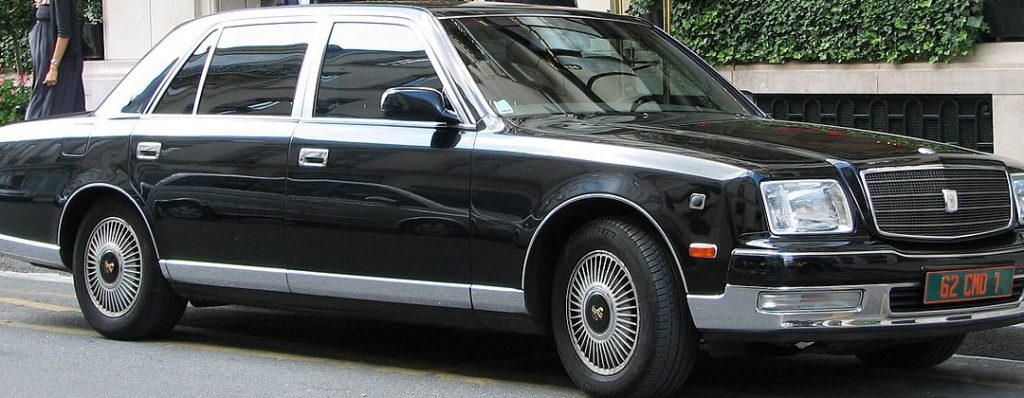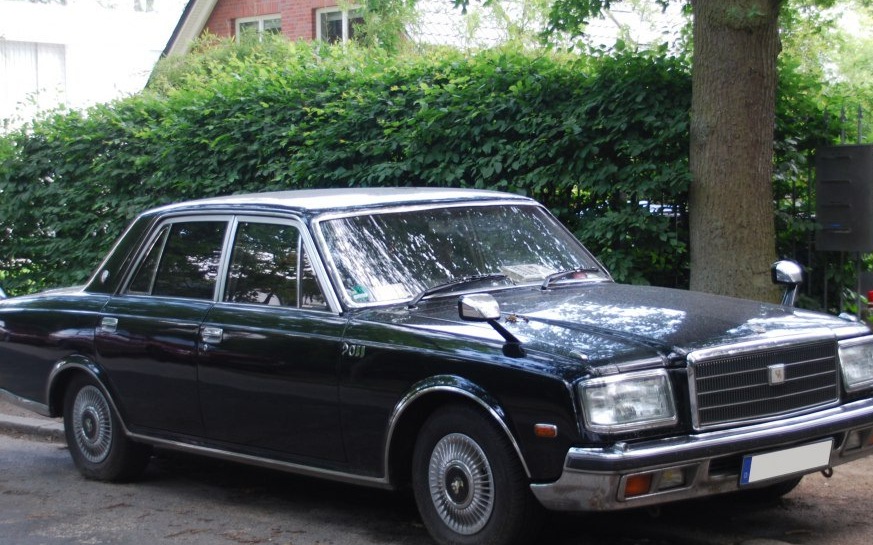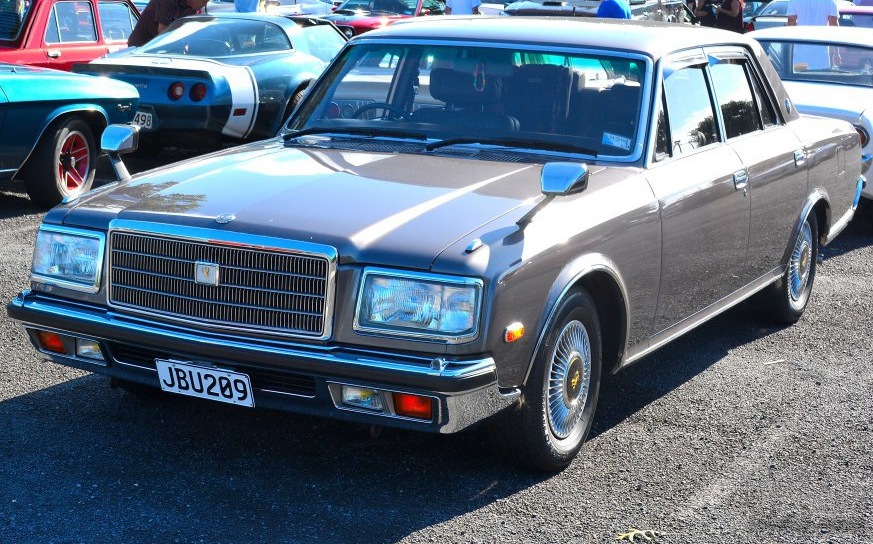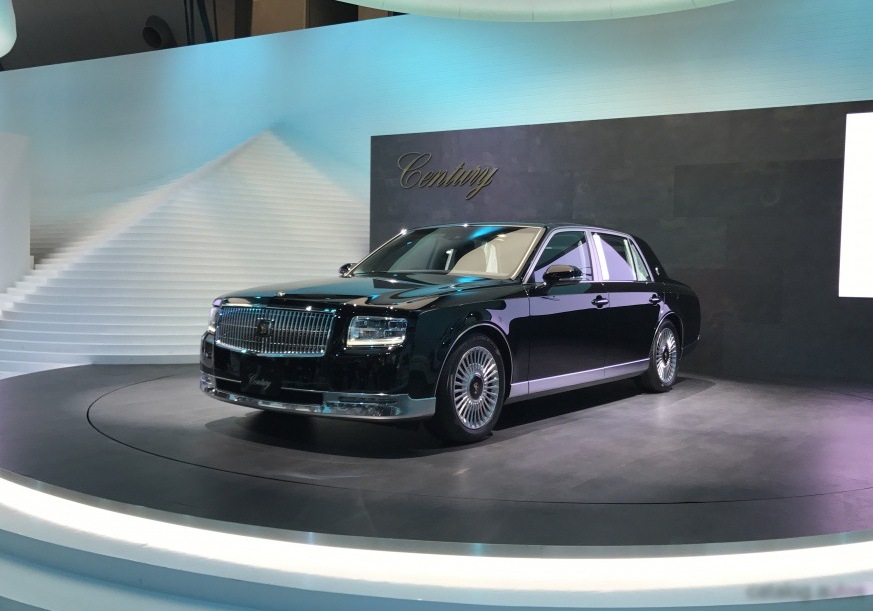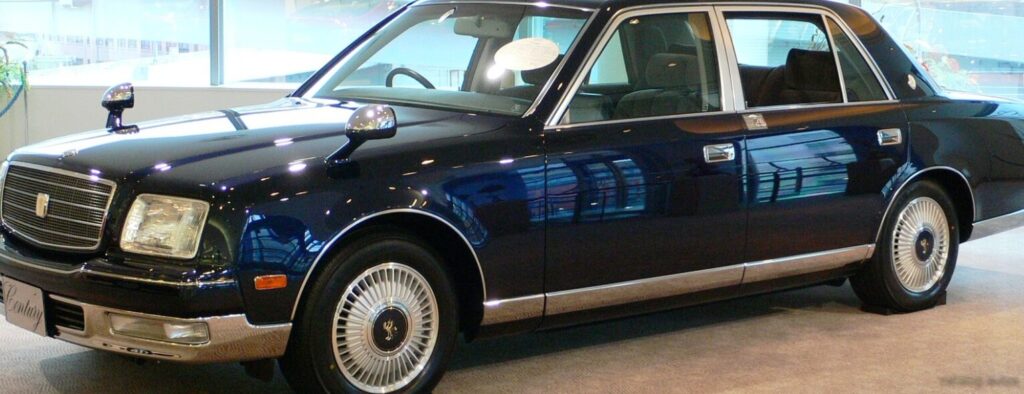
The Toyota Century II (G50), produced from 2005 to January 2017, represents the third generation of Toyota’s flagship luxury sedan. Designed as a direct successor to the highly respected Century (G30/G40), the G50 aimed to modernize the vehicle while retaining the core values of prestige, comfort, and quiet operation that defined the nameplate. Positioned firmly at the top of Toyota’s lineup, the Century II was primarily marketed towards corporate executives, government officials, and discerning clientele seeking a uniquely Japanese luxury experience. The 5.0-liter V12 engine paired with a six-speed automatic transmission was the sole powertrain offering throughout its production run, emphasizing a commitment to smooth, powerful, and refined performance. It was built on a dedicated platform, eschewing shared components with other Toyota models to maintain its exclusive character.
Technical Specifications
| Brand | Toyota |
| Model | Century |
| Generation | Century II (G50) |
| Type | 5.0 V12 (280 Hp) Automatic 6-speed |
| Start of production | 2005 |
| End of production | January, 2017 |
| Powertrain Architecture | Internal Combustion engine |
| Body type | Sedan |
| Seats | 5 |
| Doors | 4 |
| Fuel consumption (combined) | 13.2 l/100 km (17.8 US mpg, 21.4 UK mpg, 7.6 km/l) |
| CO2 emissions | 305 g/km |
| Fuel Type | Petrol (Gasoline) |
| Emission standard | SULEV |
| Weight-to-power ratio | 7.4 kg/Hp, 135.3 Hp/tonne |
| Weight-to-torque ratio | 4.5 kg/Nm, 222.2 Nm/tonne |
| Power | 280 Hp @ 5200 rpm |
| Power per litre | 56 Hp/l |
| Torque | 460 Nm @ 4000 rpm (339.28 lb.-ft. @ 4000 rpm) |
| Engine layout | Front, Longitudinal |
| Engine Model/Code | 1GZ-FE |
| Engine displacement | 4996 cm3 (304.87 cu. in.) |
| Number of cylinders | 12 |
| Engine configuration | V-engine |
| Cylinder Bore | 81 mm (3.19 in.) |
| Piston Stroke | 80.8 mm (3.18 in.) |
| Compression ratio | 10.5:1 |
| Number of valves per cylinder | 4 |
| Fuel injection system | Multi-port manifold injection |
| Engine aspiration | Naturally aspirated engine |
| Valvetrain | DOHC, VVT-i |
| Engine oil capacity | 9.4 l (9.93 US qt | 8.27 UK qt) |
| Coolant | 11 l (11.62 US qt | 9.68 UK qt) |
| Kerb Weight | 2070 kg (4563.57 lbs.) |
| Fuel tank capacity | 95 l (25.1 US gal | 20.9 UK gal) |
| Length | 5270 mm (207.48 in.) |
| Width | 1890 mm (74.41 in.) |
| Height | 1475 mm (58.07 in.) |
| Wheelbase | 3025 mm (119.09 in.) |
| Front track | 1575 mm (62.01 in.) |
| Rear track | 1575 mm (62.01 in.) |
| Ride height (ground clearance) | 135 mm (5.31 in.) |
| Minimum turning circle | 11.4 m (37.4 ft.) |
| Drivetrain Architecture | Rear wheel drive |
| Number of gears and type of gearbox | 6 gears, automatic transmission |
| Front suspension | Double wishbone, Air suspension |
| Rear suspension | Double wishbone, Air suspension |
| Front brakes | Ventilated discs |
| Rear brakes | Ventilated discs |
| Assisting systems | ABS (Anti-lock braking system) |
| Steering type | Steering rack and pinion |
| Power steering | Hydraulic Steering |
| Tires size | 225/60 R16 |
| Wheel rims size | 7J x 16 |
Powertrain & Engine Architecture
The heart of the Century II is the 1GZ-FE 5.0-liter V12 engine. This naturally aspirated powerplant is notable for its exceptionally smooth operation and refined power delivery. The engine utilizes a 60-degree V-angle, contributing to its balance and reduced vibrations. It features a double overhead camshaft (DOHC) design with Toyota’s Variable Valve Timing-intelligent (VVT-i) system, optimizing performance and fuel efficiency across the rev range. Fuel is delivered via a multi-port fuel injection system. The engine’s construction emphasizes durability and longevity, reflecting the Century’s intended lifespan of decades. Paired exclusively with a six-speed automatic transmission, the powertrain was designed for seamless shifts and a relaxed driving experience. The transmission itself is a conventional torque-converter automatic, tuned for comfort rather than aggressive performance.
Driving Characteristics
The Century II 5.0 V12 Automatic offers a driving experience focused on comfort and refinement. With 280 horsepower and 460 Nm (339 lb-ft) of torque, acceleration is brisk but not overtly sporty. The six-speed automatic transmission is programmed with smooth, almost imperceptible shifts, prioritizing a relaxed cruising experience. The gear ratios are optimized for effortless highway travel and comfortable city driving. Compared to hypothetical higher-output versions, this configuration prioritizes smoothness and fuel economy over outright speed. A manual transmission was never offered on the G50 Century, reinforcing its positioning as a chauffeur-driven or executive-owned vehicle. The rear-wheel-drive layout contributes to a balanced feel, but the car’s substantial weight (over 2000 kg) limits its agility in corners.
Equipment & Trim Levels
The Century II was exceptionally well-equipped, even by luxury car standards. Standard features included leather upholstery, power-adjustable heated and ventilated front seats, a premium audio system, automatic climate control, and a comprehensive suite of safety features. The interior was designed with a focus on traditional Japanese aesthetics, utilizing high-quality materials and meticulous craftsmanship. Optional extras included a rear-seat entertainment system, upgraded leather trim, and a selection of exterior colors. The trim level was largely standardized, with customization options focused on individual preferences rather than distinct packages. The emphasis was on providing a consistently luxurious experience across the entire model range.
Chassis & Braking
The Century II features a robust chassis designed for comfort and stability. Both the front and rear suspension utilize a double wishbone configuration, complemented by an air suspension system. The air suspension provides a remarkably smooth ride, automatically adjusting to road conditions and load variations. Braking duties are handled by ventilated disc brakes on all four wheels, coupled with an Anti-lock Braking System (ABS). The car’s substantial weight necessitates a powerful braking system to ensure confident stopping performance. Stabilizer bars are fitted to both the front and rear axles to minimize body roll during cornering.
Market Reception & Comparison
The Toyota Century II was not a high-volume seller, and it wasn’t typically subject to extensive road tests by automotive publications outside of Japan. Critics generally praised its exceptional ride quality, luxurious interior, and quiet operation. However, its size, weight, and relatively modest performance (compared to European luxury rivals) were often noted. Fuel economy, at 13.2 l/100km, was considered poor even for a large V12 engine. Compared to other trims within the Century lineup (there were no other trims), the 5.0 V12 Automatic represented the pinnacle of the model range, offering the most refined and powerful driving experience. Its reliability was generally considered excellent, consistent with Toyota’s reputation.
Legacy
The Toyota Century II remains a highly sought-after vehicle among collectors and enthusiasts of Japanese automotive history. The 1GZ-FE V12 engine is known for its durability and relatively straightforward maintenance, although parts availability can be a challenge outside of Japan. The Century II’s unique blend of traditional Japanese aesthetics, luxurious comfort, and robust engineering has cemented its status as a classic. In the used car market, well-maintained examples command premium prices, reflecting their rarity and enduring appeal. The Century II represents a unique chapter in Toyota’s history, showcasing the company’s commitment to creating a truly exceptional luxury vehicle.