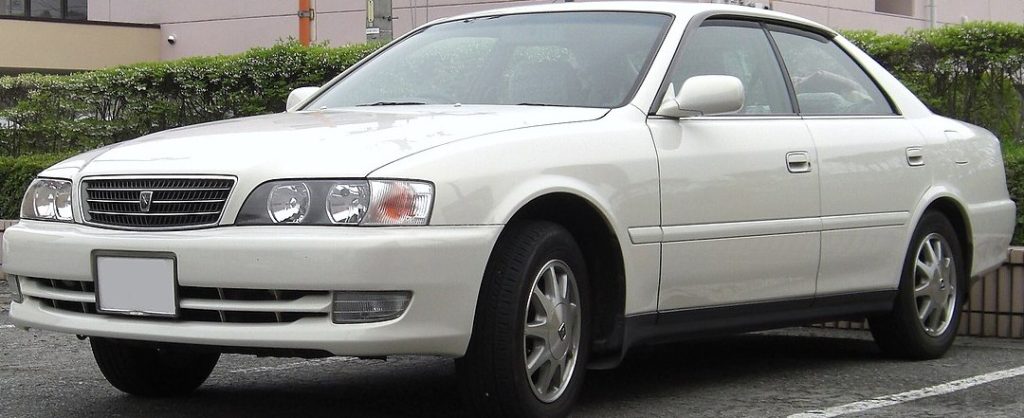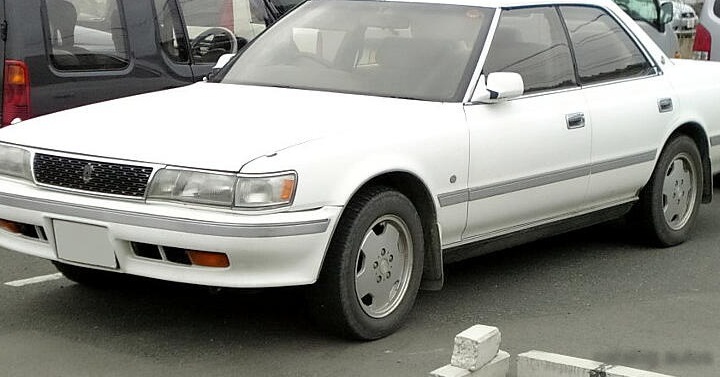
The Toyota Chaser 1.8, producing 105 horsepower, was a variant of the popular Chaser sedan manufactured between 1984 and 1988. This model occupied an entry-level position within the broader Chaser lineup of the time, appealing to buyers seeking a comfortable and reliable rear-wheel-drive sedan with reasonable fuel economy. It was part of the second generation (XG10) Chaser, which aimed to blend sporty styling with practical family car attributes. The Chaser, in general, was primarily a Japan-market vehicle, though limited grey market imports found their way to other regions.
Technical Specifications
| Brand | Toyota |
| Model | Chaser |
| Generation | Chaser (XG10) |
| Type (Engine) | 1.8 (105 Hp) |
| Start of production | 1984 |
| End of production | 1988 |
| Powertrain Architecture | Internal Combustion Engine |
| Body type | Sedan |
| Seats | 5 |
| Doors | 4 |
| Fuel consumption (urban) | 9.8 l/100 km (24 US mpg, 28.8 UK mpg) |
| Fuel consumption (extra urban) | 5.3 l/100 km (44.4 US mpg, 53.3 UK mpg) |
| Fuel Type | Petrol (Gasoline) |
| Power | 105 Hp @ 5600 rpm |
| Power per litre | 57.1 Hp/l |
| Torque | 149 Nm @ 2800 rpm (109.9 lb.-ft. @ 2800 rpm) |
| Engine Model/Code | 4S-Fi |
| Engine displacement | 1838 cm3 (112.16 cu. in.) |
| Number of cylinders | 4 |
| Engine configuration | Inline |
| Number of valves per cylinder | 4 |
| Fuel injection system | Multi-port manifold injection |
| Engine aspiration | Naturally aspirated |
| Engine oil capacity | 3.3 l (3.49 US qt | 2.9 UK qt) |
| Fuel tank capacity | 65 l (17.17 US gal | 14.3 UK gal) |
| Length | 4690 mm (184.65 in.) |
| Width | 1695 mm (66.73 in.) |
| Height | 1375 mm (54.13 in.) |
| Wheelbase | 2680 mm (105.51 in.) |
| Drivetrain Architecture | Rear-wheel drive |
| Number of gears | 5 |
| Gearbox type | Manual transmission |
| Front brakes | Ventilated discs |
| Rear brakes | Drum |
| Assisting systems | ABS (Anti-lock braking system) |
| Tires size | 185/70 R14 |
| Wheel rims size | 14 |
Powertrain & Engine Architecture
The 1.8-liter 4S-Fi engine powering this Chaser variant was a naturally aspirated, inline-four cylinder engine. The “Fi” designation indicated the use of electronic fuel injection – specifically, a multi-port fuel injection system. This system delivered fuel directly to each intake port, improving efficiency and responsiveness compared to earlier carbureted designs. The engine featured a double overhead camshaft (DOHC) valvetrain, operating four valves per cylinder. This configuration enhanced breathing and contributed to the engine’s power output. The 4S-Fi engine was known for its relative simplicity and durability, making it a reliable powerplant. The five-speed manual transmission was the standard offering for this trim, providing drivers with direct control over the rear wheels. The gear ratios were tuned for a balance of acceleration and fuel economy, prioritizing everyday usability over outright performance.
Driving Characteristics
The Chaser 1.8 with the 105 hp engine and manual transmission offered a comfortable and predictable driving experience. Acceleration was adequate for typical urban and highway driving, but it wasn’t particularly quick. The engine delivered its peak power at 5600 rpm, requiring drivers to shift gears to maintain momentum. The rear-wheel-drive layout provided a balanced feel, although it lacked the sporty handling characteristics of some of its competitors. Compared to the higher-output Chaser variants, such as those equipped with the 2.0-liter engine, the 1.8-liter model felt noticeably less powerful. However, the lighter engine weight contributed to slightly improved fuel economy and handling agility. The five-speed manual transmission allowed for precise gear selection, enhancing driver engagement.
Equipment & Trim Levels
The 1.8-liter Chaser typically served as the base model, and as such, came with a relatively modest level of standard equipment. Interior appointments generally included cloth upholstery, a basic dashboard layout, and manual windows and door locks. Air conditioning was often an optional extra. The exterior featured steel wheels with hubcaps, and relatively simple trim. Higher trim levels of the Chaser, such as the Super Extra, offered features like power windows, upgraded audio systems, and more luxurious interior materials. The 1.8 model was aimed at buyers prioritizing value and practicality over luxury and performance.
Chassis & Braking
The Chaser 1.8 utilized a conventional rear-wheel-drive chassis with independent front suspension and a solid rear axle. The front suspension employed MacPherson struts, while the rear suspension featured leaf springs. This setup provided a comfortable ride quality, but it wasn’t particularly sophisticated. The braking system consisted of ventilated disc brakes at the front and drum brakes at the rear. Anti-lock braking system (ABS) was available as an option, enhancing safety by preventing wheel lockup during hard braking. The 14-inch steel wheels were fitted with 185/70 R14 tires, providing adequate grip for everyday driving conditions.
Market Reception & Comparison
The Toyota Chaser 1.8 was generally well-received in the Japanese market as a practical and reliable family sedan. Critics praised its comfortable ride, fuel efficiency, and build quality. However, some reviewers noted its lack of performance compared to other models in the Chaser lineup and its competitors. The 1.8-liter engine offered better fuel economy than the larger engines, making it an attractive option for budget-conscious buyers. Compared to the 2.0-liter Chaser, the 1.8 model was less expensive to purchase and maintain, but it also offered less power and refinement. The 1.8L Chaser was often seen as a sensible choice for those who didn’t require the extra performance of the higher-spec models.
Legacy
The Toyota Chaser 1.8, while not the most powerful or luxurious variant of the Chaser, has proven to be a durable and reliable vehicle. Many examples are still on the road today, testament to the quality of Toyota engineering. In the used car market, the 1.8-liter Chaser is often sought after by enthusiasts looking for a classic Japanese sedan that is relatively affordable to maintain. The 4S-Fi engine is known for its longevity, and parts availability remains reasonably good. While not a collector’s item in the same vein as some of the higher-performance Chaser models, the 1.8-liter variant represents a significant piece of Toyota’s history and continues to provide reliable transportation for its owners.