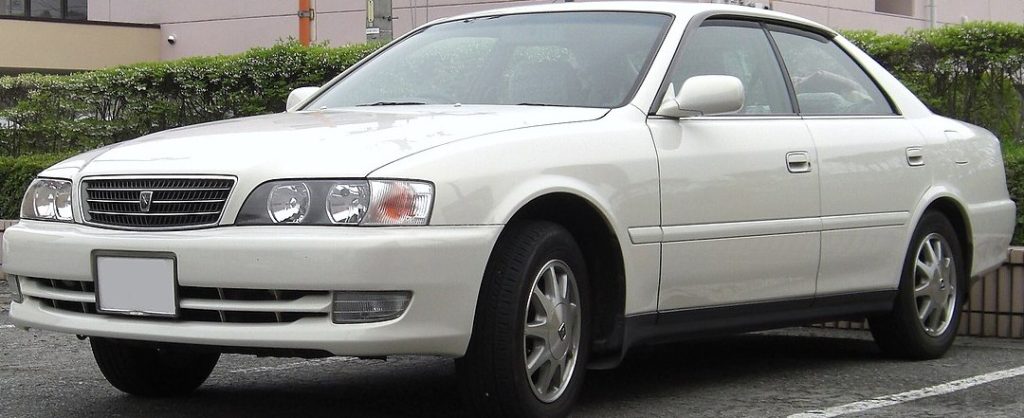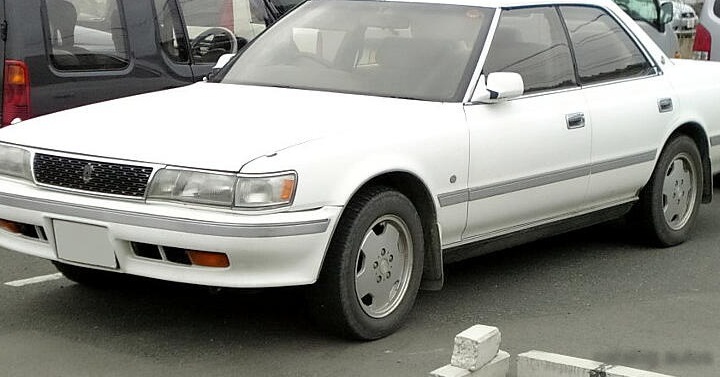
The Toyota Chaser 1.8i, producing 105 horsepower, was a variant of the JX81 series Chaser manufactured between 1988 and 1992. Positioned as the entry-level model within the Chaser lineup, it offered a more accessible and fuel-efficient alternative to the higher-performance 2.0L and 2.4L versions. The Chaser, as a whole, was a mid-size sedan primarily aimed at the Japanese domestic market, blending comfort, practicality, and a subtly sporty image. It competed with vehicles like the Nissan Skyline and Mazda Luce, appealing to buyers desiring a step above basic transportation without the full commitment to a dedicated sports car.
Technical Specifications
| Brand | Toyota |
| Model | Chaser |
| Generation | Chaser (JX81) |
| Type (Engine) | 1.8i (105 Hp) |
| Start of production | 1988 |
| End of production | 1992 |
| Powertrain Architecture | Internal Combustion engine |
| Body type | Sedan |
| Seats | 5 |
| Doors | 4 |
| Fuel consumption (urban) | 9.8 l/100 km (24 US mpg, 28.8 UK mpg, 10.2 km/l) |
| Fuel consumption (extra urban) | 5.3 l/100 km (44.4 US mpg, 53.3 UK mpg, 18.9 km/l) |
| Fuel Type | Petrol (Gasoline) |
| Power | 105 Hp @ 5600 rpm |
| Power per litre | 57.1 Hp/l |
| Torque | 149 Nm @ 2800 rpm (109.9 lb.-ft. @ 2800 rpm) |
| Engine Model/Code | 4S-Fi |
| Engine displacement | 1838 cm3 (112.16 cu. in.) |
| Number of cylinders | 4 |
| Engine configuration | Inline |
| Number of valves per cylinder | 4 |
| Fuel injection system | Multi-port manifold injection |
| Engine aspiration | Naturally aspirated engine |
| Engine oil capacity | 3.3 l (3.49 US qt | 2.9 UK qt) |
| Fuel tank capacity | 65 l (17.17 US gal | 14.3 UK gal) |
| Length | 4690 mm (184.65 in.) |
| Width | 1695 mm (66.73 in.) |
| Height | 1375 mm (54.13 in.) |
| Wheelbase | 2680 mm (105.51 in.) |
| Drivetrain Architecture | Rear wheel drive |
| Number of gears and type of gearbox | 5 gears, manual transmission |
| Front brakes | Ventilated discs |
| Rear brakes | Drum |
| Assisting systems | ABS (Anti-lock braking system) |
| Tires size | 185/70 R14 |
| Wheel rims size | 14 |
Powertrain & Engine Architecture
The 1.8i Chaser was powered by the Toyota 4S-Fi engine, a 1.8-liter (1838 cc) inline-four cylinder gasoline engine. This engine featured multi-port fuel injection, a significant improvement over earlier carbureted designs, resulting in enhanced fuel efficiency and smoother power delivery. The 4S-Fi incorporated a double overhead camshaft (DOHC) valvetrain with four valves per cylinder. This configuration maximized volumetric efficiency, allowing the engine to operate at higher speeds. The engine generated 105 horsepower at 5600 rpm and 149 Nm (109.9 lb-ft) of torque at 2800 rpm. It was typically paired with a 5-speed manual transmission, sending power to the rear wheels. The 4S-Fi was well-regarded for its inherent reliability and relatively straightforward maintenance, characteristics common to Toyota engines of that era.
Driving Characteristics
The 1.8i Chaser provided a comfortable and predictable driving experience. While not designed for high performance, the 105 hp engine offered sufficient power for everyday driving needs. Acceleration was moderate, making the car better suited for cruising and commuting than spirited driving. The 5-speed manual transmission allowed drivers to select the optimal gear for either fuel economy or to utilize the available power. Compared to the larger-displacement Chaser variants, the 1.8i felt less responsive, particularly when overtaking. However, the lighter engine weight contributed to a slightly improved handling balance. The rear-wheel-drive layout delivered a traditional driving feel, which was favored by many Japanese drivers.
Equipment & Trim Levels
The 1.8i Chaser generally came equipped with a fairly basic set of features, reflecting its position as the entry-level model. Standard equipment typically included cloth upholstery, a basic stereo system, power steering, and air conditioning. The dashboard layout was functional and prioritized usability over luxury. Optional extras, such as upgraded audio systems, electric windows, and central locking, were available, but often increased the vehicle’s price considerably. Interior color schemes were usually conservative, with shades of gray and blue being common choices.
Chassis & Braking
The Chaser 1.8i utilized a conventional rear-wheel-drive chassis layout. The front suspension employed MacPherson struts, while the rear suspension featured a semi-trailing arm design. This setup provided a reasonable compromise between ride comfort and handling performance. Braking was handled by ventilated discs at the front and drum brakes at the rear. An anti-lock braking system (ABS) was offered as an optional extra, improving safety by preventing wheel lockup during hard braking. The car rode on 14-inch steel wheels fitted with 185/70 R14 tires. Stabilizer bars were included on both the front and rear axles to minimize body roll during cornering.
Market Reception & Comparison
The Toyota Chaser 1.8i was well-received in the Japanese market as an affordable and practical sedan. Reviewers praised its fuel efficiency and comfortable ride quality. However, some critics pointed out its lack of outright performance compared to the more powerful Chaser models. Compared to the 2.0L and 2.4L versions, the 1.8i offered significantly better fuel economy, making it a popular choice for daily commuters. It also had a lower initial purchase price and potentially lower maintenance costs. However, the higher-displacement models provided a more engaging driving experience and were preferred by driving enthusiasts.
Legacy
The Toyota Chaser 1.8i, while not the most desirable variant, remains a relatively reliable and affordable classic car. The 4S-Fi engine is known for its durability, and parts availability is generally good. In the used car market, the 1.8i Chaser is often considered a good entry point into the Chaser family, offering a taste of the model’s style and driving characteristics without the higher price tag associated with the more powerful versions. Although not a high-performance machine, the 1.8i Chaser represents a practical and well-built Japanese sedan from the late 1980s and early 1990s, and continues to be appreciated by enthusiasts and collectors today.