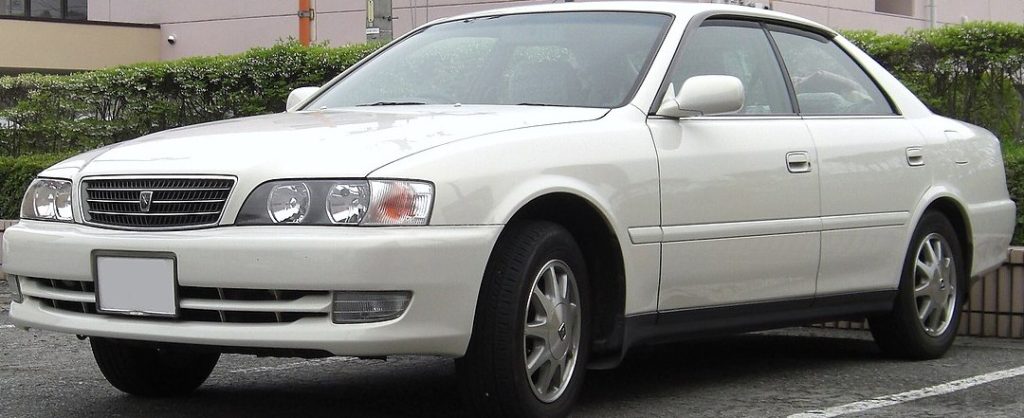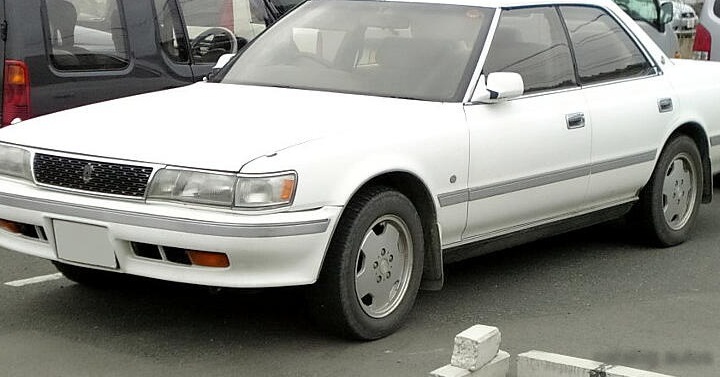
The Toyota Chaser 1.8i Automatic, produced between 1988 and 1992, represented an entry point into the popular Chaser lineage. Part of the second generation (JZX81) of the Chaser, this variant offered a more economical and accessible option compared to its higher-performance siblings, like those equipped with the 2.0-liter 1JZ engine. Positioned as a comfortable and practical sedan, the 1.8i Automatic catered to buyers prioritizing fuel efficiency and ease of driving over outright speed. It was primarily sold within the Japanese domestic market (JDM), where Toyota offered a diverse range of vehicles tailored to specific consumer needs.
Technical Specifications
| Brand | Toyota |
| Model | Chaser |
| Type | 1.8i (115 Hp) Automatic |
| Start of production | 1988 |
| End of production | 1992 |
| Powertrain Architecture | Internal Combustion engine |
| Body type | Sedan |
| Seats | 5 |
| Doors | 4 |
| Fuel consumption (urban) | 9.8 l/100 km (24 US mpg) |
| Fuel consumption (extra urban) | 5.3 l/100 km (44.4 US mpg) |
| Fuel Type | Petrol (Gasoline) |
| Power | 115 Hp @ 5400 rpm |
| Torque | 155 Nm @ 2800 rpm (114.32 lb.-ft. @ 2800 rpm) |
| Engine layout | Front, Longitudinal |
| Engine Model/Code | 4S-FE |
| Engine displacement | 1762 cm3 (107.52 cu. in.) |
| Number of cylinders | 4 |
| Engine configuration | Inline |
| Cylinder Bore | 81 mm (3.19 in.) |
| Piston Stroke | 85.5 mm (3.37 in.) |
| Compression ratio | 9.5:1 |
| Number of valves per cylinder | 4 |
| Fuel injection system | Multi-port manifold injection |
| Engine aspiration | Naturally aspirated |
| Engine oil capacity | 3.6 l (3.8 US qt | 3.17 UK qt) |
| Coolant capacity | 6.8 l (7.19 US qt | 5.98 UK qt) |
| Fuel tank capacity | 65 l (17.17 US gal | 14.3 UK gal) |
| Length | 4690 mm (184.65 in.) |
| Width | 1695 mm (66.73 in.) |
| Height | 1375 mm (54.13 in.) |
| Wheelbase | 2680 mm (105.51 in.) |
| Drivetrain | Rear wheel drive |
| Number of gears | 4 |
| Gearbox type | Automatic transmission |
| Front brakes | Ventilated discs |
| Rear brakes | Drum |
| Tire size | 185/70 R14 |
| Wheel rim size | 14 |
Powertrain & Engine Architecture
The heart of the Chaser 1.8i Automatic is the 4S-FE engine, a 1.8-liter inline-four cylinder powerplant. This engine, a staple in Toyota’s lineup during the late 1980s and early 1990s, featured a cast iron block and an aluminum cylinder head. It employed multi-port fuel injection, delivering fuel directly to each intake port for improved efficiency and responsiveness. The 4S-FE utilizes a double overhead camshaft (DOHC) valvetrain, enhancing breathing and contributing to its respectable power output for its displacement. The engine’s 9.5:1 compression ratio was a balance between performance and the ability to run on the readily available gasoline of the time. Paired with the 4S-FE was a four-speed automatic transmission, designed for smooth and effortless shifting. This transmission, while not known for its sportiness, prioritized comfort and ease of use, aligning with the target demographic of this Chaser variant.
Driving Characteristics
The 115 horsepower and 155 Nm (114 lb-ft) of torque produced by the 4S-FE engine, when channeled through the four-speed automatic, resulted in a driving experience focused on practicality rather than performance. Acceleration was adequate for everyday driving, but noticeably slower than the more powerful Chaser models. The automatic transmission’s gear ratios were tuned for fuel economy and smooth cruising, meaning quick downshifts for overtaking maneuvers weren’t particularly rapid. Compared to the manual transmission versions of the 1.8i, the automatic offered less driver engagement but greater convenience. Against the higher-spec Chasers with the 1JZ-GE or 1JZ-GTE engines, the 1.8i Automatic was significantly outmatched in terms of acceleration and overall performance. However, it offered a more forgiving and less demanding driving experience.
Equipment & Trim Levels
The Chaser 1.8i Automatic typically came with a fairly standard equipment list for its time. Interior appointments generally included cloth upholstery, a basic stereo system, and manual windows and locks. Air conditioning was a common feature, though power windows and central locking were often optional extras. The dashboard layout was functional and straightforward, prioritizing usability over aesthetic flair. Higher trim levels, if selected, might have included features like upgraded audio systems, power mirrors, and more comfortable seating materials. The overall interior ambiance was geared towards providing a comfortable and practical space for passengers.
Chassis & Braking
The Chaser 1.8i Automatic utilized a traditional rear-wheel-drive layout, contributing to its balanced handling characteristics. The suspension consisted of MacPherson struts in the front and a semi-trailing arm setup in the rear. Braking duties were handled by ventilated discs at the front and drum brakes at the rear. While adequate for normal driving conditions, the drum brakes on the rear limited the car’s overall stopping power compared to models equipped with all-disc brakes. A stabilizer bar was included at the front to reduce body roll during cornering, improving handling stability. The chassis was designed to provide a comfortable ride quality, prioritizing smoothness over sporty handling.
Market Reception & Comparison
The Toyota Chaser 1.8i Automatic was generally well-received as an affordable and reliable sedan. Critics acknowledged its fuel efficiency and comfortable ride, but noted its lack of sporting pretensions. Compared to other trims in the Chaser lineup, such as the 2.0-liter models, the 1.8i Automatic offered a lower price point but sacrificed performance. Its fuel economy was a strong selling point, particularly in a market increasingly conscious of fuel costs. Reliability was also a key factor in its appeal, as Toyota had a strong reputation for building durable and dependable vehicles. In the JDM market, it competed with other similarly sized and priced sedans from Nissan and Honda.
Legacy
The 4S-FE engine, found in the Chaser 1.8i Automatic, is known for its durability and relatively simple maintenance requirements. While not a high-performance engine, it has proven to be a reliable workhorse over the years. Today, the Chaser 1.8i Automatic is a relatively affordable classic car, particularly in Japan. Its value has been increasing as JDM cars gain popularity among enthusiasts. Finding well-maintained examples can be challenging, as many have been driven extensively over the years. However, its simplicity and reliability make it a potentially rewarding project for those seeking a classic Japanese sedan. Parts availability is generally good, though some specific trim pieces may be difficult to source.