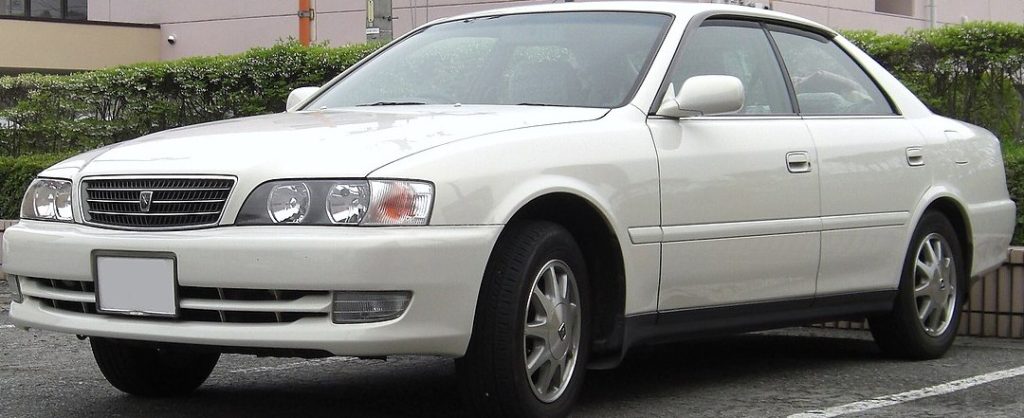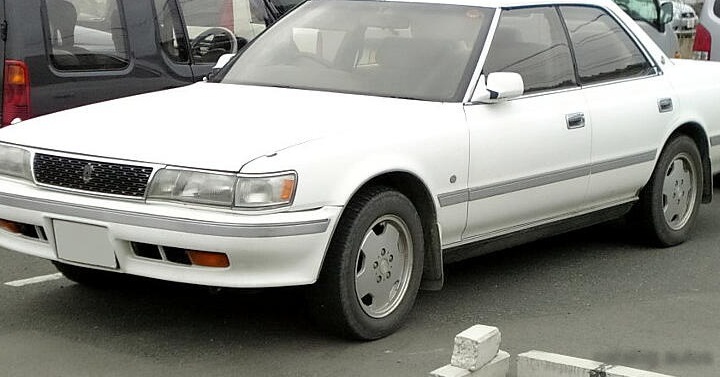
The Toyota Chaser 2.0i Automatic, produced between 1988 and 1992, represented a key variant within the second generation (X80 series) of Toyota’s Chaser lineage. Positioned as a mid-range offering, this model aimed to provide a balance of comfort, practicality, and reasonable performance for the Japanese domestic market. The Chaser, along with its siblings the Cresta and Mark II, were popular choices for families and business professionals seeking a spacious and reliable sedan. This particular 2.0i Automatic configuration offered a more accessible entry point into the Chaser range compared to the higher-performance turbocharged models or those equipped with more luxurious features.
Technical Specifications
| Brand | Toyota |
| Model | Chaser |
| Type | 2.0i (135 Hp) Automatic |
| Start of production | 1988 |
| End of production | 1992 |
| Powertrain Architecture | Internal Combustion engine |
| Body type | Sedan |
| Seats | 5 |
| Doors | 4 |
| Fuel consumption (urban) | 9.8 l/100 km (24 US mpg) |
| Fuel consumption (extra urban) | 5.3 l/100 km (44.4 US mpg) |
| Fuel Type | Petrol (Gasoline) |
| Power | 135 Hp @ 6000 rpm |
| Torque | 181 Nm @ 4000 rpm (133.5 lb.-ft. @ 4000 rpm) |
| Engine layout | Front, Longitudinal |
| Engine Model/Code | 1G-FE |
| Engine displacement | 1998 cm3 (121.93 cu. in.) |
| Number of cylinders | 4 |
| Engine configuration | Inline |
| Cylinder Bore | 86 mm (3.39 in.) |
| Piston Stroke | 86 mm (3.39 in.) |
| Compression ratio | 10:1 |
| Number of valves per cylinder | 4 |
| Fuel injection system | Multi-port manifold injection |
| Engine aspiration | Naturally aspirated |
| Engine oil capacity | 4 l (4.23 US qt | 3.52 UK qt) |
| Coolant capacity | 6.5 l (6.87 US qt | 5.72 UK qt) |
| Fuel tank capacity | 65 l (17.17 US gal | 14.3 UK gal) |
| Length | 4690 mm (184.65 in.) |
| Width | 1695 mm (66.73 in.) |
| Height | 1375 mm (54.13 in.) |
| Wheelbase | 2680 mm (105.51 in.) |
| Drivetrain | Rear wheel drive |
| Number of gears | 4 |
| Gearbox type | Automatic transmission |
| Front brakes | Ventilated discs |
| Rear brakes | Drum |
| Tire size | 185/70 R14 |
| Wheel rim size | 14 |
Powertrain & Engine Architecture
The heart of the Chaser 2.0i Automatic was the 1G-FE engine, a 2.0-liter (1998cc) inline-four cylinder powerplant. This engine was a staple in Toyota’s lineup during the late 1980s and early 1990s, known for its reliability and relatively smooth operation. The 1G-FE featured a cast iron block and an aluminum cylinder head, incorporating a double overhead camshaft (DOHC) valvetrain with four valves per cylinder. Fuel delivery was handled by a multi-port fuel injection system, contributing to improved fuel efficiency and throttle response compared to earlier carbureted engines. The engine produced 135 horsepower at 6000 rpm and 181 Nm (133.5 lb-ft) of torque at 4000 rpm. Paired with this engine was a four-speed automatic transmission, designed for comfortable and effortless cruising. This transmission wasn’t known for its sportiness, prioritizing smooth shifts over aggressive downshifts.
Driving Characteristics
The 2.0i Automatic Chaser offered a comfortable, albeit not particularly sporty, driving experience. The automatic transmission, while smooth, did detract from the overall performance feel. Acceleration was adequate for everyday driving, but it lacked the punch of the turbocharged variants or even the manual transmission versions of the 2.0i. The gear ratios were tuned for fuel economy and relaxed cruising, meaning the engine often felt strained during quick overtaking maneuvers. The rear-wheel-drive configuration provided a balanced feel, but the relatively soft suspension setup prioritized ride comfort over sharp handling. Compared to the more powerful Chaser variants, the 2.0i Automatic felt noticeably slower, with a 0-60 mph time estimated to be around 10-11 seconds.
Equipment & Trim Levels
The 2.0i Automatic trim level typically included features such as power steering, air conditioning, and an AM/FM radio. Interior upholstery was usually cloth, available in a range of colors. Higher trim levels within the Chaser range offered upgrades like power windows, central locking, and upgraded audio systems. Optional extras for the 2.0i Automatic could include a sunroof, alloy wheels, and upgraded interior trim. The dashboard layout was functional and straightforward, typical of Japanese cars of that era, with clearly labeled controls and a focus on usability.
Chassis & Braking
The Chaser 2.0i Automatic utilized a traditional body-on-frame construction, providing a robust and durable platform. The front suspension consisted of MacPherson struts, while the rear employed a semi-trailing arm setup. Braking duties were handled by ventilated discs at the front and drum brakes at the rear. Anti-lock braking system (ABS) was available as an option, enhancing safety and control during emergency braking situations. The standard tire size was 185/70 R14, mounted on 14-inch steel wheels. Stabilizer bars were fitted to both the front and rear axles, helping to reduce body roll during cornering.
Market Reception & Comparison
The Chaser 2.0i Automatic was generally well-received in the Japanese market as a practical and reliable family sedan. Critics praised its comfortable ride, spacious interior, and fuel efficiency. However, it was often criticized for its lack of sporting character compared to its turbocharged siblings or competitors like the Nissan Skyline. The 1.8-liter Chaser models offered a more affordable entry point, but the 2.0i provided a noticeable step up in performance. Compared to the 2.4-liter or turbocharged versions, the 2.0i Automatic offered a lower purchase price and potentially lower running costs, but at the expense of outright performance.
Legacy
The Toyota Chaser 2.0i Automatic, while not the most sought-after variant, remains a relatively common sight in the used car market today. The 1G-FE engine is known for its durability and longevity, and with proper maintenance, can reliably exceed 200,000 miles. Parts availability is generally good, although some trim-specific components may be harder to find. The Chaser’s popularity in Japan has led to a growing interest among enthusiasts worldwide, particularly those seeking a classic Japanese sedan with a reputation for reliability and affordability. While not a performance icon, the 2.0i Automatic Chaser represents a solid and dependable choice for those seeking a comfortable and practical classic car.