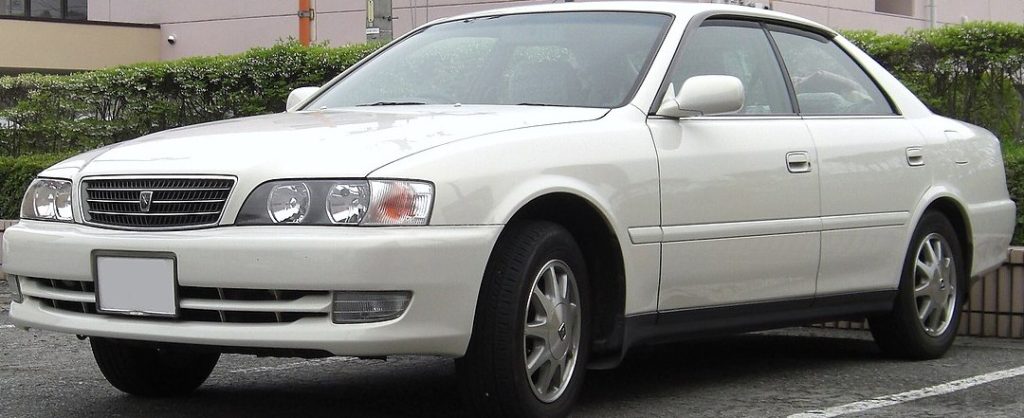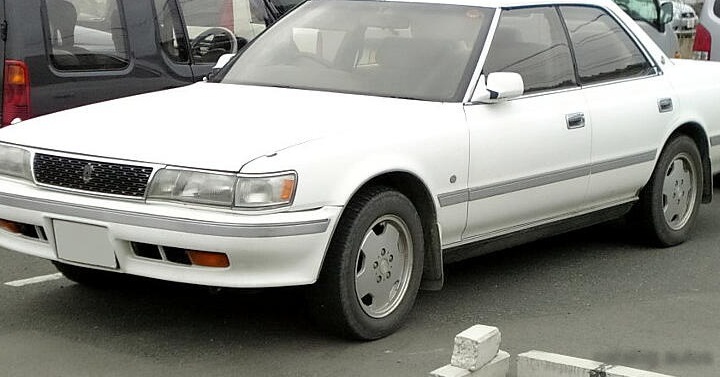
The Toyota Chaser 2.0i, produced between 1988 and 1991, represented a significant offering within the third generation (X70) of the Chaser lineage. Positioned as a mid-range variant, it catered to buyers seeking a blend of performance and practicality in a rear-wheel-drive, four-door sedan. The Chaser, in its entirety, was primarily a Japan-market vehicle, designed to compete with the Nissan Skyline and Mazda Savanna, offering a more accessible alternative to the luxury-focused Crown. This 2.0i model, with its 170 horsepower engine, aimed to provide a sporty driving experience without the higher price tag of the more powerful, turbocharged variants.
Technical Specifications
| Brand | Toyota |
| Model | Chaser |
| Generation | Chaser (X70) |
| Type (Engine) | 2.0i (170 Hp) |
| Start of production | 1988 |
| End of production | 1991 |
| Powertrain Architecture | Internal Combustion engine |
| Body type | Sedan |
| Seats | 5 |
| Doors | 4 |
| Fuel consumption (urban) | 12 l/100 km (19.6 US mpg) |
| Fuel consumption (extra urban) | 5.4 l/100 km (43.6 US mpg) |
| Fuel Type | Petrol (Gasoline) |
| Power | 170 Hp @ 6000 rpm |
| Torque | 226 Nm @ 3600 rpm (166.69 lb.-ft. @ 3600 rpm) |
| Engine layout | Front, Longitudinal |
| Engine Model/Code | 1G-GZE |
| Engine displacement | 1988 cm3 (121.32 cu. in.) |
| Number of cylinders | 6 |
| Engine configuration | Inline |
| Cylinder Bore | 75 mm (2.95 in.) |
| Piston Stroke | 75 mm (2.95 in.) |
| Compression ratio | 8:1 |
| Number of valves per cylinder | 4 |
| Fuel injection system | Multi-port manifold injection |
| Engine aspiration | Naturally aspirated engine |
| Valvetrain | DOHC |
| Fuel tank capacity | 65 l (17.17 US gal | 14.3 UK gal) |
| Length | 4690 mm (184.65 in.) |
| Width | 1695 mm (66.73 in.) |
| Height | 1375 mm (54.13 in.) |
| Wheelbase | 2680 mm (105.51 in.) |
| Drivetrain Architecture | Rear wheel drive |
| Number of gears and type of gearbox | 5 gears, manual transmission |
| Front brakes | Ventilated discs |
| Rear brakes | Disc |
| Assisting systems | ABS (Anti-lock braking system) |
| Tires size | 185/70 R14 |
| Wheel rims size | 14 |
Powertrain & Engine Architecture
The heart of the Chaser 2.0i was the 1G-GZE engine, a 2.0-liter (1988cc) inline-six cylinder powerplant. While the “ZE” designation often implies a supercharged variant, this particular iteration was naturally aspirated. This engine utilized a dual overhead camshaft (DOHC) valvetrain, operating four valves per cylinder, and a multi-port fuel injection system. The 8:1 compression ratio was a compromise between performance and the fuel quality available in the Japanese market. The 1G-GZE was known for its relatively smooth power delivery and willingness to rev, characteristics that made it a popular choice for enthusiasts. The engine was mounted longitudinally in the front of the vehicle, driving the rear wheels. The standard transmission for this model was a five-speed manual, providing drivers with direct control over the engine’s power.
Driving Characteristics
The 170 horsepower and 167 lb-ft of torque offered by the 2.0i engine provided a respectable, though not overwhelming, driving experience. Compared to the turbocharged variants of the Chaser, the 2.0i lacked the immediate punch and acceleration. However, it offered a more linear power delivery, making it easier to control in everyday driving situations. The five-speed manual transmission allowed drivers to keep the engine in its optimal power band, resulting in brisk acceleration. The rear-wheel-drive configuration contributed to a balanced handling feel, although the Chaser wasn’t marketed as a dedicated sports sedan. The suspension, tuned for comfort and stability, provided a reasonably compliant ride, even on less-than-perfect road surfaces.
Equipment & Trim Levels
The Chaser 2.0i typically came equipped with a reasonable level of standard features for its time. Interior appointments included cloth upholstery, a basic instrument cluster, and power windows. Air conditioning was a common inclusion. Optional extras could include upgraded audio systems, power mirrors, and a sunroof. The trim level of the 2.0i generally fell in the middle of the Chaser range. It offered more features than the base models but lacked the luxury appointments found in the higher-end trims, such as leather upholstery and more sophisticated audio systems. The dashboard layout was functional and straightforward, prioritizing usability over aesthetic flair.
Chassis & Braking
The Chaser 2.0i utilized a traditional body-on-frame construction, providing a robust and durable chassis. The front suspension consisted of MacPherson struts, while the rear employed a multi-link setup. This suspension configuration aimed to balance ride comfort with handling stability. Braking duties were handled by ventilated discs at the front and solid discs at the rear. An Anti-lock Braking System (ABS) was included as standard equipment, enhancing safety by preventing wheel lockup during hard braking. The 185/70 R14 tires provided adequate grip for everyday driving conditions.
Market Reception & Comparison
The Toyota Chaser 2.0i was generally well-received in the Japanese market as a practical and reliable sedan. Critics praised its comfortable ride, decent performance, and relatively affordable price. Compared to the turbocharged Chaser variants, the 2.0i offered better fuel economy, though at the expense of outright speed. It also proved to be less demanding in terms of maintenance, as the naturally aspirated engine didn’t require the same level of attention as its forced-induction counterparts. Against competitors like the Nissan Skyline and Mazda Savanna, the Chaser 2.0i offered a compelling value proposition, appealing to buyers who prioritized practicality and reliability over all-out performance.
Legacy
The Toyota Chaser 2.0i, while not as iconic as some of its turbocharged siblings, remains a respected vehicle among enthusiasts. The 1G-GZE engine, in its naturally aspirated form, is known for its durability and relatively simple maintenance requirements. Today, well-maintained examples of the Chaser 2.0i are becoming increasingly sought after by collectors and enthusiasts who appreciate its classic styling and rear-wheel-drive configuration. The car’s relative rarity outside of Japan adds to its appeal. While finding parts can sometimes be a challenge, the Chaser 2.0i continues to offer a unique and rewarding driving experience for those willing to invest in its upkeep.