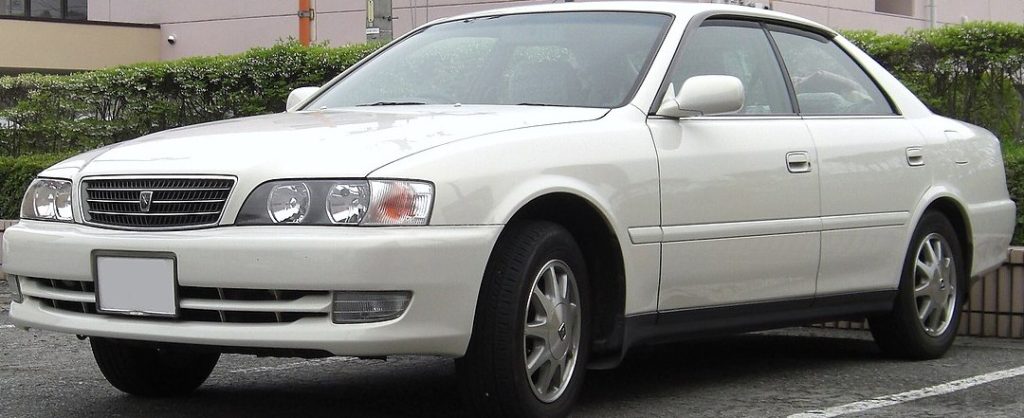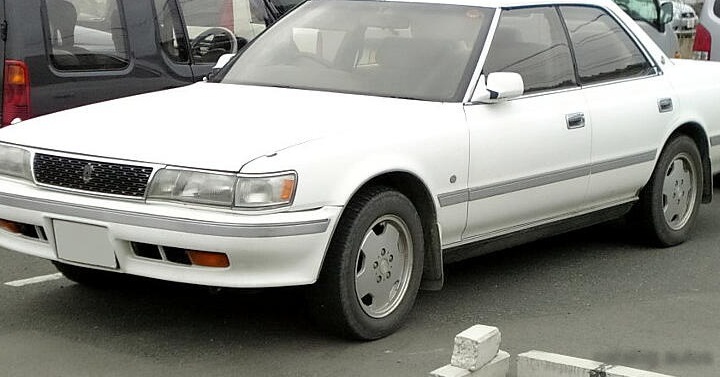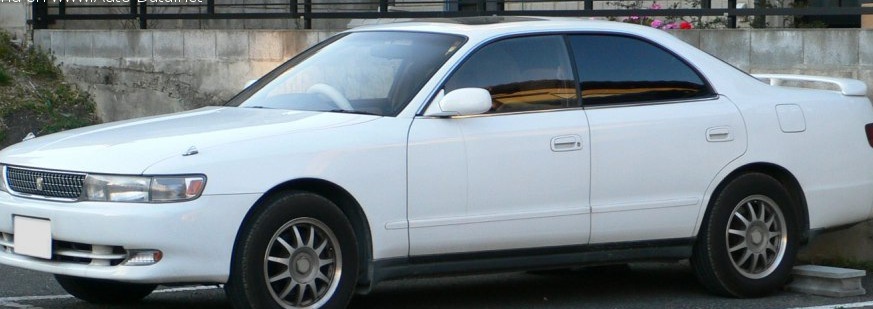
The Toyota Chaser (ZX90), produced between 1992 and 1996, represented a significant iteration of Toyota’s popular mid-size sedan. Falling within the broader JZX90 chassis code family, the 2.0i 24V variant – equipped with the 1G-FE engine producing 135 horsepower – occupied a middle ground in the Chaser lineup, offering a balance between performance and affordability. The ZX90 generation was primarily aimed at the Japanese domestic market (JDM), where it competed with rivals like the Nissan Skyline and Mazda RX-7, often becoming a popular platform for modification and tuning. This particular 2.0L engine and transmission combination was designed to appeal to buyers seeking a comfortable and reliable daily driver with a touch more sporting character than the base models.
Technical Specifications
| Brand | Toyota |
| Model | Chaser |
| Generation | Chaser (ZX 90) |
| Type (Engine) | 2.0i 24V (135 Hp) |
| Start of production | 1992 |
| End of production | 1996 |
| Powertrain Architecture | Internal Combustion engine |
| Body type | Sedan |
| Seats | 5 |
| Doors | 4 |
| Fuel consumption (combined) | 7.1 l/100 km (33.1 US mpg, 39.8 UK mpg, 14.1 km/l) |
| Fuel Type | Petrol (Gasoline) |
| Weight-to-power ratio | 9.5 kg/Hp, 105.5 Hp/tonne |
| Weight-to-torque ratio | 7.2 kg/Nm, 138.3 Nm/tonne |
| Power | 135 Hp @ 5600 rpm |
| Power per litre | 67.9 Hp/l |
| Torque | 177 Nm @ 4400 rpm (130.55 lb.-ft. @ 4400 rpm) |
| Engine layout | Front, Longitudinal |
| Engine Model/Code | 1G-FE |
| Engine displacement | 1988 cm3 (121.32 cu. in.) |
| Number of cylinders | 6 |
| Engine configuration | Inline |
| Cylinder Bore | 75 mm (2.95 in.) |
| Piston Stroke | 75 mm (2.95 in.) |
| Compression ratio | 9.6:1 |
| Number of valves per cylinder | 4 |
| Fuel injection system | Multi-port manifold injection |
| Engine aspiration | Naturally aspirated engine |
| Valvetrain | DOHC |
| Engine oil capacity | 4 l (4.23 US qt | 3.52 UK qt) |
| Coolant | 6.5 l (6.87 US qt | 5.72 UK qt) |
| Kerb Weight | 1280 kg (2821.92 lbs.) |
| Max. weight | 1555 kg (3428.19 lbs.) |
| Max load | 275 kg (606.27 lbs.) |
| Fuel tank capacity | 70 l (18.49 US gal | 15.4 UK gal) |
| Length | 4750 mm (187.01 in.) |
| Width | 1750 mm (68.9 in.) |
| Height | 1390 mm (54.72 in.) |
| Wheelbase | 2730 mm (107.48 in.) |
| Front track | 1485 mm (58.46 in.) |
| Rear (Back) track | 1495 mm (58.86 in.) |
| Drivetrain Architecture | Rear wheel drive |
| Drive wheel | Rear wheel drive |
| Number of gears and type of gearbox | 5 gears, manual transmission |
| Front suspension | Several levers and rods |
| Rear suspension | Several levers and rods |
| Front brakes | Ventilated discs |
| Rear brakes | Disc |
| Assisting systems | ABS (Anti-lock braking system) |
| Steering type | Steering rack and pinion |
| Power steering | Hydraulic Steering |
| Tires size | 185/70 R14 |
| Wheel rims size | 14 |
Powertrain & Engine Architecture
The heart of the Chaser 2.0i 24V is the 1G-FE engine, a 2.0-liter inline-six cylinder powerplant. This engine is a naturally aspirated design, utilizing multi-port fuel injection for precise fuel delivery. The “24V” designation refers to the four valves per cylinder (dual overhead camshafts – DOHC), contributing to improved breathing and higher-RPM performance. The 1G-FE is known for its relative simplicity and durability, making it a popular choice for both stock applications and modifications. The engine’s 9.6:1 compression ratio was a compromise between performance and the fuel quality available in the Japanese market. The five-speed manual transmission was the standard offering for this trim, providing drivers with full control over the engine’s powerband.
Driving Characteristics
The 135 horsepower and 177 Nm (130.55 lb-ft) of torque delivered by the 1G-FE engine, coupled with the five-speed manual transmission, provided a reasonably engaging driving experience. While not a high-performance machine, the Chaser 2.0i 24V offered sufficient power for comfortable highway cruising and spirited driving on winding roads. The gear ratios were tuned to prioritize acceleration in the mid-range, making it responsive in everyday driving situations. Compared to the more powerful 2.5-liter (1JZ-GE) and turbocharged variants (JZX100), the 2.0i 24V felt less urgent, but it also offered better fuel economy and a more forgiving power delivery. The rear-wheel-drive configuration contributed to a balanced chassis and predictable handling.
Equipment & Trim Levels
The Chaser 2.0i 24V typically came equipped with a respectable level of standard features for its time. Interior appointments included cloth upholstery, power windows, power locks, and a basic audio system. Air conditioning was also a standard feature. Optional extras included upgraded audio systems, alloy wheels, and a sunroof. The dashboard layout was functional and straightforward, prioritizing usability over extravagant design. Trim levels varied slightly depending on specific packages offered by Toyota, but generally, the 2.0i 24V represented a mid-range offering, bridging the gap between the more basic models and the higher-specification trims.
Chassis & Braking
The Chaser ZX90 utilized a traditional suspension setup, featuring independent suspension with multiple links and rods at both the front and rear. This configuration provided a comfortable ride quality while maintaining reasonable handling characteristics. The front brakes were ventilated discs, offering good stopping power, while the rear brakes were solid discs. Anti-lock braking system (ABS) was included as a standard safety feature. The chassis was designed to be relatively lightweight, contributing to the car’s agility. Stabilizer bars were fitted to both the front and rear axles to reduce body roll during cornering.
Market Reception & Comparison
The Toyota Chaser 2.0i 24V was well-received in the Japanese market as a practical and reliable sedan. Critics praised its comfortable ride, responsive engine, and overall build quality. Compared to the more expensive and powerful Chaser variants, the 2.0i 24V offered a more affordable entry point into the Chaser lineup. Its fuel economy was also a strong point, making it an attractive option for daily commuters. However, some reviewers noted that its performance was not as exhilarating as that of its turbocharged siblings. In terms of reliability, the 1G-FE engine proved to be exceptionally durable, with many examples exceeding high mileage with minimal issues.
Legacy
Today, the Toyota Chaser ZX90, particularly the 2.0i 24V variant, enjoys a growing following among JDM enthusiasts. Its relative affordability, combined with its inherent tuning potential and robust mechanicals, makes it a popular choice for restoration and modification projects. The 1G-FE engine remains a reliable and relatively easy-to-maintain powerplant. While not as highly sought after as the turbocharged JZX100 models, the 2.0i 24V offers a unique blend of practicality, reliability, and driving enjoyment, ensuring its continued presence in the classic Japanese car scene. Finding well-maintained examples is becoming increasingly difficult, driving up prices in the used car market.