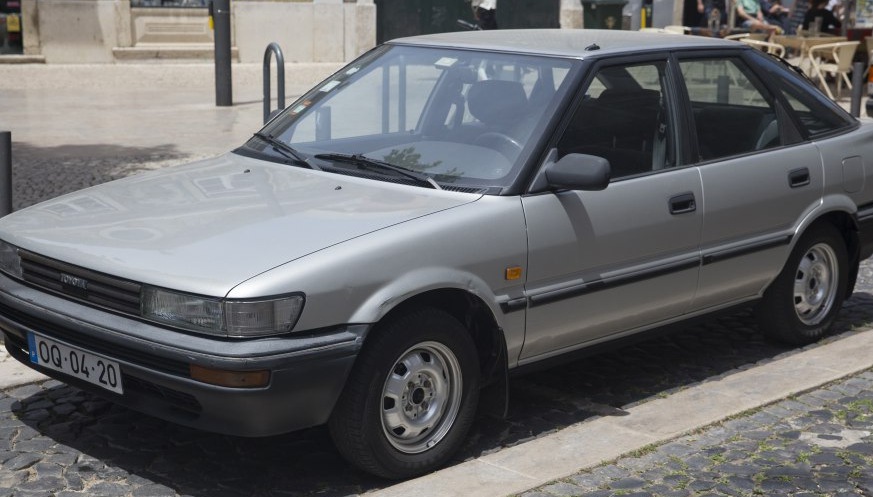
The Toyota Corolla Compact VI (E90), specifically the 1.6-liter (AE92) variant producing 90 horsepower, represents a significant iteration in the Corolla lineage. Produced from 1987 to 1992, this model occupied a crucial position in Toyota’s global strategy, particularly as an affordable and reliable compact car aimed at a broad consumer base. The E90 series marked a shift towards more modern styling and engineering compared to its predecessors, while retaining the core Corolla values of dependability and fuel efficiency. This particular 1.6L engine and transmission combination served as a mainstay in many markets, offering a balance between performance and economy.
Technical Specifications
| Brand | Toyota |
| Model | Corolla |
| Generation | Corolla Compact VI (E90) |
| Type (Engine) | 1.6 (AE92) (90 Hp) |
| Start of production | 1987 |
| End of production | 1992 |
| Powertrain Architecture | Internal Combustion engine |
| Body type | Hatchback |
| Seats | 5 |
| Doors | 3-5 |
| Fuel Type | Petrol (Gasoline) |
| Power | 90 Hp |
| Engine Model/Code | 4A-LC |
| Engine aspiration | Naturally aspirated engine |
| Engine oil capacity | 3.2 l / 3.38 US qt | 2.82 UK qt |
Powertrain & Engine Architecture
The heart of the AE92 Corolla 1.6 is the 4A-LC engine, a 1.6-liter (1587 cc) inline-four cylinder gasoline engine. This engine is naturally aspirated and utilizes a single overhead camshaft (SOHC) valvetrain. The 4A-LC is known for its simplicity and durability, characteristics that contributed to the Corolla’s reputation for reliability. Fuel delivery is managed by a throttle body injection system, a relatively basic setup for the time, but effective in providing smooth and predictable power delivery. The engine produces 90 horsepower at 6,000 rpm and approximately 98 lb-ft of torque at 3,600 rpm. The transmission paired with this engine was typically a four-speed automatic, although a five-speed manual was also available. The automatic transmission was designed for smooth, comfortable shifts, prioritizing ease of use over outright performance. It featured standard torque converter lock-up for improved fuel economy at cruising speeds.
Driving Characteristics
The 90 hp 1.6L automatic Corolla offered a comfortable, if not particularly exhilarating, driving experience. Acceleration was adequate for everyday driving, with a 0-60 mph time estimated around 12-14 seconds. The automatic transmission’s gear ratios were tuned for fuel efficiency and smooth operation, resulting in a somewhat leisurely pace. Compared to the five-speed manual version, the automatic sacrificed some responsiveness and driver engagement. The manual transmission allowed for better control and quicker acceleration, appealing to drivers who prioritized performance. However, the automatic was favored by those seeking a hassle-free driving experience, particularly in urban environments. The suspension, a traditional MacPherson strut front and torsion beam rear setup, provided a comfortable ride, absorbing bumps and imperfections in the road effectively. Steering was light and easy, making the Corolla simple to maneuver.
Equipment & Trim Levels
The AE92 Corolla 1.6, in its base automatic configuration, typically came equipped with a modest level of standard features. These generally included cloth upholstery, a basic AM/FM radio, and manual windows and door locks. Air conditioning was often an optional extra, as were power windows and a more advanced stereo system. Trim levels varied depending on the market, but generally, the 1.6L automatic represented an entry-level or mid-range offering. Higher trim levels, often featuring the more powerful 1.6L 16-valve engine or the 1.8L engine, included features like alloy wheels, upgraded interior trim, and additional convenience items. The interior design was functional and straightforward, prioritizing practicality over luxury. The dashboard layout was clean and easy to understand, with clearly labeled controls.
Chassis & Braking
The E90 Corolla’s chassis was designed to provide a balance between rigidity and weight savings. The body structure utilized high-strength steel in key areas to enhance crash safety. The front suspension featured MacPherson struts with coil springs and a stabilizer bar, while the rear suspension employed a torsion beam axle. Braking systems varied depending on the market and trim level. Base models typically featured drum brakes on the rear wheels, while higher-spec models often received disc brakes all around. The braking system was adequate for the car’s weight and performance, providing reliable stopping power in normal driving conditions. Steering was rack-and-pinion, offering precise and responsive handling.
Market Reception & Comparison
The AE92 Corolla 1.6 automatic was generally well-received by critics and consumers alike. It was praised for its reliability, fuel efficiency, and affordability. However, some reviewers noted that the engine lacked significant power, and the automatic transmission could feel sluggish at times. Compared to other compact cars of the era, such as the Honda Civic and Nissan Sentra, the Corolla offered a competitive package, particularly in terms of long-term dependability. The 1.6L engine provided a good balance between performance and economy, making it a popular choice for everyday commuting. The automatic transmission appealed to a wider range of drivers, including those who preferred a more relaxed driving experience. Fuel economy was a strong point, typically achieving around 28-32 mpg in combined driving.
Legacy
The Toyota Corolla E90 1.6 (AE92) has earned a reputation as a remarkably durable and long-lasting vehicle. Many examples are still on the road today, a testament to Toyota’s engineering and build quality. The 4A-LC engine is known for its ability to withstand high mileage with proper maintenance. In the used car market, these Corollas are often sought after for their affordability and reliability, making them a popular choice for first-time car buyers or those seeking a dependable and economical vehicle. While not a performance icon, the AE92 Corolla 1.6 automatic holds a significant place in automotive history as a symbol of Toyota’s commitment to building quality, reliable, and affordable transportation for the masses. Parts availability remains relatively good, further contributing to its longevity and appeal in the used car market.