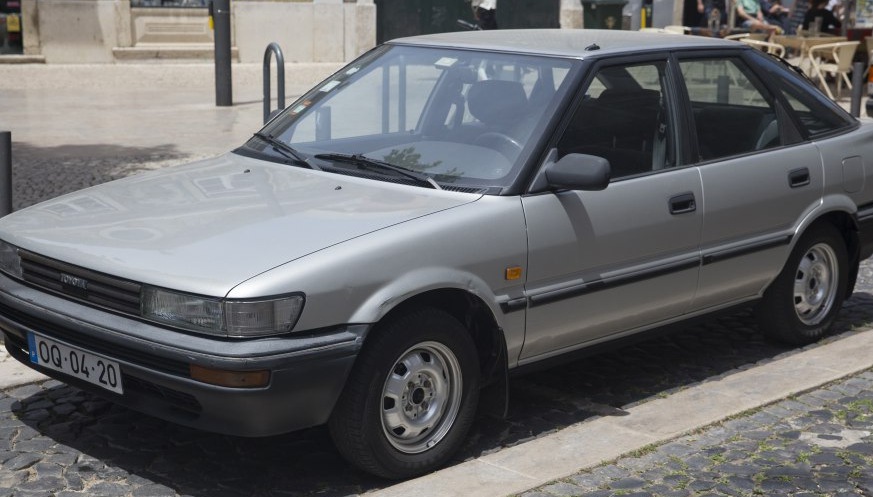
The Toyota Corolla Compact VI (E90) 1.8 D (CE90), produced between 1987 and 1992, represented a significant offering in Toyota’s lineup during a period of increasing demand for fuel-efficient and practical compact cars. This variant, powered by the 1C-L diesel engine, was primarily aimed at European markets where diesel engines enjoyed considerable popularity due to favorable taxation and fuel economy. The E90 series, the sixth generation of the Corolla, moved towards a more modern and aerodynamic design compared to its predecessors, and the 1.8 D model offered a cost-effective entry point into the range, prioritizing economy over outright performance. It was available in both 3-door and 5-door hatchback configurations.
Technical Specifications
| Brand | Toyota |
| Model | Corolla |
| Generation | Corolla Compact VI (E90) |
| Type (Engine) | 1.8 D (CE90) (64 Hp) |
| Start of production | 1987 |
| End of production | 1992 |
| Powertrain Architecture | Internal Combustion engine |
| Body type | Hatchback |
| Seats | 5 |
| Doors | 3-5 |
| Fuel Type | Diesel |
| Power | 64 Hp |
| Engine Model/Code | 1C-L |
| Engine aspiration | Naturally aspirated engine |
| Engine oil capacity | 4.3 l (4.54 US qt | 3.78 UK qt) |
| Coolant capacity | 7.3 l (7.71 US qt | 6.42 UK qt) |
Powertrain & Engine Architecture
The heart of the Corolla 1.8 D (CE90) was the 1C-L diesel engine, a 1.8-liter (1779cc) inline-four cylinder unit. This engine was a naturally aspirated design, meaning it did not employ a turbocharger or supercharger. It featured indirect injection, a common characteristic of diesel engines of that era, utilizing pre-combustion chambers to improve combustion efficiency. The 1C-L engine was known for its robust construction and relative simplicity, contributing to its longevity. The engine produced 64 horsepower (47 kW) at 4200 rpm and approximately 98 lb-ft (133 Nm) of torque at 2400 rpm. While not a powerhouse, the torque output provided reasonable pulling power for everyday driving. The transmission paired with the 1.8 D was typically a four-speed automatic, although a five-speed manual was also available. The automatic transmission was chosen to enhance ease of use, particularly in urban environments, and appeal to drivers prioritizing comfort over sporty performance.
Driving Characteristics
The driving experience in the Corolla 1.8 D (CE90) with the automatic transmission was characterized by its relaxed and unhurried nature. Acceleration was modest, with a 0-60 mph time estimated to be around 14-16 seconds. The four-speed automatic transmission, while smooth, lacked the responsiveness of more modern gearboxes. Gear ratios were optimized for fuel economy rather than performance, resulting in a noticeable delay during kickdown. However, the engine’s torque characteristics meant that it was reasonably capable of maintaining highway speeds, although overtaking required careful planning. Compared to the gasoline-powered Corolla variants, the 1.8 D offered significantly better fuel economy, making it a popular choice for drivers covering long distances. The manual transmission version, while offering more driver involvement, didn’t dramatically improve performance due to the engine’s inherent limitations.
Equipment & Trim Levels
The Corolla 1.8 D (CE90) typically occupied the lower to mid-range of the E90 lineup. Standard equipment generally included basic features such as cloth upholstery, a simple dashboard layout, and manual windows and door locks. Power steering was often an optional extra, as was air conditioning. Higher trim levels, available with the gasoline engines, offered features like central locking, electric windows, and upgraded interior trim. The interior design was functional and durable, prioritizing practicality over luxury. The 3-door version often appealed to younger buyers or those seeking a more sporty appearance, while the 5-door model offered greater versatility for families.
Chassis & Braking
The E90 Corolla featured a relatively simple chassis design. Front suspension consisted of MacPherson struts, while the rear utilized a torsion beam setup. This configuration provided a comfortable ride quality, although it wasn’t particularly sporty. Braking systems varied depending on the specific market and trim level. Lower-spec models, including the 1.8 D, often featured drum brakes on the rear wheels, while higher-spec models received disc brakes all around. Front brakes were typically ventilated discs. Stabilizer bars were fitted to both the front and rear axles to reduce body roll during cornering, although their effectiveness was limited by the suspension’s overall design. The steering was typically a recirculating ball system, providing a relatively indirect feel.
Market Reception & Comparison
The Corolla 1.8 D (CE90) was generally well-received in European markets as a practical and economical choice. Critics praised its fuel efficiency and reliability, but noted its lack of performance. Compared to the gasoline-powered Corolla variants, the 1.8 D offered significantly better fuel economy – often exceeding 50 mpg on the highway. However, it was considerably slower and less refined. The 1.6-liter gasoline engine, for example, offered a noticeable performance advantage, while the more powerful 1.8-liter gasoline engine provided a significantly more engaging driving experience. The 1.8 D’s main competitors included diesel-powered versions of the Volkswagen Golf and Ford Escort, all vying for the attention of budget-conscious buyers.
Legacy
The 1C-L diesel engine, and the Corolla 1.8 D (CE90) variant, developed a reputation for exceptional reliability and longevity. Many examples remain on the road today, testament to the engine’s robust construction and Toyota’s overall build quality. However, due to its age, maintenance can be challenging, as parts availability is becoming increasingly limited. The 1.8 D is now considered a classic car in many regions, appealing to enthusiasts seeking a simple, reliable, and economical vehicle. On the used car market, prices for well-maintained examples are steadily increasing, reflecting their growing desirability and rarity. While not a performance icon, the Corolla 1.8 D (CE90) played a vital role in establishing Toyota’s reputation for building durable and dependable vehicles.