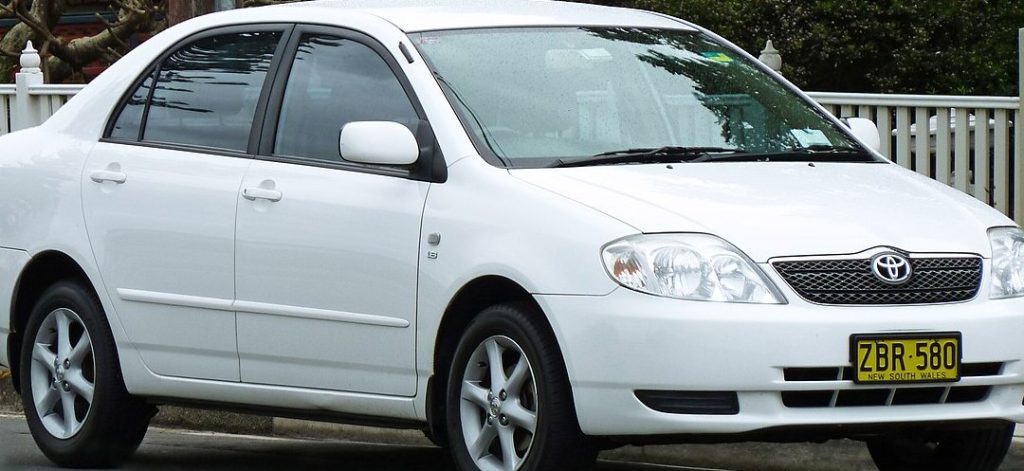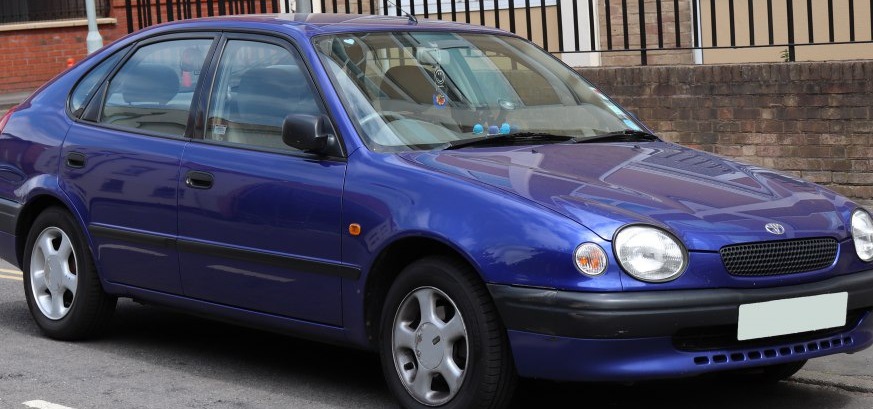
The Toyota Corolla Compact VIII (E110) 1.6, produced between 1997 and 2000, represented a significant iteration of Toyota’s globally successful Corolla line. This variant, powered by the 4A-FE engine and typically paired with either a manual or automatic transmission, was primarily aimed at the European and Asian markets, where compact hatchbacks were highly favored. The E110 generation marked a shift towards more rounded styling and improved interior space compared to its predecessor, the E100. Within the E110 range, the 1.6-liter model occupied a middle ground, offering a balance between affordability, fuel efficiency, and acceptable performance. It served as a step up from the base 1.3-liter engine while remaining more accessible than the higher-spec 1.8-liter options.
Technical Specifications
| Brand | Toyota |
| Model | Corolla |
| Generation | Corolla Compact VIII (E110) |
| Type (Engine) | 1.6 (110 Hp) |
| Start of production | 1997 |
| End of production | 2000 |
| Powertrain Architecture | Internal Combustion engine |
| Body type | Hatchback |
| Seats | 5 |
| Doors | 5 |
| Fuel Type | Petrol (Gasoline) |
| Power | 110 Hp |
| Engine Model/Code | 4A-FE |
| Engine aspiration | Naturally aspirated engine |
| Engine oil capacity | 3.2 l (3.38 US qt | 2.82 UK qt) |
| Coolant capacity | 6 l (6.34 US qt | 5.28 UK qt) |
Powertrain & Engine Architecture
The heart of the Corolla E110 1.6 was the 4A-FE engine, a 1.6-liter (1587 cc) inline-four cylinder gasoline engine. This engine was a mainstay in Toyota’s lineup for many years, known for its reliability and relatively simple design. It featured a single overhead camshaft (SOHC) valvetrain with two valves per cylinder. Fuel delivery was managed by a multi-point fuel injection system, contributing to improved fuel efficiency and reduced emissions compared to earlier carbureted engines. The 4A-FE produced 110 horsepower at 6,000 rpm and 108 lb-ft of torque at 4,400 rpm. While not a powerhouse, it provided adequate power for everyday driving. The automatic transmission offered with this variant was typically a four-speed unit, designed for smooth and comfortable operation. This transmission prioritized fuel economy and ease of use over sporty performance.
Driving Characteristics
The Corolla E110 1.6 with the automatic transmission offered a comfortable and predictable driving experience. Acceleration was adequate for merging onto highways and navigating city streets, but it wasn’t particularly quick. The four-speed automatic transmission, while smooth, lacked the responsiveness of a manual gearbox or a more modern automatic with additional gears. Gear ratios were tuned for fuel efficiency, meaning the engine often operated at lower rpm, which could sometimes feel sluggish when attempting to overtake or climb hills. Compared to the manual transmission version of the 1.6, the automatic resulted in a slight performance decrease due to the transmission’s inherent power loss. The 1.8-liter models, available in the E110 range, offered significantly more power and a more engaging driving experience, but at a higher price point. The suspension was tuned for comfort, providing a relatively soft ride that absorbed bumps and imperfections in the road well.
Equipment & Trim Levels
The E110 1.6 typically came equipped with a reasonable level of standard features, though the exact specifications varied depending on the market. Common features included power steering, central locking, electric front windows, and an AM/FM radio. Higher trim levels, often denoted by suffixes like “GL” or “GXI”, added features such as alloy wheels, air conditioning, a better audio system, and upgraded interior trim. Interior upholstery was typically cloth, with options for different colors and patterns. Dashboard configuration was relatively simple and functional, prioritizing ease of use over flashy design. Optional extras included a sunroof, rear power windows, and upgraded sound systems. Safety features were fairly basic for the time, typically including a driver’s airbag and seatbelts.
Chassis & Braking
The Corolla E110 utilized a MacPherson strut front suspension and a torsion beam rear suspension. This setup provided a good balance between ride comfort and handling. The torsion beam rear suspension was a cost-effective solution that minimized complexity while still offering acceptable handling characteristics. Braking systems varied depending on the market and trim level. Lower-spec models often featured drum brakes on the rear wheels, while higher-spec models were equipped with disc brakes all around. Front brakes were typically ventilated discs. Anti-lock Braking System (ABS) was available as an option, enhancing braking performance and safety, particularly in slippery conditions. Stabilizer bars were fitted to both the front and rear axles to reduce body roll during cornering.
Market Reception & Comparison
The Toyota Corolla E110 1.6 Automatic was generally well-received by critics and consumers alike. It was praised for its reliability, fuel efficiency, and comfortable ride. However, some reviewers noted that the engine lacked outright power, and the automatic transmission could feel sluggish at times. Compared to other compact hatchbacks of the era, such as the Volkswagen Golf, Ford Focus, and Opel/Vauxhall Astra, the Corolla offered a strong reputation for reliability and low running costs. Fuel economy was competitive, typically ranging from 30 to 35 mpg in mixed driving conditions. The 1.8-liter Corolla offered superior performance but came at a higher price, making the 1.6 a more attractive option for budget-conscious buyers. The 1.3-liter version was even more affordable but lacked the power needed for comfortable highway driving.
Legacy
The Toyota Corolla E110 1.6, particularly with the 4A-FE engine, has proven to be a remarkably durable and reliable vehicle. Many examples are still on the road today, a testament to Toyota’s engineering and build quality. The 4A-FE engine is known for its longevity and relatively simple maintenance requirements. Common issues are typically limited to age-related wear and tear, such as oil leaks and worn suspension components. In the used car market, the E110 1.6 remains a popular choice for those seeking an affordable, reliable, and fuel-efficient compact hatchback. Its reputation for dependability and low running costs continues to make it a practical and sensible option for first-time car buyers or those needing a dependable daily driver. While not a performance icon, the E110 1.6 holds a significant place in Toyota’s history as a consistently reliable and popular vehicle.