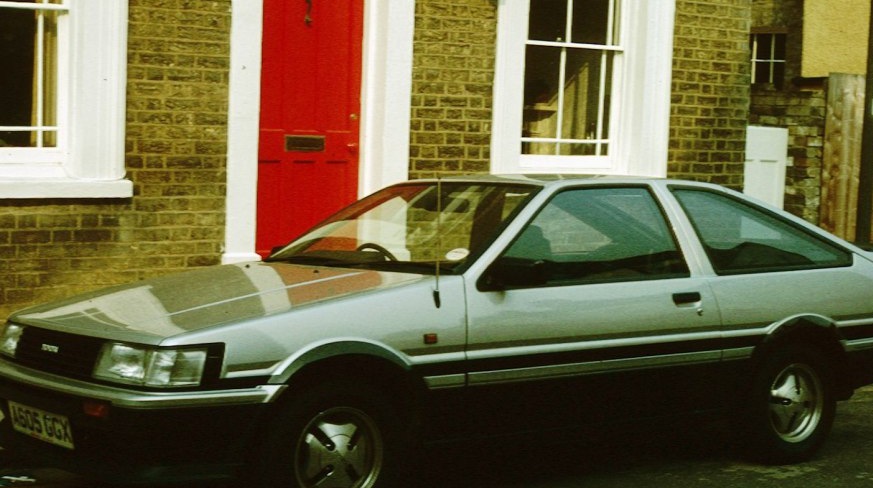
The Toyota Corolla Coupe V (E80) 1.6 GT 16V, produced between 1985 and 1987, represented a sporty iteration of Toyota’s popular Corolla line. Falling within the fifth generation of the Corolla (E80 series), this coupe aimed to attract buyers seeking a more dynamic driving experience than the standard sedan offered. The “GT” designation signified a performance-oriented trim, and the 16V indicated the engine’s four-valve-per-cylinder head, a feature that enhanced its power output. This model was primarily marketed in Japan and Europe, offering a rear-wheel-drive experience increasingly uncommon in the family car segment during that era. It occupied a middle ground in the E80 coupe lineup, positioned above the base models but below any potential limited-edition or higher-performance variants.
Technical Specifications
| Brand | Toyota |
| Model | Corolla |
| Generation | Corolla Coupe V (E80) |
| Type (Engine) | 1.6 GT 16V (124 Hp) |
| Start of production | 1985 |
| End of production | 1987 |
| Powertrain Architecture | Internal Combustion engine |
| Body type | Coupe |
| Seats | 4 |
| Doors | 2 |
| Fuel consumption (urban) | 8.9 l/100 km (26.4 US mpg) |
| Fuel consumption (extra urban) | 6.2 l/100 km (37.9 US mpg) |
| Fuel Type | Petrol (Gasoline) |
| Acceleration 0 – 100 km/h | 9.2 sec |
| Acceleration 0 – 62 mph | 9.2 sec |
| Acceleration 0 – 60 mph | 8.7 sec |
| Maximum speed | 196 km/h (121.79 mph) |
| Weight-to-power ratio | 7.7 kg/Hp |
| Weight-to-torque ratio | 6.7 kg/Nm |
| Power | 124 Hp @ 6600 rpm |
| Power per litre | 78.1 Hp/l |
| Torque | 142 Nm @ 5200 rpm (104.73 lb.-ft. @ 5200 rpm) |
| Engine layout | Front, Longitudinal |
| Engine Model/Code | 4A-GEC |
| Engine displacement | 1587 cm3 (96.84 cu. in.) |
| Number of cylinders | 4 |
| Engine configuration | Inline |
| Piston Stroke | 81 mm (3.19 in.) |
| Compression ratio | 10:1 |
| Number of valves per cylinder | 4 |
| Fuel injection system | Single-point injection |
| Engine aspiration | Naturally aspirated |
| Valvetrain | DOHC |
| Engine oil capacity | 4.1 l (4.33 US qt | 3.61 UK qt) |
| Coolant capacity | 5.6 l (5.92 US qt | 4.93 UK qt) |
| Kerb Weight | 955 kg (2105.41 lbs.) |
| Max. weight | 1345 kg (2965.22 lbs.) |
| Max load | 390 kg (859.8 lbs.) |
| Trunk (boot) space | 315 l (11.12 cu. ft.) |
| Fuel tank capacity | 50 l (13.21 US gal | 11 UK gal) |
| Length | 4200 mm (165.35 in.) |
| Width | 1645 mm (64.76 in.) |
| Height | 1335 mm (52.56 in.) |
| Wheelbase | 2400 mm (94.49 in.) |
| Front track | 1365 mm (53.74 in.) |
| Rear track | 1360 mm (53.54 in.) |
| Drivetrain | Rear wheel drive |
| Number of gears | 5 gears, manual transmission |
Powertrain & Engine Architecture
The heart of the Corolla 1.6 GT 16V was the 4A-GEC engine, a 1.6-liter inline-four cylinder powerplant. This engine was a key component of Toyota’s performance offerings in the mid-1980s. The “G” in the engine code denoted its inclusion in the performance-oriented family, while “EC” signified specific modifications for the European market. It featured a dual overhead camshaft (DOHC) valvetrain operating four valves per cylinder, a significant advancement for the time that allowed for improved breathing and higher revs. Fuel delivery was handled by a single-point fuel injection system, a relatively simple system compared to later multi-port injection, but effective for its time. The engine produced 124 horsepower at 6600 rpm and 142 Nm (104.73 lb-ft) of torque at 5200 rpm. The engine was mounted longitudinally, driving the rear wheels through a five-speed manual transmission. This rear-wheel-drive configuration was a defining characteristic of the GT model, offering a more engaging driving experience than the front-wheel-drive configurations becoming increasingly common.
Driving Characteristics
The 1.6 GT 16V offered a noticeably more spirited driving experience than the base Corolla coupes. While not a high-performance sports car, the combination of the 124 hp engine and rear-wheel drive provided a balanced and enjoyable ride. Acceleration to 60 mph took approximately 8.7 seconds, and the car could reach a top speed of 196 km/h (121.79 mph). The five-speed manual transmission allowed drivers to keep the engine in its optimal power band. Compared to the lower-powered, often carbureted, versions of the E80 Corolla, the GT 16V felt significantly more responsive. The rear-wheel-drive layout contributed to a more neutral handling balance, although it lacked the outright grip of front-wheel-drive cars in slippery conditions. The gear ratios were tuned for a balance between acceleration and fuel economy, making it a practical daily driver as well as a fun weekend car.
Equipment & Trim Levels
The 1.6 GT 16V typically came equipped with a range of features designed to enhance both comfort and driving enjoyment. Standard equipment included upgraded seats with more supportive bolstering, a sporty three-spoke steering wheel, and a more comprehensive instrument cluster. Interior trim was generally more refined than the base models, with higher-quality materials used throughout the cabin. Optional extras included power windows, central locking, and a sunroof. The exterior styling was also enhanced with features such as a rear spoiler, alloy wheels, and distinctive badging. The overall aesthetic aimed for a sporty and modern look, appealing to buyers who wanted a car that stood out from the crowd.
Chassis & Braking
The Corolla Coupe V utilized an independent McPherson strut suspension in the front, providing good handling and ride comfort. The rear suspension employed a spring strut and trailing arm setup. Stabilizer bars were fitted to both the front and rear axles to reduce body roll during cornering. Braking duties were handled by ventilated discs at the front and discs at the rear, providing adequate stopping power for the car’s weight and performance. The chassis was reinforced in key areas to improve rigidity and handling precision. Tire size was typically 195/60 VR14, providing a good balance between grip and ride comfort.
Market Reception & Comparison
The Corolla 1.6 GT 16V was generally well-received by automotive critics. It was praised for its lively engine, engaging handling, and overall value for money. Compared to other coupes in its class, such as the Volkswagen Scirocco or the Ford Escort XR3, the Corolla offered a compelling combination of performance, reliability, and affordability. Fuel economy was respectable for a performance-oriented car of the era, and the Toyota brand was already known for its reliability. However, some critics noted that the single-point fuel injection system was less sophisticated than the multi-port injection systems found in some competitors. The rear-wheel-drive layout, while enjoyable for driving enthusiasts, was becoming less common and potentially less practical in certain conditions.
Legacy
The Toyota Corolla E80 1.6 GT 16V has developed a cult following among enthusiasts, particularly those who appreciate classic Japanese sports coupes. The 4A-GEC engine is known for its durability and tunability, making it a popular choice for engine swaps and modifications. While finding well-maintained examples can be challenging, the car remains relatively affordable in the used car market. The combination of rear-wheel drive, a lively engine, and a sporty design has ensured its enduring appeal. Today, it’s remembered as a fun-to-drive and reliable coupe that offered a unique driving experience in its time.