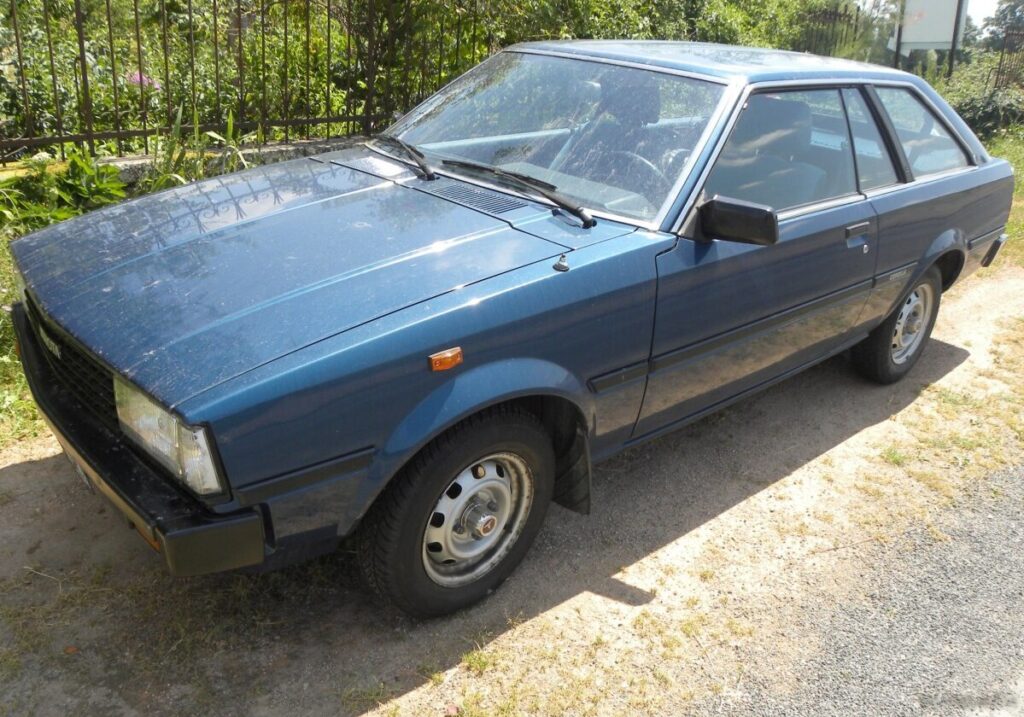
The Toyota Corolla E70, produced from 1979 to 1983, represented a significant evolution for Toyota’s popular compact car. Within the E70 range, the 1.6 GT (TE71) hatchback, powered by the 2T-G engine producing 110 horsepower, occupied a sporty niche. This variant aimed to appeal to drivers seeking a more engaging driving experience than the standard Corolla models, offering a blend of practicality and performance in a three-door hatchback configuration. It was a key model in Toyota’s strategy to broaden the Corolla’s appeal beyond purely economical transportation, particularly in markets where compact, sporty hatchbacks were gaining popularity.
Technical Specifications
| Brand | Toyota |
| Model | Corolla |
| Generation | Corolla Hatch IV (E70) |
| Type (Engine) | 1.6 GT (TE71) (110 Hp) |
| Start of production | 1979 |
| End of production | 1983 |
| Powertrain Architecture | Internal Combustion engine |
| Body type | Hatchback |
| Seats | 5 |
| Doors | 3 |
| Fuel Type | Petrol (Gasoline) |
| Power | 110 Hp |
| Engine Model/Code | 2T-G |
| Engine aspiration | Naturally aspirated engine |
| Engine oil capacity | 3.8 l (4.02 US qt | 3.34 UK qt) |
| Coolant capacity | 8.7 l (9.19 US qt | 7.65 UK qt) |
Powertrain & Engine Architecture
The heart of the 1.6 GT was the 2T-G engine, a 1.6-liter, inline-four cylinder powerplant. This engine was a significant upgrade over the standard Corolla engines of the time, featuring a twin overhead camshaft (DOHC) design – a relatively advanced feature for a mass-market car in the late 1970s. The 2T-G utilized a cast iron block and an aluminum cylinder head, contributing to its durability and relatively lightweight construction. Fuel delivery was managed by a carburetor, a common setup for the era, though it wasn’t as sophisticated as the fuel injection systems appearing on some contemporary performance cars. The engine’s 110 horsepower output was achieved through a compression ratio of 9.5:1 and a four-barrel carburetor. The transmission paired with the 2T-G was typically a four-speed manual, though a three-speed automatic transmission was also available, albeit less common in the GT trim. The automatic transmission, while offering convenience, did noticeably impact the car’s acceleration and overall responsiveness.
Driving Characteristics
The 1.6 GT, even with the manual transmission, wasn’t a particularly fast car by modern standards. However, it offered a lively and engaging driving experience for its time. The 2T-G engine provided a decent amount of torque for everyday driving, and the DOHC configuration allowed it to rev freely. The four-speed manual transmission offered precise shifts, and the relatively light weight of the E70 Corolla contributed to its nimble handling. The automatic transmission version, while comfortable, suffered from noticeable performance degradation. The gear ratios were spaced to prioritize fuel economy over acceleration, resulting in a slower 0-60 mph time compared to the manual variant. The automatic also tended to “hunt” for gears on inclines, diminishing the overall driving experience. Steering was light and responsive, making the car easy to maneuver in urban environments, while the suspension provided a comfortable ride without excessive body roll.
Equipment & Trim Levels
The 1.6 GT trim level was positioned as the sporty offering within the E70 Corolla range. Standard features included upgraded interior trim, often featuring sport seats with patterned cloth upholstery. A three-spoke steering wheel was also typical, along with a more comprehensive instrument cluster that included a tachometer – a feature often absent in lower trim levels. Exterior features included a rear spoiler, often a small lip spoiler, and sometimes upgraded wheels. Optional extras included a sunroof, upgraded audio systems, and air conditioning. The interior was relatively basic by today’s standards, but it was well-built and functional. The dashboard layout was straightforward, with clearly labeled controls. The GT trim generally offered a more refined interior ambiance compared to the base Corolla models.
Chassis & Braking
The E70 Corolla utilized a MacPherson strut front suspension and a leaf spring rear suspension. This setup provided a good balance of ride comfort and handling. The GT trim often featured a slightly stiffer suspension setup compared to the standard Corolla, improving its cornering ability. Braking was typically accomplished with disc brakes on the front wheels and drum brakes on the rear. The braking system was adequate for the car’s weight and performance, but it lacked the stopping power of more modern braking systems. Stabilizer bars were often included on the GT trim, further enhancing handling stability. The chassis itself was a relatively simple body-on-frame construction, which contributed to its durability but also added to its weight.
Market Reception & Comparison
The 1.6 GT was generally well-received by automotive critics of the time. It was praised for its lively engine, nimble handling, and relatively affordable price. However, some critics noted that the car’s performance was not on par with some of its European and Japanese rivals. Compared to other Corolla trims, the 1.6 GT offered a significant performance upgrade, but it also came with a slightly higher price tag. The 1.8L diesel and the standard 1.3L gasoline models were more focused on fuel economy and practicality, appealing to a different segment of the market. The automatic transmission version of the 1.6 GT was often criticized for its sluggish performance, and many enthusiasts preferred the manual transmission option. Fuel economy was reasonable for the era, averaging around 28-32 mpg depending on driving conditions.
Legacy
The Toyota Corolla E70 1.6 GT (TE71) has developed a cult following among classic car enthusiasts. The 2T-G engine is known for its durability and tunability, and many owners have modified their cars for improved performance. The car’s simple mechanical design makes it relatively easy to maintain and repair. Finding parts can sometimes be a challenge, but a dedicated aftermarket exists to support these vehicles. Today, well-maintained examples of the 1.6 GT are becoming increasingly collectible, particularly those with the manual transmission. The car represents a significant chapter in Toyota’s history, demonstrating the company’s commitment to building reliable, affordable, and engaging vehicles. The automatic transmission versions, while less desirable to enthusiasts, still offer a comfortable and practical classic car experience.