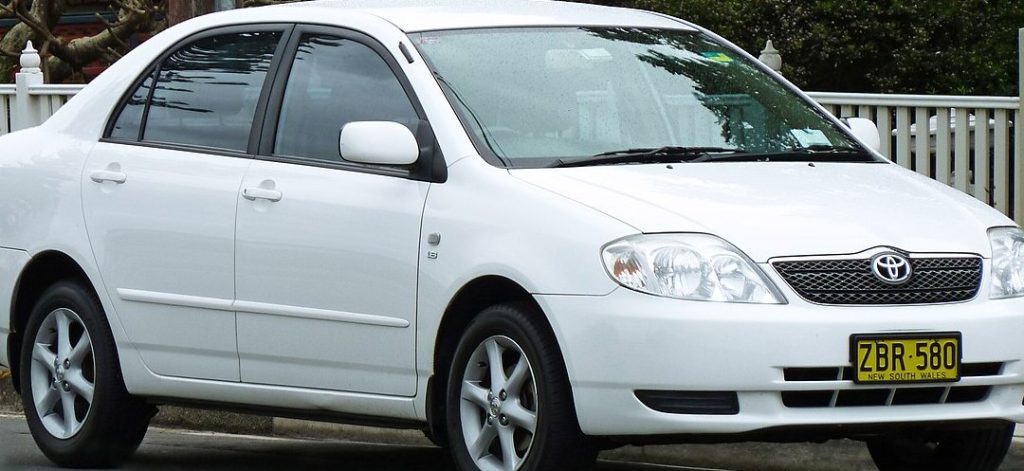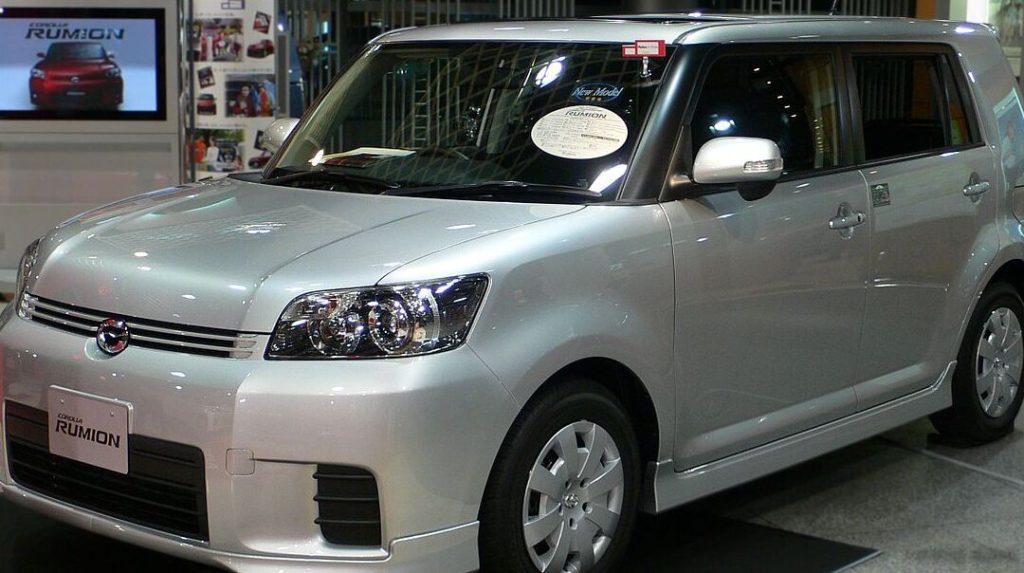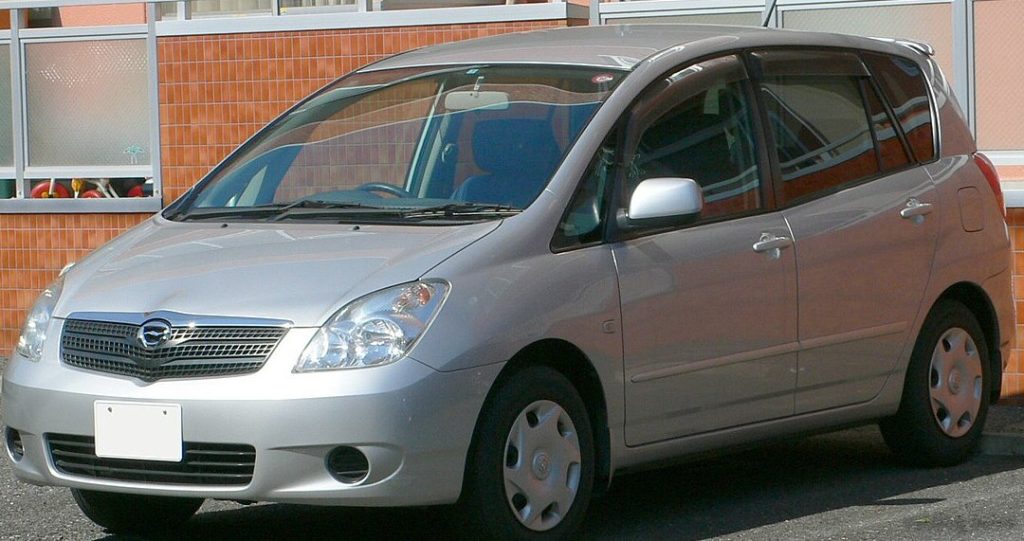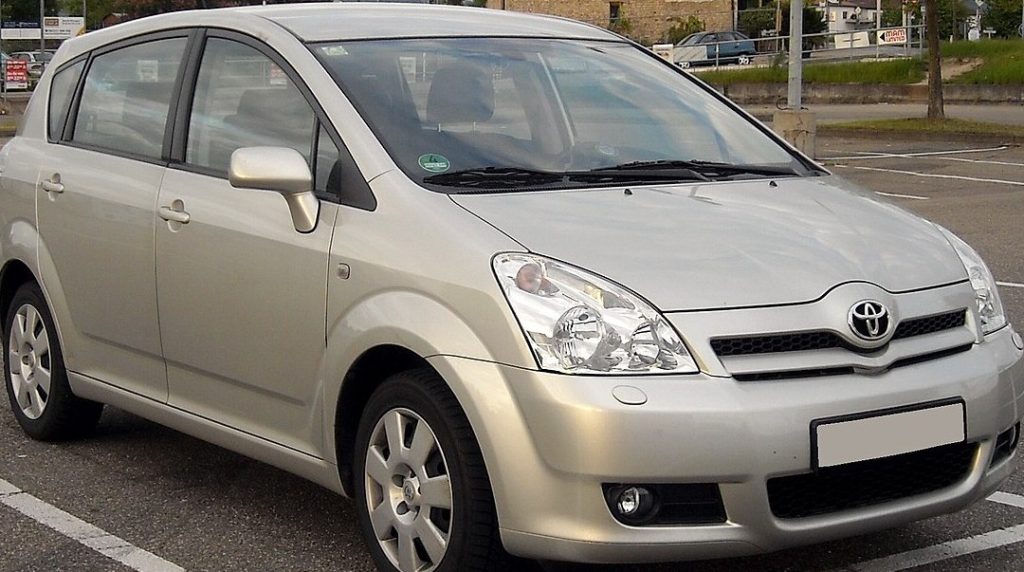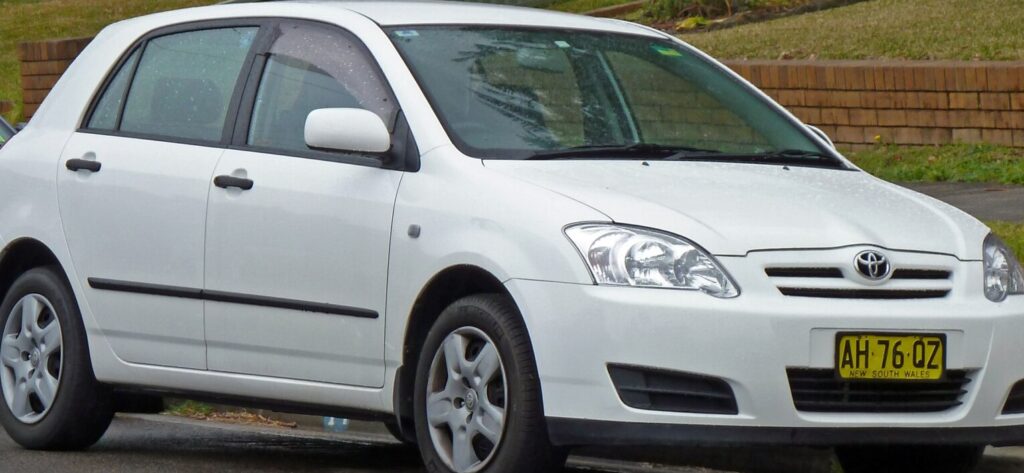
The Toyota Corolla Hatchback, specifically the E120/E130 generation produced between 2001 and 2006, represented a significant shift for the Corolla line in many markets, particularly Europe and Asia. While the sedan remained a mainstay, the hatchback offered a more youthful and practical alternative. The 1.6i 16V variant, producing 110 horsepower, served as a core model within the range, positioned as an affordable and efficient entry point for buyers seeking a compact hatchback. This version aimed to balance fuel economy with acceptable performance for daily commuting and urban driving.
Technical Specifications
| Brand | Toyota |
| Model | Corolla |
| Generation | Corolla Hatch IX (E120, E130) |
| Type (Engine) | 1.6i 16V (110 Hp) |
| Start of production | 2001 |
| End of production | 2006 |
| Powertrain Architecture | Internal Combustion engine |
| Body type | Hatchback |
| Seats | 5 |
| Doors | 3-5 |
| Fuel consumption (urban) | 10.2 l/100 km (23.1 US mpg, 27.7 UK mpg, 9.8 km/l) |
| Fuel consumption (extra urban) | 6.4 l/100 km (36.8 US mpg, 44.1 UK mpg, 15.6 km/l) |
| Fuel consumption (combined) | 7.8 l/100 km (30.2 US mpg, 36.2 UK mpg, 12.8 km/l) |
| Fuel Type | Petrol (Gasoline) |
| Acceleration 0 – 100 km/h | 10.6 sec |
| Acceleration 0 – 62 mph | 10.6 sec |
| Acceleration 0 – 60 mph | 10.1 sec |
| Maximum speed | 183 km/h (113.71 mph) |
| Weight-to-power ratio | 10.3 kg/Hp, 97.3 Hp/tonne |
| Weight-to-torque ratio | 7.5 kg/Nm, 132.7 Nm/tonne |
| Power | 110 Hp @ 6000 rpm |
| Power per litre | 68.8 Hp/l |
| Torque | 150 Nm @ 4800 rpm (110.63 lb.-ft. @ 4800 rpm) |
| Engine layout | Front, Transverse |
| Engine Model/Code | 3ZZ-FE |
| Engine displacement | 1598 cm3 (97.52 cu. in.) |
| Number of cylinders | 4 |
| Engine configuration | Inline |
| Cylinder Bore | 79 mm (3.11 in.) |
| Piston Stroke | 81.5 mm (3.21 in.) |
| Compression ratio | 10.5:1 |
| Number of valves per cylinder | 4 |
| Fuel injection system | Multi-port manifold injection |
| Engine aspiration | Naturally aspirated engine |
| Valvetrain | DOHC |
| Engine oil capacity | 4.2 l (4.44 US qt | 3.7 UK qt) |
| Coolant capacity | 6.5 l (6.87 US qt | 5.72 UK qt) |
| Kerb Weight | 1130 kg (2491.22 lbs.) |
| Max. weight | 1655 kg (3648.65 lbs.) |
| Max load | 525 kg (1157.43 lbs.) |
| Trunk (boot) space – minimum | 289 l (10.21 cu. ft.) |
| Trunk (boot) space – maximum | 960 l (33.9 cu. ft.) |
| Fuel tank capacity | 55 l (14.53 US gal | 12.1 UK gal) |
| Length | 4180 mm (164.57 in.) |
| Width | 1710 mm (67.32 in.) |
| Height | 1475 mm (58.07 in.) |
| Wheelbase | 2600 mm (102.36 in.) |
| Front track | 1490 mm (58.66 in.) |
| Rear track | 1470 mm (57.87 in.) |
| Drivetrain Architecture | Front wheel drive |
| Drive wheel | Front wheel drive |
| Number of gears | 5 gears, manual transmission |
| Front suspension | Spring Strut |
| Rear suspension | Coil spring |
| Front brakes | Ventilated discs |
| Rear brakes | Disc |
| Assisting systems | ABS (Anti-lock braking system) |
| Steering type | Steering rack and pinion |
| Tires size | 195/65 R15 |
| Wheel rims size | 15 |
Powertrain & Engine Architecture
The 1.6i 16V engine, designated the 3ZZ-FE, is a 1.6-liter (1598 cc) inline-four cylinder gasoline engine. It features a double overhead camshaft (DOHC) valvetrain with four valves per cylinder, contributing to its relatively efficient breathing. The engine utilizes multi-port fuel injection, a common technology at the time, delivering fuel directly to each intake port. The 3ZZ-FE engine is known for its reliability, though it’s not without its potential issues, such as oil consumption in some instances. The engine’s 110 horsepower output at 6000 rpm and 150 Nm (110.63 lb-ft) of torque at 4800 rpm were achieved through a combination of optimized combustion chamber design and variable valve timing (VVT-i) on the intake camshaft. This VVT-i system adjusted the valve timing based on engine speed and load, improving both performance and fuel efficiency. The standard transmission for this variant was a five-speed manual, though a four-speed automatic transmission was also offered, impacting performance and fuel economy.
Driving Characteristics
The 1.6i 16V with the five-speed manual transmission provided adequate, though not exhilarating, performance. Acceleration from 0-60 mph took around 10.1 seconds, making it suitable for everyday driving but not for spirited performance. The automatic transmission version added approximately 0.5 seconds to the 0-60 mph time. The engine’s torque curve was relatively flat, providing usable power across a reasonable rev range. However, it did require the driver to downshift frequently when overtaking or climbing hills. Compared to the higher-output 1.8L variants, the 1.6L felt noticeably less powerful, especially at higher speeds. The manual transmission offered a more engaging driving experience, while the automatic prioritized convenience. The gear ratios were tuned for fuel efficiency rather than outright acceleration.
Equipment & Trim Levels
The 1.6i 16V typically came with a base level of equipment, making it the most affordable Corolla Hatchback. Standard features generally included power steering, central locking, electric front windows, and an AM/FM radio. Air conditioning was often an optional extra. Interior upholstery was typically cloth, with a relatively simple dashboard layout. Higher trim levels, such as the 1.8L models, offered features like alloy wheels, upgraded audio systems, and more luxurious interior trim. The 1.6i 16V was often seen as a practical choice for buyers prioritizing affordability and fuel economy over luxury features.
Chassis & Braking
The E120/E130 Corolla Hatchback utilized a MacPherson strut front suspension and a coil spring rear suspension. This setup provided a comfortable ride quality, though it wasn’t particularly sporty. The front brakes were ventilated discs, offering good stopping power, while the rear brakes were typically solid discs. Anti-lock Braking System (ABS) was standard, enhancing safety. The chassis was designed to provide a balance between rigidity and weight, contributing to the car’s overall handling characteristics. Stabilizer bars were included, but were relatively thin compared to those found on higher-performance models.
Market Reception & Comparison
The 1.6i 16V Corolla Hatchback was generally well-received as a practical and reliable everyday car. Critics praised its fuel efficiency and affordability, but noted its lack of outright performance. Compared to the 1.8L variants, the 1.6L offered lower running costs but less driving excitement. The 1.8L models were often preferred by buyers who prioritized performance and were willing to pay a premium. The 1.6L also competed with other compact hatchbacks from manufacturers like Volkswagen, Ford, and Opel, often holding its own in terms of reliability and value for money.
Legacy
The 3ZZ-FE engine, while not known for being particularly groundbreaking, proved to be a durable and reliable powerplant. Corolla Hatchbacks equipped with this engine continue to be found on the used car market today, often with high mileage and a reputation for dependability. Maintenance is generally straightforward and relatively inexpensive. However, potential buyers should be aware of the possibility of oil consumption issues, particularly in older examples. The E120/E130 Corolla Hatchback, and specifically the 1.6i 16V variant, remains a popular choice for those seeking an affordable, practical, and reliable compact hatchback.