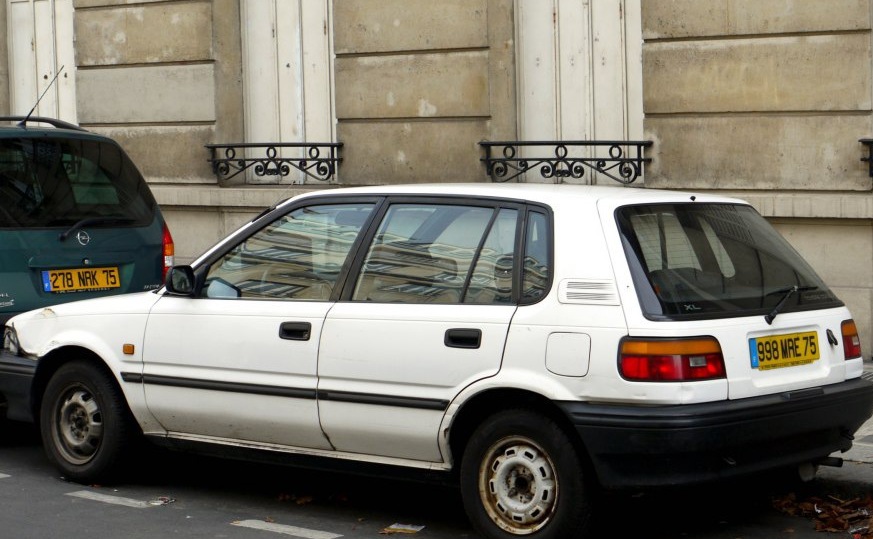
The Toyota Corolla E90, specifically the 1.8 D (CE90) variant produced between 1989 and 1992, represents a significant entry point into the sixth generation of Toyota’s globally successful Corolla line. This model, a five-door hatchback, was primarily aimed at European markets where diesel engines were favored for their fuel efficiency and practicality. Positioned as the entry-level diesel offering within the E90 range, it provided a cost-effective and economical transportation solution, differing significantly from the gasoline-powered variants and the later, more powerful diesel options. The E90 series itself was a crucial step in Toyota’s expansion in Europe, building upon the reputation for reliability established by previous Corolla generations.
Technical Specifications
| Brand | Toyota |
| Model | Corolla |
| Generation | Corolla Hatch VI (E90) |
| Type (Engine) | 1.8 D (CE90) (67 Hp) |
| Start of production | 1989 |
| End of production | 1992 |
| Powertrain Architecture | Internal Combustion engine |
| Body type | Hatchback |
| Seats | 5 |
| Doors | 5 |
| Fuel Type | Diesel |
| Power | 67 Hp |
| Engine Model/Code | 1C-L |
| Engine aspiration | Naturally aspirated engine |
| Engine oil capacity | 4.3 l (4.54 US qt | 3.78 UK qt) |
| Coolant capacity | 7.3 l (7.71 US qt | 6.42 UK qt) |
Powertrain & Engine Architecture
The heart of the Corolla 1.8 D (CE90) is the 1C-L diesel engine, a 1.8-liter (1779cc) naturally aspirated inline-four cylinder unit. This engine was a relatively simple design, prioritizing durability and fuel economy over outright performance. It featured indirect injection, utilizing a pre-chamber combustion system common in diesel engines of that era. This system involved a small auxiliary combustion chamber where fuel was initially injected and ignited, then transferred to the main cylinder for complete combustion. The 1C-L engine employed a single overhead camshaft (SOHC) valvetrain, operating two valves per cylinder. While not particularly powerful, the 1C-L was known for its robustness and ability to withstand high mileage. The engine was typically paired with a four-speed automatic transmission, although a five-speed manual was also available. The automatic transmission, while offering convenience, was geared towards economy rather than sporty acceleration.
Driving Characteristics
The driving experience in the Corolla 1.8 D Automatic was characterized by its relaxed and unhurried nature. With only 67 horsepower on tap, acceleration was modest, and overtaking required careful planning. The four-speed automatic transmission contributed to this, with relatively wide gear ratios prioritizing fuel efficiency. The engine produced a usable amount of torque at low RPMs, making it suitable for everyday driving and city commutes. However, climbing hills or carrying a full load of passengers noticeably strained the engine. Compared to the gasoline-powered Corolla variants, the 1.8 D offered significantly less performance. Even compared to later diesel iterations within the E90 range, such as the 2.0 D, the 1.8 D felt underpowered. The manual transmission version offered slightly improved responsiveness, but the automatic was the more popular choice for drivers prioritizing ease of use.
Equipment & Trim Levels
The 1.8 D (CE90) typically represented the base trim level for diesel Corollas. Standard equipment generally included cloth upholstery, basic instrumentation, and manual windows and door locks. Power steering was often an optional extra, as was air conditioning. The interior design was functional and utilitarian, reflecting the car’s focus on affordability. Dashboard materials were durable but not luxurious. Optional extras could include a radio/cassette player, upgraded seat fabrics, and central locking. The overall trim level was deliberately kept simple to maintain a competitive price point. The target audience for this variant was budget-conscious buyers seeking a reliable and economical vehicle for daily transportation.
Chassis & Braking
The Corolla E90 featured a relatively conventional chassis design. It utilized a MacPherson strut front suspension and a torsion beam rear suspension. The torsion beam rear suspension was a cost-effective solution, providing adequate ride comfort for everyday use. Braking on the 1.8 D typically consisted of disc brakes on the front wheels and drum brakes on the rear. This configuration was common for vehicles in this price range during the late 1980s and early 1990s. The braking performance was adequate for normal driving conditions, but lacked the stopping power of more sophisticated braking systems. Stabilizer bars were often omitted on the base trim level to further reduce costs, contributing to a slightly more pronounced body roll during cornering.
Market Reception & Comparison
The Toyota Corolla 1.8 D (CE90) was generally well-received in European markets as a practical and economical diesel hatchback. Critics praised its fuel efficiency and reliability, but noted its lack of performance. Compared to other diesel hatchbacks of the time, such as the Volkswagen Golf Diesel, the Corolla offered a similar level of practicality and economy, but often at a slightly lower price point. The Golf, however, generally offered a more refined driving experience and a higher perceived quality interior. Within the Corolla E90 lineup, the 1.8 D was positioned as the entry-level diesel option, appealing to buyers who prioritized affordability over performance. The gasoline-powered variants offered more spirited driving, while the 2.0 D provided a more powerful diesel alternative.
Legacy
The 1C-L diesel engine, while not known for its power, proved to be exceptionally durable and reliable. Many examples of the Corolla 1.8 D (CE90) have remained on the road for decades, a testament to Toyota’s engineering prowess. In the used car market today, these Corollas are often sought after by enthusiasts looking for a simple, reliable, and economical classic car. Maintenance costs are generally low, and parts availability remains reasonably good. However, potential buyers should be aware of the age-related issues common to vehicles of this era, such as corrosion and wear and tear on rubber components. The 1.8 D (CE90) represents a significant chapter in the Corolla’s history, demonstrating Toyota’s commitment to providing affordable and reliable transportation to a global audience.