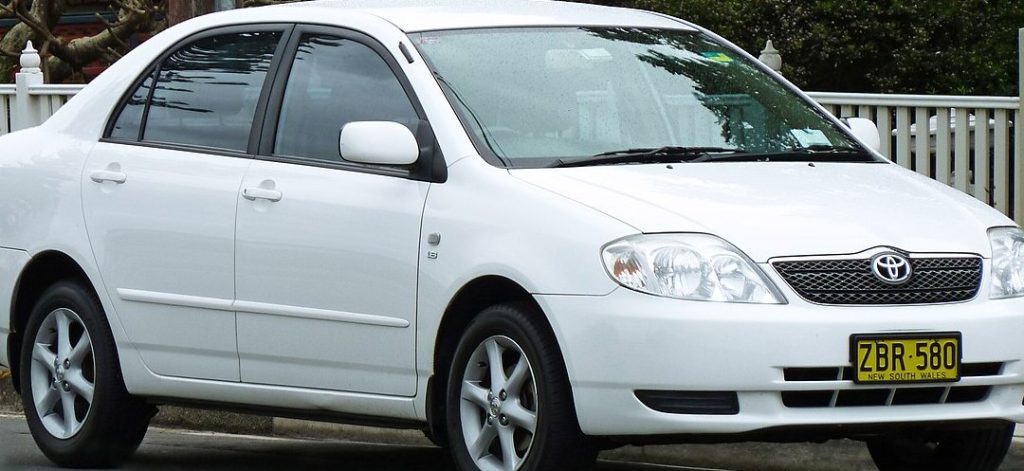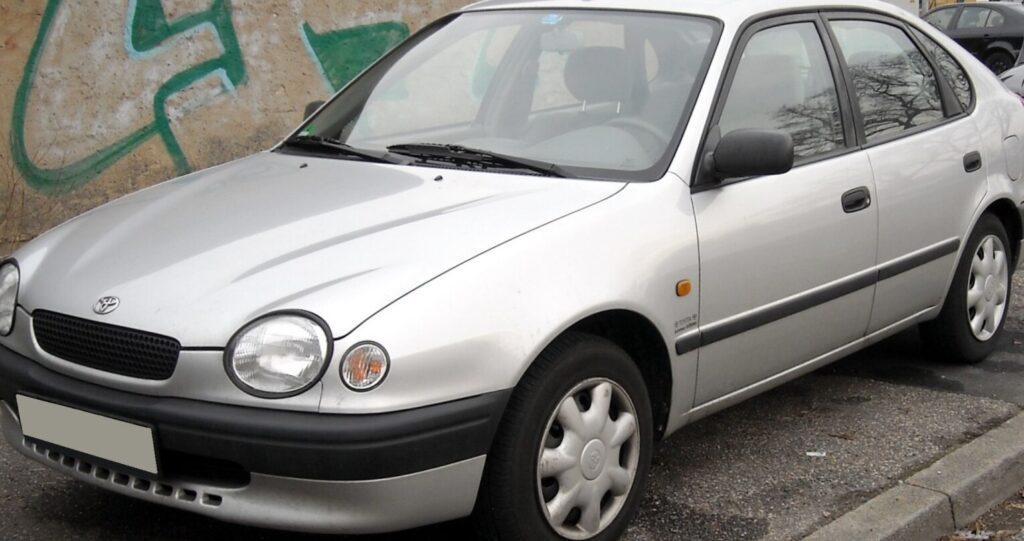
The Toyota Corolla E110, produced between 1997 and 2001, represented the eighth generation of Toyota’s globally popular Corolla. Within this generation, the 1.6 i 16V variant, producing 110 horsepower, served as a key mid-range offering. Positioned above the base 1.6L models and below the more performance-oriented options, it aimed to balance affordability with a reasonable level of equipment and performance. The E110 series was a significant model for Toyota, representing a move towards more modern styling and improved refinement compared to its predecessor, and was sold in various body styles including sedan, liftback, and wagon configurations, with the hatchback being particularly popular in European markets.
The 1.6 i 16V variant was powered by the 4A-FE engine, a 1.6-liter inline-four cylinder gasoline engine. This engine utilized a multi-port fuel injection system and a double overhead camshaft (DOHC) valvetrain, contributing to its relatively efficient operation and respectable power output for its displacement. The 4A-FE engine was known for its durability and reliability, characteristics that became synonymous with the Toyota brand. The engine displaced 1587 cc (96.84 cubic inches) and produced 110 hp at 6000 rpm and 145 Nm (106.95 lb-ft) of torque at 4800 rpm. While not a high-performance engine, it provided adequate power for everyday driving. The engine’s 9.5:1 compression ratio was a standard figure for naturally aspirated engines of the era, balancing performance and fuel efficiency. The 4A-FE engine required 3.2 liters (3.38 US quarts) of engine oil and 6 liters (6.34 US quarts) of coolant.
In real-world driving conditions, the 1.6 i 16V Corolla offered a comfortable and predictable experience. Acceleration from 0 to 100 km/h (0-62 mph) took approximately 10.2 seconds, and 0 to 60 mph was achieved in around 9.7 seconds. While these figures weren’t particularly quick, they were sufficient for typical commuting and highway driving. The engine delivered its power in a linear fashion, making it easy to modulate. Compared to the base 1.6L models, the 16V version offered a noticeable improvement in responsiveness, while remaining more economical to operate than higher-displacement engines. The five-speed manual transmission, standard on this model, provided precise shifts and allowed drivers to make the most of the engine’s power band.
The 1.6 i 16V Corolla typically came equipped with a reasonable level of standard features. Interior appointments included cloth upholstery, a basic audio system, and power steering. Depending on the market and optional packages selected, features like air conditioning, power windows, and central locking were commonly added. The dashboard layout was functional and straightforward, prioritizing ease of use over stylistic flair. Optional extras included alloy wheels, a sunroof, and upgraded audio systems. The interior offered comfortable seating for five passengers and a practical hatchback design provided a usable cargo area of 372 liters (13.14 cubic feet).
The E110 Corolla utilized a relatively simple suspension setup, featuring spring struts at both the front and rear. This configuration provided a comfortable ride quality, suitable for everyday driving. Front brakes were ventilated discs, offering good stopping power, while rear brakes were drums. This combination was typical for vehicles in this class at the time, balancing cost and performance. The car was equipped with an anti-lock braking system (ABS) as a safety feature. The steering system was a rack and pinion type with hydraulic power assistance, providing responsive and precise steering feel. The standard tire size was 175/65 R14.
Critics generally viewed the 1.6 i 16V Corolla as a sensible and reliable choice in the compact hatchback segment. It was praised for its fuel efficiency, with combined fuel consumption figures around 8.3 l/100km (28.5 US mpg). Its reliability was also a major selling point, consistent with Toyota’s reputation. Compared to other trims, the 1.6 i 16V offered a good balance between performance and economy, making it a popular choice for drivers who wanted a practical and dependable vehicle without sacrificing too much driving enjoyment. While the higher-displacement engines offered more power, they came at the cost of increased fuel consumption and a higher purchase price.
| Engine Model/Code | 4A-FE |
| Engine Displacement | 1587 cm3 (96.84 cu. in.) |
| Number of Cylinders | 4, Inline |
| Power | 110 Hp @ 6000 rpm |
| Torque | 145 Nm @ 4800 rpm (106.95 lb.-ft. @ 4800 rpm) |
| Compression Ratio | 9.5:1 |
| Fuel Injection System | Multi-port manifold injection |
| Valvetrain | DOHC |
| Engine Oil Capacity | 3.2 l (3.38 US qt | 2.82 UK qt) |
| Coolant Capacity | 6 l (6.34 US qt | 5.28 UK qt) |
| Kerb Weight | 1100 kg (2425.08 lbs.) |
| Max. Weight | 1615 kg (3560.47 lbs.) |
| Trunk (boot) space – minimum | 372 l (13.14 cu. ft.) |
| Fuel Tank Capacity | 50 l (13.21 US gal | 11 UK gal) |
| Acceleration 0 – 100 km/h | 10.2 sec |
| Maximum Speed | 195 km/h (121.17 mph) |
| Tires Size | 175/65 R14 |
| Gears/Transmission | 5 gears, manual transmission |
The 4A-FE engine, when properly maintained, proved to be exceptionally durable, with many examples exceeding 200,000 miles (320,000 kilometers) without major issues. The E110 Corolla, in general, enjoys a reputation for reliability, making it a popular choice in the used car market. While age and mileage inevitably lead to wear and tear, parts availability remains good, and the relatively simple mechanical design makes it accessible for DIY repairs. Today, these Corollas are often sought after as affordable and dependable transportation, particularly by those seeking a practical and fuel-efficient vehicle.