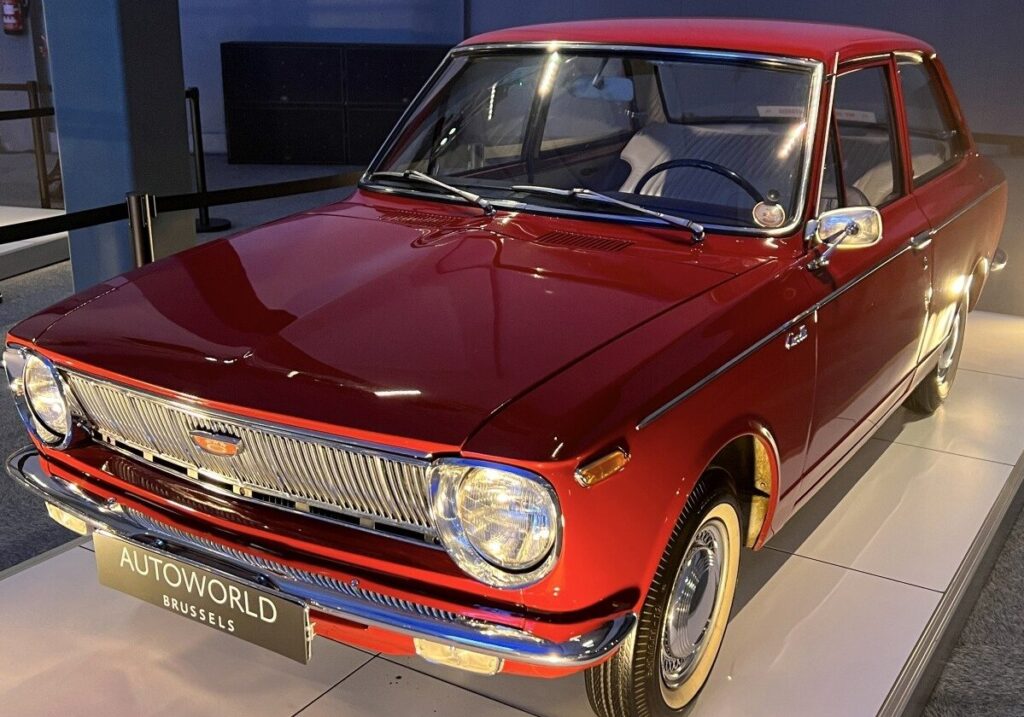
The Toyota Corolla E10, introduced in 1969 and produced through 1970, marked a significant step forward for Toyota, establishing the Corolla as a globally recognized compact car. Within the E10 range, the 1200 variant, producing 68 horsepower, represented the entry-level offering. This 2-door sedan was positioned as an affordable and practical transportation solution, aimed at a broad consumer base seeking reliable and economical motoring. It was the foundational model upon which Toyota built the Corolla’s reputation for durability and value. The E10 series was built on the A10 platform, and represented the first generation of Corolla vehicles.
The 1.2L 68 hp Corolla E10: An Entry-Level Offering
The 1200 model, powered by the 3K engine, served as the base trim level for the E10 Corolla. It was designed to provide basic transportation at a competitive price point. While more powerful 1.5L and 1.6L engine options were available, the 1200 appealed to buyers prioritizing fuel efficiency and affordability over outright performance. This variant was particularly popular in markets where smaller, more economical vehicles were favored. The 2-door sedan body style further contributed to its accessibility, offering a more compact and often less expensive alternative to the 4-door sedan.
Powertrain & Engine Architecture
At the heart of the Corolla 1200 was the Toyota 3K engine, a 1.2-liter (1166 cc) inline-four cylinder gasoline engine. This engine featured a cast iron block and cylinder head, with a relatively simple overhead valve (OHV) valvetrain – two valves per cylinder. Fuel delivery was managed by a single carburetor, a common setup for vehicles of this era. The 3K engine produced 68 horsepower at 6000 rpm and 93 Nm (68.59 lb-ft) of torque at 3800 rpm. The engine was longitudinally mounted in the front of the vehicle, driving the rear wheels.
The 1200 was exclusively offered with a 4-speed manual transmission. This transmission was chosen to maximize fuel economy and keep costs down. The gear ratios were optimized for everyday driving, prioritizing acceleration from a standstill and providing adequate performance for highway cruising, though it wasn’t designed for rapid acceleration. The transmission was a fully synchronized unit, offering smooth and reliable gear changes.
Driving Characteristics
The driving experience in the Corolla 1200 was characterized by its simplicity and ease of use. With 68 horsepower propelling a relatively lightweight vehicle (740 kg or 1631.42 lbs), acceleration was modest but adequate for typical urban and rural driving conditions. The 0-60 mph time was not a primary concern for buyers of this vehicle; instead, the focus was on reliable transportation. The rear-wheel-drive configuration provided a balanced feel, although handling was not particularly sporty. The manual transmission required driver involvement, but offered precise control over the engine’s power delivery.
Compared to the higher-displacement Corolla variants, the 1200 felt noticeably less powerful. The 1.5L and 1.6L engines offered significantly more torque and horsepower, resulting in quicker acceleration and improved highway performance. However, these upgrades came at a higher price. The 1200’s strength lay in its fuel efficiency and affordability, making it a practical choice for budget-conscious buyers.
Equipment & Trim Levels
The Corolla 1200 was offered with a fairly basic level of standard equipment, reflecting its position as the entry-level model. Standard features typically included vinyl upholstery, basic instrumentation (speedometer, fuel gauge, and temperature gauge), and simple steel wheels with hubcaps. The interior was functional and durable, designed for practicality rather than luxury. Options were limited, but could include a radio, heater, and upgraded interior trim. The exterior featured minimal chrome trim, further emphasizing its affordability.
The 2-door sedan body style itself was a defining feature of this trim. It offered a more compact footprint than the 4-door sedan, making it easier to maneuver in tight urban environments. The two doors also contributed to a lower overall weight, slightly improving fuel economy.
Chassis & Braking
The Corolla 1200 utilized a relatively simple chassis design. The front suspension consisted of independent coil springs with a transverse stabilizer bar, providing a comfortable ride and reasonable handling. The rear suspension employed a rigid axle with leaf springs, a common setup for rear-wheel-drive vehicles of this era. This configuration prioritized durability and simplicity over sophisticated handling characteristics.
The braking system featured disc brakes on the front wheels and drum brakes on the rear wheels. This combination provided adequate stopping power for the vehicle’s weight and performance. The steering system was a cone worm with recirculation balls, offering a direct but somewhat heavy steering feel. The relatively simple braking and steering systems contributed to the vehicle’s overall reliability and ease of maintenance.
Market Reception & Comparison
The Toyota Corolla E10 1200 was generally well-received by critics and consumers alike. It was praised for its reliability, fuel efficiency, and affordability. While not a performance car, it provided a dependable and practical transportation solution for a wide range of buyers. Compared to its competitors, such as the Datsun 510 and the Volkswagen Beetle, the Corolla offered a compelling combination of features and value.
The 1200’s fuel economy was a significant selling point, particularly during the fuel crises of the 1970s. Its simple engine design and lightweight construction contributed to its impressive fuel efficiency. In terms of reliability, the Corolla 1200 proved to be exceptionally durable, earning a reputation for long-term dependability. However, the higher-trim Corolla models, with their larger engines and more refined features, were often preferred by buyers seeking a more comfortable and capable vehicle.
Technical Specifications
| Brand | Toyota |
| Model | Corolla |
| Generation | Corolla I 2-door sedan (E10) |
| Type (Engine) | 1200 (68 Hp) |
| Start of production | 1969 |
| End of production | 1970 |
| Powertrain Architecture | Internal Combustion engine |
| Body type | Sedan |
| Seats | 5 |
| Doors | 2 |
| Fuel Type | Petrol (Gasoline) |
| Maximum speed | 145 km/h (90.1 mph) |
| Weight-to-power ratio | 10.9 kg/Hp, 91.9 Hp/tonne |
| Weight-to-torque ratio | 8 kg/Nm, 125.7 Nm/tonne |
| Power | 68 Hp @ 6000 rpm |
| Power per litre | 58.3 Hp/l |
| Torque | 93 Nm @ 3800 rpm (68.59 lb.-ft. @ 3800 rpm) |
| Engine layout | Front, Longitudinal |
| Engine Model/Code | 3K |
| Engine displacement | 1166 cm3 (71.15 cu. in.) |
| Number of cylinders | 4 |
| Engine configuration | Inline |
| Cylinder Bore | 75 mm (2.95 in.) |
| Piston Stroke | 66 mm (2.6 in.) |
| Compression ratio | 9:1 |
| Number of valves per cylinder | 2 |
| Fuel injection system | Carburettor |
| Engine aspiration | Naturally aspirated engine |
| Valvetrain | OHV |
| Kerb Weight | 740 kg (1631.42 lbs.) |
| Max. weight | 1090 kg (2403.04 lbs.) |
| Max load | 350 kg (771.62 lbs.) |
| Fuel tank capacity | 36 l (9.51 US gal | 7.92 UK gal) |
| Length | 3845 mm (151.38 in.) |
| Width | 1485 mm (58.46 in.) |
| Height | 1380 mm (54.33 in.) |
| Wheelbase | 2285 mm (89.96 in.) |
| Front track | 1230 mm (48.43 in.) |
| Rear (Back) track | 1220 mm (48.03 in.) |
| Front overhang | 670 mm (26.38 in.) |
| Rear overhang | 890 mm (35.04 in.) |
| Minimum turning circle (turning diameter) | 9.1 m (29.86 ft.) |
| Drivetrain Architecture | Rear wheel drive |
| Number of gears and type of gearbox | 4 gears, manual transmission |
| Front suspension | Independent coil spring, Transverse stabilizer |
| Rear suspension | Rigid axle suspension, Leaf spring |
| Front brakes | Disc |
| Rear brakes | Drum |
| Steering type | Cone worm with recirculation balls |
Legacy
The Toyota Corolla E10 1200, while the most basic version of the first-generation Corolla, played a crucial role in establishing the model’s reputation for reliability and affordability. Today, these vehicles are relatively rare, and well-maintained examples are sought after by collectors and enthusiasts. The 3K engine, while simple, proved to be remarkably durable, and many examples are still running today. The E10 1200 represents a significant milestone in Toyota’s history, marking the beginning of the Corolla’s long and successful journey as one of the world’s best-selling automobiles. Its simplicity and robust construction continue to endear it to those who appreciate classic Japanese motoring.