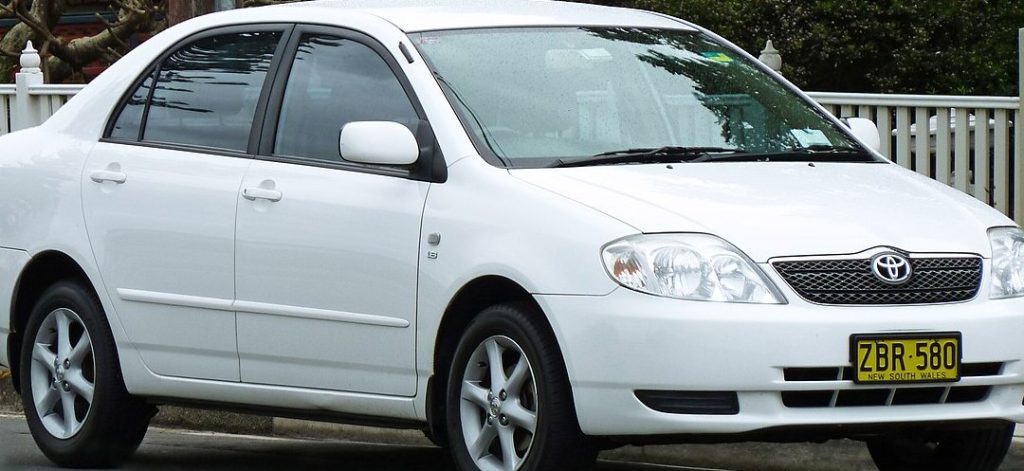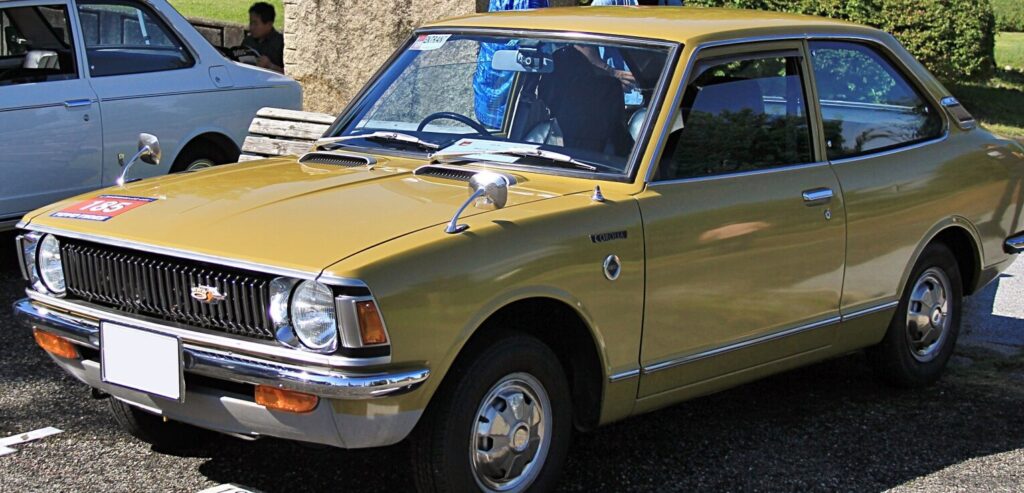
The Toyota Corolla II 2-door sedan (E20) SL 1400, produced between 1970 and 1974, represented a significant step forward for Toyota in offering a compact, affordable, and stylish vehicle to a broader market. Positioned as an entry-level offering within the E20 Corolla range, the SL 1400 aimed to provide basic transportation with reasonable fuel economy and reliability. It was a key model in establishing the Corolla’s reputation for durability and value, particularly in markets seeking smaller, more economical cars than the larger sedans of the era. The E20 series, built on the A10 platform, was a departure from the previous Corolla generation, offering a more modern design and improved features.
Powertrain & Engine Architecture
The heart of the Corolla II SL 1400 was the Toyota T engine, a 1.4-liter (1407 cc) inline-four cylinder gasoline engine. This engine, designated as the ‘T’ series, was a naturally aspirated unit producing 86 horsepower at 6000 rpm and 115 Nm (84.82 lb-ft) of torque at 3800 rpm. The engine featured a two-valve per cylinder configuration and a compression ratio of 8.5:1. Fuel delivery was managed by a carburetor, a common practice for vehicles of this period. The engine’s layout was longitudinal, contributing to the rear-wheel-drive configuration of the vehicle. The bore and stroke measured 80 mm (3.15 in) and 70 mm (2.76 in) respectively, resulting in a power-to-liter ratio of 61.1 hp/l. While not a high-performance engine, the ‘T’ engine was known for its robustness and relatively simple maintenance requirements.
Transmission
The SL 1400 was equipped with a four-speed manual transmission as standard. An automatic transmission was not offered on this specific variant. The manual gearbox was designed to provide smooth shifting and efficient power delivery, complementing the engine’s characteristics. The gear ratios were tailored to maximize fuel economy and provide adequate acceleration for everyday driving conditions. The rear-wheel-drive configuration, coupled with the manual transmission, provided a traditional driving experience common in vehicles of the early 1970s.
Driving Characteristics
The Corolla II SL 1400 offered a modest but adequate driving experience. With 86 hp propelling a relatively lightweight vehicle (825 kg or 1818.81 lbs), acceleration was not its strong suit. However, the car was capable of reaching a maximum speed of 160 km/h (99.42 mph). The weight-to-power ratio of 9.6 kg/hp indicated a reasonable balance, allowing for comfortable cruising and city driving. The manual transmission required driver involvement, but provided precise control over the engine’s power band. Compared to potential future higher-performance Corolla variants, the SL 1400 prioritized fuel efficiency and ease of use over outright speed. The rear-wheel-drive setup offered predictable handling, although it lacked the sophistication of more modern suspension systems.
Equipment & Trim Levels
The SL 1400 was positioned as a basic, no-frills model. Standard equipment included cloth upholstery, basic instrumentation (speedometer, fuel gauge, and temperature gauge), and simple interior trim. The exterior featured minimal chrome accents and basic steel wheels. Optional extras were limited, reflecting the car’s entry-level status. Available options might have included a radio, upgraded interior trim materials, and potentially a different exterior color. The dashboard layout was functional and straightforward, prioritizing usability over aesthetic appeal. The car comfortably seated five passengers, although rear legroom was somewhat limited due to the compact dimensions of the vehicle.
Chassis & Braking
The Corolla II SL 1400 utilized a relatively simple chassis design. The front suspension consisted of an independent coil spring setup with a transverse stabilizer bar, providing a degree of ride comfort and handling stability. The rear suspension employed a rigid axle with leaf springs, a common configuration for rear-wheel-drive vehicles of the era. The front brakes were disc brakes, offering superior stopping power compared to drum brakes. However, the rear brakes were drum brakes, a cost-saving measure typical for entry-level models. The steering system was a cone worm with recirculation balls, providing a reasonably direct steering feel. The car’s wheelbase measured 2335 mm (91.93 in), contributing to its compact size and maneuverability.
Market Reception & Comparison
The Corolla II SL 1400 was generally well-received by consumers and automotive critics as a practical and affordable transportation solution. It was praised for its fuel economy (5 l/100 km or 47 US mpg), reliability, and ease of maintenance. Compared to other Corolla variants, such as those with larger engines or more luxurious trim levels, the SL 1400 offered a more economical entry point into the Corolla family. Its simplicity and robust construction made it a popular choice for first-time car buyers and those seeking a dependable daily driver. While it lacked the performance of some of its competitors, its overall value proposition made it a strong contender in the compact car segment. The SL 1400’s fuel efficiency was particularly appealing during the oil crises of the 1970s.
Technical Specifications
| Brand | Toyota |
| Model | Corolla II |
| Generation | Corolla II 2-door sedan (E20) |
| Type (Engine) | SL 1400 (86 Hp) |
| Start of production | 1970 |
| End of production | 1974 |
| Body type | Sedan, 2 Doors, 5 Seats |
| Fuel consumption (combined) | 5 l/100 km (47 US mpg, 56.5 UK mpg, 20 km/l) |
| Maximum speed | 160 km/h (99.42 mph) |
| Weight-to-power ratio | 9.6 kg/Hp |
| Weight-to-torque ratio | 7.2 kg/Nm |
| Power | 86 Hp @ 6000 rpm |
| Torque | 115 Nm @ 3800 rpm (84.82 lb.-ft. @ 3800 rpm) |
| Engine layout | Front, Longitudinal |
| Engine Model/Code | T |
| Engine displacement | 1407 cm3 (85.86 cu. in.) |
| Number of cylinders | 4 |
| Engine configuration | Inline |
| Cylinder Bore | 80 mm (3.15 in.) |
| Piston Stroke | 70 mm (2.76 in.) |
| Compression ratio | 8.5:1 |
| Number of valves per cylinder | 2 |
| Fuel injection system | Carburettor |
| Engine aspiration | Naturally aspirated |
| Kerb Weight | 825 kg (1818.81 lbs.) |
| Fuel tank capacity | 45 l (11.89 US gal | 9.9 UK gal) |
| Length | 3945 mm (155.31 in.) |
| Width | 1505 mm (59.25 in.) |
| Height | 1345 mm (52.95 in.) |
| Wheelbase | 2335 mm (91.93 in.) |
| Front track | 1260 mm (49.61 in.) |
| Rear track | 1245 mm (49.02 in.) |
| Minimum turning circle | 9 m (29.53 ft.) |
| Drivetrain Architecture | Rear wheel drive |
| Number of gears and type of gearbox | 4 gears, manual transmission |
| Front suspension | Independent coil spring, Transverse stabilizer |
| Rear suspension | Rigid axle suspension, Leaf spring |
| Front brakes | Disc |
| Rear brakes | Drum |
| Steering type | Cone worm with recirculation balls |
Legacy
The Toyota Corolla II SL 1400, while a relatively simple vehicle by modern standards, played a crucial role in establishing the Corolla’s reputation for reliability and affordability. The ‘T’ engine proved to be remarkably durable, and many examples of the SL 1400 continued to provide dependable transportation for years after their initial production run. Today, the SL 1400 is a sought-after classic car, particularly among enthusiasts who appreciate its simplicity and historical significance. While finding well-maintained examples can be challenging, the SL 1400 remains a testament to Toyota’s commitment to building quality vehicles that stand the test of time. Its straightforward design makes it relatively easy to maintain and repair, further contributing to its enduring appeal in the used car market.