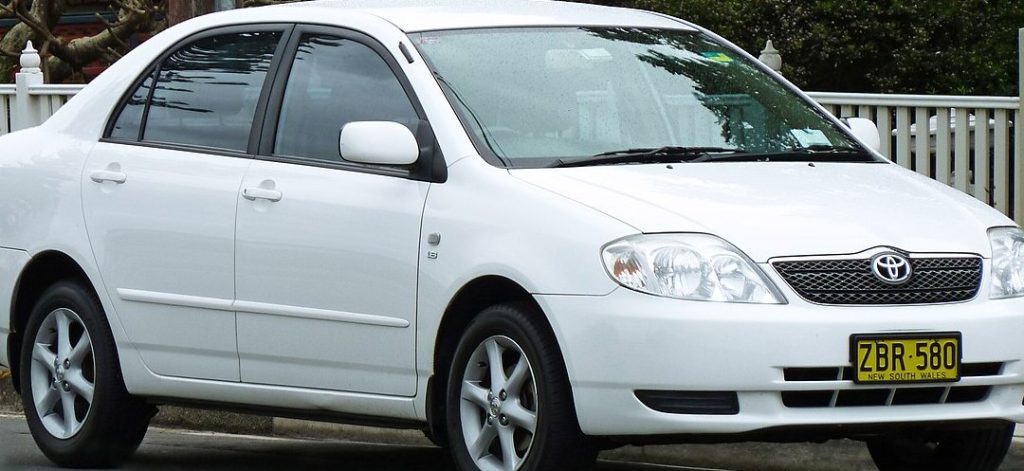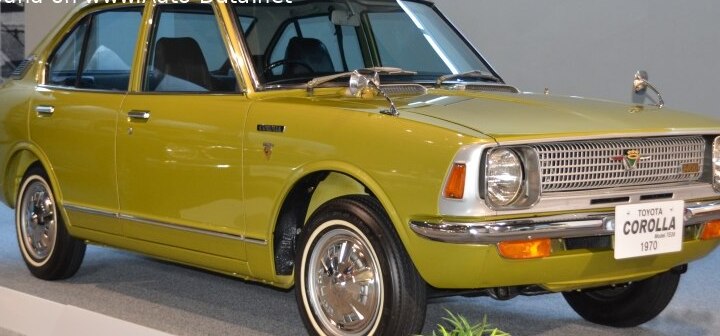
The Toyota Corolla II 4-door sedan, designated as the E20 series, was produced from May 1970 to July 1974. This generation represented a significant step forward for Toyota, offering a more refined and spacious vehicle compared to its predecessor. Within the E20 lineup, the 1200 variant equipped with a 68 horsepower engine and a three-speed automatic transmission occupied the entry-level position, aimed at buyers prioritizing affordability and ease of use. It served as the gateway to the Corolla family, offering a comfortable and reliable means of transportation for a broad demographic.
The 1200 Automatic: Positioning and Market Role
The 1200 Automatic trim was specifically designed to appeal to drivers who preferred the convenience of an automatic gearbox. In the early 1970s, automatic transmissions were still considered a luxury feature, and this variant provided access to that convenience at a relatively accessible price point. Compared to the standard 1200 model with a manual transmission, the automatic version offered a smoother driving experience, particularly in urban environments. However, it came with a slight performance penalty and typically a higher purchase price. Higher trim levels within the E20 range, such as those equipped with the 1600cc engine, offered more power and features, targeting buyers seeking a more dynamic driving experience or a more luxurious interior.
Powertrain & Engine Architecture
The heart of the Corolla II 1200 Automatic was the 3K engine, a 1.2-liter (1166 cc) inline-four cylinder gasoline engine. This engine produced 68 horsepower at 6000 rpm and 93 Nm (68.59 lb-ft) of torque at 3800 rpm. The engine featured a naturally aspirated configuration and utilized an overhead valve (OHV) valvetrain with two valves per cylinder. Fuel delivery was managed by a carburetor, a common technology for the time. The 3K engine was known for its durability and relatively simple design, contributing to the Corolla’s reputation for reliability. The engine’s longitudinal front-engine layout was typical for rear-wheel-drive vehicles of the era.
The automatic transmission was a three-speed unit. While not offering the efficiency or responsiveness of modern automatic transmissions, it provided a comfortable and effortless driving experience. The gear ratios were optimized for smooth acceleration and cruising, prioritizing ease of use over outright performance. The transmission’s simplicity also contributed to its reliability and ease of maintenance.
Driving Characteristics
The 1200 Automatic Corolla II offered a comfortable, albeit unhurried, driving experience. With 68 horsepower propelling a vehicle weighing 765 kg (1686.54 lbs), acceleration was modest. The 0 to 60 mph time was not a primary focus for this variant; instead, the emphasis was on smooth cruising and ease of operation. The automatic transmission contributed to a relaxed driving style, eliminating the need for constant gear changes. Compared to the manual transmission version, the automatic offered slightly reduced fuel economy and a less engaging driving experience. However, for drivers prioritizing convenience, the trade-offs were generally considered acceptable. The maximum speed was approximately 140 km/h (86.99 mph).
Equipment & Trim Levels
The 1200 Automatic trim level was generally considered the base model. Standard features typically included basic instrumentation, vinyl upholstery, and a simple two-spoke steering wheel. While not lavishly equipped, the interior was functional and offered comfortable seating for five passengers. Optional extras available for this trim could include a radio, upgraded upholstery, and occasionally, air conditioning (depending on the market). The dashboard layout was straightforward, prioritizing functionality over aesthetics. The focus was on providing a practical and affordable vehicle, and as such, luxury features were kept to a minimum.
Chassis & Braking
The Corolla II 1200 Automatic featured a rear-wheel-drive layout. The front suspension utilized an independent coil spring design with a transverse stabilizer bar, providing a reasonable level of ride comfort and handling. The rear suspension employed a rigid axle setup with leaf springs, a common configuration for vehicles of this era. Braking duties were handled by disc brakes at the front and drum brakes at the rear. The steering system was a cone worm type with recirculation balls, offering adequate precision for everyday driving. The chassis was designed to provide a balance between ride comfort and handling, prioritizing stability and predictability over sporty performance.
Market Reception & Comparison
The Corolla II 1200 Automatic was generally well-received by critics and consumers alike. It was praised for its reliability, affordability, and ease of use. While not a performance leader, it provided a comfortable and practical means of transportation for a wide range of drivers. Compared to other vehicles in its class, such as the Datsun 1200, the Corolla II offered a similar level of reliability and fuel economy. However, the Corolla’s reputation for build quality and long-term durability often gave it an edge. Fuel consumption was rated at 5.2 l/100 km (45.2 US mpg, 54.3 UK mpg, 19.2 km/l), which was competitive for the time.
Technical Specifications
| Brand | Toyota |
| Model | Corolla II |
| Generation | E20 |
| Type (Engine) | 1200 (68 Hp) Automatic |
| Start of Production | May 1970 |
| End of Production | July 1974 |
| Engine Model/Code | 3K |
| Engine Displacement | 1166 cm3 (71.15 cu. in.) |
| Number of Cylinders | 4 |
| Engine Configuration | Inline |
| Cylinder Bore | 75 mm (2.95 in.) |
| Piston Stroke | 66 mm (2.6 in.) |
| Compression Ratio | 9:1 |
| Number of Valves per Cylinder | 2 |
| Fuel Injection System | Carburettor |
| Engine Aspiration | Naturally Aspirated |
| Power | 68 Hp @ 6000 rpm |
| Torque | 93 Nm @ 3800 rpm (68.59 lb.-ft. @ 3800 rpm) |
| Fuel Consumption (Combined) | 5.2 l/100 km (45.2 US mpg, 54.3 UK mpg, 19.2 km/l) |
| Maximum Speed | 140 km/h (86.99 mph) |
| Kerb Weight | 765 kg (1686.54 lbs.) |
| Fuel Tank Capacity | 45 l (11.89 US gal | 9.9 UK gal) |
| Length | 3945 mm (155.31 in.) |
| Width | 1505 mm (59.25 in.) |
| Height | 1375 mm (54.13 in.) |
| Wheelbase | 2335 mm (91.93 in.) |
| Number of Gears | 3 |
| Gearbox Type | Automatic Transmission |
Legacy
The Toyota Corolla II 1200 Automatic, while not the most powerful or technologically advanced vehicle of its time, played a crucial role in establishing Toyota’s reputation for reliability and affordability. The 3K engine proved to be remarkably durable, and many examples of this vehicle are still on the road today. In the used car market, these Corollas are often sought after by enthusiasts and collectors, particularly those looking for a classic Japanese automobile. The simplicity of the design and the availability of spare parts make them relatively easy to maintain. The 1200 Automatic represents a significant chapter in Toyota’s history, demonstrating the company’s commitment to producing high-quality, dependable vehicles for the masses.