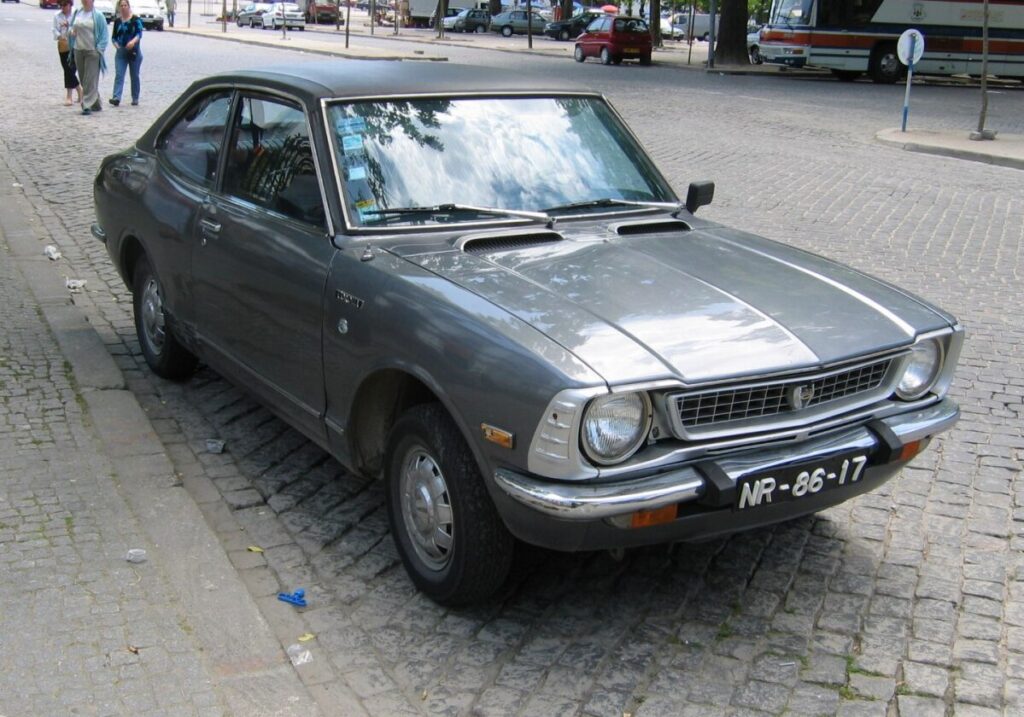
The Toyota Corolla II Coupe (E20) 1200 Automatic, produced between May 1970 and July 1974, represented an entry-level offering within the second generation Corolla lineup. Positioned as a more affordable and compact alternative to the larger Corolla sedans and fastbacks, the E20 Coupe aimed at buyers seeking economical transportation with a degree of style. This variant, powered by the 3K engine and a three-speed automatic transmission, was specifically designed for ease of use and fuel efficiency, making it a popular choice for urban commuters and first-time car buyers. The E20 series, built on the A10 platform, marked a significant step forward in Toyota’s engineering and design, offering improved comfort and reliability compared to its predecessor.
Powertrain & Engine Architecture
The heart of the Corolla II Coupe 1200 Automatic was the Toyota 3K engine, a 1.2-liter (1166 cc) inline-four cylinder gasoline engine. This engine, characterized by its robust construction and simplicity, was designed for reliability and low maintenance. The 3K featured an overhead valve (OHV) valvetrain with two valves per cylinder. Fuel delivery was managed by a single carburetor, a common setup for vehicles of this era. The engine produced 68 horsepower at 6000 rpm and 93 Nm (68.59 lb-ft) of torque at 3800 rpm. The engine’s longitudinal front-engine layout, coupled with rear-wheel drive, was typical for compact cars of the early 1970s.
The automatic transmission was a three-speed unit, designed to provide smooth and effortless shifting. While not known for its performance, the transmission was well-suited to the engine’s power characteristics and the intended use of the vehicle. The gear ratios were optimized for fuel economy and drivability in typical urban conditions. The transmission’s simplicity contributed to its reliability, although it lacked the sophistication of more modern automatic gearboxes.
Engine Specifications (3K)
- Displacement: 1166 cc (71.15 cu. in.)
- Bore x Stroke: 75 mm x 66 mm (2.95 in x 2.6 in)
- Compression Ratio: 9:1
- Valvetrain: OHV, 2 valves per cylinder
- Fuel System: Carburetor
- Aspiration: Naturally Aspirated
Driving Characteristics
The Corolla II Coupe 1200 Automatic offered a comfortable, albeit unhurried, driving experience. With 68 horsepower propelling a relatively lightweight vehicle (760 kg or 1675.51 lbs), acceleration was modest. The three-speed automatic transmission contributed to a smooth ride, but also limited the vehicle’s responsiveness. Compared to the available manual transmission versions of the Corolla II, the automatic variant sacrificed some performance for convenience. The automatic’s gear ratios were geared towards fuel efficiency, resulting in a noticeable delay during acceleration. The rear-wheel drive configuration provided predictable handling, but lacked the stability of front-wheel drive systems found in later vehicles. Maximum speed was rated at 140 km/h (86.99 mph).
The steering, utilizing a cone worm and recirculation balls system, was relatively heavy but provided adequate feedback. The suspension, consisting of independent coil springs with a transverse stabilizer at the front and a rigid axle with leaf springs at the rear, offered a reasonable compromise between ride comfort and handling. However, the leaf spring rear suspension could sometimes result in a somewhat bumpy ride, particularly on uneven surfaces.
Equipment & Trim Levels
The Corolla II Coupe 1200 Automatic was typically equipped with basic, yet functional, features. Standard equipment included cloth upholstery, a simple dashboard layout with basic instrumentation (speedometer, fuel gauge, and temperature gauge), and manually operated windows and door locks. The interior was designed with practicality in mind, offering sufficient space for five passengers, although rear seat legroom was limited.
Optional extras were available, including a radio, heater, and upgraded interior trim. Higher trim levels, though not common on the base 1200 Automatic, might have included features such as a vinyl roof, chrome trim, and more comfortable seating. The overall interior aesthetic was typical of early 1970s Japanese automobiles – functional, durable, and relatively spartan.
Chassis & Braking
The Corolla II Coupe 1200 Automatic featured a body-on-frame construction, which was common for vehicles of its era. The chassis was designed to provide a balance between rigidity and affordability. The front suspension utilized independent coil springs and a transverse stabilizer bar to improve handling and ride comfort. The rear suspension employed a rigid axle with leaf springs, a cost-effective solution that provided adequate load-carrying capacity.
The braking system consisted of disc brakes at the front and drum brakes at the rear. While adequate for the vehicle’s weight and performance, the braking system lacked the stopping power and sophistication of more modern systems. The steering system, a cone worm with recirculation balls setup, provided a reasonable level of control, but required a moderate amount of effort from the driver.
Market Reception & Comparison
The Corolla II Coupe 1200 Automatic was generally well-received by consumers and automotive critics alike. It was praised for its fuel efficiency (5.2 l/100 km or 45.2 US mpg), reliability, and affordability. However, it was also criticized for its modest performance and relatively basic features. Compared to other trims in the Corolla lineup, such as the 1600 GT, the 1200 Automatic offered a more economical and practical alternative. The 1600 GT, with its larger engine and sportier suspension, appealed to drivers seeking more performance, while the 1200 Automatic targeted buyers prioritizing fuel economy and ease of use. Compared to competitors like the Datsun 1200, the Corolla II offered a similar level of value and reliability.
Technical Specifications
| Body Type | Coupe, 2 Doors, 5 Seats |
| Engine Displacement | 1.2 l (1166 cm3 / 71.15 cu. in.) |
| Engine Model/Code | 3K |
| Number of Cylinders | 4, Inline |
| Fuel Type | Petrol (Gasoline) |
| Power | 68 Hp @ 6000 rpm |
| Torque | 93 Nm @ 3800 rpm (68.59 lb.-ft. @ 3800 rpm) |
| Transmission | 3-speed Automatic |
| Drive Wheels | Rear Wheel Drive |
| Kerb Weight | 760 kg (1675.51 lbs.) |
| Fuel Tank Capacity | 45 l (11.89 US gal | 9.9 UK gal) |
| Length | 3945 mm (155.31 in.) |
| Width | 1505 mm (59.25 in.) |
| Height | 1345 mm (52.95 in.) |
| Wheelbase | 2335 mm (91.93 in.) |
| Fuel Consumption (Combined) | 5.2 l/100 km (45.2 US mpg, 54.3 UK mpg, 19.2 km/l) |
| Maximum Speed | 140 km/h (86.99 mph) |
Legacy
The Toyota Corolla II Coupe 1200 Automatic, while not a high-performance vehicle, played a significant role in establishing Toyota’s reputation for reliability and affordability. The 3K engine, in particular, proved to be exceptionally durable and long-lasting. Today, well-maintained examples of the E20 Coupe are sought after by collectors and enthusiasts. The powertrain, while simple by modern standards, is known for its robustness and relatively low maintenance requirements. Finding parts can be challenging, but a dedicated community of Toyota enthusiasts ensures that spares remain available. The 1200 Automatic remains a testament to Toyota’s early engineering prowess and a charming reminder of a bygone era in automotive history. Its enduring appeal lies in its simplicity, reliability, and the nostalgic connection it provides to the early days of Japanese automotive exports.