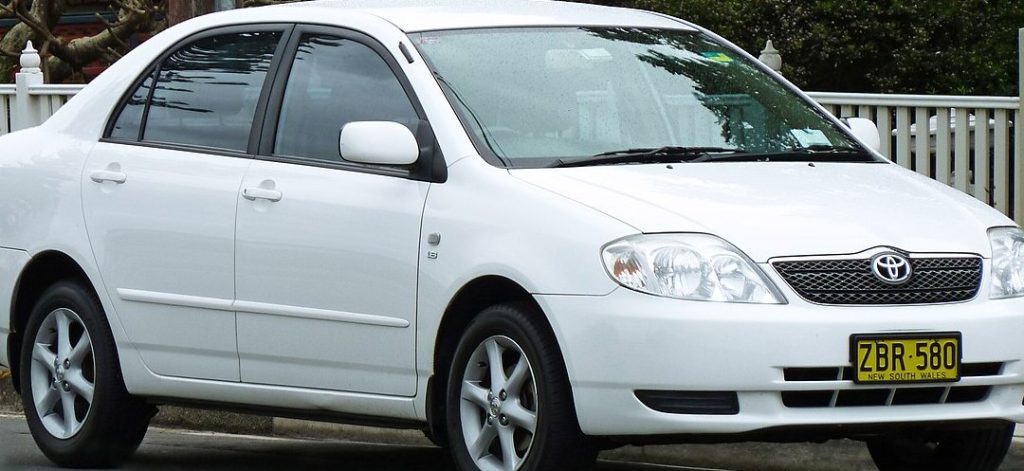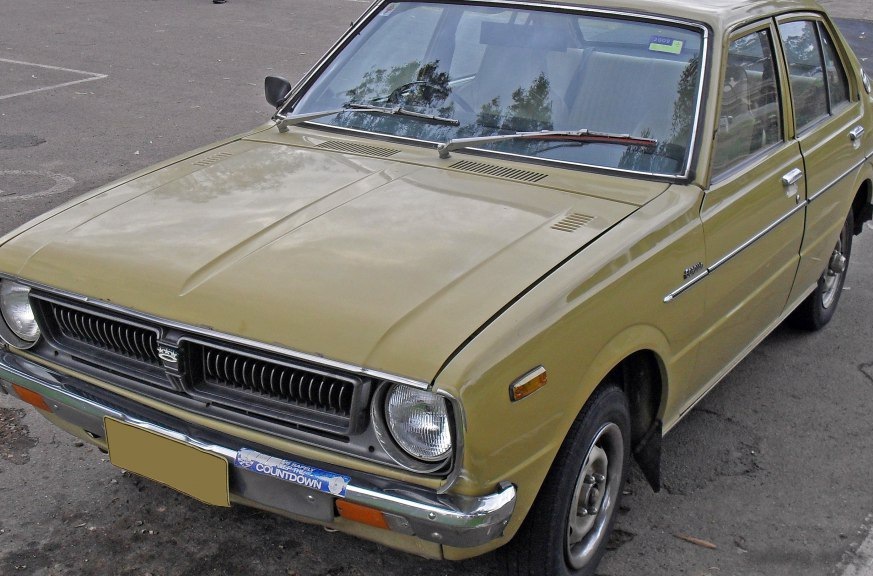
The Toyota Corolla III, encompassing chassis codes E30, E40, E50, and E60, represented a significant evolution of Toyota’s popular compact car. Produced between 1974 and 1980, this generation broadened the Corolla’s appeal with a wider range of body styles and engine options. Among these, the 1.2-liter (KE20, KE25, KE30) variant, producing 54 horsepower, served as the entry-level offering in many markets. This model was particularly important for providing affordable transportation during a period of rising fuel costs and increasing demand for economical vehicles. It represented a core part of Toyota’s strategy to establish a strong presence in the global automotive market.
The 1.2L (54 hp) Corolla: Entry Point to Reliability
The 1.2-liter Corolla, identified by chassis codes KE20, KE25, and KE30, occupied the base trim level within the broader Corolla III lineup. It was designed to be the most accessible and fuel-efficient option, appealing to buyers prioritizing practicality and affordability over outright performance. While larger-displacement engines and more luxurious trim levels were available, the 1.2L model formed the backbone of Corolla sales in many regions, particularly in developing markets and as a first car for new drivers. It was a direct response to the growing need for economical transportation.
Powertrain & Engine Architecture
The heart of the 1.2L Corolla was the 3K-H inline four-cylinder engine. This engine, displacing 1196 cc (72.9 cubic inches), was a simple, robust design intended for longevity and ease of maintenance. It featured a single overhead camshaft (SOHC) valvetrain with eight valves. The 3K-H engine utilized a carburetor for fuel delivery, a common practice for vehicles of this era, prioritizing simplicity over the more complex fuel injection systems that would become prevalent later. The carburetor was typically a single-barrel unit, tuned for fuel economy rather than peak power. The engine’s bore and stroke measured 76.0 mm x 80.0 mm, contributing to its relatively long-stroke design, which favored low-end torque. Lubrication was provided by a conventional wet-sump system with a 3.5-liter (3.7 US quarts) oil capacity, requiring oil changes at relatively frequent intervals. Cooling was achieved through a liquid-cooled system with a capacity of 5.3 liters (5.6 US quarts).
Driving Characteristics
The 54 horsepower and approximately 68 lb-ft of torque produced by the 3K-H engine translated to modest, but adequate, performance. Acceleration was leisurely, and the car was not designed for rapid overtaking. However, the engine’s torque curve was relatively flat, providing reasonable drivability in everyday traffic conditions. The Corolla III 1.2L was typically equipped with a four-speed manual transmission, although a three-speed automatic transmission was also offered as an option. The automatic transmission, while providing convenience, further reduced acceleration performance. Gear ratios were optimized for fuel efficiency, with a relatively tall final drive. The rear-wheel-drive configuration provided predictable handling, although the car’s suspension was tuned for comfort rather than sporty handling. The overall driving experience was characterized by its simplicity and ease of use, making it an ideal vehicle for novice drivers and those seeking basic transportation.
Equipment & Trim Levels
The 1.2L Corolla was typically offered in a relatively basic trim level, reflecting its position as the entry-level model. Standard features generally included vinyl upholstery, simple steel wheels with hubcaps, and basic instrumentation consisting of a speedometer, fuel gauge, and temperature gauge. Power steering and air conditioning were generally not available on this trim level, although they may have been offered as optional extras in some markets. Interior appointments were functional and durable, prioritizing practicality over luxury. The dashboard layout was straightforward, with easily accessible controls. Optional extras could include a radio, upgraded seat upholstery, and a heater. The KE25 model often represented a slightly more upscale version of the 1.2L, with minor cosmetic enhancements and potentially a few additional comfort features.
Chassis & Braking
The Corolla III utilized a body-on-frame construction, a common practice for vehicles of this era. The suspension consisted of independent front suspension with coil springs and a live axle rear suspension with leaf springs. This setup provided a comfortable ride, but handling was not particularly sharp. The front brakes were typically disc brakes, providing adequate stopping power, while the rear brakes were drum brakes. This combination was typical for vehicles in this price range during the 1970s. The steering was a recirculating ball system, offering relatively light steering effort. Wheel rims were typically 13 inches in diameter, fitted with bias-ply tires. Stabilizer bars were generally not fitted to the 1.2L models, further emphasizing the focus on comfort over handling.
Market Reception & Comparison
The 1.2L Corolla was generally well-received by critics and consumers alike, particularly for its reliability, fuel efficiency, and affordability. It was often praised for its simple design and ease of maintenance. Compared to other vehicles in its class, such as the Ford Pinto or the Volkswagen Beetle, the Corolla offered a more modern design and a reputation for superior reliability. However, its performance was significantly lower than that of larger-engined Corollas, such as the 1.6L models. Fuel economy was a key selling point, particularly during the oil crises of the 1970s. The 1.2L Corolla typically achieved fuel economy figures in the range of 30-35 mpg, making it an attractive option for budget-conscious buyers. Reliability was a major strength, with the 3K-H engine proving to be exceptionally durable.
Technical Specifications
| Body Type | Sedan, 4 Doors, 5 Seats |
| Engine Model/Code | 3K-H |
| Engine Configuration | Inline-4 |
| Displacement | 1196 cc (72.9 cu in) |
| Power | 54 hp @ 6000 rpm |
| Torque | 68 lb-ft @ 3600 rpm |
| Fuel System | Carburetor |
| Valvetrain | SOHC, 8 valves |
| Transmission | 4-speed Manual or 3-speed Automatic |
| Drivetrain | Rear-Wheel Drive |
| Front Brakes | Disc |
| Rear Brakes | Drum |
| Engine Oil Capacity | 3.5 l (3.7 US qt, 3.08 UK qt) |
| Coolant Capacity | 5.3 l (5.6 US qt, 4.66 UK qt) |
Legacy
The 1.2L Corolla (KE20, KE25, KE30) has earned a reputation as a remarkably reliable and durable vehicle. Many examples are still on the road today, a testament to the quality of its construction and the robustness of the 3K-H engine. In the used car market, these Corollas are often sought after by enthusiasts and collectors, particularly those interested in classic Japanese automobiles. While not particularly valuable, well-maintained examples can command a reasonable price. The 3K-H engine is known for its simplicity and ease of repair, making it a popular choice for restoration projects. The 1.2L Corolla played a crucial role in establishing Toyota’s reputation for reliability and affordability, paving the way for the company’s future success in the global automotive market. Its enduring legacy is a testament to the enduring appeal of simple, well-engineered transportation.