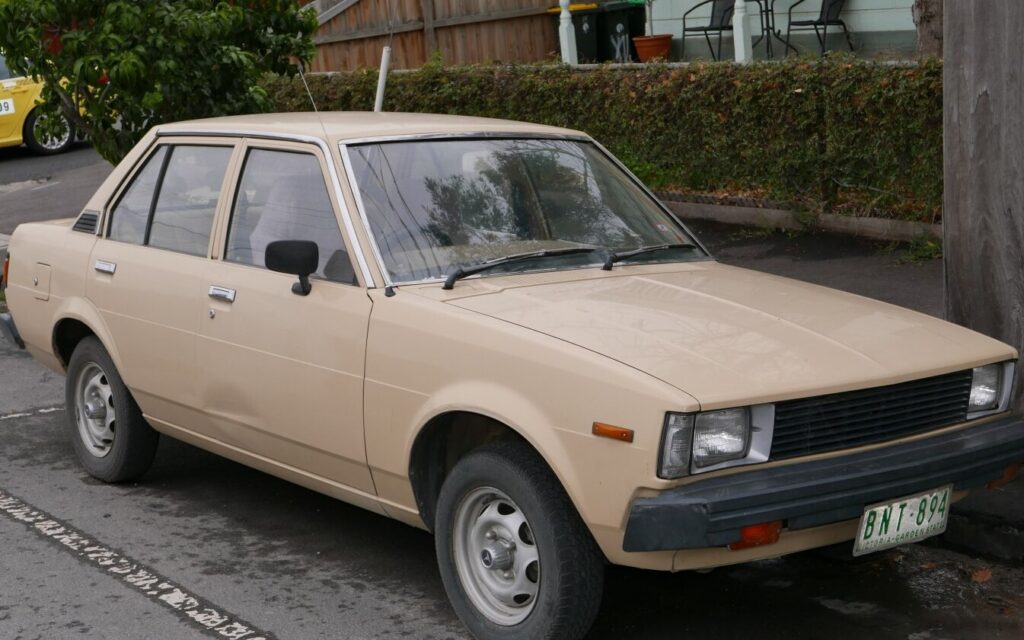
The Toyota Corolla E70, produced from 1979 to 1983, represented the fourth generation of Toyota’s globally successful Corolla line. Within this generation, the KE70 designation specifically identifies models equipped with the 1.3-liter 4K engine producing 65 horsepower. This variant served as the entry-level offering in many markets, particularly in North America and Australia, providing affordable and reliable transportation during a period of increasing fuel costs and economic uncertainty. The KE70 was a crucial model for Toyota, solidifying the Corolla’s reputation for dependability and value. It was available primarily as a four-door sedan, though coupe and liftback versions also existed with different engine options.
The 1.3L (4K) KE70 Corolla: An Entry-Level Staple
The KE70 1.3L Corolla occupied the base trim level within the E70 range. Above it sat models with larger 1.6-liter engines offering increased performance. The 1.3L engine was chosen for its fuel efficiency and affordability, making it attractive to buyers prioritizing economy over outright speed. While not a performance-oriented vehicle, the KE70 provided a comfortable and practical driving experience for everyday use. It was often favored by first-time car buyers, families on a budget, and those seeking a reliable commuter vehicle. The KE70’s simplicity also contributed to its ease of maintenance and relatively low repair costs.
Powertrain & Engine Architecture
The heart of the KE70 1.3L is the Toyota 4K engine, a 1.3-liter (1290 cc) inline-four cylinder gasoline engine. This engine is a naturally aspirated, overhead valve (OHV) design with a single camshaft operating both intake and exhaust valves. It features a two-barrel carburetor for fuel delivery, a relatively simple system for the time. The 4K engine is known for its robust construction and durability, utilizing a cast iron block and cylinder head. Bore and stroke dimensions are 76.0 mm x 80.5 mm, resulting in a compression ratio of 8.5:1. The engine produces 65 horsepower (48 kW) at 6,000 rpm and 73 lb-ft (99 Nm) of torque at 3,600 rpm.
The KE70 typically came equipped with a four-speed manual transmission as standard. However, a three-speed automatic transmission was offered as an optional extra, though less common. The automatic transmission, while providing convenience, did noticeably impact acceleration and fuel economy compared to the manual version. The transmission is a conventional hydraulic automatic, lacking the electronic controls found in later designs. The final drive ratio varied depending on the transmission and market, but generally ranged from 3.90:1 to 4.22:1. This gearing was optimized for fuel efficiency and low-speed drivability rather than high-speed performance.
Driving Characteristics
The driving experience in a KE70 1.3L is best described as utilitarian. Acceleration is modest, taking approximately 15-18 seconds to reach 60 mph (97 km/h). The engine feels strained at higher speeds, and passing maneuvers require careful planning. The three-speed automatic transmission further diminishes performance, with noticeable delays between gears. However, the KE70 excels in city driving, where its light steering and compact size make it easy to maneuver. The suspension, while simple, provides a reasonably comfortable ride, absorbing bumps and imperfections in the road surface adequately. The car’s light weight (around 1,800-2,000 lbs or 816-907 kg) contributes to its nimble handling, despite the lack of sophisticated suspension components. Compared to the 1.6L versions, the KE70 feels significantly slower, particularly when fully loaded with passengers and cargo.
Equipment & Trim Levels
The KE70 1.3L was typically offered with a fairly basic level of equipment, reflecting its position as the entry-level model. Standard features generally included vinyl upholstery, a basic AM radio, and manual windows and door locks. Air conditioning was often an optional extra, as were features like a clock and upgraded sound system. Interior trim was typically simple and functional, with durable plastics and minimal ornamentation. The dashboard layout was straightforward, with clearly labeled controls. Later models may have included minor cosmetic upgrades, such as improved seat fabrics or a slightly revised dashboard design. The exterior typically featured steel wheels with hubcaps, black plastic bumpers, and minimal chrome trim. Paint options were limited to a selection of solid colors.
Chassis & Braking
The KE70 utilizes a body-on-frame construction, a common practice for the time. The suspension consists of independent MacPherson struts at the front and a leaf spring rear suspension. The leaf spring setup, while simple and durable, contributes to a somewhat bumpy ride, particularly when the vehicle is unloaded. Steering is by a recirculating ball system, providing a relatively indirect feel. Braking is typically accomplished with drum brakes on all four wheels, though some markets received front disc brakes as an upgrade. The braking system is adequate for normal driving conditions, but lacks the stopping power of more modern vehicles. The KE70’s relatively light weight helps to mitigate the limitations of the drum brake system. Stabilizer bars were not typically fitted to the base KE70 models.
Market Reception & Comparison
The KE70 1.3L Corolla was generally well-received by critics and consumers alike. It was praised for its reliability, fuel efficiency, and affordability. However, its lack of performance was often noted. Compared to its competitors, such as the Honda Civic and Nissan Sunny, the KE70 offered a similar level of practicality and reliability, but often at a slightly lower price point. The 1.6L Corolla models offered a significant performance upgrade, but at a higher cost. The KE70’s fuel economy was a key selling point, particularly during the early 1980s when gasoline prices were rising. In terms of reliability, the 4K engine proved to be exceptionally durable, with many examples exceeding 200,000 miles (320,000 km) with proper maintenance.
Technical Specifications
| Body Type | Four-Door Sedan |
| Engine Model | 4K |
| Engine Type | Inline-Four, Naturally Aspirated |
| Displacement | 1.3 L (1290 cc) |
| Bore x Stroke | 76.0 mm x 80.5 mm |
| Compression Ratio | 8.5:1 |
| Maximum Power | 65 hp (48 kW) @ 6,000 rpm |
| Maximum Torque | 73 lb-ft (99 Nm) @ 3,600 rpm |
| Fuel System | Two-Barrel Carburetor |
| Transmission | Four-Speed Manual or Three-Speed Automatic |
| Weight | 1,800 – 2,000 lbs (816 – 907 kg) |
| Fuel Capacity | 11.9 US gallons (45 liters) |
| Engine Oil Capacity | 3.5 liters (3.7 US qt) |
| Coolant Capacity | 6.2 liters (6.55 US qt) |
Legacy
The KE70 1.3L Corolla has become a popular choice among classic car enthusiasts and restoration projects. Its simplicity, affordability, and readily available parts make it an attractive option for those looking to experience a piece of automotive history. The 4K engine is known for its longevity and ease of repair, making it a relatively straightforward engine to maintain. While not a high-performance vehicle, the KE70 offers a charming and nostalgic driving experience. In the used car market today, well-maintained examples of the KE70 1.3L can fetch reasonable prices, particularly those with low mileage and original features. The KE70’s enduring popularity is a testament to Toyota’s commitment to building reliable and durable vehicles.