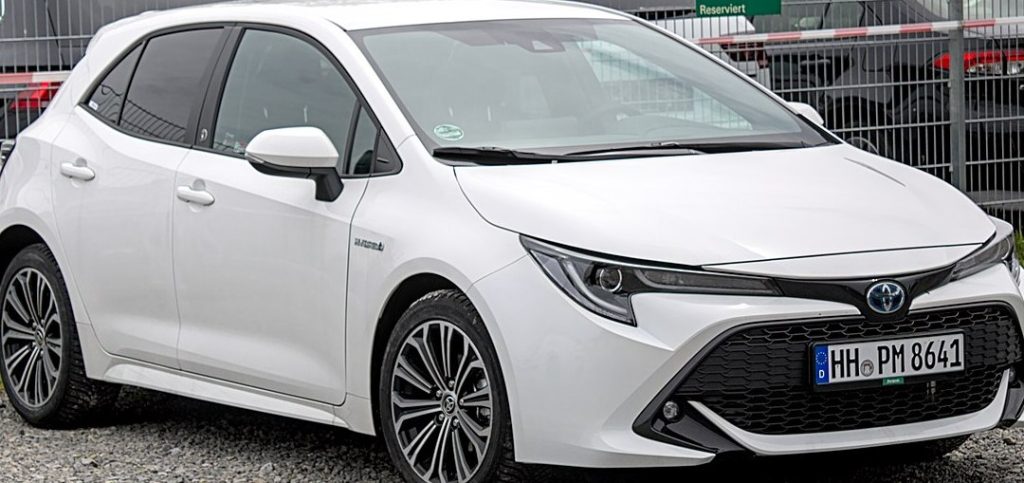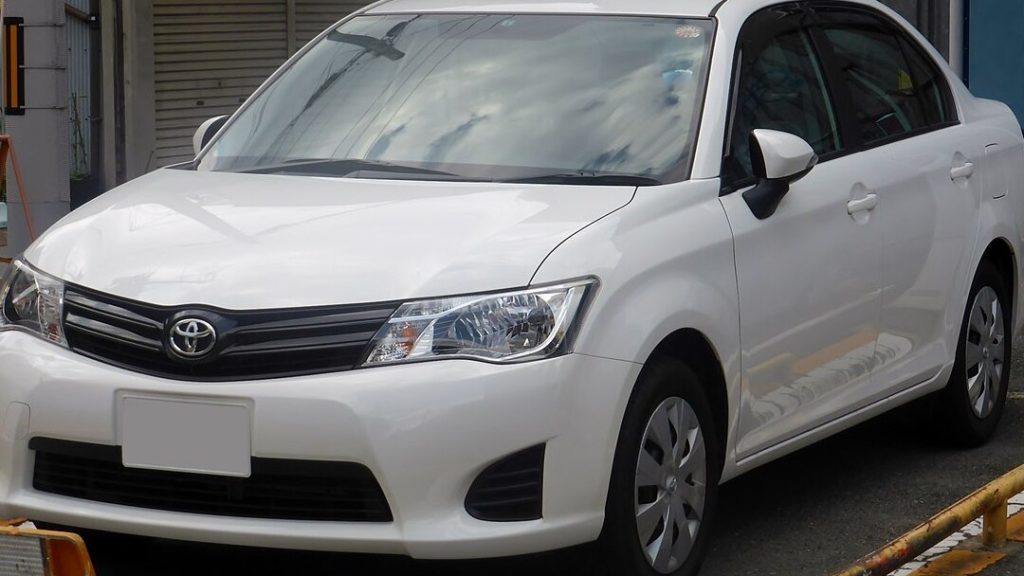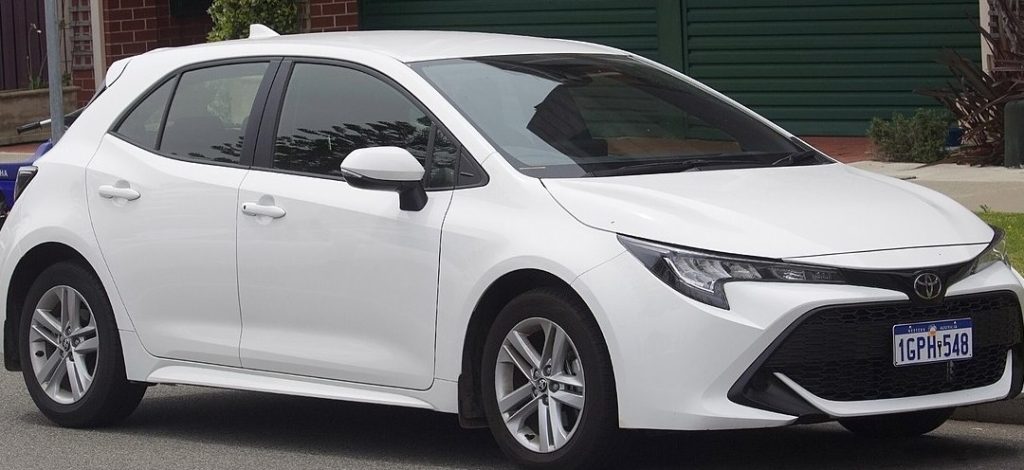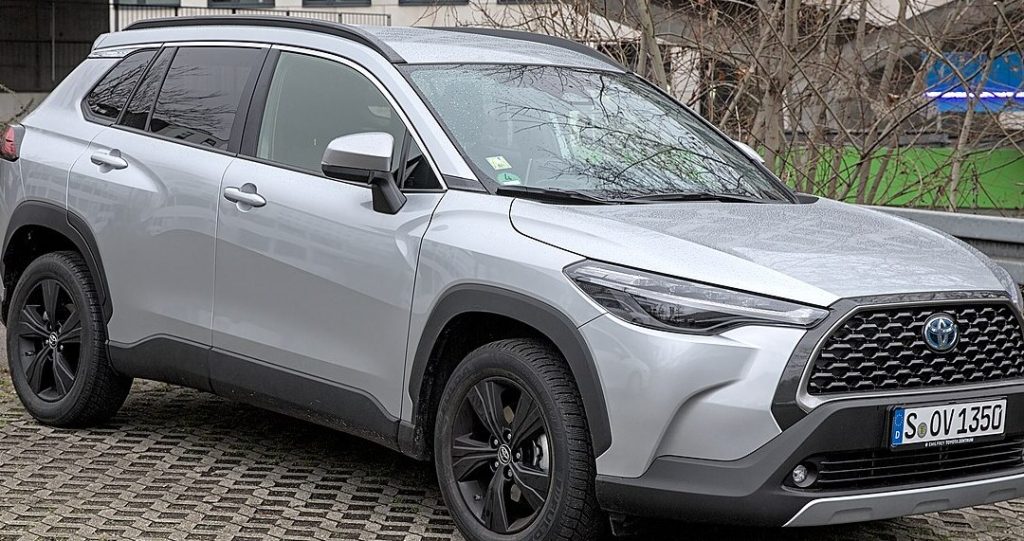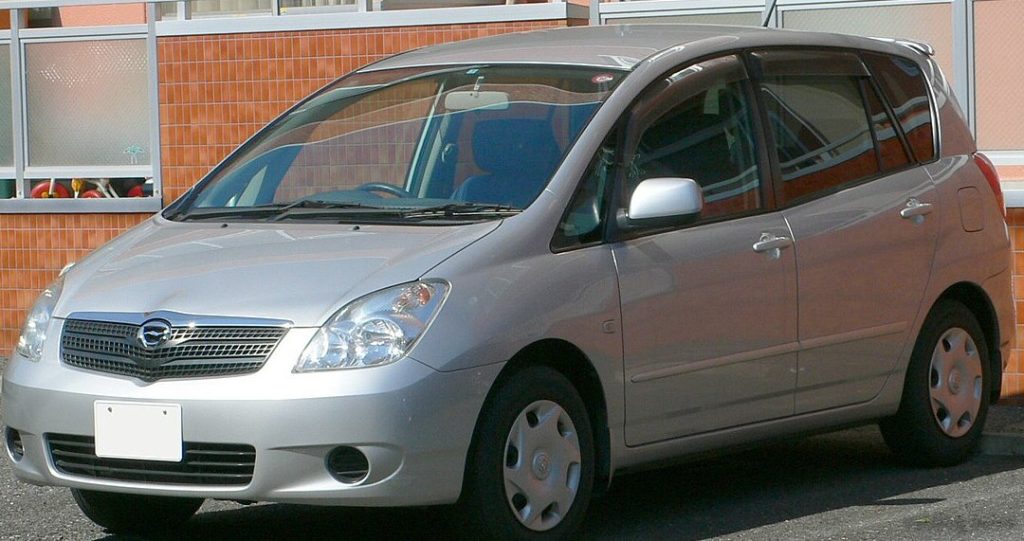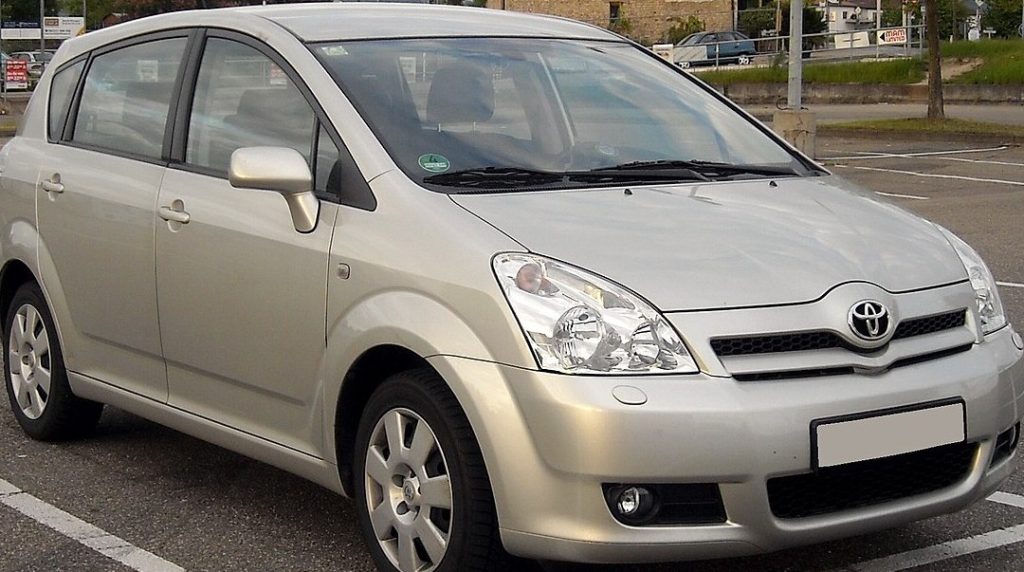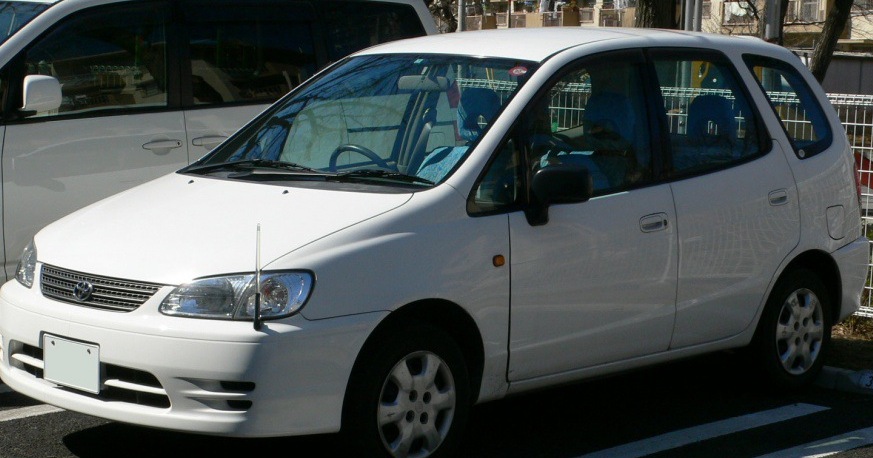
The Toyota Corolla Spacio, launched in 1997, represented Toyota’s foray into the compact MPV (Multi-Purpose Vehicle) segment, primarily aimed at the Japanese domestic market (JDM). The first generation, designated E110, spanned from 1997 to 2001, offering a practical and versatile alternative to traditional hatchbacks and sedans. Within the E110 range, the 1.8i variant, producing 125 horsepower, occupied a mid-range position, balancing performance with affordability. Production of this specific configuration ran from 2000 to 2001, offering a refined option for families seeking a spacious and reliable vehicle.
Technical Specifications
| Brand | Toyota |
| Model | Corolla Spacio |
| Generation | Corolla Spacio I (E110) |
| Type (Engine) | 1.8i (125 Hp) |
| Start of production | 2000 year |
| End of production | 2001 year |
| Powertrain Architecture | Internal Combustion engine |
| Body type | MPV |
| Seats | 5 |
| Doors | 5 |
| Fuel Type | Petrol (Gasoline) |
| Power | 125 Hp @ 6000 rpm |
| Power per litre | 69.7 Hp/l |
| Torque | 161 Nm @ 4200 rpm |
| Torque (lb-ft) | 118.75 lb.-ft. @ 4200 rpm |
| Engine layout | Front, Transverse |
| Engine Model/Code | 1ZZ-FE |
| Engine displacement | 1794 cm3 |
| Engine displacement (cu. in.) | 109.48 cu. in. |
| Number of cylinders | 4 |
| Engine configuration | Inline |
| Cylinder Bore | 79 mm |
| Cylinder Bore (in.) | 3.11 in. |
| Piston Stroke | 91.5 mm |
| Piston Stroke (in.) | 3.6 in. |
| Compression ratio | 10:1 |
| Number of valves per cylinder | 4 |
| Fuel injection system | Multi-port manifold injection |
| Engine aspiration | Naturally aspirated engine |
| Valvetrain | DOHC |
| Engine oil capacity | 3.7 l |
| Engine oil capacity (US qt) | 3.91 US qt |
| Engine oil capacity (UK qt) | 3.26 UK qt |
| Coolant | 6.5 l |
| Coolant (US qt) | 6.87 US qt |
| Coolant (UK qt) | 5.72 UK qt |
| Fuel tank capacity | 50 l |
| Fuel tank capacity (US gal) | 13.21 US gal |
| Fuel tank capacity (UK gal) | 11 UK gal |
| Length | 4135 mm |
| Length (in.) | 162.8 in. |
| Width | 1690 mm |
| Width (in.) | 66.54 in. |
| Height | 1620 mm |
| Height (in.) | 63.78 in. |
| Wheelbase | 2260 mm |
| Wheelbase (in.) | 88.98 in. |
| Front track | 1460 mm |
| Front track (in.) | 57.48 in. |
| Rear track | 1450 mm |
| Rear track (in.) | 57.09 in. |
| Minimum turning circle | 10 m |
| Minimum turning circle (ft) | 32.81 ft. |
| Drivetrain | Front wheel drive |
| Number of gears | 5 |
| Gearbox type | Manual transmission |
| Front brakes | Ventilated discs |
| Rear brakes | Drum |
| Tires size | 185/65 R14 |
Powertrain & Engine Architecture
The heart of the 1.8i Spacio is the 1ZZ-FE engine, a 1.8-liter (1794 cc) inline-four cylinder gasoline engine. This engine is a member of Toyota’s ZZ engine family, known for its lightweight aluminum block and cylinder head, contributing to improved fuel efficiency. The 1ZZ-FE utilizes multi-port fuel injection and a double overhead camshaft (DOHC) valvetrain with four valves per cylinder, enabling a respectable power output of 125 hp at 6000 rpm and 161 Nm (118.75 lb-ft) of torque at 4200 rpm. The engine’s relatively high compression ratio of 10:1 further aids in maximizing efficiency. The 5-speed manual transmission was standard, providing drivers with direct control over the engine’s power delivery. This engine was known for its smooth operation and relatively quiet nature, typical of Toyota’s engineering philosophy.
Driving Characteristics
The 1.8i Spacio, equipped with the 5-speed manual transmission, offered a balanced driving experience. While not a performance-oriented vehicle, the 125 hp engine provided adequate power for everyday driving and highway cruising. The gear ratios were tuned for fuel economy and drivability, rather than outright acceleration. Compared to the lower-powered 1.5-liter variants, the 1.8i offered noticeably more responsive acceleration and a more relaxed driving experience, particularly when fully loaded with passengers or cargo. However, it didn’t possess the sporty feel of some competitors, prioritizing comfort and practicality over dynamic handling. The front-wheel-drive configuration provided predictable handling, but lacked the all-weather capability of an all-wheel-drive system.
Equipment & Trim Levels
The 1.8i Spacio typically came with a reasonable level of standard equipment. Interior features included comfortable cloth seats, a basic audio system, and air conditioning. Power windows and door locks were often included, though these could vary depending on specific regional specifications. The dashboard layout was functional and straightforward, prioritizing ease of use. Optional extras included alloy wheels, upgraded audio systems, and a sunroof. The Spacio’s interior was designed with practicality in mind, offering ample headroom and legroom for passengers. The rear seats could be folded down to create a larger cargo area, enhancing the vehicle’s versatility.
Chassis & Braking
The Corolla Spacio’s chassis was designed to provide a comfortable ride and stable handling. It utilized a MacPherson strut suspension in the front and a torsion beam suspension in the rear. The front brakes were ventilated discs, providing adequate stopping power, while the rear brakes were drums, a cost-saving measure common in this class of vehicle. Stabilizer bars were included on both axles to reduce body roll during cornering. The suspension tuning prioritized comfort over sporty handling, resulting in a smooth ride quality, even on uneven road surfaces. The relatively lightweight construction of the vehicle contributed to its nimble handling characteristics.
Market Reception & Comparison
The Toyota Corolla Spacio 1.8i was generally well-received in the Japanese market as a practical and reliable family vehicle. Critics praised its spacious interior, comfortable ride, and fuel efficiency. Compared to the 1.5-liter variants, the 1.8i offered a noticeable improvement in performance, making it a more appealing option for drivers who frequently carried passengers or drove on highways. However, some critics noted that the interior styling was somewhat basic and lacked the sophistication of some competitors. Fuel economy was competitive for its class, averaging around 30-35 mpg in mixed driving conditions. Reliability was a strong point, as with most Toyota products of this era.
Legacy
The Toyota Corolla Spacio, particularly the 1.8i variant, has maintained a reputation for reliability and durability. The 1ZZ-FE engine is known to be a robust and long-lasting unit, provided it receives regular maintenance. In the used car market, these vehicles are often sought after for their practicality, affordability, and Toyota’s renowned build quality. While not a collector’s item, well-maintained examples command reasonable prices. The Spacio’s legacy lies in its contribution to the growing popularity of compact MPVs, offering a versatile and family-friendly alternative to traditional car designs. The 1.8i trim, with its balanced performance and fuel efficiency, remains a desirable option for those seeking a reliable and practical used vehicle.