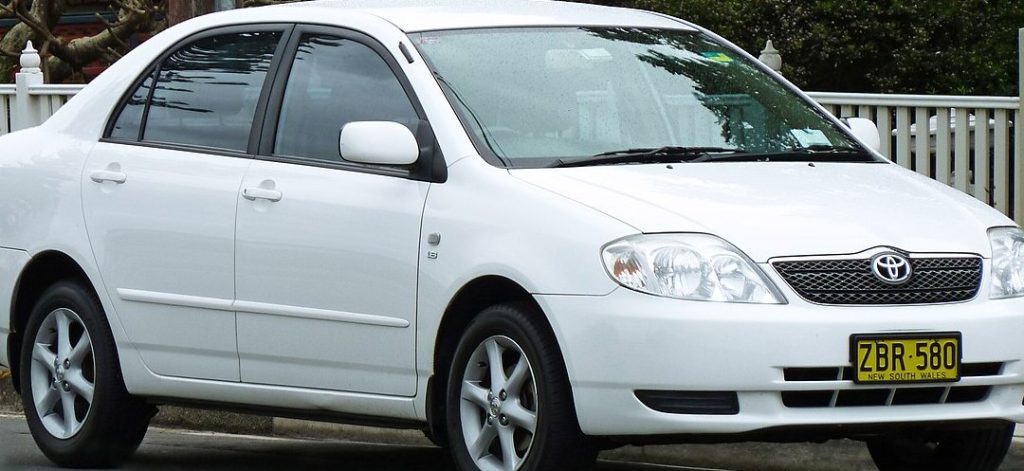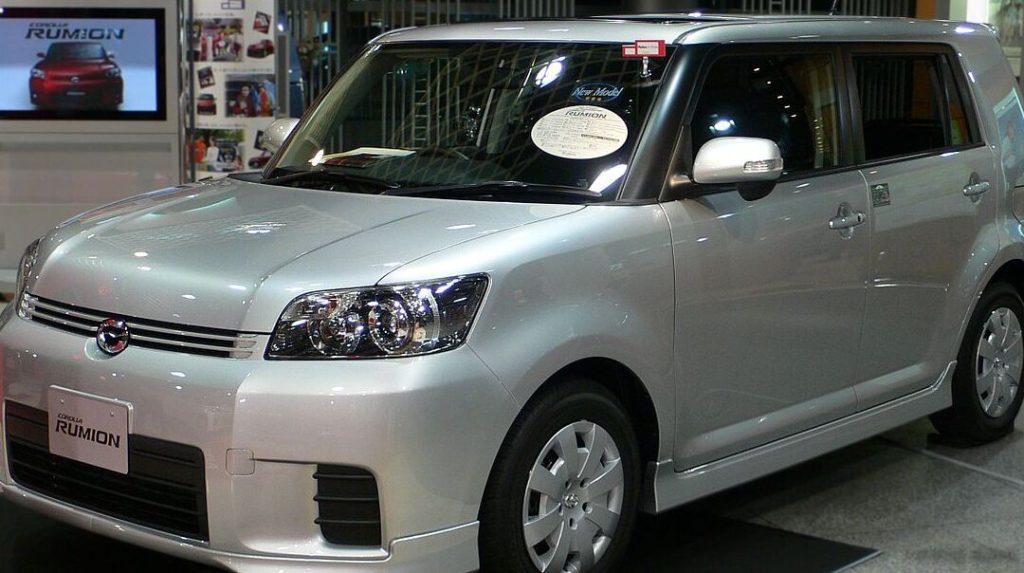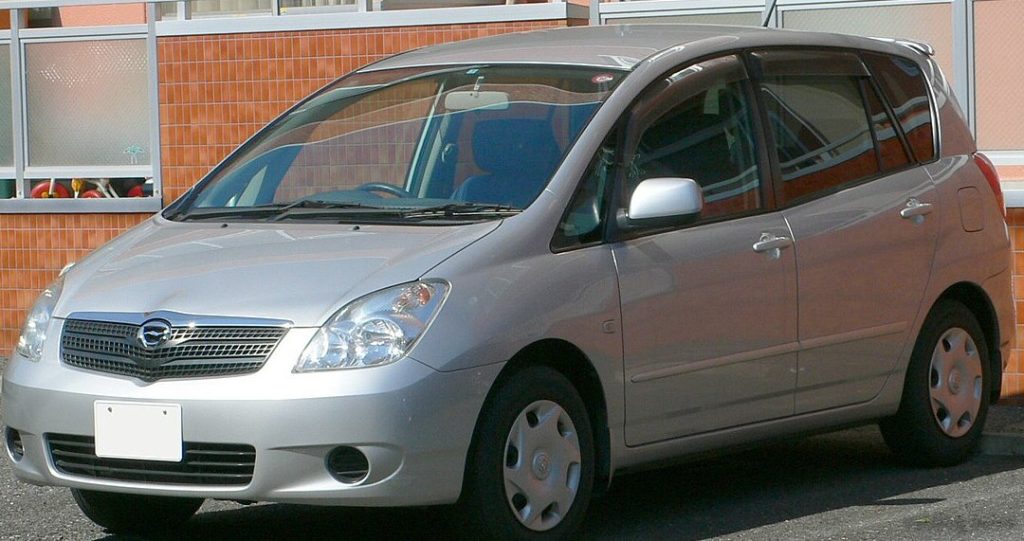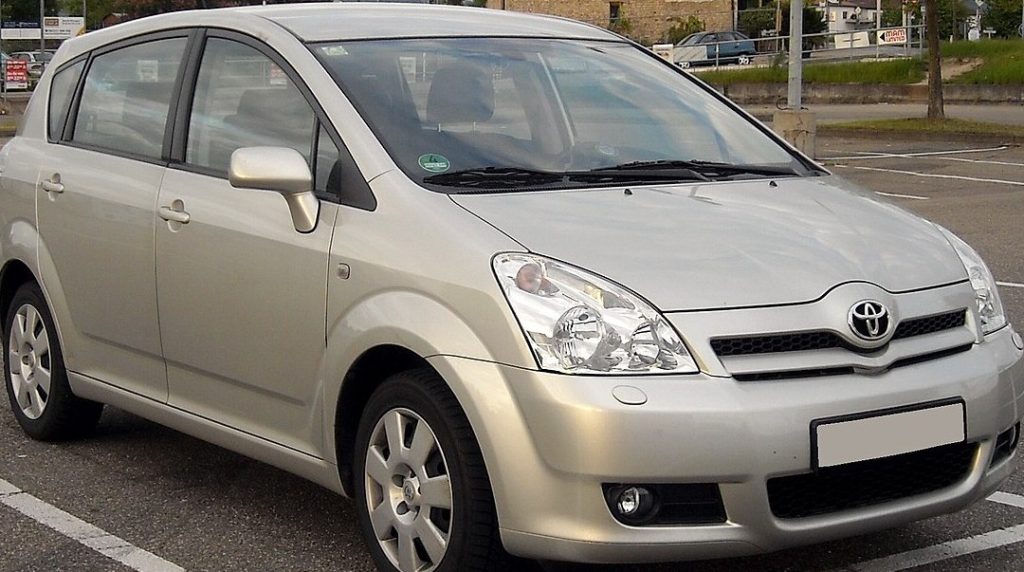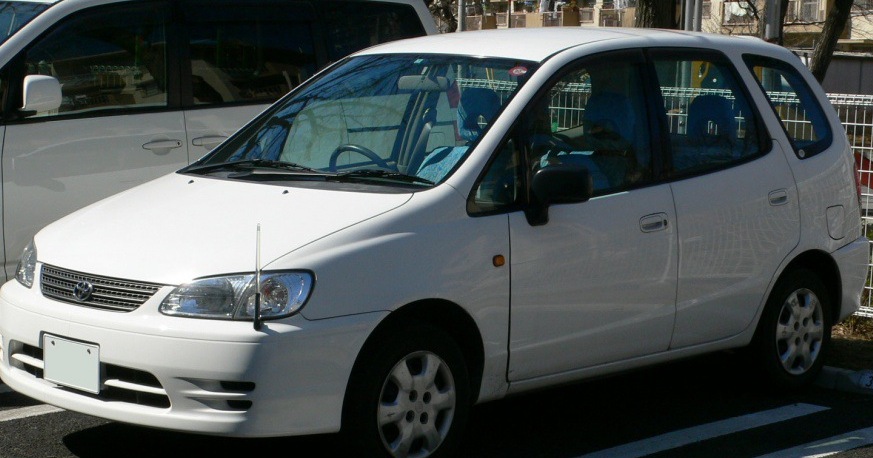
The Toyota Corolla Spacio, launched in 1997, represented Toyota’s foray into the compact MPV (Multi-Purpose Vehicle) segment, primarily aimed at the Japanese domestic market (JDM). The first generation, designated E110, was produced from 1997 to 2001, offering a practical and versatile alternative to traditional hatchbacks and small sedans. The 1.8i variant with the automatic transmission, produced between 2000 and 2001, occupied a mid-range position within the Spacio lineup, offering a balance between performance, fuel economy, and convenience. It was designed to appeal to families and individuals seeking a spacious and comfortable vehicle for everyday use.
Technical Specifications
| Brand | Toyota |
| Model | Corolla Spacio |
| Generation | Corolla Spacio I (E110) |
| Type (Engine) | 1.8i (125 Hp) Automatic |
| Start of production | 2000 year |
| End of production | 2001 year |
| Powertrain Architecture | Internal Combustion engine |
| Body type | MPV |
| Seats | 5 |
| Doors | 5 |
| Fuel Type | Petrol (Gasoline) |
| Power | 125 Hp @ 6000 rpm |
| Power per litre | 69.7 Hp/l |
| Torque | 161 Nm @ 4200 rpm / 118.75 lb.-ft. @ 4200 rpm |
| Engine layout | Front, Transverse |
| Engine Model/Code | 1ZZ-FE |
| Engine displacement | 1794 cm3 / 109.48 cu. in. |
| Number of cylinders | 4 |
| Engine configuration | Inline |
| Cylinder Bore | 79 mm / 3.11 in. |
| Piston Stroke | 91.5 mm / 3.6 in. |
| Compression ratio | 10:1 |
| Number of valves per cylinder | 4 |
| Fuel injection system | Multi-port manifold injection |
| Engine aspiration | Naturally aspirated engine |
| Valvetrain | DOHC |
| Engine oil capacity | 3.7 l / 3.91 US qt | 3.26 UK qt |
| Coolant | 6.5 l / 6.87 US qt | 5.72 UK qt |
| Fuel tank capacity | 50 l / 13.21 US gal | 11 UK gal |
| Length | 4135 mm / 162.8 in. |
| Width | 1690 mm / 66.54 in. |
| Height | 1620 mm / 63.78 in. |
| Wheelbase | 2260 mm / 88.98 in. |
| Front track | 1460 mm / 57.48 in. |
| Rear (Back) track | 1450 mm / 57.09 in. |
| Minimum turning circle (turning diameter) | 10 m / 32.81 ft. |
| Drivetrain Architecture | The Internal combustion engine (ICE) drives the front wheels of the vehicle. |
| Drive wheel | Front wheel drive |
| Number of gears and type of gearbox | 4 gears, automatic transmission |
| Front brakes | Ventilated discs |
| Rear brakes | Drum |
| Tires size | 185/65 R14 |
| Wheel rims size | 14 |
Powertrain & Engine Architecture
The 1.8i Spacio was powered by the 1ZZ-FE engine, a 1.8-liter (1794 cc) inline-four cylinder gasoline engine. This engine was a member of Toyota’s ZZ engine family, known for its lightweight aluminum block and cylinder head, and its use of multi-port fuel injection. The 1ZZ-FE featured a double overhead camshaft (DOHC) valvetrain with four valves per cylinder, contributing to its relatively high output for its displacement. The engine produced 125 horsepower at 6000 rpm and 161 Nm (118.75 lb-ft) of torque at 4200 rpm. The automatic transmission was a conventional four-speed unit, designed for smooth and comfortable shifting. It wasn’t a particularly advanced transmission, but it was reliable and well-suited to the engine’s power characteristics.
Driving Characteristics
The 1.8i automatic Spacio offered a comfortable and easy driving experience. While not particularly sporty, the engine provided adequate power for everyday driving and highway cruising. The automatic transmission, while lacking the responsiveness of a manual, offered smooth gear changes and reduced driver fatigue. Acceleration was reasonable, but not brisk, with a 0-60 mph time estimated around 11-12 seconds. Compared to the manual transmission version, the automatic suffered a slight performance penalty due to the transmission’s inherent efficiency losses. The gear ratios were tuned for fuel economy and drivability rather than outright performance. The Spacio’s relatively light weight helped to mitigate the engine’s modest power output.
Equipment & Trim Levels
The 1.8i automatic trim level typically included features such as power windows, power door locks, air conditioning, and an AM/FM radio with a cassette player. Higher trim levels, often denoted with additional suffixes, could add features like alloy wheels, a sunroof, and upgraded interior upholstery. The interior was generally functional and well-built, with a focus on practicality. Upholstery was typically cloth, available in a range of colors. Optional extras included a CD player, upgraded sound system, and rear parking sensors.
Chassis & Braking
The Corolla Spacio utilized a front-wheel-drive layout with independent MacPherson strut suspension in the front and a torsion beam suspension in the rear. This setup provided a comfortable ride, although it wasn’t particularly sporty. The front brakes were ventilated discs, offering good stopping power, while the rear brakes were drums, a cost-saving measure common in this class of vehicle. The steering was power-assisted, making it easy to maneuver in tight spaces. The 14-inch wheels were fitted with 185/65 R14 tires, providing a good balance between ride comfort and handling.
Market Reception & Comparison
The Corolla Spacio was well-received in Japan as a practical and versatile family vehicle. The 1.8i automatic variant was popular with buyers who prioritized comfort and convenience over outright performance. Critics generally praised the Spacio’s spacious interior, comfortable ride, and fuel efficiency. Compared to other compact MPVs of the time, such as the Honda Mobilio, the Spacio offered a slightly more refined driving experience and a more stylish interior. Fuel economy was respectable, averaging around 28-32 mpg in mixed driving conditions. Reliability was also a strong point, as with most Toyota vehicles of this era.
Legacy
The Toyota Corolla Spacio, particularly the 1.8i automatic variant, has proven to be a reliable and durable vehicle. Many examples are still on the road today, testament to Toyota’s engineering quality. The 1ZZ-FE engine is known for its longevity, although regular maintenance is essential to prevent issues such as oil leaks and timing chain wear. In the used car market, the Spacio remains an affordable and practical option for those seeking a spacious and reliable MPV. Its simple mechanical design makes it relatively easy and inexpensive to maintain, contributing to its continued popularity among budget-conscious buyers. While not a collector’s item, well-maintained examples are increasingly sought after by enthusiasts of JDM vehicles.