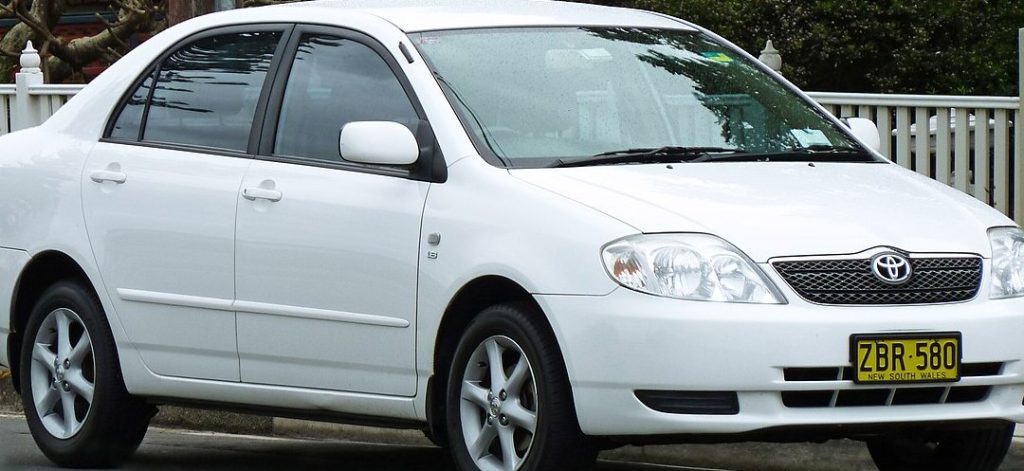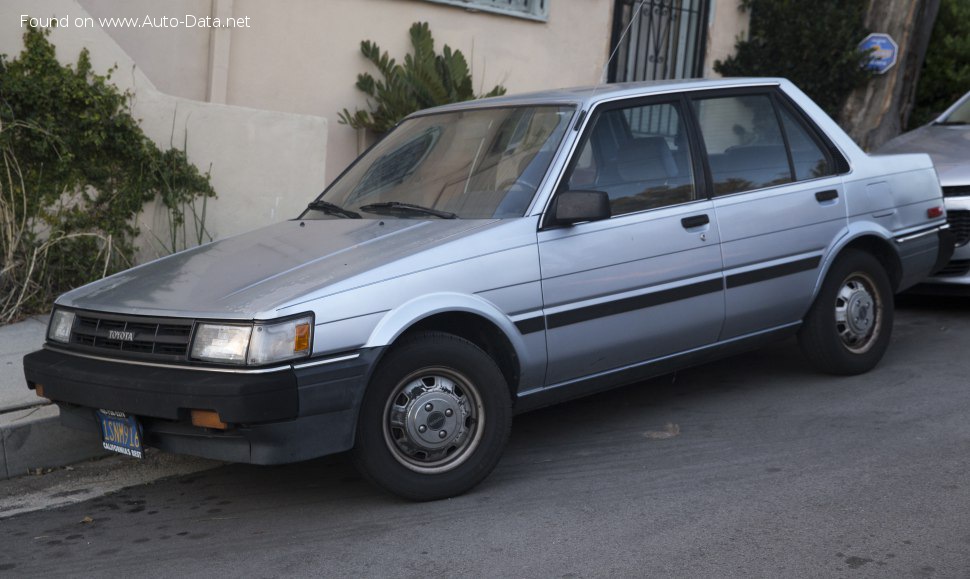
The Toyota Corolla E80, produced between 1985 and 1988, represented the fifth generation of Toyota’s globally successful Corolla line. Within this generation, the 1.6-liter (73 hp) variant, powered by the 2E-LU engine, occupied a significant position as a mainstream, affordable option for buyers seeking reliable transportation. This model served as a step up from the base 1.3-liter engine, offering a modest increase in performance without the added cost of the higher-trim 1.6 GT or diesel options. The E80 series was built on Toyota’s New Generation Platform, emphasizing improved fuel efficiency, comfort, and safety compared to its predecessor.
The 1.6L (73 hp) Corolla E80: A Detailed Overview
The 1.6L Corolla E80 was primarily marketed towards families and individuals prioritizing practicality and economy. It was available almost exclusively as a four-door sedan, though limited numbers of five-door hatchbacks and wagons were also produced depending on the regional market. This variant aimed to provide a balance between affordability, fuel efficiency, and acceptable performance for everyday driving. It was a common sight on roads throughout the late 1980s, known for its dependability and low running costs.
Powertrain & Engine Architecture
At the heart of the 1.6L Corolla E80 lay the 2E-LU engine, a 1.6-liter (1587 cc) inline-four cylinder gasoline engine. This engine was naturally aspirated and featured a single overhead camshaft (SOHC) valvetrain operating with two valves per cylinder. The 2E-LU engine was known for its simplicity and robustness, contributing to the Corolla’s reputation for reliability. Fuel delivery was managed by a carburetor, a common feature for vehicles of this era, rather than fuel injection. This carburetor system, while less precise than fuel injection, was relatively easy to maintain and repair.
The engine produced 73 horsepower (54 kW) at 5,200 rpm and 99 lb-ft (134 Nm) of torque at 3,200 rpm. While not a performance powerhouse, this output was sufficient for comfortable cruising and everyday driving. The engine was typically paired with a four-speed automatic transmission, although a five-speed manual transmission was also available. The automatic transmission was designed for smooth operation and ease of use, catering to drivers who preferred convenience over sporty driving dynamics. The transmission’s gear ratios were optimized for fuel efficiency and relaxed cruising, rather than rapid acceleration.
Driving Characteristics
The driving experience in a 1.6L Corolla E80 was characterized by its smoothness and predictability. The automatic transmission provided seamless gear changes, making it a comfortable vehicle for city driving and highway cruising. Acceleration was adequate, but not particularly brisk. The 0-60 mph time was estimated to be around 13-15 seconds, placing it firmly in the realm of practical transportation rather than performance vehicles. Compared to the manual transmission version, the automatic offered less driver engagement but greater convenience. The 1.6 GT model, with its twin-carburetor setup and higher compression ratio, offered significantly more power and a sportier driving experience, but at a higher price point.
The engine’s torque curve was relatively flat, providing usable power across a wide range of engine speeds. This made it easy to drive in various traffic conditions without constantly needing to downshift. However, overtaking maneuvers required careful planning, as the engine lacked the outright power to execute quick passes. The suspension was tuned for comfort, absorbing bumps and imperfections in the road surface effectively. This contributed to a smooth and pleasant ride quality.
Equipment & Trim Levels
The 1.6L Corolla E80 typically came equipped with a modest level of standard features. Base models generally included cloth upholstery, a basic AM/FM radio, and manual windows and door locks. Higher trim levels, often denoted by designations like “DX” or “LE,” added features such as upgraded upholstery, a more sophisticated sound system, and power windows and locks. Optional extras included a sunroof, air conditioning, and alloy wheels. The interior design was functional and straightforward, prioritizing practicality over luxury. The dashboard layout was simple and easy to use, with clearly labeled controls.
The interior space was generous for a compact sedan, offering comfortable seating for five passengers. The trunk provided ample cargo space for everyday needs. The build quality was generally good, with durable materials and solid construction. However, the interior materials were not particularly luxurious, reflecting the vehicle’s affordable price point.
Chassis & Braking
The Corolla E80 utilized a front-engine, rear-wheel-drive layout. The suspension consisted of independent MacPherson struts at the front and a semi-trailing arm suspension at the rear. This suspension setup provided a good balance between ride comfort and handling. The steering was rack-and-pinion, offering precise and responsive control. The braking system typically featured disc brakes at the front and drum brakes at the rear. The brakes were adequate for normal driving conditions, but lacked the stopping power of more modern braking systems.
Stabilizer bars were often included, particularly on higher trim levels, to reduce body roll during cornering. The chassis was relatively lightweight, contributing to the vehicle’s fuel efficiency and maneuverability. The tires were typically narrow, prioritizing fuel economy over grip. The overall chassis design was focused on providing a safe and comfortable driving experience.
Market Reception & Comparison
The 1.6L Corolla E80 was well-received by critics and consumers alike. It was praised for its reliability, fuel efficiency, and affordability. It consistently ranked highly in consumer surveys for dependability. Compared to its competitors, such as the Honda Civic and Nissan Sentra, the Corolla E80 offered a compelling combination of value and practicality. The 1.6 GT model, while more expensive, provided a sportier alternative for drivers seeking more performance. The diesel-powered Corolla variants offered even greater fuel economy, but at the expense of performance and refinement.
Fuel economy for the 1.6L automatic was typically around 28-32 mpg in combined driving conditions. This was considered excellent for a vehicle of its size and era. Reliability was a major strength, with many Corolla E80s remaining on the road for decades with minimal maintenance. The relatively simple engine design and robust construction contributed to its longevity.
Technical Specifications
| Body Type | 4-Door Sedan |
| Engine Type | 1.6L Inline-Four Cylinder |
| Engine Code | 2E-LU |
| Engine Displacement | 1587 cc |
| Power Output | 73 hp (54 kW) @ 5200 rpm |
| Torque Output | 99 lb-ft (134 Nm) @ 3200 rpm |
| Fuel System | Carburetor |
| Valvetrain | SOHC, 2 Valves per Cylinder |
| Transmission | 4-Speed Automatic (Optional 5-Speed Manual) |
| Drivetrain | Rear-Wheel Drive |
| Front Suspension | MacPherson Strut |
| Rear Suspension | Semi-Trailing Arm |
| Brakes (Front) | Disc |
| Brakes (Rear) | Drum |
| Fuel Capacity | 55 Liters (14.5 US Gallons) |
| Engine Oil Capacity | 3.2 Liters (3.38 US Quarts) |
Legacy
The 1.6L Corolla E80 remains a popular choice among classic car enthusiasts and collectors. Its reputation for reliability and affordability has ensured its continued presence on the used car market. While finding well-maintained examples can be challenging, these vehicles often represent a good value for those seeking a simple, dependable, and fuel-efficient classic car. The 2E-LU engine is known for its longevity, and many examples are still running strong after decades of service. The Corolla E80’s enduring popularity is a testament to Toyota’s commitment to quality and reliability.