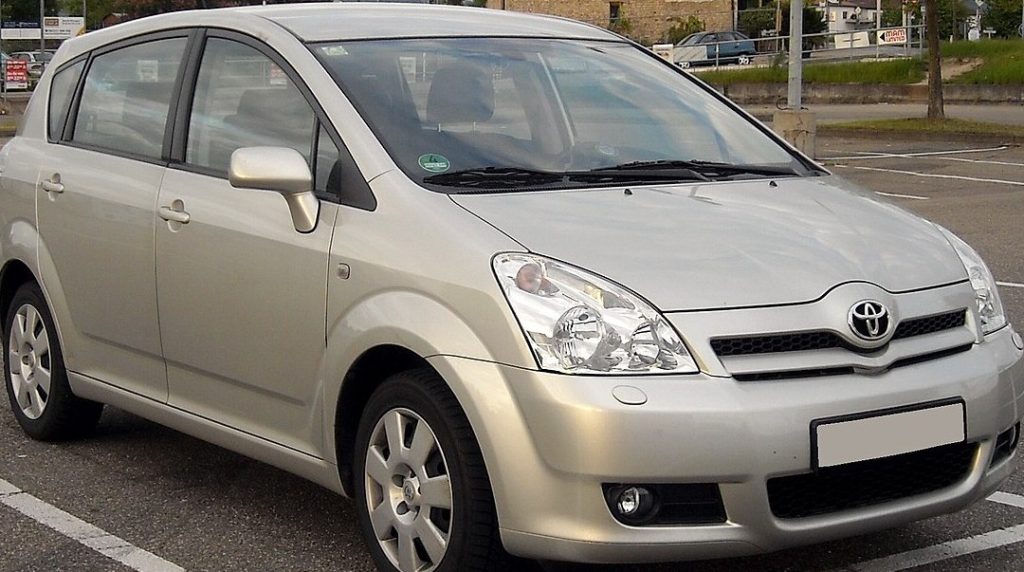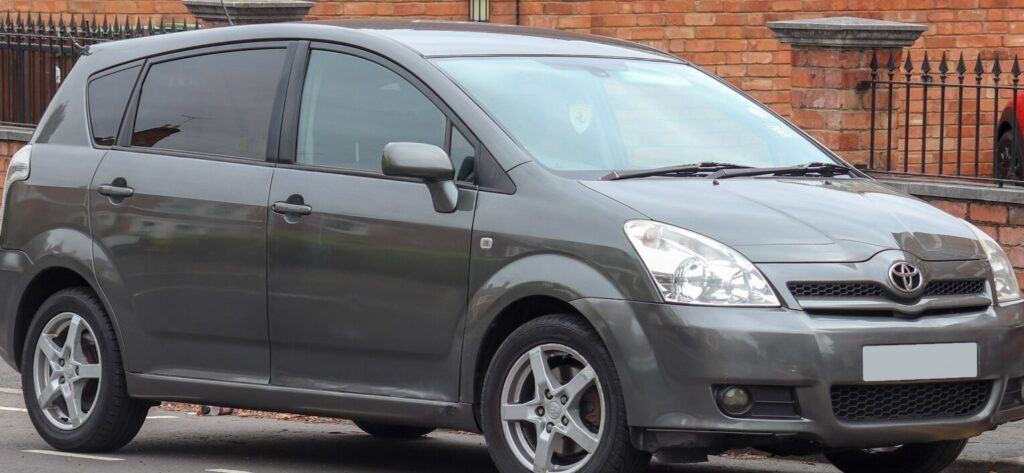
The Toyota Corolla Verso II, specifically the 2.0 D-4D 7-seat variant, was produced between 2004 and 2006 as part of the AR10 generation. This model represented Toyota’s entry into the compact MPV (Multi-Purpose Vehicle) segment, aimed at providing a practical and versatile vehicle for families. Positioned as a mid-range offering within the Verso lineup, it slotted between the base 1.6L petrol engine and the more powerful, though less common, petrol variants. The Corolla Verso II was primarily marketed in Europe, where the demand for compact, seven-passenger vehicles was growing. It was designed to compete with vehicles like the Renault Scenic and Citroën Xsara Picasso.
Technical Specifications
| Brand | Toyota |
| Model | Corolla Verso |
| Generation | Corolla Verso II (AR10) |
| Type | 2.0 D-4D (116 Hp) 7 Seats |
| Start of production | April, 2004 |
| End of production | 2006 |
| Powertrain Architecture | Internal Combustion engine |
| Body type | MPV |
| Seats | 7 |
| Doors | 5 |
| Fuel consumption (urban) | 7.8 l/100 km (30.2 US mpg) |
| Fuel consumption (extra urban) | 5.3 l/100 km (44.4 US mpg) |
| Fuel Type | Diesel |
| Acceleration 0 – 100 km/h | 12.6 sec |
| Acceleration 0 – 62 mph | 12.6 sec |
| Acceleration 0 – 60 mph | 12 sec |
| Maximum speed | 180 km/h (111.85 mph) |
| Weight-to-power ratio | 12.7 kg/Hp |
| Weight-to-torque ratio | 5.3 kg/Nm |
| Power | 116 Hp @ 3600 rpm |
| Torque | 280 Nm @ 2000 rpm (206.52 lb.-ft. @ 2000 rpm) |
| Engine layout | Front, Transverse |
| Engine Model/Code | 1CD-FTV |
| Engine displacement | 1995 cm3 (121.74 cu. in.) |
| Number of cylinders | 4 |
| Engine configuration | Inline |
| Cylinder Bore | 82.2 mm (3.24 in.) |
| Piston Stroke | 94 mm (3.7 in.) |
| Compression ratio | 18.6:1 |
| Number of valves per cylinder | 4 |
| Fuel injection system | Diesel Commonrail |
| Engine aspiration | Turbocharger, Intercooler |
| Valvetrain | DOHC |
| Engine oil capacity | 5.9 l (6.23 US qt | 5.19 UK qt) |
| Coolant | 7.4 l (7.82 US qt | 6.51 UK qt) |
| Kerb Weight | 1475 kg (3251.82 lbs.) |
| Max. weight | 2140 kg (4717.89 lbs.) |
| Max load | 665 kg (1466.07 lbs.) |
| Trunk (boot) space – minimum | 415 l (14.66 cu. ft.) |
| Trunk (boot) space – maximum | 1760 l (62.15 cu. ft.) |
| Fuel tank capacity | 55 l (14.53 US gal | 12.1 UK gal) |
| Length | 4240 mm (166.93 in.) |
| Width | 1710 mm (67.32 in.) |
| Height | 1610 mm (63.39 in.) |
| Wheelbase | 2600 mm (102.36 in.) |
| Front track | 1480 mm (58.27 in.) |
| Rear (Back) track | 1490 mm (58.66 in.) |
| Drivetrain Architecture | Front wheel drive |
| Number of gears | 5 |
| Gearbox type | Manual transmission |
| Front suspension | Spring Strut |
| Rear suspension | Coil spring |
| Front brakes | Ventilated discs |
| Rear brakes | Disc |
| Assisting systems | ABS (Anti-lock braking system) |
| Steering type | Steering rack and pinion |
| Power steering | Hydraulic Steering |
| Tires size | 205/55 R16 |
INTRODUCTION
The 2.0 D-4D variant of the Corolla Verso II, introduced in 2004, was a key model for Toyota in the European MPV market. It combined a relatively fuel-efficient diesel engine with the practicality of seven-seat accommodation. Built on the Toyota’s MC platform (also known as the 1HX0/A3 platform shared with other models like the Corolla sedan and Avensis), the Verso II aimed to offer a comfortable and spacious interior, along with Toyota’s reputation for reliability. The seven-seat configuration, while adding versatility, did compromise rear cargo space when all seats were in use.
Powertrain & Engine Architecture
At the heart of the 2.0 D-4D Verso II lies the 1CD-FTV engine, a 1.995-liter inline-four cylinder diesel. This engine was a common sight in Toyota’s European lineup during the early 2000s. It featured a common rail direct injection system, delivering fuel at extremely high pressure for improved combustion efficiency and reduced emissions. The engine utilized a turbocharger with an intercooler to boost power output. The DOHC (Double Overhead Camshaft) valvetrain, with four valves per cylinder, further enhanced breathing and performance. The 1CD-FTV was known for its robust construction and relatively simple design, contributing to its longevity. This particular variant produced 116 horsepower at 3600 rpm and 280 Nm (206.52 lb-ft) of torque at 2000 rpm. The engine was paired with a five-speed manual transmission, which was the standard offering for this trim level. An automatic transmission was available on some Verso models, but was less common with the 2.0 D-4D engine.
Driving Characteristics
The 2.0 D-4D with the manual transmission offered a reasonable balance between performance and fuel economy. While not a particularly sporty vehicle, the engine provided adequate power for everyday driving and highway cruising. Acceleration from 0-60 mph took around 12 seconds, and the top speed was approximately 112 mph. The five-speed gearbox was well-matched to the engine’s torque curve, allowing for comfortable and efficient gear changes. Compared to the lower-powered 1.6L petrol version, the 2.0 D-4D offered significantly more torque, making it easier to carry a full load of passengers and luggage. However, it wasn’t as refined or responsive as the higher-output petrol engines available in the Verso range. The diesel engine was noticeably louder and produced more vibration than its petrol counterparts.
Equipment & Trim Levels
The 2.0 D-4D 7-seat Verso typically came with a decent level of standard equipment. This included air conditioning, power windows, central locking, and an audio system. Safety features such as ABS (Anti-lock Braking System) and front airbags were also standard. Higher trim levels offered additional features like alloy wheels, rear parking sensors, and a more sophisticated audio system. Interior upholstery was typically cloth, with a dark color scheme. The dashboard layout was functional and straightforward, prioritizing practicality over aesthetics. Optional extras included a sunroof, upgraded audio systems, and metallic paint finishes.
Chassis & Braking
The Corolla Verso II utilized a front-wheel-drive layout with a MacPherson strut suspension at the front and a coil spring suspension at the rear. This setup provided a comfortable ride quality, although it wasn’t particularly sporty. The front brakes were ventilated discs, while the rear brakes were solid discs. The steering was a hydraulic power-assisted rack and pinion system, offering reasonable precision and feedback. The suspension was tuned to prioritize comfort and stability, rather than handling prowess. The relatively modest weight of the vehicle (around 3252 lbs) helped to compensate for the engine’s limited power.
Market Reception & Comparison
The Toyota Corolla Verso II 2.0 D-4D was generally well-received by automotive critics. It was praised for its practicality, fuel efficiency, and Toyota’s reputation for reliability. However, some critics noted that the interior design was somewhat bland and that the driving experience wasn’t particularly engaging. Compared to the 1.6L petrol version, the 2.0 D-4D offered superior torque and fuel economy, making it a more suitable choice for those who frequently carried passengers or drove long distances. Compared to the higher-powered petrol engines, it lacked the same level of refinement and performance. Fuel economy was a strong point, averaging around 44 mpg on the extra-urban cycle.
Legacy
The 1CD-FTV engine, found in the 2.0 D-4D Verso II, has proven to be a durable and reliable unit. While not immune to age-related issues, it’s generally considered a robust engine capable of high mileage with proper maintenance. On the used car market, the 2.0 D-4D Verso II remains a popular choice for families seeking a practical and affordable MPV. Common issues include wear and tear on the turbocharger and potential problems with the fuel injectors. However, these are typically relatively inexpensive to repair. The Verso II’s reputation for reliability and its spacious interior continue to make it a viable option for those seeking a used MPV.