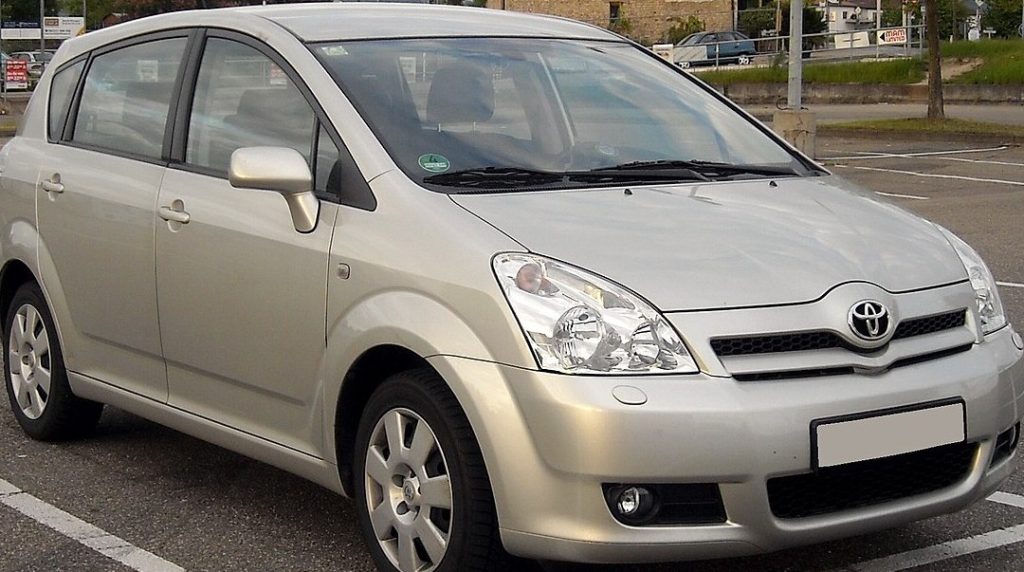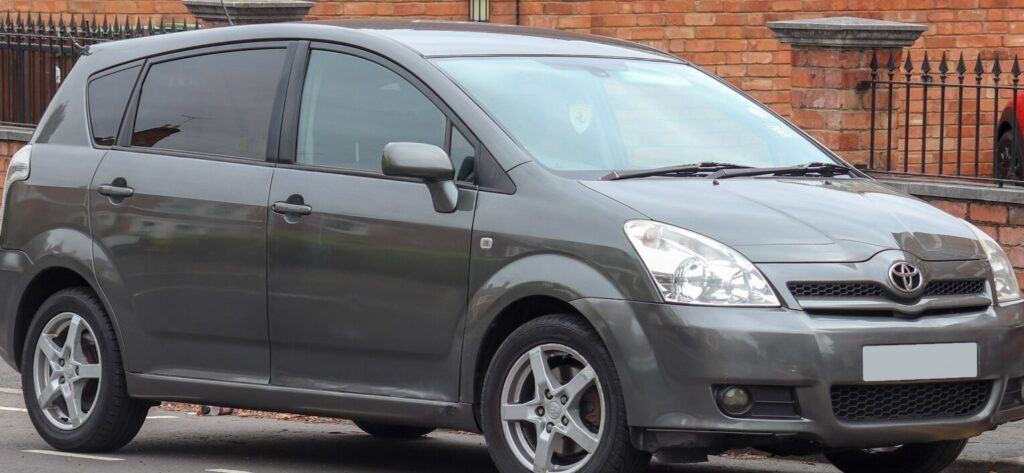
The Toyota Corolla Verso II, specifically the 2.2 D-4D (136 horsepower) variant with a Diesel Particulate Filter (DPF) and seven seats, was produced between 2004 and 2007. This model, designated AR10, represented Toyota’s second-generation entry into the compact MPV (Multi-Purpose Vehicle) segment, primarily aimed at the European market. It offered a practical and versatile option for families seeking a spacious and fuel-efficient vehicle. The Verso II was built on the Toyota MC platform, shared with other models like the Corolla and RAV4, providing a solid foundation for its people-carrying duties.
Technical Specifications
| Brand | Toyota |
| Model | Corolla Verso |
| Generation | Corolla Verso II (AR10) |
| Type | 2.2 D-4D (136 Hp) DPF 7 Seats |
| Start of production | 2004 |
| End of production | 2007 |
| Powertrain Architecture | Internal Combustion engine |
| Body type | MPV |
| Seats | 7 |
| Doors | 5 |
| Fuel consumption (urban) | 8.3 l/100 km (28.3 US mpg, 34 UK mpg, 12 km/l) |
| Fuel consumption (extra urban) | 5.6 l/100 km (42 US mpg, 50.4 UK mpg, 17.9 km/l) |
| Fuel consumption (combined) | 6.6 l/100 km (35.6 US mpg, 42.8 UK mpg, 15.2 km/l) |
| Fuel Type | Diesel |
| Acceleration 0 – 100 km/h | 10.2 sec |
| Acceleration 0 – 62 mph | 10.2 sec |
| Acceleration 0 – 60 mph | 9.7 sec |
| Maximum speed | 195 km/h (121.17 mph) |
| Emission standard | Euro 4 |
| Weight-to-power ratio | 11.6 kg/Hp |
| Weight-to-torque ratio | 5.1 kg/Nm |
| Power | 136 Hp @ 3600 rpm |
| Torque | 310 Nm @ 2000 rpm (228.64 lb.-ft. @ 2000 rpm) |
| Engine layout | Front, Transverse |
| Engine Model/Code | 2AD-FTV |
| Engine displacement | 2231 cm3 (136.14 cu. in.) |
| Number of cylinders | 4 |
| Engine configuration | Inline |
| Cylinder Bore | 86 mm (3.39 in.) |
| Piston Stroke | 96 mm (3.78 in.) |
| Compression ratio | 16.8:1 |
| Number of valves per cylinder | 4 |
| Fuel injection system | Diesel Commonrail |
| Engine aspiration | Turbocharger, Intercooler |
| Valvetrain | DOHC |
| Engine oil capacity | 5.9 l (6.23 US qt | 5.19 UK qt) |
| Coolant capacity | 8 l (8.45 US qt | 7.04 UK qt) |
| Kerb Weight | 1575 kg (3472.28 lbs.) |
| Max. weight | 2140 kg (4717.89 lbs.) |
| Max load | 565 kg (1245.61 lbs.) |
| Trunk (boot) space – minimum | 620 l (21.9 cu. ft.) |
| Fuel tank capacity | 55 l (14.53 US gal | 12.1 UK gal) |
| Length | 4370 mm (172.05 in.) |
| Width | 1770 mm (69.69 in.) |
| Height | 1620 mm (63.78 in.) |
| Wheelbase | 2750 mm (108.27 in.) |
| Front track | 1480 mm (58.27 in.) |
| Rear track | 1490 mm (58.66 in.) |
| Drivetrain Architecture | Front wheel drive |
| Number of gears | 6 |
| Gearbox type | Manual transmission |
| Front suspension | Spring Strut |
| Rear suspension | Coil spring |
| Front brakes | Ventilated discs |
| Rear brakes | Disc |
| Assisting systems | ABS (Anti-lock braking system) |
| Steering type | Steering rack and pinion |
| Power steering | Hydraulic Steering |
| Tires size | 205/55 R16 |
Powertrain & Engine Architecture
The heart of this Corolla Verso variant is the 2AD-FTV 2.2-liter inline-four diesel engine. This engine is a member of Toyota’s ‘D-4D’ family, known for its direct injection technology and emphasis on fuel efficiency. The 2AD-FTV utilizes a common rail direct injection system, delivering fuel at extremely high pressure for optimized combustion. A turbocharger with an intercooler further enhances performance, boosting power output to 136 horsepower and 310 Nm (228.64 lb-ft) of torque. The engine features a double overhead camshaft (DOHC) valvetrain with four valves per cylinder, contributing to its relatively smooth operation for a diesel. The six-speed manual transmission was the standard offering for this trim, providing a good balance between fuel economy and driver control. The inclusion of a Diesel Particulate Filter (DPF) was crucial for meeting the stringent Euro 4 emission standards prevalent at the time.
Driving Characteristics
The 2.2 D-4D engine, paired with the six-speed manual gearbox, provided a reasonably responsive driving experience for a compact MPV. While not a performance-oriented vehicle, the 310 Nm of torque available from 2000 rpm offered ample pulling power for everyday driving and fully loaded with passengers. Acceleration from 0-60 mph took around 9.7 seconds, which was competitive within its class. The gear ratios were well-chosen, allowing for comfortable cruising on highways and sufficient power for overtaking maneuvers. Compared to the lower-powered 1.8-liter gasoline versions, the 2.2 D-4D offered significantly more torque and better fuel economy, making it ideal for long journeys and those who frequently carried a full load. However, it lacked the refinement and higher revving nature of some of its gasoline counterparts.
Equipment & Trim Levels
The 2.2 D-4D 7-seater typically represented a mid-range trim level within the Corolla Verso II lineup. Standard equipment generally included air conditioning, power windows, central locking, and an audio system. Safety features such as ABS (Anti-lock Braking System) and front airbags were also standard. Higher trim levels offered options like alloy wheels, rear parking sensors, automatic climate control, and upgraded audio systems. Interior upholstery was typically cloth, with a functional and durable design. The seven-seat configuration offered flexibility for families, with the third-row seats being foldable to maximize cargo space when not in use.
Chassis & Braking
The Corolla Verso II utilized a MacPherson strut front suspension and a coil spring rear suspension. This setup provided a comfortable ride quality, although it wasn’t particularly sporty. The front brakes were ventilated discs, offering good stopping power, while the rear brakes were solid discs. The hydraulic power steering provided a reasonable level of assistance, making maneuvering easy. The chassis was designed to accommodate the extra weight of the diesel engine and the seven-seat configuration, with slightly stiffer spring rates compared to the lighter gasoline models.
Market Reception & Comparison
The Toyota Corolla Verso II 2.2 D-4D was generally well-received by automotive critics for its practicality, fuel efficiency, and spacious interior. It was often praised as a sensible and reliable choice for families. Compared to rivals like the Renault Scenic and Citroen C4 Picasso, the Verso offered a reputation for Toyota’s renowned reliability and build quality. Fuel economy was a key selling point, with the diesel engine offering significantly better mileage than the gasoline alternatives. However, some critics noted that the interior design was somewhat conservative and lacked the visual flair of some competitors.
Legacy
The 2AD-FTV engine, while generally reliable, is known to require regular maintenance, particularly concerning the DPF system. Proper servicing and the use of high-quality diesel fuel are crucial to prevent DPF blockages. Today, used examples of the Corolla Verso II 2.2 D-4D can be found at relatively affordable prices. They continue to appeal to buyers seeking a practical and economical MPV. The engine’s durability, combined with Toyota’s reputation for reliability, means that well-maintained examples can still provide years of dependable service. However, potential buyers should be aware of the potential costs associated with DPF maintenance and ensure a thorough inspection before purchase.