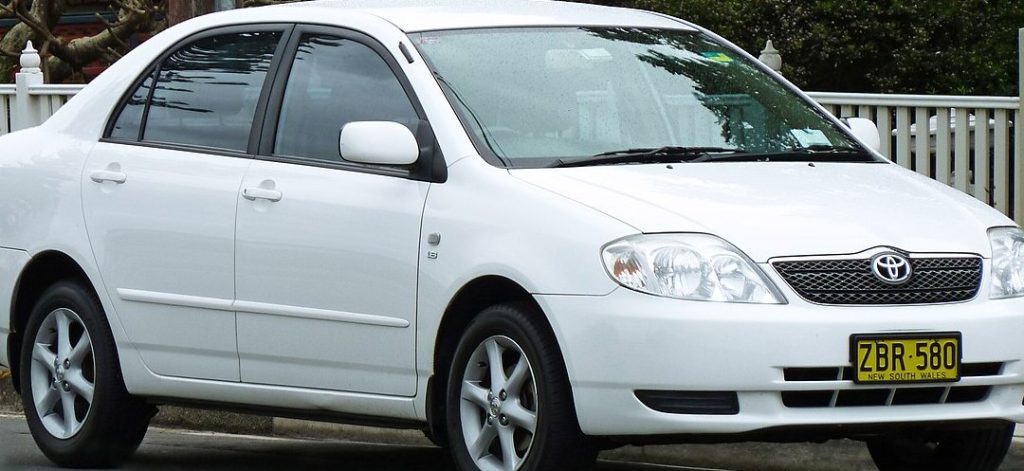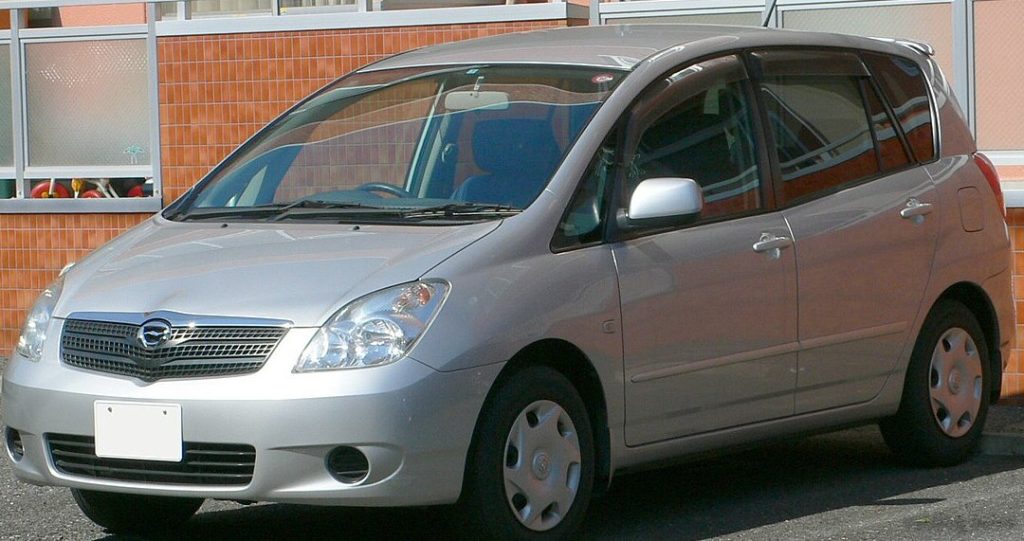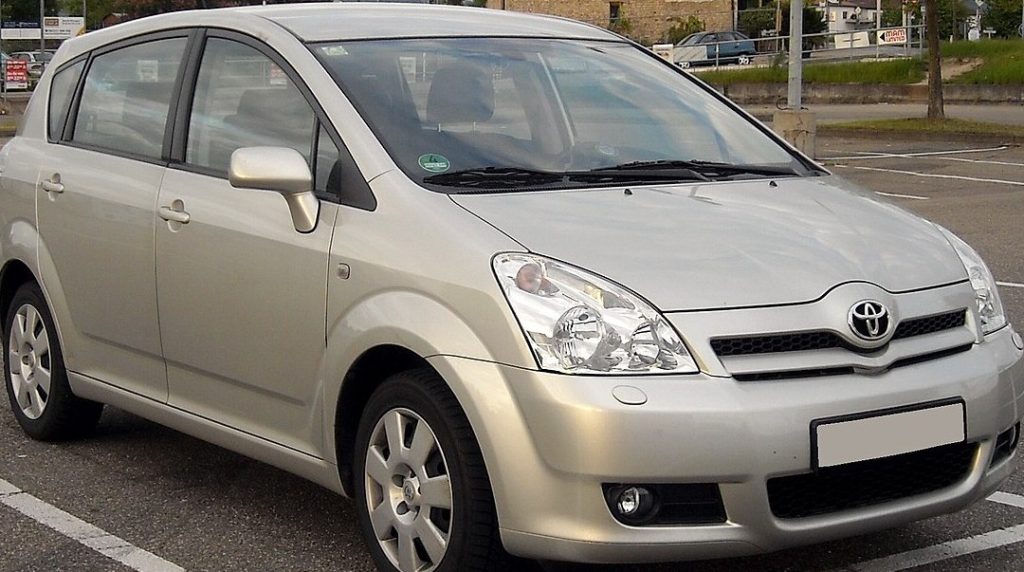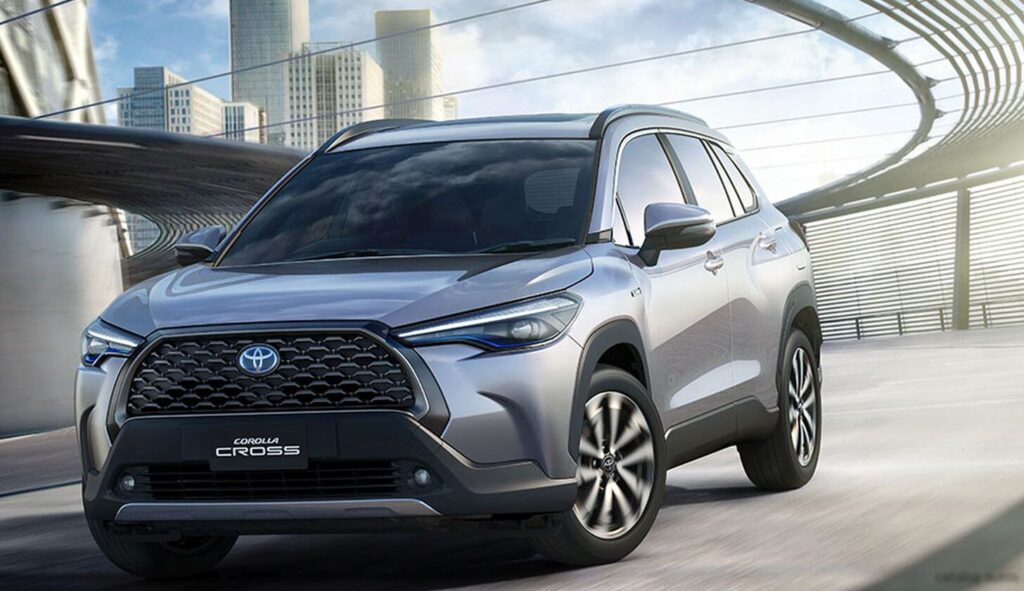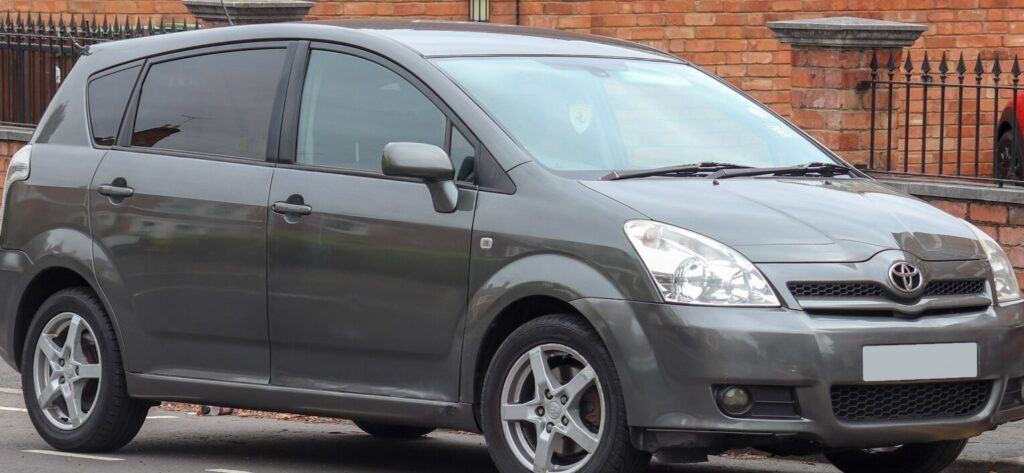
The Toyota Corolla Verso II, specifically the 2.2 D-CAT variant producing 177 horsepower, was a compact multi-purpose vehicle (MPV) sold primarily in the European market from 2005 to 2007. Part of the AR10 series, it represented Toyota’s second-generation attempt at a versatile, family-oriented vehicle in the increasingly popular compact MPV segment. This model aimed to provide a practical and efficient alternative to larger, more expensive people carriers, while offering a more engaging driving experience than some of its competitors. The 2.2 D-CAT trim occupied a mid-to-upper position in the Verso II lineup, offering a balance of performance, fuel economy, and equipment.
Technical Specifications
| Brand | Toyota |
| Model | Corolla Verso |
| Generation | Corolla Verso II (AR10) |
| Type (Engine) | 2.2 D-CAT (177 Hp) |
| Start of production | 2005 |
| End of production | 2007 |
| Powertrain Architecture | Internal Combustion engine |
| Body type | MPV |
| Seats | 5 |
| Doors | 5 |
| Fuel consumption (urban) | 8.5 l/100 km (27.7 US mpg, 33.2 UK mpg, 11.8 km/l) |
| Fuel consumption (extra urban) | 5.8 l/100 km (40.6 US mpg, 48.7 UK mpg, 17.2 km/l) |
| Fuel consumption (combined) | 6.8 l/100 km (34.6 US mpg, 41.5 UK mpg, 14.7 km/l) |
| CO2 emissions | 178 g/km |
| Fuel Type | Diesel |
| Acceleration 0 – 100 km/h | 8.8 sec |
| Acceleration 0 – 62 mph | 8.8 sec |
| Acceleration 0 – 60 mph | 8.4 sec |
| Maximum speed | 205 km/h (127.38 mph) |
| Emission standard | Euro 4 |
| Weight-to-power ratio | 8.5 kg/Hp, 117.2 Hp/tonne |
| Weight-to-torque ratio | 3.8 kg/Nm, 264.9 Nm/tonne |
| Power | 177 Hp @ 3600 rpm |
| Power per litre | 79.3 Hp/l |
| Torque | 400 Nm @ 2000-2800 rpm (295.02 lb.-ft. @ 2000-2800 rpm) |
| Engine layout | Front, Transverse |
| Engine Model/Code | 2AD-FHV |
| Engine displacement | 2231 cm3 (136.14 cu. in.) |
| Number of cylinders | 4 |
| Engine configuration | Inline |
| Cylinder Bore | 86 mm (3.39 in.) |
| Piston Stroke | 96 mm (3.78 in.) |
| Compression ratio | 15.8:1 |
| Number of valves per cylinder | 4 |
| Fuel injection system | Diesel Commonrail |
| Engine aspiration | Turbocharger, Intercooler |
| Valvetrain | DOHC |
| Engine oil capacity | 5.9 l (6.23 US qt | 5.19 UK qt) |
| Coolant capacity | 8 l (8.45 US qt | 7.04 UK qt) |
| Kerb Weight | 1510 kg (3328.98 lbs.) |
| Max. weight | 2165 kg (4773.01 lbs.) |
| Max load | 655 kg (1444.03 lbs.) |
| Trunk (boot) space – minimum | 423 l (14.94 cu. ft.) |
| Trunk (boot) space – maximum | 1563 l (55.2 cu. ft.) |
| Fuel tank capacity | 55 l (14.53 US gal | 12.1 UK gal) |
| Permitted trailer load with brakes (12%) | 1300 kg (2866.01 lbs.) |
| Permitted trailer load without brakes | 450 kg (992.08 lbs.) |
| Length | 4360 mm (171.65 in.) |
| Width | 1770 mm (69.69 in.) |
| Height | 1620 mm (63.78 in.) |
| Wheelbase | 2750 mm (108.27 in.) |
| Front track | 1505 mm (59.25 in.) |
| Rear track | 1495 mm (58.86 in.) |
| Front overhang | 870 mm (34.25 in.) |
| Rear overhang | 740 mm (29.13 in.) |
| Drag coefficient (Cd) | 0.30 |
| Minimum turning circle | 11.6 m (38.06 ft.) |
| Drivetrain | Front wheel drive |
| Number of gears | 6 |
| Gearbox type | Manual transmission |
| Front suspension | Independent type McPherson, Transverse stabilizer |
| Rear suspension | Transverse stabilizer, Torsion |
| Front brakes | Ventilated discs, 295 mm |
| Rear brakes | Disc, 290 mm |
| Assisting systems | ABS (Anti-lock braking system) |
| Steering type | Steering rack and pinion |
| Power steering | Hydraulic Steering |
| Tires size | 215/50 R17 |
| Wheel rims size | 7J x 17 |
INTRODUCTION
The Toyota Corolla Verso II, launched in 2005, was a significant update to Toyota’s compact MPV offering. Built on the same platform (the E120 series, also known as the 1HX0/A3 platform) as the Corolla and Matrix/Crunch, the Verso II aimed to blend the practicality of a small van with the driving dynamics of a conventional hatchback. The 2.2 D-CAT variant, powered by the 2AD-FHV engine, was positioned as a premium offering within the Verso II range, appealing to buyers who prioritized performance and fuel efficiency. It was primarily sold in Europe, where demand for diesel-powered MPVs was high.
Powertrain & Engine Architecture
The heart of the 2.2 D-CAT Verso II is the 2AD-FHV, a 2.2-liter inline-four cylinder diesel engine. This engine utilizes a common-rail direct injection system, delivering fuel directly into the combustion chamber at extremely high pressure for improved efficiency and reduced emissions. A turbocharger with an intercooler further enhances performance by forcing more air into the engine. The D-CAT designation refers to the Diesel particulate filter and Catalytic Reduction system, designed to meet stringent Euro 4 emission standards. The engine produces 177 horsepower at 3600 rpm and a substantial 400 Nm (295 lb-ft) of torque between 2000 and 2800 rpm. This torque output provides strong acceleration and effortless cruising. The engine features a double overhead camshaft (DOHC) valvetrain with four valves per cylinder. The 2.2 D-CAT was typically paired with a six-speed manual transmission, although an automatic transmission was also available, though less common.
Driving Characteristics
The 2.2 D-CAT equipped Corolla Verso II offered a noticeably more spirited driving experience compared to lower-powered variants. The ample torque allowed for brisk acceleration, making overtaking and merging onto highways easy. While not a sports car, the Verso II felt composed and stable on the road. The six-speed manual transmission provided precise gear changes and allowed the driver to keep the engine in its optimal power band. The automatic transmission, while offering convenience, could sometimes feel hesitant during quick acceleration. The Verso II’s suspension, tuned for comfort, absorbed bumps and imperfections in the road well, providing a smooth ride for passengers. However, this did result in some body roll during cornering.
Equipment & Trim Levels
The 2.2 D-CAT Verso II typically came with a generous level of standard equipment. This included air conditioning, power windows, central locking, and an audio system with CD player. Higher trim levels added features such as alloy wheels, fog lights, a multi-function steering wheel, and upgraded interior upholstery. Optional extras included a sunroof, navigation system, and rear parking sensors. Interior materials were generally of good quality, and the cabin was well-designed with a focus on practicality and ergonomics. The Verso II’s flexible seating arrangement, with individual rear seats that could be folded flat or removed entirely, provided excellent versatility for carrying passengers and cargo.
Chassis & Braking
The Corolla Verso II utilized a McPherson strut front suspension and a torsion beam rear suspension. This setup provided a good balance of ride comfort and handling. The front brakes were ventilated discs, while the rear brakes were solid discs, providing adequate stopping power for the vehicle’s weight. Anti-lock Braking System (ABS) was standard, enhancing safety during emergency braking situations. The steering was a hydraulic power steering system, offering a responsive and precise feel. The Verso II’s chassis was designed to provide a stable and secure platform, contributing to its overall driving confidence.
Market Reception & Comparison
The Toyota Corolla Verso II 2.2 D-CAT was generally well-received by automotive critics. It was praised for its strong performance, fuel efficiency, and spacious interior. However, some reviewers noted that the ride could be a bit firm and that the interior styling was somewhat conservative. Compared to other compact MPVs of the time, such as the Renault Scenic and Citroën C4 Picasso, the Verso II offered a more refined driving experience and a reputation for reliability. The 1.8-liter gasoline engine variants offered lower purchase price but lacked the torque and fuel economy of the 2.2 D-CAT. The diesel engine was a popular choice for buyers who frequently undertook long journeys.
Legacy
The 2AD-FHV engine, while generally reliable, is known to require regular maintenance, particularly regarding the diesel particulate filter (DPF). Proper servicing and the use of high-quality diesel fuel are crucial to prevent DPF issues. Today, used examples of the 2.2 D-CAT Verso II are relatively affordable and can represent a good value for buyers seeking a practical and spacious MPV. Its reputation for reliability, combined with its fuel efficiency, makes it a viable option for families and individuals who need a versatile vehicle. However, potential buyers should be aware of the potential for DPF-related problems and ensure that the vehicle has been well-maintained.