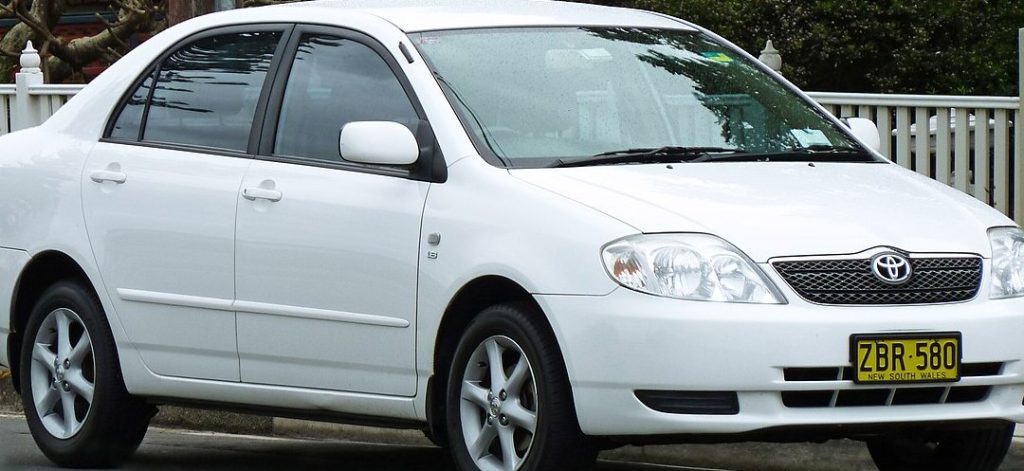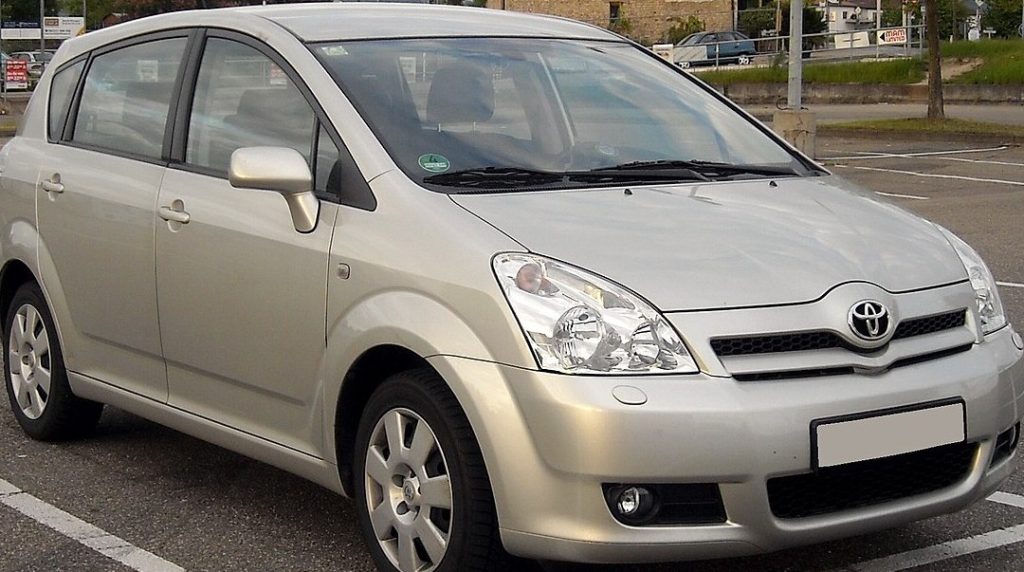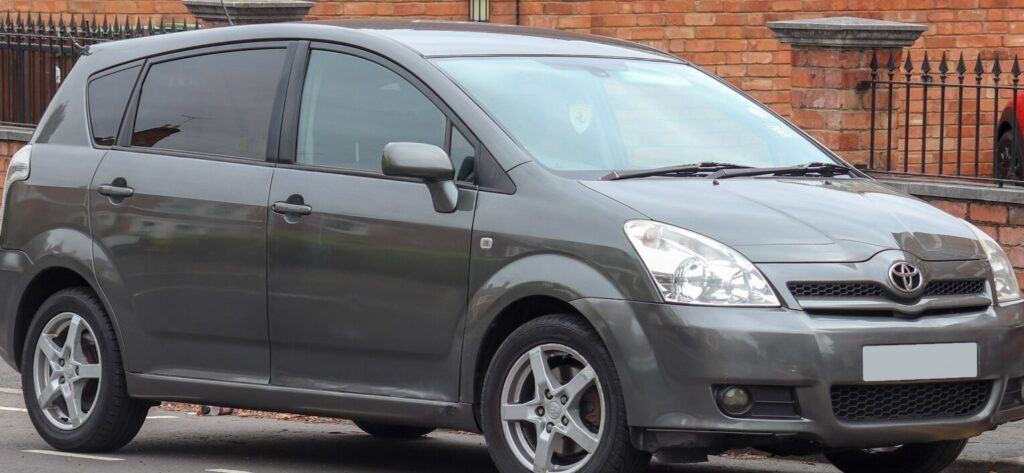
The Toyota Corolla Verso II, specifically the 2.2 D-CAT 177 horsepower variant with seven seats, was a compact multi-purpose vehicle (MPV) produced between 2004 and 2007. Part of the AR10 generation, it represented Toyota’s entry into the increasingly popular European compact MPV segment. This model aimed to provide a practical and versatile vehicle for families, offering seating for up to seven passengers in a relatively small footprint. It was primarily marketed in Europe, where demand for these types of vehicles was high, and positioned as a more affordable and efficient alternative to larger, more expensive MPVs.
Technical Specifications
| Brand | Toyota |
| Model | Corolla Verso |
| Generation | Corolla Verso II (AR10) |
| Type | 2.2 D-CAT (177 Hp) 7 Seats |
| Start of production | 2004 |
| End of production | 2007 |
| Powertrain Architecture | Internal Combustion engine |
| Body type | MPV |
| Seats | 7 |
| Doors | 5 |
| Fuel consumption (urban) | 8.5 l/100 km (27.7 US mpg) |
| Fuel consumption (extra urban) | 5.8 l/100 km (40.6 US mpg) |
| Fuel consumption (combined) | 6.8 l/100 km (34.6 US mpg) |
| Fuel Type | Diesel |
| Acceleration 0 – 100 km/h | 9 sec |
| Acceleration 0 – 62 mph | 9 sec |
| Acceleration 0 – 60 mph | 8.6 sec |
| Maximum speed | 205 km/h (127.38 mph) |
| Emission standard | Euro 4 |
| Weight-to-power ratio | 9 kg/Hp |
| Weight-to-torque ratio | 4 kg/Nm |
| Power | 177 Hp @ 3600 rpm |
| Torque | 400 Nm @ 2000 rpm (295.02 lb.-ft. @ 2000 rpm) |
| Engine layout | Front, Transverse |
| Engine Model/Code | 2AD-FHV |
| Engine displacement | 2231 cm3 (136.14 cu. in.) |
| Number of cylinders | 4 |
| Engine configuration | Inline |
| Cylinder Bore | 86 mm (3.39 in.) |
| Piston Stroke | 96 mm (3.78 in.) |
| Compression ratio | 16.8:1 |
| Number of valves per cylinder | 4 |
| Fuel injection system | Diesel Commonrail |
| Engine aspiration | Turbocharger, Intercooler |
| Valvetrain | DOHC |
| Engine oil capacity | 5.9 l (6.23 US qt | 5.19 UK qt) |
| Coolant capacity | 8 l (8.45 US qt | 7.04 UK qt) |
| Kerb Weight | 1595 kg (3516.37 lbs.) |
| Max. weight | 2140 kg (4717.89 lbs.) |
| Max load | 545 kg (1201.52 lbs.) |
| Trunk (boot) space – minimum | 620 l (21.9 cu. ft.) |
| Fuel tank capacity | 55 l (14.53 US gal | 12.1 UK gal) |
| Length | 4370 mm (172.05 in.) |
| Width | 1770 mm (69.69 in.) |
| Height | 1620 mm (63.78 in.) |
| Wheelbase | 2750 mm (108.27 in.) |
| Front track | 1480 mm (58.27 in.) |
| Rear track | 1490 mm (58.66 in.) |
| Drivetrain | Front wheel drive |
| Number of gears | 6 |
| Gearbox type | Manual transmission |
| Front suspension | Spring Strut |
| Rear suspension | Coil spring |
| Front brakes | Ventilated discs |
| Rear brakes | Disc |
| Assisting systems | ABS (Anti-lock braking system) |
| Steering type | Steering rack and pinion |
| Power steering | Hydraulic Steering |
| Tires size | 215/50 R17 |
The heart of the Corolla Verso II 2.2 D-CAT was the 2AD-FHV engine, a 2.2-liter inline-four cylinder diesel. This engine utilized a common rail direct injection system, delivering fuel at extremely high pressure for improved combustion efficiency and reduced emissions. The ‘D-CAT’ designation signified the inclusion of a Diesel Particulate Filter (DPF) to further minimize particulate matter emissions, meeting the stringent Euro 4 standards. The engine featured a double overhead camshaft (DOHC) design, operating with four valves per cylinder. A turbocharger with an intercooler was employed to boost power output and improve torque across the rev range. The 2AD-FHV produced 177 horsepower at 3600 rpm and a substantial 400 Nm (295 lb-ft) of torque at just 2000 rpm. This engine was paired with a six-speed manual transmission, providing a good balance between fuel economy and performance. The engine’s transverse mounting and front-wheel-drive configuration were typical for vehicles in this class.
Driving Characteristics
The 2.2 D-CAT engine provided a noticeable step up in performance compared to the lower-powered gasoline engines available in the Corolla Verso II range. The high torque output at low engine speeds made it particularly well-suited for everyday driving and hauling passengers or cargo. While not a sports car, the 9-second 0-60 mph acceleration was respectable for a seven-seat MPV. The six-speed manual transmission allowed drivers to keep the engine in its optimal power band, maximizing efficiency and responsiveness. Compared to the gasoline variants, the diesel offered significantly better fuel economy, making it a popular choice for those covering long distances. However, the diesel engine was noticeably louder and produced more vibration than the gasoline engines, a common characteristic of diesel powertrains of that era.
Equipment & Trim Levels
The 2.2 D-CAT variant typically represented a mid-to-high trim level within the Corolla Verso II lineup. Standard equipment generally included air conditioning, power windows, central locking, and an audio system. Higher trim levels added features such as alloy wheels, fog lights, a multi-function steering wheel, and upgraded interior trim. The seven-seat configuration featured a flexible seating arrangement, with the third-row seats folding flat into the floor when not in use. Safety features included ABS brakes, front airbags, and seatbelt pretensioners. Optional extras could include a sunroof, parking sensors, and a navigation system.
Chassis & Braking
The Corolla Verso II utilized a relatively simple suspension setup, featuring MacPherson strut front suspension and a coil spring rear suspension. This configuration provided a comfortable ride quality, although it wasn’t particularly sporty. The front brakes were ventilated discs, providing good stopping power, while the rear brakes were solid discs. ABS (Anti-lock Braking System) was standard, enhancing safety during emergency braking situations. The steering was a hydraulic power-assisted rack and pinion system, offering reasonable precision and feedback.
Market Reception & Comparison
The Corolla Verso II 2.2 D-CAT was generally well-received by automotive critics. It was praised for its spacious interior, versatile seating arrangement, and fuel-efficient diesel engine. However, some reviewers noted the engine’s noise and vibration, as well as the somewhat basic interior trim. Compared to other compact MPVs of the time, such as the Renault Scenic and Citroën C4 Picasso, the Corolla Verso II offered a more conservative design and a reputation for Toyota’s renowned reliability. The diesel engine provided a significant advantage in terms of fuel economy, making it a compelling option for those prioritizing running costs.
Legacy
The 2AD-FHV engine, while generally reliable, is known to require regular maintenance, particularly regarding the DPF system. Proper servicing and the use of high-quality diesel fuel are crucial to prevent DPF clogging and ensure long-term engine health. Today, used examples of the Corolla Verso II 2.2 D-CAT can be found at relatively affordable prices. They remain a practical and versatile option for families seeking a spacious and fuel-efficient MPV, but potential buyers should be aware of the potential maintenance costs associated with the diesel engine and DPF system. The AR10 generation Corolla Verso helped solidify Toyota’s presence in the European compact MPV market, paving the way for future generations of the Verso model.