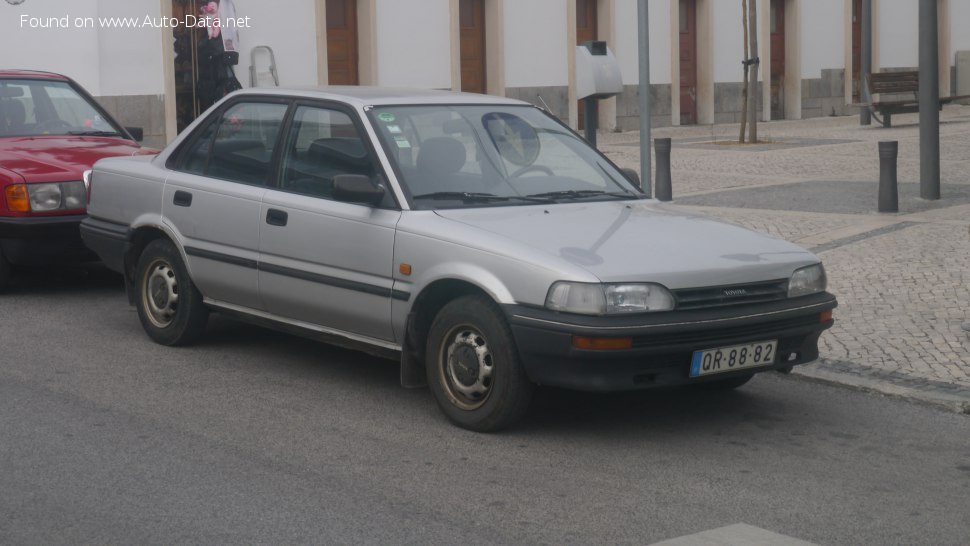
The Toyota Corolla E90, produced between 1989 and 1993, represented the sixth generation of Toyota’s globally successful Corolla line. Within this generation, the 1.8 D variant, powered by the 1C-L diesel engine and producing 67 horsepower, occupied a specific niche. It was positioned as the entry-level diesel offering, aimed at buyers prioritizing fuel economy and durability over outright performance. This model served as a practical and economical transportation solution, particularly in European and other markets where diesel fuel was more prevalent and affordable. The E90 chassis, part of the larger T platform, offered a balance of affordability, reliability, and reasonable comfort, making it a popular choice in its segment.
The 1.8 D (67 Hp) Corolla E90: A Detailed Overview
The 1.8 D variant of the Corolla E90 distinguished itself from other models in the lineup primarily through its diesel engine. While gasoline-powered Corollas offered a wider range of performance options, the 1.8 D focused on maximizing fuel efficiency and providing a robust, long-lasting powertrain. This made it a popular choice for fleet vehicles, taxis, and individuals who frequently traveled long distances. The E90 generation saw significant improvements in build quality and refinement compared to its predecessor, and the 1.8 D benefited from these advancements, offering a relatively comfortable and reliable driving experience for its price point.
Powertrain & Engine Architecture
The heart of the 1.8 D Corolla E90 is the 1C-L diesel engine. This is a 1.8-liter (1779 cc) inline-four cylinder engine, naturally aspirated. It’s a relatively simple design, contributing to its durability and ease of maintenance. The 1C-L engine utilizes indirect injection, a common technology for diesel engines of that era. This system involves injecting fuel into a pre-chamber before it enters the main combustion chamber, promoting more complete combustion and reducing noise. The engine features a single overhead camshaft (SOHC) valvetrain operating two valves per cylinder. The engine’s output of 67 horsepower (49.2 kW) at 4,200 rpm and 98 lb-ft (133 Nm) of torque at 2,400 rpm, while modest, provided sufficient power for everyday driving. The transmission offered was typically a 4-speed automatic, though a 5-speed manual was also available in some markets. The automatic transmission was chosen by many buyers for its convenience, particularly in urban environments. The 4-speed automatic, while not known for its sporty performance, was reliable and well-suited to the engine’s torque characteristics.
Driving Characteristics
The driving experience in the 1.8 D Corolla E90 is best described as practical and unhurried. Acceleration is modest, and the engine requires downshifting for overtaking maneuvers. The 4-speed automatic transmission contributes to this, with relatively wide gear ratios. Compared to the gasoline-powered Corolla variants, the 1.8 D offers significantly less horsepower but a noticeable increase in low-end torque. This makes it more capable of carrying loads and climbing hills without excessive strain. The manual transmission version, while offering more driver control, still doesn’t transform the car into a performance machine. The focus is firmly on fuel economy and ease of driving. Steering is light and precise, and the suspension provides a comfortable ride, absorbing bumps and imperfections in the road reasonably well. The overall driving experience is geared towards practicality and efficiency rather than excitement.
Equipment & Trim Levels
The 1.8 D Corolla E90 typically came with a fairly basic level of equipment, reflecting its position as the entry-level diesel model. Standard features generally included cloth upholstery, a basic stereo system, and manual windows and door locks. Power steering was often included, but air conditioning was typically an optional extra. Trim levels varied depending on the market, but generally, the 1.8 D was offered in a single, relatively spartan trim. Optional extras could include upgraded stereo systems, alloy wheels, and a sunroof. Interior materials were durable and functional, prioritizing longevity over luxury. The dashboard layout was simple and straightforward, with easy-to-read gauges and controls. The overall interior ambiance was practical and utilitarian.
Chassis & Braking
The Corolla E90 chassis features a MacPherson strut front suspension and a torsion beam rear suspension. This configuration provides a good balance of ride comfort and handling. The torsion beam rear suspension is a cost-effective solution that offers adequate stability for everyday driving. Braking systems varied depending on the market and trim level. Lower-spec models, including many 1.8 D variants, were equipped with drum brakes on the rear wheels, while higher-spec models received disc brakes all around. Front brakes were typically ventilated discs. The braking system was adequate for the car’s weight and performance, but it lacked the stopping power of more modern vehicles. Stabilizer bars were typically fitted to both the front and rear axles, helping to reduce body roll during cornering. The steering system is a rack-and-pinion setup, providing precise and responsive steering feel.
Market Reception & Comparison
The 1.8 D Corolla E90 received generally positive reviews for its fuel economy, reliability, and durability. Critics praised its robust engine and simple mechanical design, which made it relatively easy and inexpensive to maintain. However, it was also criticized for its lack of performance and basic interior. Compared to the gasoline-powered Corolla variants, the 1.8 D offered significantly lower running costs but a less engaging driving experience. Against competitors like the Volkswagen Golf and Ford Escort diesel models, the Corolla 1.8 D offered a competitive combination of fuel economy, reliability, and price. Its reputation for bulletproof reliability made it a popular choice in markets where diesel vehicles were common. Fuel economy figures typically ranged from 45 to 55 mpg, depending on driving conditions and maintenance.
Technical Specifications
| Engine Code | 1C-L |
| Engine Type | Inline-4 Diesel |
| Displacement | 1779 cc (1.8 L) |
| Power | 67 hp (49.2 kW) @ 4200 rpm |
| Torque | 98 lb-ft (133 Nm) @ 2400 rpm |
| Fuel System | Indirect Injection |
| Valvetrain | SOHC, 2 valves/cylinder |
| Transmission | 4-speed Automatic (typically) / 5-speed Manual (optional) |
| Fuel Capacity | 50 liters (13.2 US gallons) |
| Engine Oil Capacity | 4.3 liters (4.54 US quarts) |
| Coolant Capacity | 7.3 liters (7.71 US quarts) |
| Curb Weight | Approximately 1150-1250 kg (2535-2756 lbs) |
Legacy
The 1.8 D Corolla E90, while not the most exciting variant in the lineup, has earned a reputation for exceptional reliability and longevity. Many examples are still on the road today, testament to the robustness of the 1C-L diesel engine and the overall build quality of the E90 chassis. In the used car market, these Corollas are often sought after by buyers looking for a simple, dependable, and fuel-efficient vehicle. Maintenance costs remain relatively low, and parts availability is generally good. While modern diesel technology has advanced significantly, the 1.8 D Corolla E90 remains a practical and economical choice for those seeking a no-frills, reliable mode of transportation. Its enduring popularity is a testament to Toyota’s commitment to building durable and dependable vehicles.