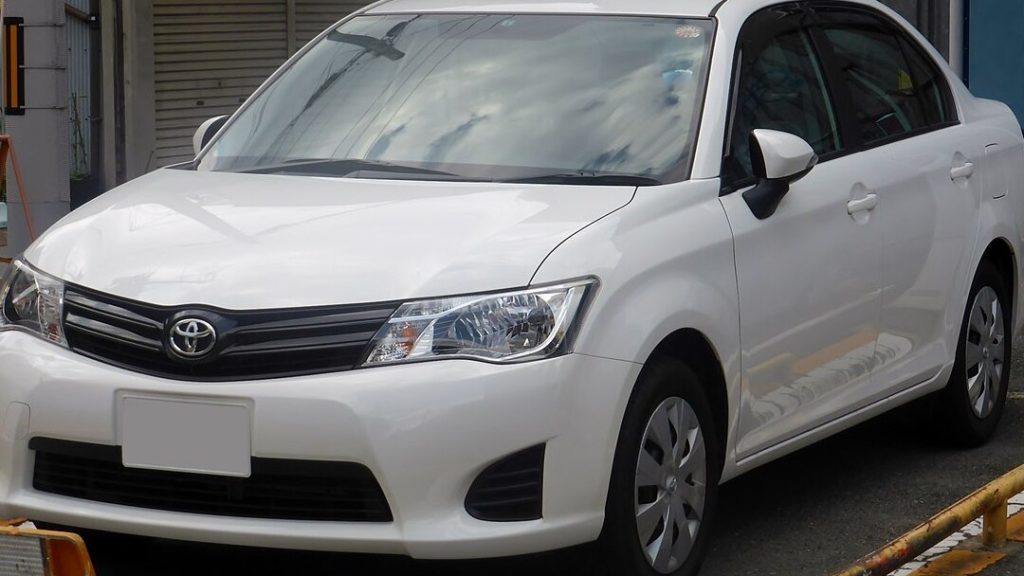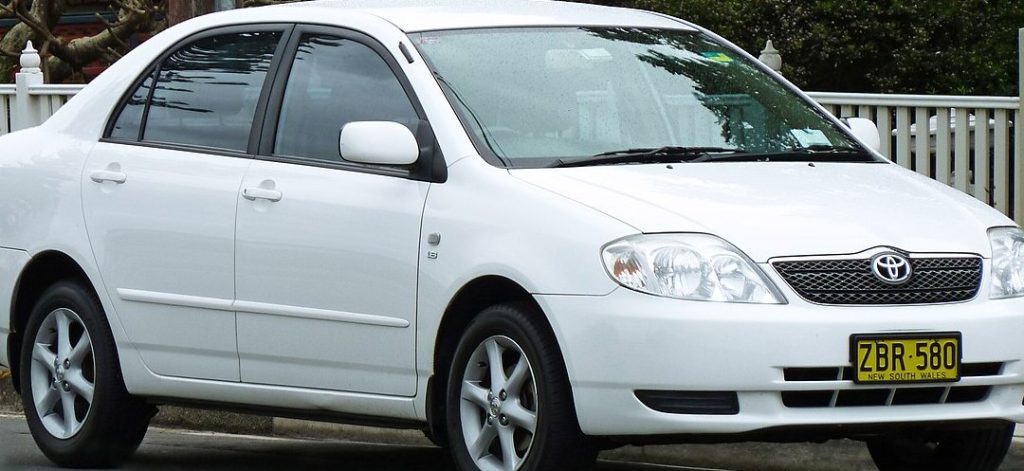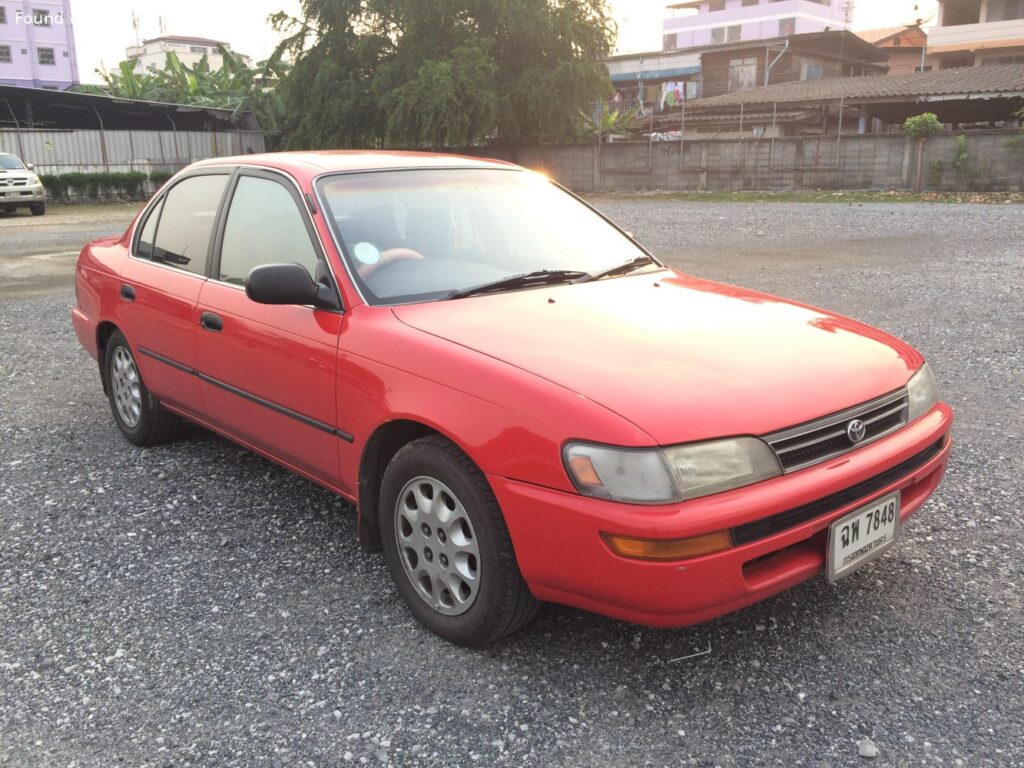
The Toyota Corolla E100, produced between 1995 and 1997, represented the seventh generation of Toyota’s globally successful Corolla compact car. Within the E100 lineup, the 1.6 Si variant, boasting 114 horsepower, occupied a middle ground, offering a balance between affordability and performance. It served as a step up from the base models while remaining more accessible than the higher-specification trims. This generation Corolla was built on the T platform, also known as the 1HX0 series, and was available in various body styles including sedan, hatchback, and wagon, though the sedan was the most common configuration in North America.
1.6 Si: Positioning and Market Context
The 1.6 Si trim was designed to appeal to buyers seeking a more engaging driving experience than the standard Corolla offered. It slotted between the base 1.6-liter models and potentially higher-performance options available in some markets. In the US market, the E100 Corolla was primarily offered with the 1.6L engine, with the Si trim representing the upper echelon of available performance for this generation. The target audience was typically young drivers or small families who desired a reliable, fuel-efficient, and reasonably sporty vehicle.
Comparison with Other E100 Variants
Compared to the base 1.6-liter Corolla, the 1.6 Si featured a higher compression ratio, revised intake and exhaust systems, and often, subtle styling enhancements. These changes resulted in a noticeable power increase. While not a dedicated sports model, the 1.6 Si offered a more responsive feel. Unlike some markets that offered diesel or larger displacement gasoline engines in the E100 Corolla, the US market primarily focused on the 1.6L, making the Si trim the most potent option available domestically. The difference in driving experience between the standard 1.6L and the 1.6 Si was significant, with the latter providing quicker acceleration and a more willing engine at higher RPMs.
Powertrain & Engine Architecture
The heart of the 1.6 Si was the 4A-FE inline-four cylinder engine, displacing 1.6 liters (1587 cc or 96.84 cubic inches). This engine was a mainstay in Toyota’s lineup during the 1990s, known for its durability and relatively simple design. The 4A-FE featured a cast iron block and an aluminum cylinder head, incorporating a double overhead camshaft (DOHC) valvetrain with four valves per cylinder. This configuration allowed for efficient breathing and contributed to the engine’s respectable power output for its displacement.
Fuel delivery was handled by a multi-port fuel injection system, precisely metering fuel into each intake port. The engine utilized a compression ratio of 9.5:1, optimized for both performance and fuel efficiency. The 4A-FE engine was known for its relatively smooth operation and linear power delivery. While not a high-revving engine, it provided adequate torque throughout the rev range. The engine’s oil capacity was 3.3 liters (3.49 US quarts or 2.9 UK quarts), and it required a specific oil specification as outlined in the owner’s manual.
The 1.6 Si was typically paired with a 5-speed manual transmission, although automatic transmission options were also available. The manual transmission offered precise shifts and allowed drivers to fully exploit the engine’s power. The automatic transmission, while providing convenience, did slightly diminish the car’s acceleration performance.
Driving Characteristics
The 1.6 Si offered a noticeable improvement in driving dynamics compared to the base Corolla models. Acceleration from 0 to 60 mph was achieved in approximately 9.5 seconds, while the 0-100 km/h sprint took around 10 seconds. Top speed was rated at 195 km/h (121.17 mph). The engine’s 145 Nm (106.95 lb-ft) of torque, available at 4800 rpm, provided sufficient pulling power for everyday driving and overtaking maneuvers.
The 5-speed manual transmission featured gear ratios designed to maximize both acceleration and fuel economy. First gear was relatively short, providing quick off-the-line acceleration, while fifth gear was geared for comfortable highway cruising. The automatic transmission, while convenient, resulted in slightly slower acceleration due to torque converter losses. The overall driving experience was characterized by a comfortable ride, predictable handling, and a responsive engine. The 1.6 Si wasn’t a sports car, but it offered a more engaging driving experience than many of its competitors.
Equipment & Trim Levels
The 1.6 Si trim typically included features such as power steering, upgraded interior trim, and often, alloy wheels. Standard equipment also included a basic audio system, air conditioning, and power windows. Optional extras could include a sunroof, upgraded audio systems, and anti-lock brakes (ABS). Interior upholstery was typically cloth, with a sporty design. The dashboard layout was functional and straightforward, prioritizing ease of use. The 1.6 Si often featured subtle exterior styling cues, such as a rear spoiler or unique wheel covers, to differentiate it from the base models.
Chassis & Braking
The E100 Corolla utilized a front-engine, front-wheel-drive layout. The front suspension consisted of a spring-loaded rack, while the rear suspension employed a spring strut design. This setup provided a comfortable ride and predictable handling. The 1.6 Si typically featured ventilated disc brakes on the front wheels and drum brakes on the rear wheels. ABS was often available as an option, enhancing braking performance and safety. The steering system was a rack and pinion type with hydraulic power assistance, providing precise steering feel and ease of maneuverability. The vehicle rode on 185/65 R14 tires.
Market Reception & Comparison
The Toyota Corolla E100 1.6 Si was generally well-received by automotive critics for its reliability, fuel efficiency, and comfortable ride. It was praised for its value for money and its overall practicality. However, some critics noted that its performance was not particularly exciting compared to some of its competitors. Fuel economy figures were respectable, with combined fuel consumption averaging around 7.3 l/100 km (32.2 US mpg or 38.7 UK mpg). In terms of reliability, the 4A-FE engine was known to be exceptionally durable, with many examples exceeding 200,000 miles with proper maintenance. Compared to other trims in the E100 lineup, the 1.6 Si offered a noticeable performance advantage without a significant increase in price.
Technical Specifications
| Brand | Toyota |
| Model | Corolla |
| Generation | Corolla VII (E100) |
| Type (Engine) | 1.6 Si (114 Hp) |
| Start of production | 1995 |
| End of production | 1997 |
| Engine Model/Code | 4A-FE |
| Engine displacement | 1587 cm3 (96.84 cu. in.) |
| Number of cylinders | 4 |
| Engine configuration | Inline |
| Cylinder Bore | 81 mm (3.19 in.) |
| Piston Stroke | 77 mm (3.03 in.) |
| Compression ratio | 9.5:1 |
| Fuel injection system | Multi-port manifold injection |
| Power | 114 Hp @ 6000 rpm |
| Torque | 145 Nm @ 4800 rpm (106.95 lb.-ft. @ 4800 rpm) |
| Fuel Type | Petrol (Gasoline) |
| Acceleration 0 – 100 km/h | 10 sec |
| Acceleration 0 – 60 mph | 9.5 sec |
| Maximum speed | 195 km/h (121.17 mph) |
| Kerb Weight | 1005 kg (2215.65 lbs.) |
| Fuel tank capacity | 50 l (13.21 US gal | 11 UK gal) |
| Length | 4270 mm (168.11 in.) |
| Width | 1685 mm (66.34 in.) |
| Height | 1380 mm (54.33 in.) |
Legacy
The Toyota Corolla E100 1.6 Si remains a popular choice among used car buyers due to its reputation for reliability and affordability. The 4A-FE engine is known for its longevity, and parts availability is generally good. While not a particularly collectible model, well-maintained examples are increasingly sought after by enthusiasts. The 1.6 Si represents a sweet spot in the E100 lineup, offering a balance of performance, fuel efficiency, and practicality that continues to appeal to drivers today. Its simple design and robust construction ensure that it remains a viable transportation option for years to come.