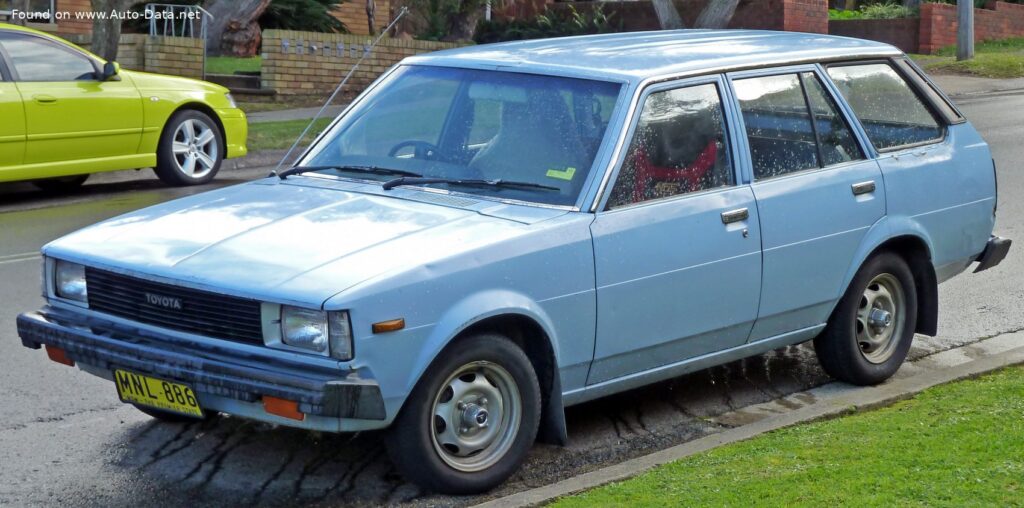
The Toyota Corolla Wagon, designated as the E70 series, represented the fourth generation of Toyota’s globally successful Corolla line. Produced between 1979 and 1982, the E70 wagon offered a practical and economical transportation solution, particularly appealing to families. Within the E70 range, the 1.3-liter (KE70) variant, producing 60 horsepower, served as the entry-level offering, prioritizing fuel efficiency and affordability over outright performance. This model occupied the base trim level, providing essential transportation without the added cost of larger engines or more luxurious features. It was a common sight in both domestic Japanese markets and export destinations, including North America, Europe, and Australia.
The 1.3L (KE70) Corolla Wagon: An Overview
The KE70 designation specifically identifies the Corolla Wagon equipped with the 4K engine. This engine, a 1.3-liter inline-four, was known for its reliability and simplicity. The E70 generation marked a significant shift in Corolla design, moving towards a more squared-off and practical aesthetic compared to its predecessors. The wagon body style, in particular, offered increased cargo capacity, making it a popular choice for those needing a versatile vehicle. The KE70’s position in the lineup was crucial; it provided an accessible entry point into Corolla ownership, attracting buyers who prioritized economy and dependability.
Powertrain & Engine Architecture
The heart of the KE70 Corolla Wagon was the 4K engine, a 1.3-liter (1290cc) inline-four cylinder gasoline engine. This engine utilized a single overhead camshaft (SOHC) valvetrain, operating with two valves per cylinder. The 4K engine was naturally aspirated, meaning it did not employ a turbocharger or supercharger. Fuel delivery was managed by a carburetor, specifically the Aisan type, a common setup for vehicles of this era. The carburetor was chosen for its simplicity and cost-effectiveness, contributing to the overall affordability of the KE70. The engine’s bore and stroke measured 76.2 mm x 80 mm, resulting in a compression ratio of 9.0:1. Lubrication was provided by a conventional wet sump system, and the engine was cooled by a water-cooled system. The 4K engine was renowned for its durability and relatively straightforward maintenance requirements.
The KE70 typically came equipped with a four-speed manual transmission as standard. However, a three-speed automatic transmission was offered as an optional extra. The automatic transmission, while providing convenience, did noticeably impact the vehicle’s acceleration and fuel economy compared to the manual version. The automatic transmission was a simple three-speed unit, lacking the overdrive gears found in later automatic transmissions. The final drive ratio varied depending on the specific transmission and market, but generally fell within the range of 4.22:1 to 4.57:1.
Driving Characteristics
The driving experience in a KE70 Corolla Wagon with the 1.3-liter engine and automatic transmission was characterized by its relaxed and unhurried nature. With only 60 horsepower on tap, acceleration was modest, particularly when fully loaded with passengers or cargo. The automatic transmission further dampened performance, as it lacked the responsiveness of a manual gearbox. However, the engine proved to be quite tractable, offering sufficient power for everyday driving situations, such as commuting and running errands. The gear ratios in the three-speed automatic were spaced to prioritize fuel economy and smooth cruising rather than rapid acceleration. The vehicle felt stable and predictable in handling, although it wasn’t designed for sporty driving. The steering was light and easy, making it maneuverable in urban environments. The overall driving experience was one of practicality and dependability, rather than excitement.
Equipment & Trim Levels
The KE70 Corolla Wagon, in its base 1.3-liter automatic configuration, was typically equipped with a relatively sparse set of standard features. Interior upholstery consisted of durable vinyl or cloth, often in basic color schemes. The dashboard was functional and straightforward, featuring a simple instrument cluster with speedometer, fuel gauge, and temperature gauge. A basic AM radio was often included as standard equipment. Power steering and air conditioning were generally not available on the base model, although they could be added as optional extras in some markets. The exterior trim was minimal, with black plastic bumpers and steel wheels with hubcaps being common features. Optional extras included upgraded audio systems, tinted glass, and a sunroof. The focus was on providing a no-frills, affordable vehicle that met the basic transportation needs of its owners.
Chassis & Braking
The KE70 Corolla Wagon utilized a body-on-frame construction, which was common for vehicles of this era. The suspension system consisted of independent front suspension with MacPherson struts and a live axle rear suspension with leaf springs. This setup provided a comfortable ride, although it wasn’t particularly sophisticated. The braking system was relatively simple, featuring drum brakes on all four wheels. The drum brakes were adequate for the vehicle’s weight and performance, but they lacked the stopping power and fade resistance of disc brakes. Steering was accomplished through a recirculating ball steering system, which provided a relatively indirect steering feel. The chassis was designed for durability and reliability, rather than sporty handling. Stabilizer bars were not typically fitted to the base KE70 model.
Market Reception & Comparison
The KE70 Corolla Wagon, particularly the 1.3-liter automatic variant, was generally well-received as an affordable and reliable family vehicle. Critics praised its fuel efficiency and practicality, but noted its lack of performance. Compared to other trims in the E70 lineup, such as the 1.6-liter versions, the 1.3-liter model offered significantly less power and acceleration. However, it also offered lower running costs and a more accessible price point. In terms of fuel economy, the 1.3-liter automatic typically achieved around 28-32 mpg (US) in combined driving conditions, making it a relatively economical vehicle for its time. Reliability was a key strength of the KE70, with the 4K engine proving to be exceptionally durable. Compared to competing vehicles from other manufacturers, such as the Ford Escort Wagon or the Volkswagen Golf, the Corolla Wagon offered a compelling combination of affordability, reliability, and practicality.
Technical Specifications
| Engine Model | 4K |
| Engine Type | Inline-4, Naturally Aspirated |
| Displacement | 1290 cc (1.3 L) |
| Bore x Stroke | 76.2 mm x 80 mm |
| Compression Ratio | 9.0:1 |
| Maximum Power | 60 hp @ 6000 rpm |
| Maximum Torque | 73 lb-ft @ 3600 rpm |
| Fuel System | Aisan Carburetor |
| Valvetrain | SOHC, 2 valves per cylinder |
| Transmission | 3-Speed Automatic (Optional) |
| Drivetrain | Rear-Wheel Drive |
| Engine Oil Capacity | 3.5 liters (3.7 US qt, 3.08 UK qt) |
| Coolant Capacity | 6.2 liters (6.55 US qt, 5.46 UK qt) |
| Curb Weight | Approximately 1,850 lbs (840 kg) |
Legacy
The KE70 Corolla Wagon, and specifically the 1.3-liter automatic variant, has earned a reputation as a remarkably durable and reliable vehicle. Many examples are still on the road today, a testament to Toyota’s engineering and build quality. In the used car market, these wagons are often sought after by enthusiasts and collectors, particularly those interested in classic Japanese automobiles. The 4K engine is known for its longevity and relatively simple maintenance requirements, making it a popular choice for those seeking a dependable and affordable vehicle. While not particularly powerful or luxurious, the KE70 Corolla Wagon remains a beloved and iconic vehicle, representing a significant chapter in Toyota’s history.