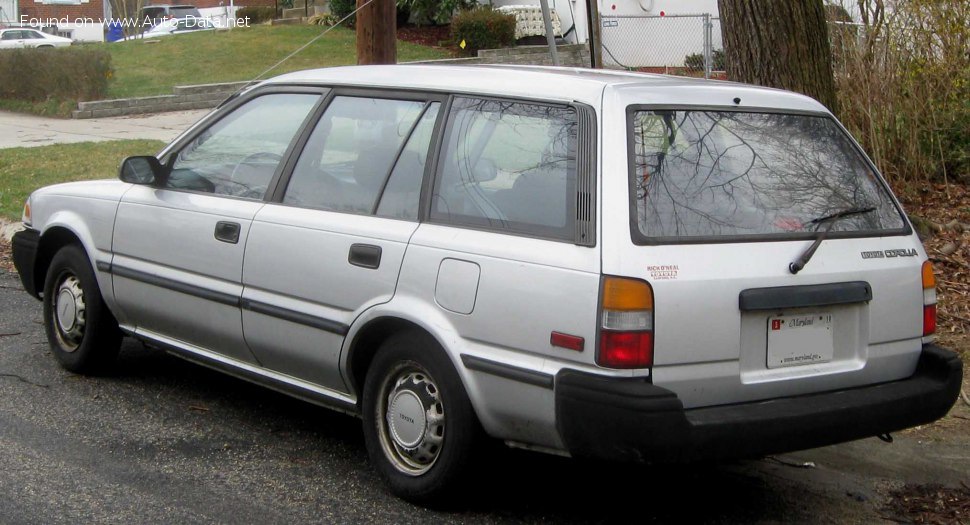
The Toyota Corolla Wagon VI (E90) 1.6 XLI (AE95) 4×4, produced between 1988 and 1992, represented a niche offering within the broader E90 Corolla range. This variant combined the practicality of a station wagon body style with the added capability of all-wheel drive, powered by Toyota’s 4A-F 1.6-liter gasoline engine. It occupied a position between the more basic, rear-wheel drive Corolla wagons and the higher-performance, often front-wheel drive, trims available during this generation. The E90 series, built upon the T platform, was a significant evolution of the Corolla line, offering improved comfort, features, and safety compared to its predecessors.
The 1.6 XLI 4×4: Positioning and Market
The 1.6 XLI 4×4 trim was positioned as a mid-range offering within the E90 Corolla wagon lineup. It wasn’t the base model, which typically featured smaller engines and fewer amenities, nor was it the top-of-the-line trim with luxury features. Instead, it aimed to provide a balance of practicality, capability, and affordability for buyers needing a versatile vehicle for family use or light-duty work. The all-wheel drive system was a key differentiator, appealing to customers in regions with inclement weather or those requiring enhanced traction for occasional off-pavement use. Compared to the standard rear-wheel drive Corolla wagons, the 4×4 offered superior grip and stability, particularly on slippery surfaces. However, it came at the cost of slightly increased fuel consumption and a more complex drivetrain.
Powertrain & Engine Architecture
At the heart of the 1.6 XLI 4×4 lay Toyota’s 4A-F engine, a 1.6-liter (1587 cc) inline-four cylinder gasoline engine. This engine produced 105 horsepower at 5000 rpm and approximately 100 lb-ft of torque. The 4A-F featured a cast iron block and an aluminum cylinder head, incorporating a single overhead camshaft (SOHC) design with four valves per cylinder. Fuel delivery was managed by a multi-port fuel injection system, contributing to improved fuel efficiency and reduced emissions compared to earlier carburetor-equipped engines. The engine’s longitudinal mounting within the engine bay was a characteristic of the E90’s drivetrain layout. The 4A-F engine was known for its reliability and relatively simple maintenance requirements. The 4×4 system employed a viscous coupling to distribute power between the front and rear axles, providing automatic all-wheel drive operation without driver intervention. The transmission was a 5-speed manual, the only transmission option available with this specific configuration.
Driving Characteristics
The driving experience of the 1.6 XLI 4×4 was characterized by its competent, if not particularly sporty, performance. The 105 horsepower engine provided adequate power for everyday driving, but acceleration was modest, especially when fully loaded. The 5-speed manual transmission allowed drivers to make the most of the available power, while the all-wheel drive system enhanced traction and stability in various conditions. The gear ratios were tuned for fuel efficiency and drivability, rather than outright performance. Compared to the rear-wheel drive Corolla wagons, the 4×4 exhibited improved handling and cornering grip, particularly on loose or wet surfaces. However, the added weight of the all-wheel drive components did slightly diminish overall agility. The suspension, consisting of McPherson struts at the front and a coil spring setup at the rear, provided a comfortable ride, absorbing bumps and irregularities in the road surface effectively.
Equipment & Trim Levels
The 1.6 XLI 4×4 trim level included a reasonable level of standard equipment for its time. Interior features typically included cloth upholstery, a basic instrument cluster, and a steering wheel. Power steering was standard, making maneuvering easier, particularly at low speeds. While not lavishly equipped, the XLI trim offered a step up in comfort and convenience compared to the base models. Optional extras could include a radio/cassette player, upgraded sound systems, and occasionally, air conditioning, depending on the market. The exterior featured steel wheels with hubcaps, and relatively simple body trim. The wagon body style provided a generous cargo area, making it well-suited for families or those needing to transport bulky items.
Chassis & Braking
The E90 Corolla wagon chassis was a traditional body-on-frame construction, providing a robust and durable platform. The front suspension utilized independent McPherson struts with coil springs and an anti-roll bar, contributing to improved handling and ride comfort. The rear suspension employed a coil spring setup, offering a balance of comfort and stability. The braking system consisted of ventilated discs at the front and drum brakes at the rear. Hydraulic power steering was standard, reducing driver effort. The 1.6 XLI 4×4’s curb weight of approximately 1180 kg (2601 lbs) influenced its handling and braking performance. The all-wheel drive system added weight compared to the rear-wheel drive models, but also enhanced traction and stability.
Market Reception & Comparison
The Toyota Corolla Wagon VI (E90) 1.6 XLI 4×4 received generally positive reviews from automotive critics. It was praised for its practicality, reliability, and the added capability of all-wheel drive. However, some critics noted that its performance was modest, and its fuel economy was slightly lower than that of the rear-wheel drive models. Compared to other wagons available at the time, such as those from Ford or Vauxhall/Opel, the Corolla offered a reputation for exceptional reliability and build quality. Within the Corolla lineup, the 1.6 XLI 4×4 appealed to a specific segment of buyers who prioritized all-weather capability and versatility over outright performance. Its fuel economy was reasonable for the era, averaging around 30-35 mpg in mixed driving conditions.
Technical Specifications
| Engine Model/Code | 4A-F |
| Engine Displacement | 1587 cc (97.64 cu. in.) |
| Number of Cylinders | 4, Inline |
| Number of Valves per Cylinder | 4 |
| Fuel Injection System | Multi-port Fuel Injection |
| Maximum Power | 105 hp @ 5000 rpm |
| Torque | ~100 lb-ft |
| Compression Ratio | 9.5:1 |
| Engine Oil Capacity | 3.2 liters (3.38 US qt | 2.82 UK qt) |
| Coolant Capacity | 5.6 liters (5.92 US qt | 4.93 UK qt) |
| Kerb Weight | 1180 kg (2601.45 lbs) |
| Fuel Tank Capacity | 50 liters (13.21 US gal | 11 UK gal) |
| Drivetrain | All-Wheel Drive (4×4) |
| Transmission | 5-speed Manual |
| Front Suspension | Independent, McPherson Strut with Coil Spring and Anti-Roll Bar |
| Rear Suspension | Coil Spring |
| Front Brakes | Ventilated Discs |
| Rear Brakes | Drum |
| Maximum Speed | 172 km/h (106.88 mph) |
Legacy
The Toyota Corolla Wagon VI (E90) 1.6 XLI 4×4 has developed a reputation for long-term reliability and durability. The 4A-F engine is known for its ability to withstand high mileage with proper maintenance. Today, these wagons are relatively rare, particularly in well-preserved condition. They are sought after by enthusiasts and collectors who appreciate their classic styling, practicality, and the unique appeal of the all-wheel drive system. While parts availability may be limited in some regions, many components are still available through aftermarket suppliers or salvaged vehicles. The 1.6 XLI 4×4 remains a testament to Toyota’s commitment to building reliable and versatile vehicles, and it continues to hold a special place in the hearts of many Corolla enthusiasts.