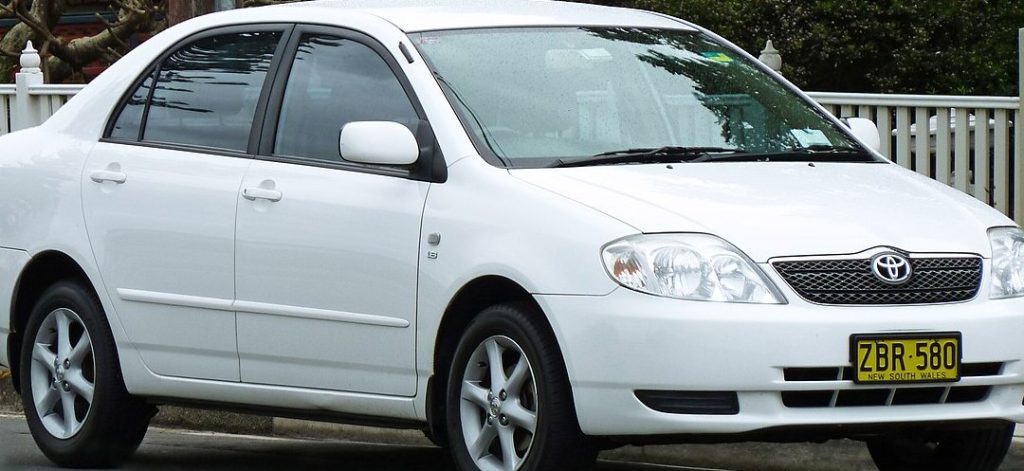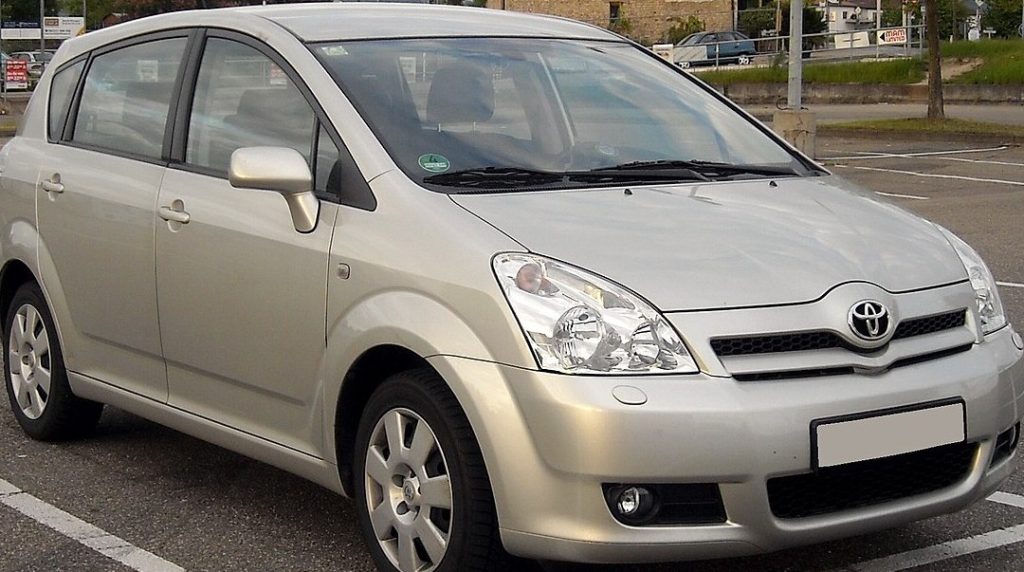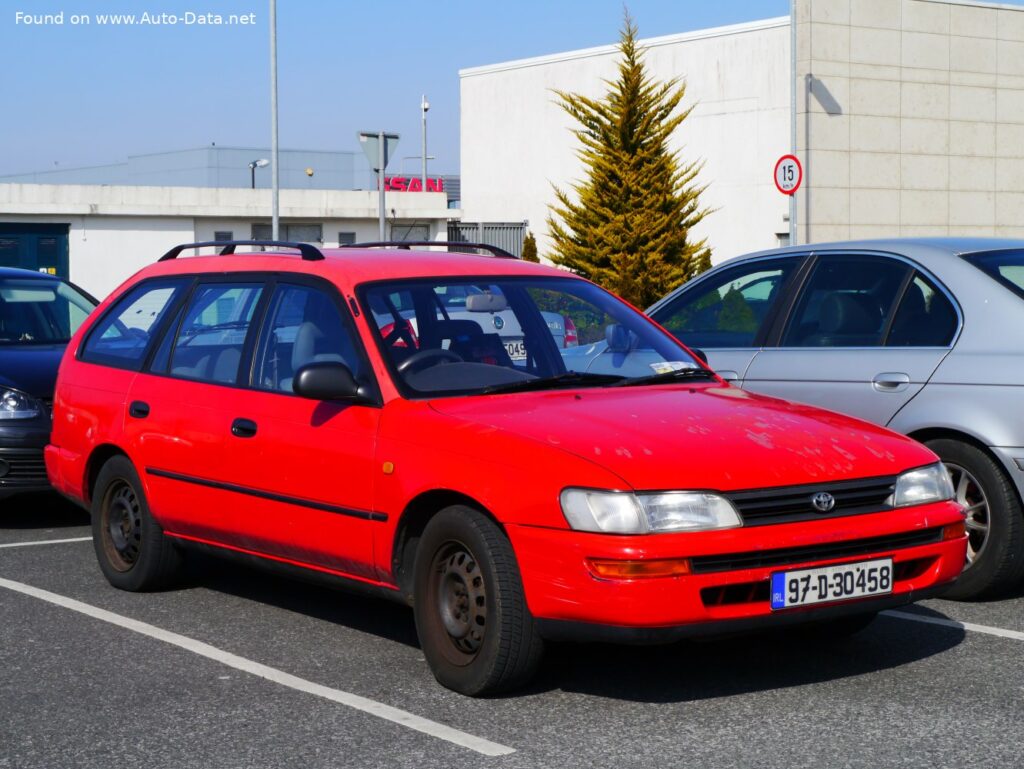
The Toyota Corolla Wagon VII (E100) 1.3 i XLI 16V (88 Hp) represents a significant chapter in the history of the Corolla, one of the world’s most enduring automotive nameplates. Produced from 1992 to 1997, the seventh-generation Corolla, internally designated E100, continued Toyota’s tradition of building reliable, economical, and practical vehicles. While the sedan and hatchback variants achieved widespread success, the station wagon, particularly with the 1.3-liter engine, found a strong niche in European and Asian markets where its compact dimensions and versatile cargo capacity were highly valued. This variant exemplified the E100 generation’s commitment to efficiency and everyday usability, offering a no-frills approach to family transport.
The E100 Corolla Wagon: Positioning and Overview
The E100 generation marked a design shift with a more rounded, aerodynamic aesthetic. The 1.3 i XLI 16V trim level occupied the entry-level position within the Corolla Wagon lineup. It was designed to appeal to budget-conscious buyers prioritizing fuel economy and practicality over outright performance. It served as a more affordable alternative to the higher-spec Corolla Wagons equipped with larger engines and more luxurious features. Its presence, though less prominent in North America compared to its sedan siblings, demonstrated the Corolla’s adaptability and global appeal.
Powertrain & Engine Architecture
At the heart of the Toyota Corolla Wagon VII (E100) 1.3 i XLI 16V lies Toyota’s 2E-E engine, a naturally aspirated inline four-cylinder unit. With a displacement of 1299 cubic centimeters (79.27 cubic inches), this powerplant produced 88 horsepower at 6000 rpm. The engine utilized a multi-port fuel injection system for precise fuel delivery, contributing to its reliability and fuel economy. The power per liter was 67.7 horsepower, a respectable figure for a non-turbocharged engine of the early 1990s.
Torque output was rated at 123 Nm (90.72 lb.-ft.) at 4400 rpm. The engine’s layout was front and transverse, typical for front-wheel-drive vehicles, optimizing cabin space and weight distribution. A compression ratio of 10.5:1 and a DOHC (Dual Overhead Camshaft) valvetrain with four valves per cylinder showcased Toyota’s engineering prowess. The 2E-E engine was known for its robust construction and straightforward design, contributing to the Corolla’s legendary reliability.
This specific engine was typically paired with a 5-speed manual transmission, although a 3-speed or 4-speed automatic transmission was also available. The automatic transmission, while offering convenience, did impact performance and fuel economy compared to the manual version. The automatic was a conventional hydraulic control unit, lacking the electronic sophistication of later transmissions.
Driving Characteristics
The 1.3L 88 hp engine with the automatic transmission delivered adequate, but not exhilarating, performance. Acceleration from 0 to 60 mph was approximately 12-13 seconds, and the top speed was around 108 mph. The automatic transmission’s gear ratios were optimized for fuel efficiency rather than rapid acceleration. The power delivery was relatively linear, but the engine felt strained when climbing hills or carrying a full load. Compared to the manual transmission version, the automatic resulted in a noticeable decrease in responsiveness. Higher-output Corolla Wagons, such as those equipped with the 1.6L or 1.8L engines, offered significantly improved performance, but at the cost of increased fuel consumption.
The steering was light and precise, making it easy to maneuver in urban environments. The suspension provided a comfortable ride, absorbing bumps and imperfections in the road surface reasonably well. However, the handling was not particularly sporty, with noticeable body roll during cornering. Overall, the driving experience was geared towards comfort and practicality rather than driving excitement.
Equipment & Trim Levels
The 1.3 i XLI 16V trim level offered a sensible array of standard equipment for the early 1990s. Standard features typically included power steering, a basic audio system, cloth upholstery, and manual windows and door locks. ABS (Anti-lock Braking System) was often an optional extra, depending on the market. The interior was functional and durable, with a focus on practicality rather than luxury. The dashboard layout was straightforward and easy to use. Optional extras could include air conditioning, a sunroof, and upgraded audio systems. The interior color schemes were typically conservative, with shades of gray and beige being common.
Chassis & Braking
The Corolla Wagon VII (E100) utilized a front-wheel-drive chassis with independent MacPherson strut suspension at the front and a torsion beam axle at the rear. This suspension setup provided a good balance between ride comfort and handling. The braking system consisted of ventilated discs at the front and drum brakes at the rear. This configuration was common for vehicles in this segment during the early 1990s. The brake system was adequate for normal driving conditions, but lacked the stopping power of more advanced systems. A stabilizer bar was fitted to the front suspension to reduce body roll during cornering.
Market Reception & Comparison
Critics generally praised the Toyota Corolla Wagon VII (E100) 1.3 i XLI 16V for its reliability, fuel economy, and practicality. However, some reviewers noted its lack of performance and relatively basic interior. Compared to other trims in the Corolla lineup, the 1.3L version offered the lowest price point and the best fuel economy. It was a popular choice for buyers who prioritized affordability and efficiency over performance and luxury. Fuel economy was a strong point, averaging around 34 mpg in combined driving. Reliability was exceptional, with many owners reporting trouble-free ownership for many years. Compared to competitors like the Opel Astra Caravan and Ford Escort Estate, the Corolla Wagon offered a similar level of practicality but was often perceived as being more reliable and durable.
Technical Specifications
| Category | Specification |
| Brand | Toyota |
| Model | Corolla |
| Generation | Corolla Wagon VII (E100) |
| Type (Engine) | 1.3 i XLI 16V (88 Hp) |
| Start of production | 1992 year |
| End of production | 1997 year |
| Powertrain Architecture | Internal Combustion engine |
| Body type | Station wagon (estate) |
| Seats | 5 |
| Doors | 5 |
| Fuel consumption (combined) | 6.9 l/100 km |
| Fuel Type | Petrol (Gasoline) |
| Acceleration 0 – 60 mph (Calculated) | 10.9 sec |
| Maximum speed | 175 km/h |
| Power | 88 Hp @ 6000 rpm |
| Torque | 123 Nm @ 4400 rpm |
| Engine layout | Front, Transverse |
| Engine Model/Code | 2E-E |
| Engine displacement | 1299 cm3 |
| Number of cylinders | 4 |
| Compression ratio | 10.5:1 |
| Kerb Weight | 1035 kg |
| Trunk (boot) space – minimum | 394 l |
| Trunk (boot) space – maximum | 713 l |
| Length | 4260 mm |
| Width | 1685 mm |
| Height | 1460 mm |
Legacy
The Toyota Corolla E100, and specifically the 1.3 i XLI 16V variant, continues to be regarded as a remarkably reliable and durable vehicle. Its simple mechanicals and robust construction have allowed many examples to remain on the road today, often with high mileage. In the used car market, these Corollas are valued for their affordability and low running costs. While not particularly sought after by collectors, they represent a practical and dependable option for budget-conscious buyers. The 2E-E engine is known for its longevity, and with proper maintenance, can easily exceed 200,000 miles. The availability of spare parts remains good, making it relatively easy and inexpensive to keep these vehicles running. The E100 Corolla Wagon’s legacy is one of dependable transportation, solidifying the Corolla’s reputation as a global icon of automotive reliability.