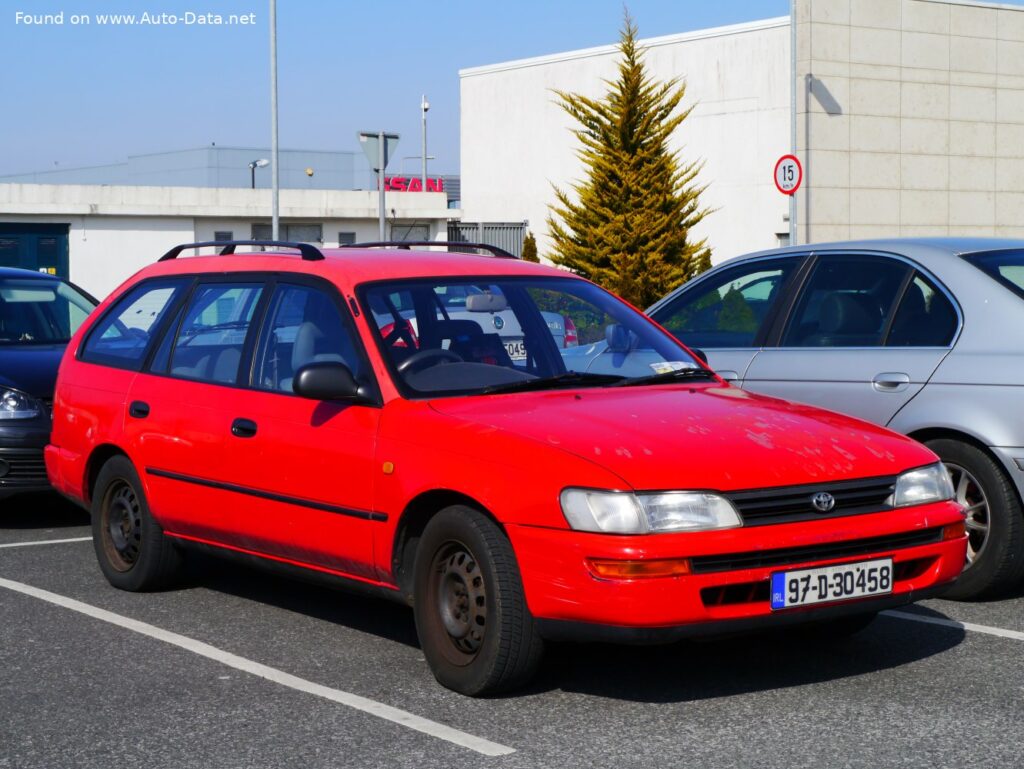
The Toyota Corolla Wagon VII (E100) 2.0 D (72 Hp) represents a pragmatic and enduring iteration of Toyota’s globally renowned Corolla line. Produced from 1992 to 1997, this specific variant was primarily aimed at European and Asian markets, where diesel engines and station wagon body styles were highly favored for their fuel efficiency and cargo capacity. Positioned as an entry-level to mid-range offering within the E100 generation – which also included gasoline-powered sedan and hatchback models – the 2.0 D wagon prioritized practicality and durability over outright performance. It served as a reliable workhorse for families and businesses seeking economical transportation, building upon the Corolla’s established reputation for dependability.
The 2C-Diesel Powertrain & Engine Architecture
The heart of the Toyota Corolla Wagon VII (E100) 2.0 D (72 Hp) is Toyota’s 2C diesel engine. This 1.975-liter (120.52 cubic inches) inline-four cylinder engine, identified by engine codes such as the 2C-E, was engineered for longevity and fuel economy rather than high output. It produced 72 horsepower at 4600 revolutions per minute and 131 Newton-meters (96.62 lb-ft) of torque at 2600 rpm. This torque figure, delivered at relatively low engine speeds, proved particularly useful for a wagon intended for hauling loads or navigating urban traffic. The engine featured a robust cast iron block and a relatively simple design, contributing to its renowned durability.
The 2C engine utilized a precombustion chamber indirect injection system, a common design for diesel engines of the era. This system, while less efficient than modern direct injection, offered smoother operation and quieter running characteristics. It also featured a single overhead camshaft (OHC) operating four valves per cylinder. The engine’s fuel injection system was mechanically controlled, a feature that contributed to its reliability and ease of maintenance. Power was transmitted to the front wheels through a five-speed manual transmission, maximizing fuel efficiency and providing drivers with a direct connection to the engine. The powertrain layout was a front-engine, front-wheel-drive configuration, typical for compact vehicles of the early 1990s.
Driving Characteristics and Performance
The Toyota Corolla Wagon VII (E100) 2.0 D (72 Hp) offered a driving experience focused on practicality and efficiency. Acceleration was modest, with an estimated 0 to 60 mph time of 13.4 seconds and 0 to 62 mph (100 km/h) taking 14.1 seconds. The top speed was approximately 102.53 mph (165 km/h). Compared to the gasoline-powered Corolla variants, particularly those with larger engines, the 2.0 D was noticeably slower. However, the diesel engine’s low-end torque provided adequate pulling power for everyday driving and hauling cargo.
The five-speed manual transmission allowed drivers to optimize engine speed for fuel efficiency or to extract the most available power when needed. The gear ratios were geared towards maximizing fuel economy, with a relatively tall final drive. The wagon’s suspension, tuned for comfort and stability, provided a predictable and manageable ride, although it wasn’t particularly sporty. Compared to a higher-output gasoline Corolla, the 2.0 D offered a more relaxed and economical driving experience, prioritizing fuel savings and durability over spirited performance.
Equipment & Trim Levels
The Toyota Corolla Wagon VII (E100) 2.0 D (72 Hp) was typically equipped with a practical, rather than luxurious, set of features. Standard equipment generally included hydraulic power steering, a basic audio system, and cloth upholstery. The interior was designed for durability and ease of use, with straightforward controls and robust materials. Trim levels varied depending on the market, but generally offered incremental upgrades in terms of interior appointments and exterior detailing.
Optional extras could include air conditioning, power windows, and central locking. Higher trim levels might feature upgraded upholstery, a more sophisticated audio system, and alloy wheels. However, the focus remained on providing a functional and reliable vehicle at an affordable price point. Safety features, while limited by the standards of the time, typically included seatbelts and, on some models, an Anti-lock Braking System (ABS). The dashboard layout was functional and straightforward, prioritizing ease of use over aesthetic flair.
Chassis & Braking
The Toyota Corolla Wagon VII (E100) 2.0 D (72 Hp) utilized a relatively conventional chassis and braking system for a vehicle of its class. The front suspension employed a MacPherson strut design, while the rear suspension featured a torsion beam setup. This configuration provided a comfortable ride and predictable handling characteristics. The chassis was designed to balance ride comfort with stability, making it suitable for both urban driving and highway cruising.
Braking duties were handled by ventilated disc brakes at the front and drum brakes at the rear. This combination was common for vehicles in this price range during the early 1990s. ABS was available as an option on some models, enhancing braking performance and control, particularly on slippery surfaces. The steering system was a rack-and-pinion setup, providing precise and responsive steering feel. The wagon’s relatively light weight contributed to its manageable handling characteristics.
Market Reception & Comparison
The Toyota Corolla Wagon VII (E100) 2.0 D (72 Hp) received generally positive reviews for its fuel efficiency, reliability, and practicality. Critics praised its robust diesel engine and spacious interior, making it a popular choice for families and businesses. However, its modest performance was often noted, particularly when compared to gasoline-powered rivals.
Compared to other trims in the Corolla lineup, the 2.0 D offered superior fuel economy but lower performance. The gasoline-powered models provided quicker acceleration and a more engaging driving experience, but at the cost of increased fuel consumption. Against competitors like the Volkswagen Golf Variant and Opel Astra Caravan, the Corolla Wagon stood out for its exceptional reliability and low running costs. Its fuel economy was competitive with other diesel-powered wagons of the era, making it an attractive option for cost-conscious buyers.
Technical Specifications: Toyota Corolla Wagon VII (E100) 2.0 D (72 Hp)
| Category | Specification |
| General Information | |
| Brand | Toyota |
| Model | Corolla |
| Generation | Corolla Wagon VII (E100) |
| Type (Engine) | 2.0 D (72 Hp) |
| Start of Production | 1992 year |
| End of Production | 1997 year |
| Powertrain Architecture | Internal Combustion engine |
| Body type | Station wagon (estate) |
| Seats | 5 |
| Doors | 5 |
| Performance Specs | |
| Fuel consumption (combined) | 5.8 l/100 km (40.6 US mpg) |
| Fuel Type | Diesel |
| Acceleration 0 – 60 mph | 13.4 sec |
| Acceleration 0 – 62 mph (0 – 100 km/h) | 14.1 sec |
| Maximum speed | 165 km/h (102.53 mph) |
| Engine Specs | |
| Power | 72 Hp @ 4600 rpm |
| Torque | 131 Nm (96.62 lb-ft) @ 2600 rpm |
| Engine layout | Front, Transverse |
| Engine Model/Code | 2C |
| Engine displacement | 1975 cm3 (120.52 cu. in.) |
| Number of cylinders | 4 |
| Engine configuration | Inline |
| Compression ratio | 23:1 |
| Fuel injection system | Precombustion chamber injection |
| Valvetrain | OHC |
| Space, Volume and Weights | |
| Kerb Weight | 1135 kg (2502.25 lbs) |
| Trunk (boot) space – minimum | 394 l (13.91 cu. ft) |
| Trunk (boot) space – maximum | 713 l (25.18 cu. ft) |
| Dimensions | |
| Length | 4260 mm (167.72 in) |
| Width | 1685 mm (66.34 in) |
| Height | 1460 mm (57.48 in) |
Legacy
The Toyota Corolla Wagon VII (E100) 2.0 D (72 Hp) enjoys a lasting legacy as a dependable and economical vehicle. The 2C diesel engine, known for its robustness, continues to operate reliably in many examples still on the road today. In the used car market, these wagons are often sought after by those seeking a simple, durable, and fuel-efficient vehicle. While not a performance icon, the 2.0 D Corolla Wagon represents a significant chapter in Toyota’s history, demonstrating the brand’s commitment to providing practical and reliable transportation to a global audience. Its enduring presence is a testament to the quality of its engineering and the enduring appeal of its utilitarian design.