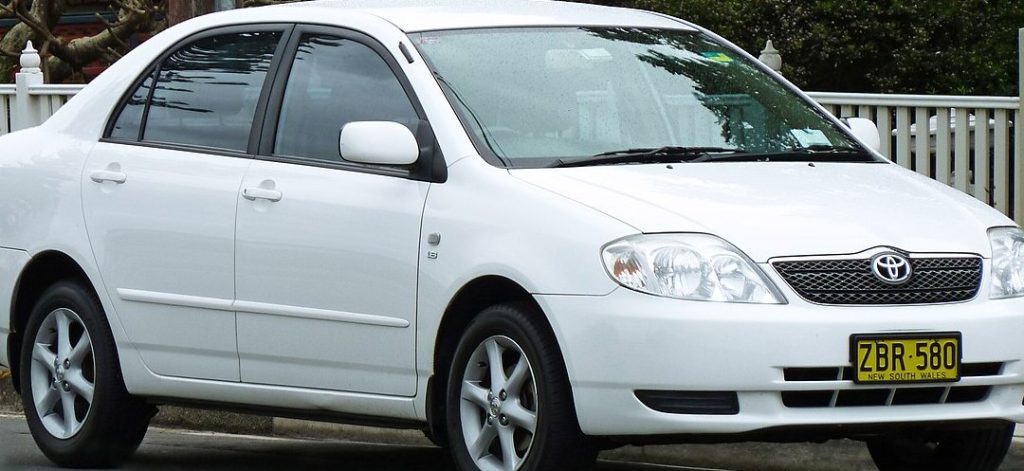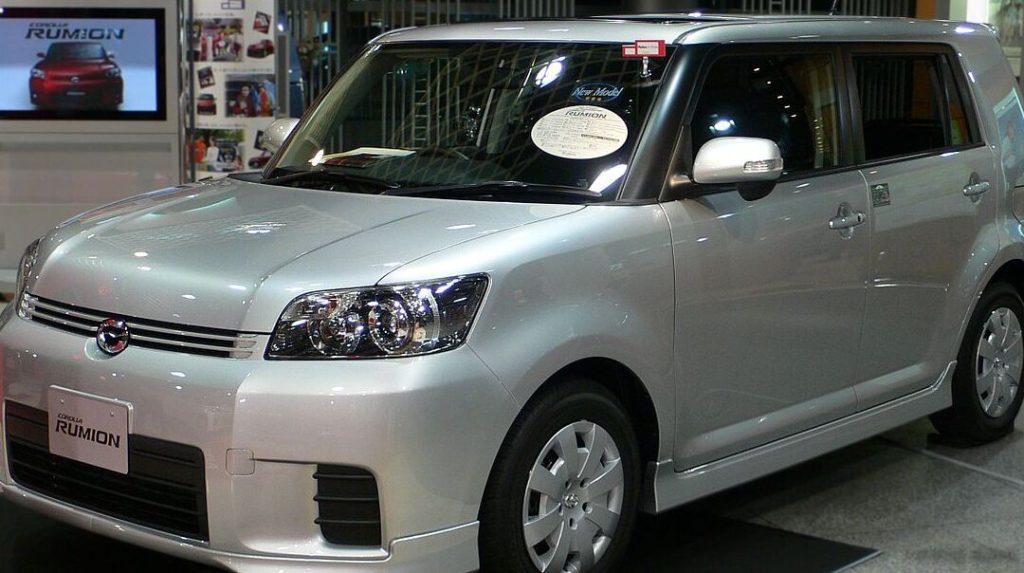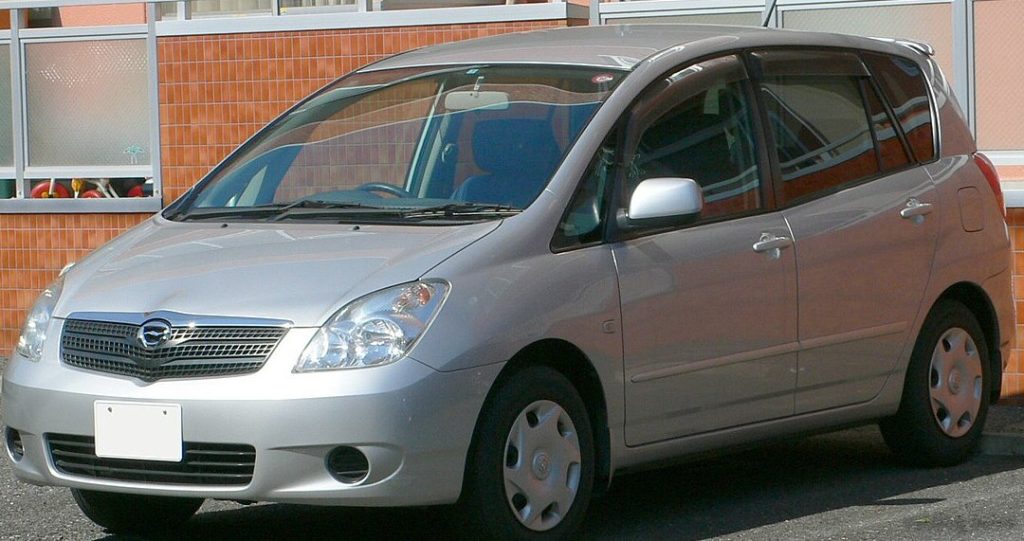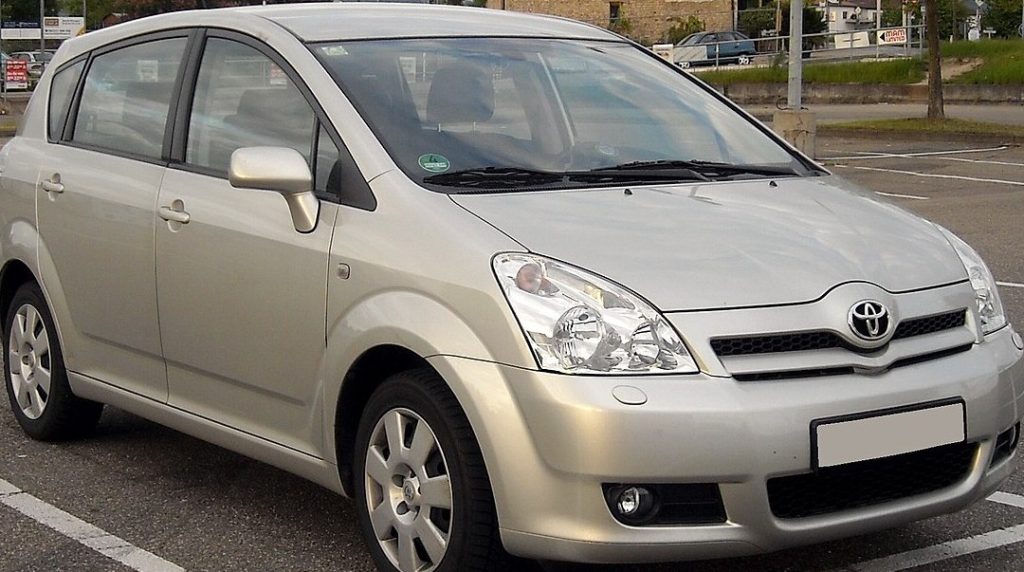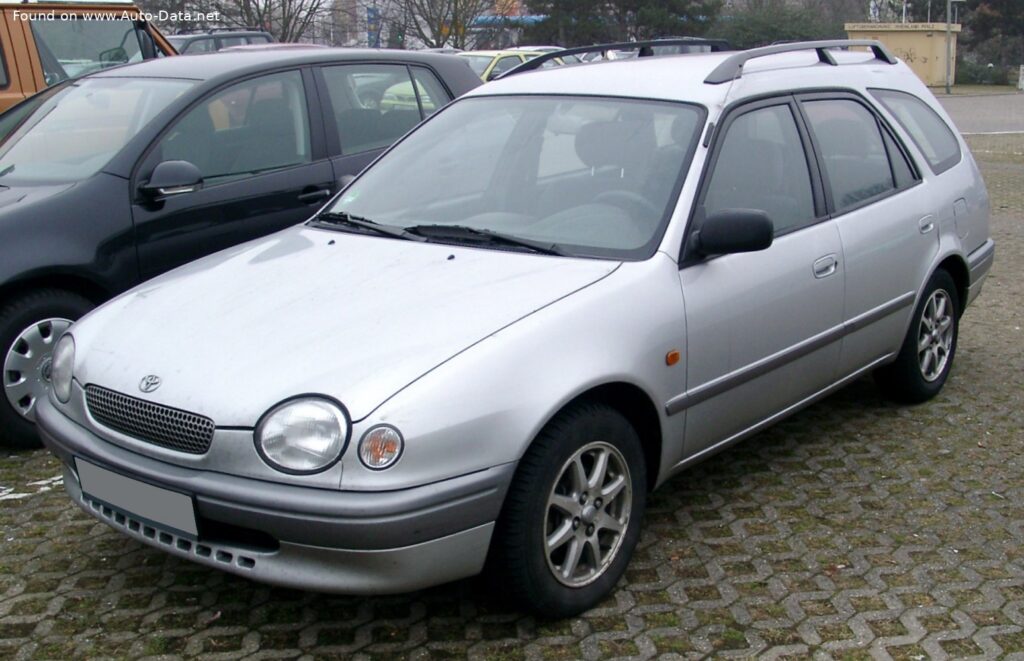
The Toyota Corolla, a name synonymous with reliability and practicality, has been a cornerstone of the global automotive landscape for decades. The eighth generation, known internally as the E110 series, continued this legacy, offering a range of body styles and powertrains tailored to various international markets. Among these, the Toyota Corolla Wagon VIII (E110) 1.3 i 16V (86 Hp) stood out as a particularly pragmatic choice, especially in regions like Europe and parts of Asia where compact station wagons were highly valued for their blend of family utility and economical operation. Produced between 1997 and 1999, this specific variant emphasized efficiency and everyday usability over outright performance, embodying the Corolla’s reputation for dependable transportation.
The 1.3 i 16V Variant: Positioning in the E110 Lineup
The 1.3 i 16V Corolla Wagon occupied the entry-level position within the E110 wagon range in many markets. It was designed to appeal to buyers prioritizing fuel efficiency and affordability. Compared to larger-engined Corollas, such as the 1.6L or 1.8L variants, the 1.3L offered a more economical purchase price and lower running costs. It also differed significantly from diesel-powered versions (like the 2.0 D) which focused on torque and fuel economy for long-distance driving. The target audience for this trim was typically families on a budget, first-time car buyers, or individuals needing a practical vehicle for urban commuting and light hauling.
Powertrain & Engine Architecture
At the heart of the Toyota Corolla Wagon VIII (E110) 1.3 i 16V was Toyota’s 4E-FE inline-four engine. This naturally aspirated, multi-port fuel-injected gasoline unit was engineered for durability and efficiency. With a displacement of 1332 cubic centimeters (approximately 81.28 cubic inches or 1.3 liters), it delivered 86 horsepower at 5400 rpm and 88.51 lb.-ft. (120 Nm) of torque at 4200 rpm. The 4E-FE engine featured a 16-valve cylinder head, with four valves per cylinder, optimizing airflow for improved combustion and efficiency. Its compression ratio of 10:1 further contributed to its fuel economy.
Power was delivered to the front wheels via a four-speed automatic transmission, a common choice for buyers seeking convenience over driver involvement. This transmission was electronically controlled, offering smoother shifts compared to older hydraulic systems. The automatic transmission featured typical gear ratios for the era, prioritizing fuel efficiency and comfortable cruising. The engine’s layout was front and transverse, maximizing interior space and contributing to the car’s balanced handling characteristics.
Driving Characteristics
The 1.8L 90 hp Automatic setup provided adequate, but not exhilarating, performance. Acceleration from 0 to 60 mph took approximately 12.5 seconds, and the top speed was around 108 mph. Compared to the five-speed manual version of the same engine, the automatic transmission resulted in a slight decrease in acceleration due to power loss through the torque converter. However, the automatic offered a more relaxed driving experience, particularly in urban traffic. The gear ratios were tuned for fuel economy, meaning the engine often operated at lower rpm, resulting in a quieter cabin and reduced fuel consumption. While not a sporty vehicle, the Corolla Wagon 1.3 i 16V offered predictable handling and a comfortable ride, making it well-suited for everyday driving.
Equipment & Trim Levels
The Corolla Wagon 1.3 i 16V typically came with a modest level of standard equipment. Base models generally included power steering, central locking, electric windows, and a basic audio system. Interior upholstery was typically cloth, with a durable and practical design. Optional extras included air conditioning, alloy wheels, a sunroof, and upgraded audio systems. Trim levels varied depending on the market, with higher-spec versions offering additional features such as color-coded bumpers, door handles, and side mirrors. The dashboard configuration was functional and straightforward, with easy-to-read gauges and intuitive controls. Safety features included seatbelts for all occupants and, importantly, ABS (Anti-lock Braking System) as standard equipment in many markets.
Chassis & Braking
The E110 Corolla Wagon utilized a conventional chassis design with coil springs and a torsion beam rear suspension. This setup provided a comfortable ride and predictable handling. The front suspension featured MacPherson struts, while the rear employed a twist beam axle. Braking was handled by ventilated discs at the front and drum brakes at the rear. The drum brakes were a cost-saving measure for the entry-level trim, but provided adequate stopping power for the vehicle’s weight and performance. Steering was managed by a hydraulic rack and pinion system, offering direct and responsive feedback to the driver. The standard tire size was 165/70 R14, balancing grip and ride comfort. The curb weight of approximately 2369.97 lbs (1075 kg) contributed to its manageable handling characteristics.
Market Reception & Comparison
Critics generally viewed the Toyota Corolla Wagon 1.3 i 16V as a sensible and reliable choice. It wasn’t praised for its performance, but it was consistently lauded for its fuel efficiency, durability, and low running costs. Compared to other trims in the Corolla lineup, the 1.3L automatic offered the most affordable entry point, but at the expense of performance and refinement. Fuel economy was a key strength, achieving approximately 26.4 US mpg (8.9 l/100 km) in urban driving and 38.6 US mpg (6.1 l/100 km) on the highway. Reliability was also a major selling point, with the 4E-FE engine and automatic transmission proving to be exceptionally durable. Against competitors like the Volkswagen Golf Variant and Ford Escort Wagon, the Corolla Wagon offered a compelling combination of practicality, reliability, and value.
Technical Specifications: Toyota Corolla Wagon VIII (E110) 1.3 i 16V (86 Hp)
| Category | Specification |
| General Information | |
| Brand | Toyota |
| Model | Corolla |
| Generation | Corolla Wagon VIII (E110) |
| Type (Engine) | 1.3 i 16V (86 Hp) |
| Start of Production | 1997 year |
| End of Production | 1999 year |
| Powertrain Architecture | Internal Combustion engine |
| Body type | Station wagon (estate) |
| Seats | 5 |
| Doors | 5 |
| Performance Specs | |
| Fuel Consumption (Economy) – Urban | 8.9 l/100 km (26.4 US mpg) |
| Fuel Consumption (Economy) – Extra Urban | 6.1 l/100 km (38.6 US mpg) |
| Fuel Type | Petrol (Gasoline) |
| Acceleration 0 – 60 mph | 12.5 sec |
| Acceleration 0 – 100 km/h | 12.5 sec |
| Maximum Speed | 175 km/h (108.74 mph) |
| Weight-to-power ratio | 12.5 kg/Hp, 80 Hp/tonne |
| Weight-to-torque ratio | 9 kg/Nm, 111.6 Nm/tonne |
| Engine Specs | |
| Power | 86 Hp @ 5400 rpm |
| Power per liter | 64.6 Hp/l |
| Torque | 120 Nm @ 4200 rpm (88.51 lb.-ft.) |
| Engine Layout | Front, Transverse |
| Engine Model/Code | 4E-FE |
| Engine Displacement | 1332 cm3 (81.28 cu. in.) |
| Number of Cylinders | 4 |
| Engine Configuration | Inline |
| Cylinder Bore | 74 mm (2.91 in.) |
| Piston Stroke | 77.4 mm (3.05 in.) |
| Compression Ratio | 10:1 |
| Number of Valves per Cylinder | 4 |
| Fuel Injection System | Multi-port manifold injection |
| Engine Aspiration | Naturally aspirated engine |
| Engine Oil Capacity | 2.8 l (2.96 US qt) |
| Coolant | 4.8 l (5.07 US qt) |
| Space, Volume and Weights | |
| Kerb Weight | 1075 kg (2369.97 lbs) |
| Max. Weight | 1615 kg (3560.47 lbs) |
| Max Load | 540 kg (1190.5 lbs) |
| Trunk (boot) Space – Minimum | 308 l (10.88 cu. ft.) |
| Trunk (boot) Space – Maximum | 1218 l (43.01 cu. ft.) |
| Fuel Tank Capacity | 50 l (13.21 US gal) |
| Dimensions | |
| Length | 4320 mm (170.08 in.) |
| Width | 1690 mm (66.54 in.) |
| Height | 1445 mm (56.89 in.) |
| Wheelbase | 2465 mm (97.05 in.) |
| Front Track | 1460 mm (57.48 in.) |
| Rear (Back) Track | 1450 mm (57.09 in.) |
| Drivetrain, Brakes and Suspension Specs | |
| Drivetrain Architecture | The Internal combustion engine (ICE) drives the front wheels of the vehicle. |
| Drive Wheel | Front wheel drive |
| Number of Gears and Type of Gearbox | 4 gears, automatic transmission |
| Front Suspension | Coil spring |
| Rear Suspension | Coil spring |
| Front Brakes | Ventilated discs |
| Rear Brakes | Drum |
| Assisting Systems | ABS (Anti-lock braking system) |
| Steering Type | Steering rack and pinion |
| Power Steering | Hydraulic Steering |
| Tires Size | 165/70 R14 |
Legacy
The Toyota Corolla Wagon VIII (E110) 1.3 i 16V continues to be regarded as a reliable and economical used car. The 4E-FE engine is known for its longevity, and with proper maintenance, can easily exceed 200,000 miles. Parts availability is generally good, and repair costs are relatively low. While not a particularly desirable or collectible model, it remains a practical and affordable option for buyers seeking a dependable station wagon. Its enduring reputation for reliability ensures that it continues to hold its value in the used car market, making it a testament to Toyota’s commitment to building vehicles that stand the test of time.